Istiophoridae spp.
Spot a billfish by its elongated rostrum and tall dorsal fin. Observed in waters from 18 to 29°C, these pelagic speedsters reward open-water divers worldwide.
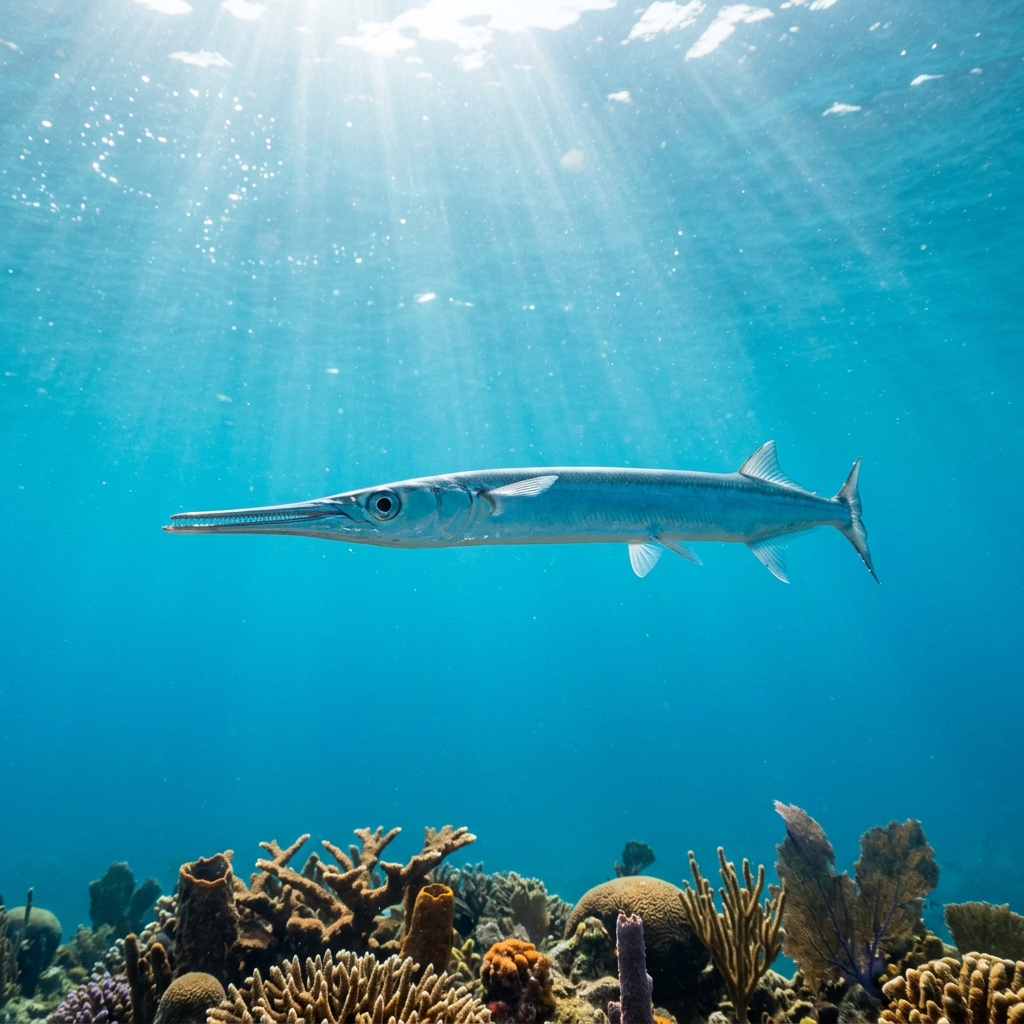
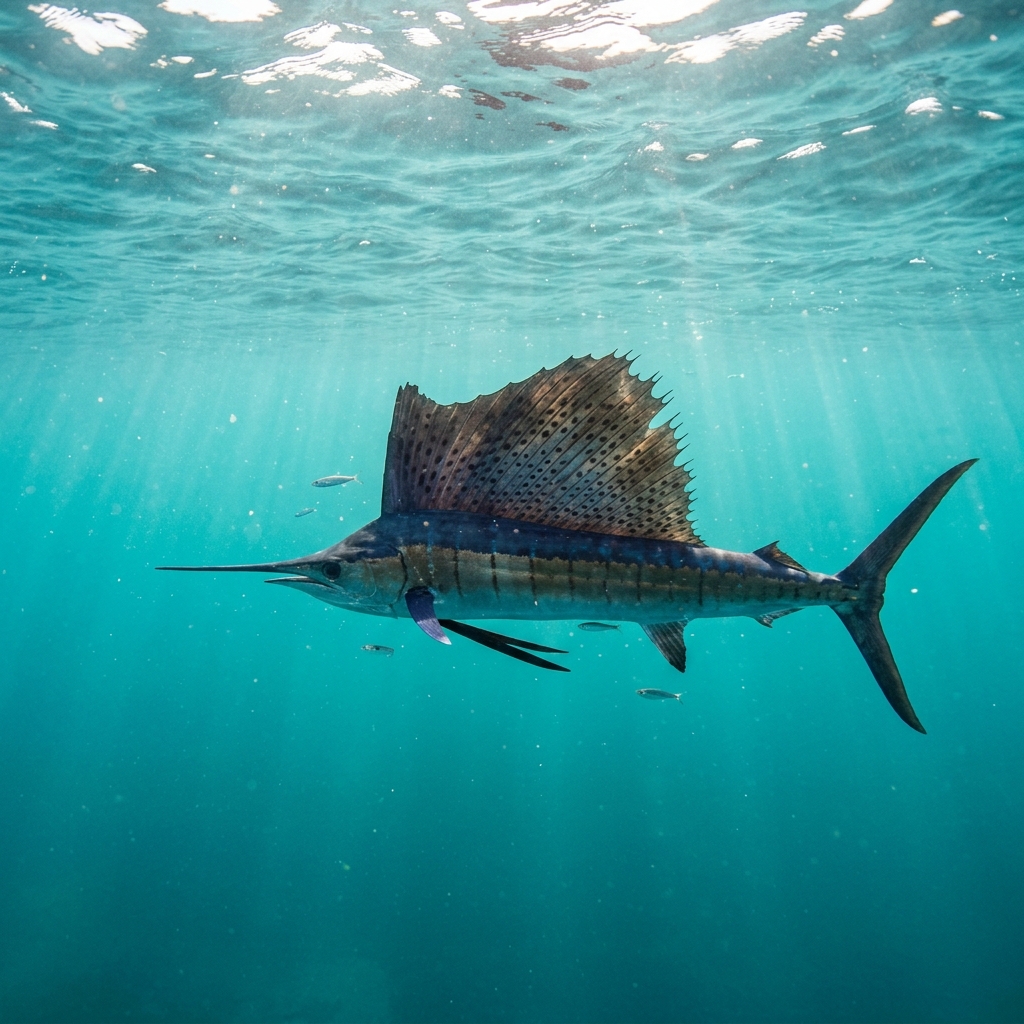
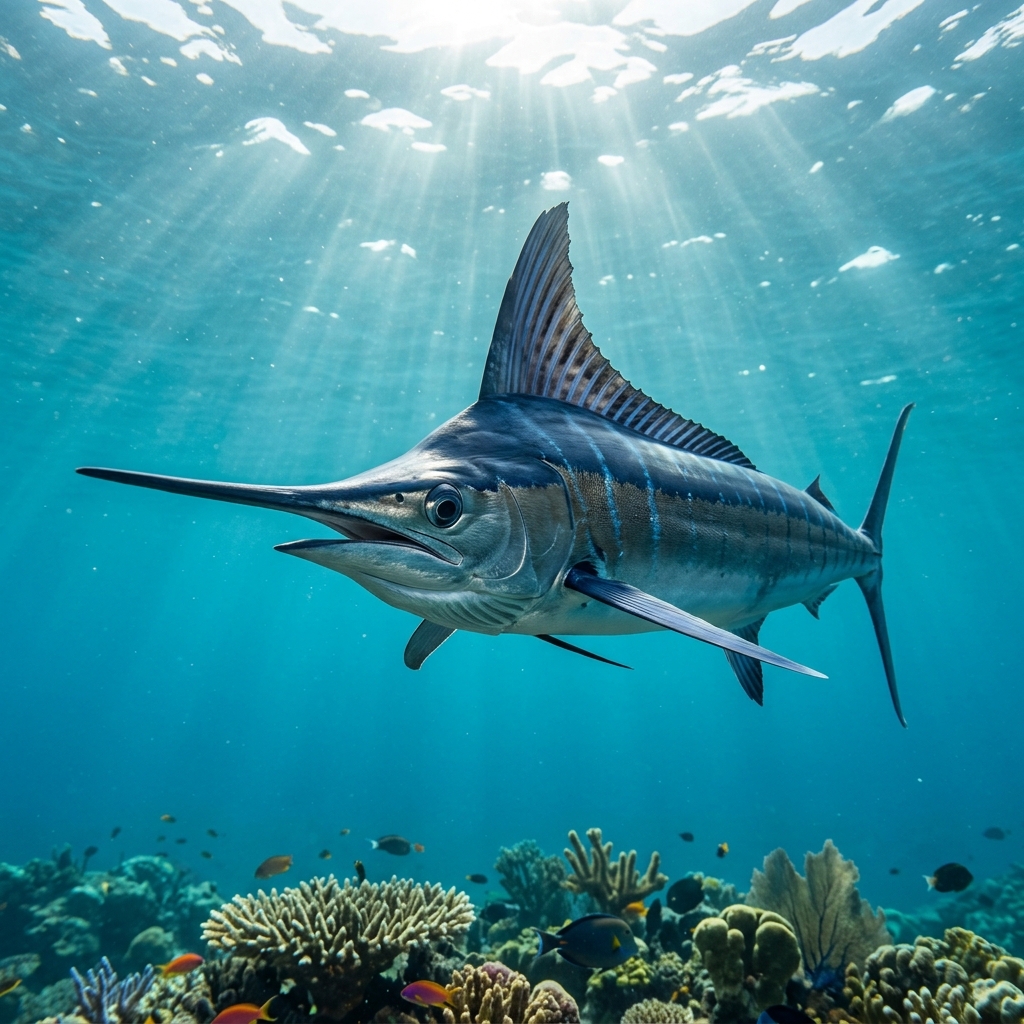
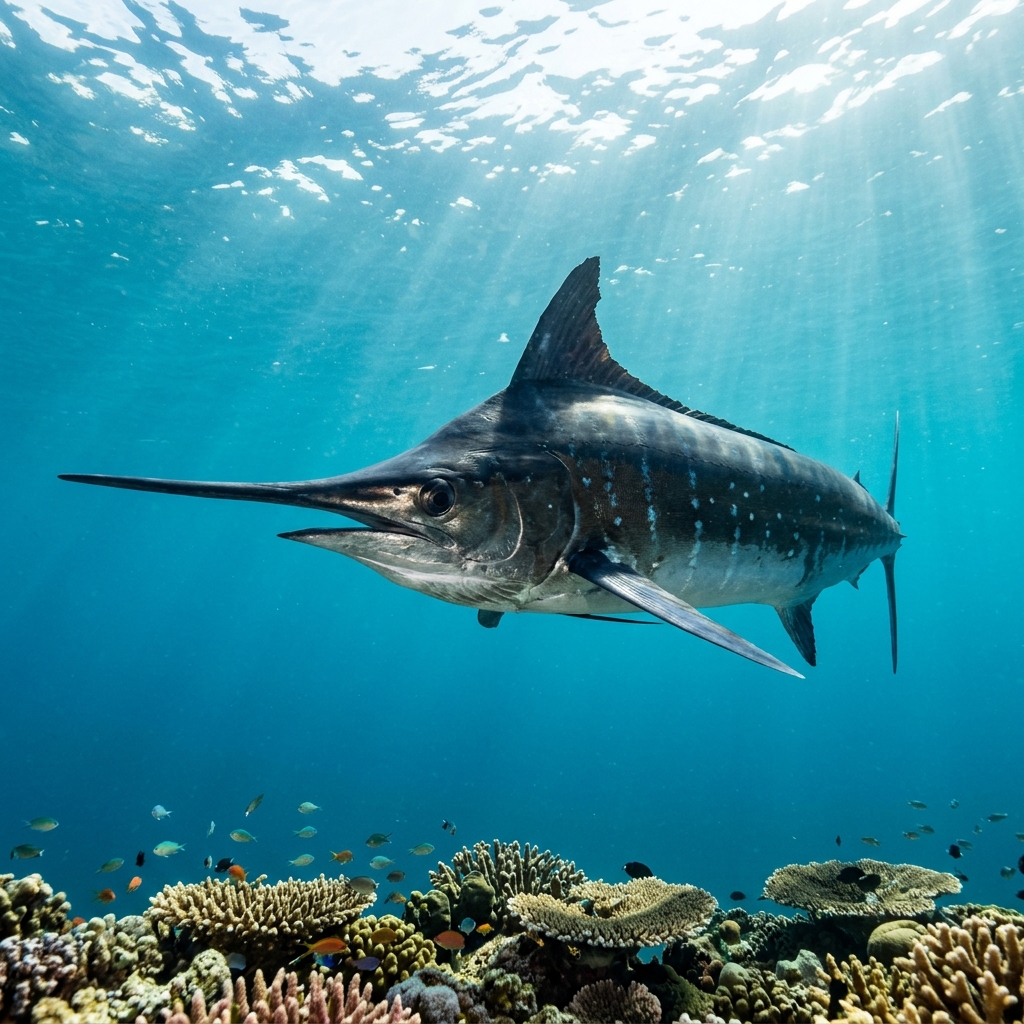
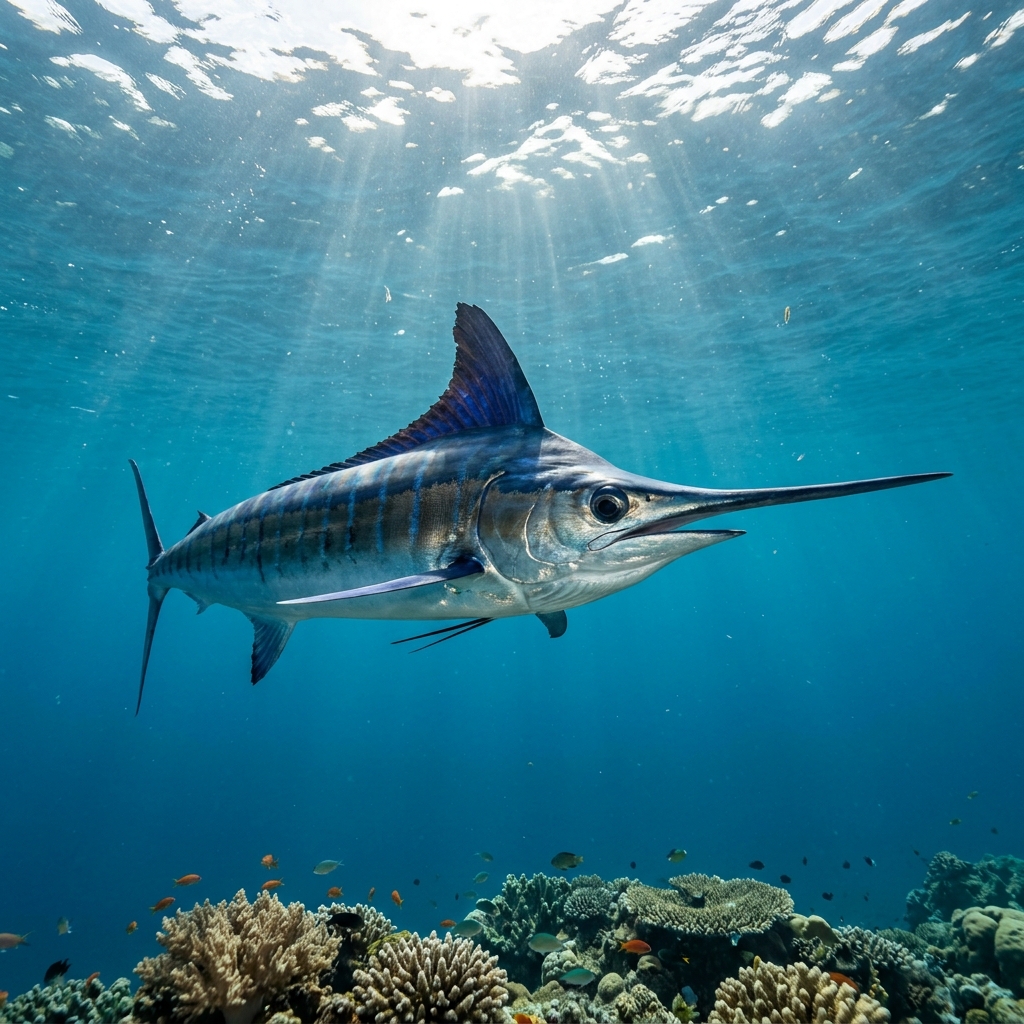
The long, spear-like rostrum (bill) projecting from the upper jaw is the single most reliable field mark, instantly setting billfish apart from any reef fish. Most species carry a tall, sail-like first dorsal fin that can be raised or folded flat against the body. Body colour in life is typically iridescent blue or violet on the back fading to silver-white on the belly, often with faint vertical bars or spots on the flanks. Females can be more than twice the body mass of males, though both sexes share the same colouring.
Encounters in the water column are typically brief, as billfish are fast, active hunters that move through the blue water in search of schooling prey. They rarely linger near divers and usually cruise past at mid-water depth, often at the edge of visibility. On rare occasions, individuals may circle a dive group with apparent curiosity before accelerating away.
Billfish are among the fastest fish in the ocean, capable of short bursts thought to exceed 100 km/h, an adaptation their elongated bill and deeply forked tail are both built for.
Seasonality data is insufficient to point to a particular window, so billfish should be treated as a year-round possibility in suitable waters. Their observed temperature range of roughly 18 to 29°C means they are most consistently present in tropical and warm temperate seas.
Reef neighbours a diver could mistake it for. Use the identification notes above to tell them apart.
Billfish are wide-ranging pelagic fish encountered in open tropical and subtropical seas rather than at fixed reef sites, so sightings tend to come from blue-water dives and offshore passages. Encounters are most often reported in warm oceanic waters across the Indo-Pacific and Atlantic, typically far from shore. Liveaboard routes that cross open ocean, particularly around offshore seamounts and current lines, give divers the best realistic chance of a sighting.
Mapping where Billfish is logged…
Billfish are open-ocean pelagic animals rather than reef residents, so sightings come from blue-water dives and offshore liveaboard crossings in tropical and warm subtropical seas worldwide. Seamount dives and current lines in the Indo-Pacific and Atlantic offer the best odds. There are no fixed, reliable dive sites; an encounter is always a bonus rather than a guarantee.
There is not enough sighting data to identify a concentrated season, so billfish can realistically appear year-round in waters between about 18 and 29°C. Planning around offshore blue-water dives in warm seas, rather than chasing a specific month, is the most practical approach.
Look for the long, rigid spear projecting from the upper jaw and a tall first dorsal fin that can fan open like a sail. Body colour is iridescent blue to violet on the back with a silver-white belly and faint vertical bars. No other large open-water fish combines those three features.
Size varies considerably across the family. Black marlin and Atlantic blue marlin are the largest members, with females reaching over 600 kg and exceeding 4 metres in length. Sailfish and spearfish are more slender and typically fall in the 2 to 3 metre range. Females consistently outgrow males, sometimes by more than double the body mass.
Billfish can warm their eyes and brain using a specialised heat-exchange organ, keeping those tissues several degrees warmer than the surrounding water. This improves reaction time and visual acuity when hunting in cooler, deeper water, giving them a significant advantage over cold-blooded prey.
Site and sighting data is aggregated from diver logs, iNaturalist and GBIF. For taxonomy and conservation status: