Istiophorus platypterus
Spot sailfish across Florida, Queensland, and the Red Sea. Learn how to ID that towering dorsal fin and what water temperatures to target.
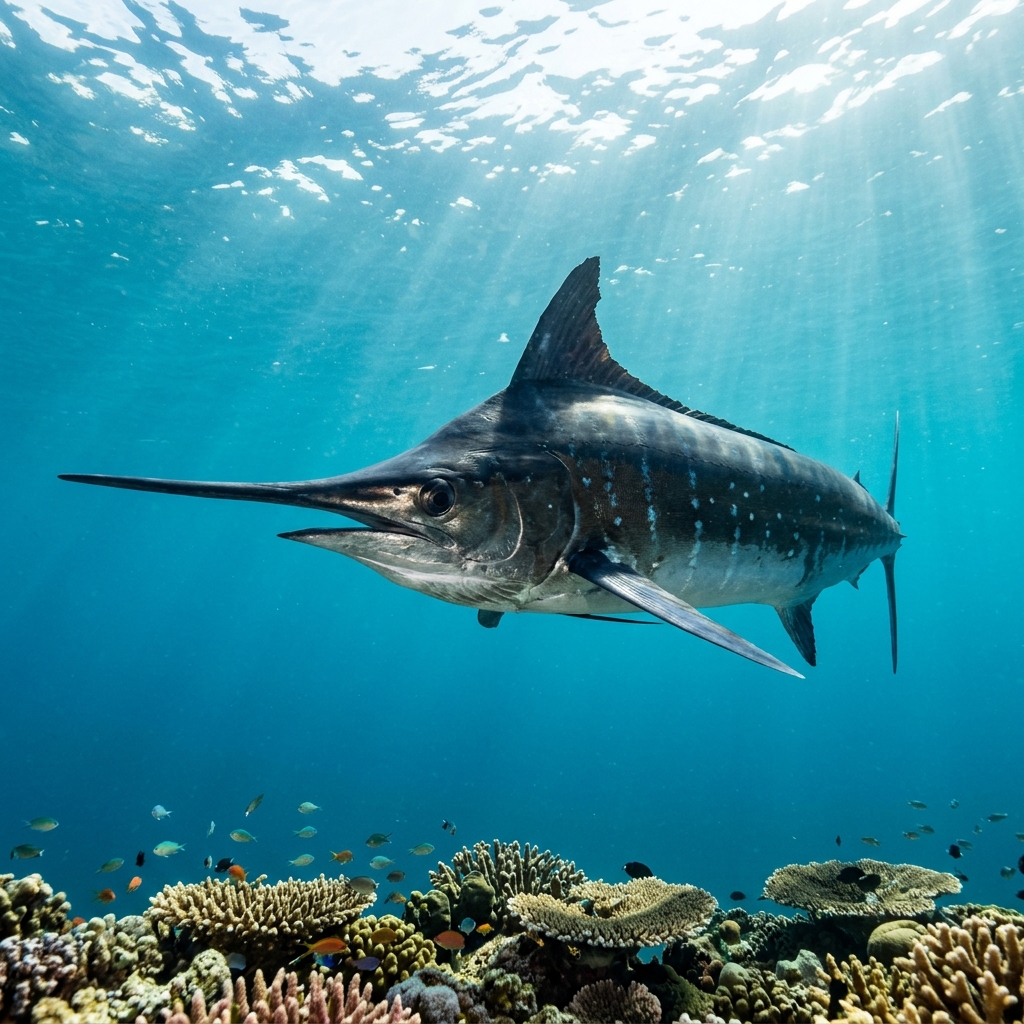
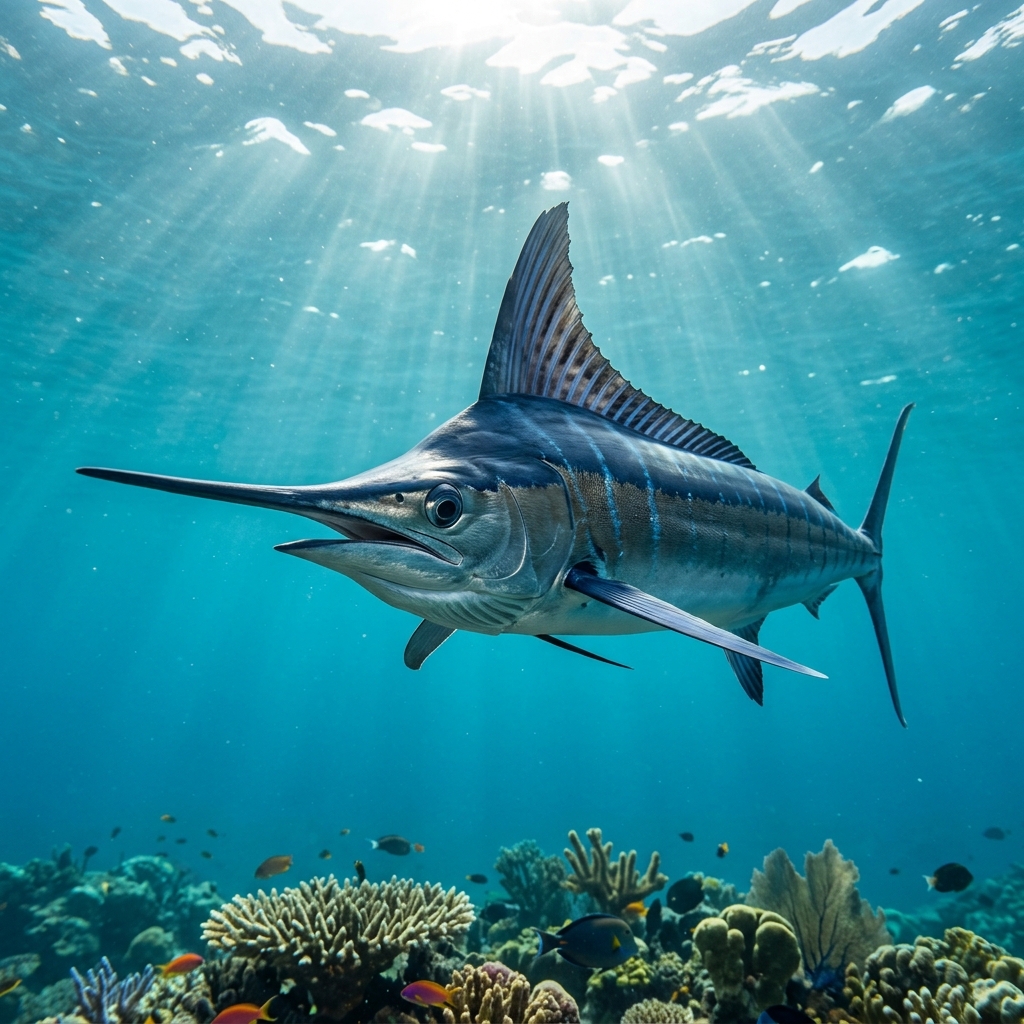
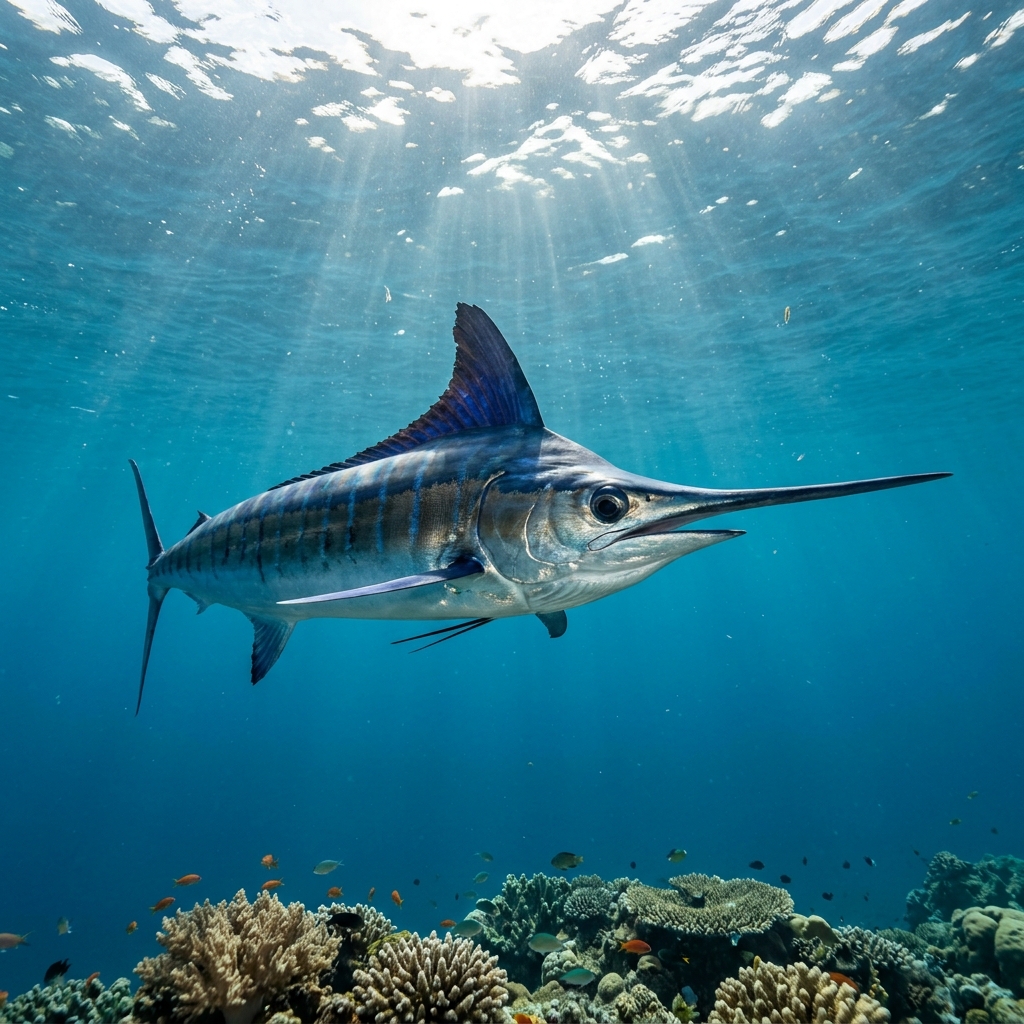
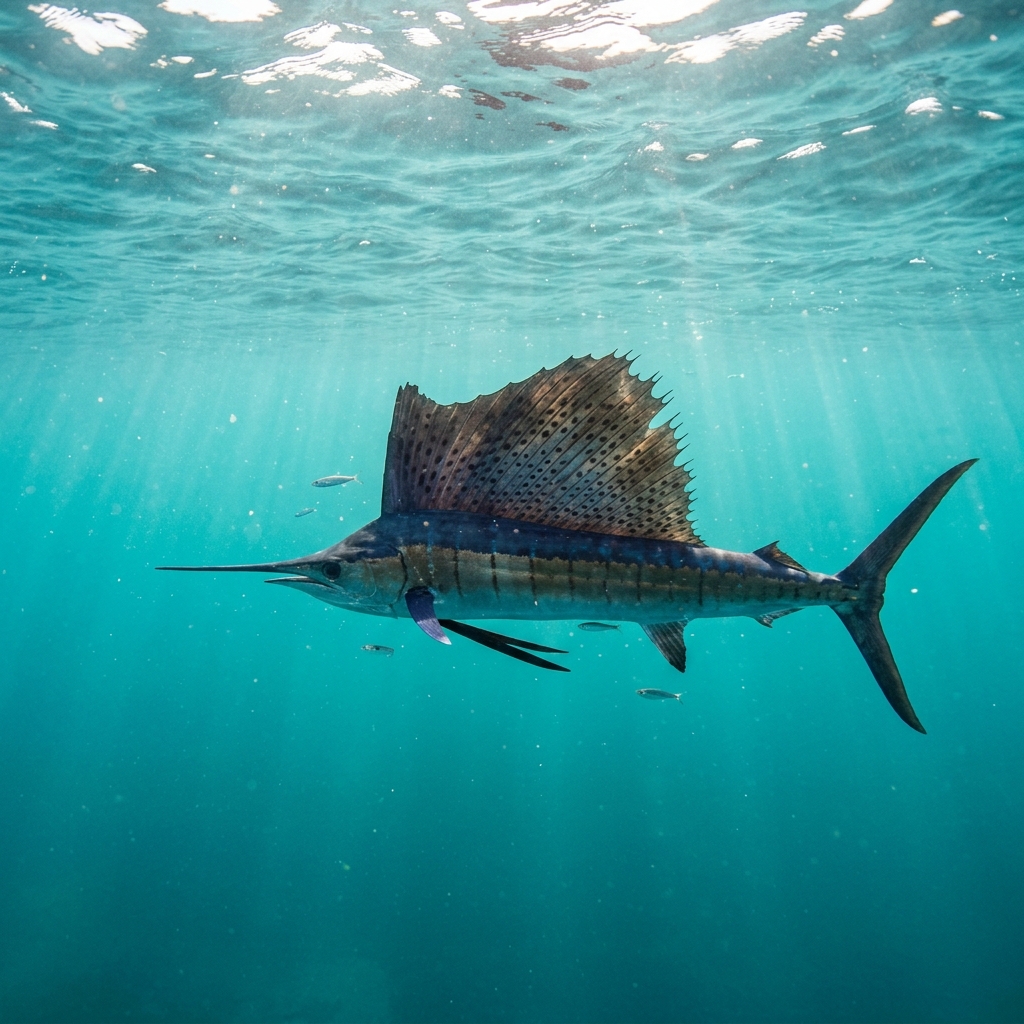
That enormous sail-like dorsal fin, stretching nearly the full length of the back and often taller than the body is deep, is the single feature that sets this fish apart from every other billfish you will encounter underwater. The body is dark blue-grey along the back, fading to silver-white on the flanks, and often shows faint pale vertical bars when active. The long, sharp bill is unmistakable, projecting well beyond the lower jaw. At full size this is a large, fast-moving animal that will typically pass through your field of view rather than linger.
Sailfish are pelagic (open-water) predators, so sightings typically happen in blue water rather than on the reef itself, often as the fish passes quickly through the water column. They are not known to be shy of divers but rarely slow down long enough for an extended encounter. When hunting schooling baitfish they sometimes work cooperatively, herding prey near the surface, and that is when snorkellers and divers in the right place at the right time get the most memorable views.
Sailfish can rapidly change colour, flashing electric blue and silver patterns across their flanks during a hunt, a form of visual communication thought to coordinate attacks among individuals working together.
No clear seasonal peak emerges from current dive data, so encounters should be treated as possible year-round wherever sailfish are present. The observed water-temperature range of roughly 18 to 28 °C is broad enough to cover most tropical and subtropical dive seasons.
Reef neighbours a diver could mistake it for. Use the identification notes above to tell them apart.
The species is recorded across a wide spread of tropical and warm-temperate waters, with the strongest site coverage in Florida and the broader US Southeast, followed by Queensland and Western Australia in Australia, and the Izu Peninsula region of Japan. Mexico's Baja California, Cuba, and Egypt's Saint Johns region are also well-represented destinations where divers have the best contextual chance of an encounter.
Mapping where Sailfish is logged…
Sailfish range widely through tropical and warm-temperate seas. The dive sites with the most coverage include Florida and the US Southeast, Queensland and Western Australia in Australia, Mexico's Baja California, and Egypt's Saint Johns region in the Red Sea. Cuba and Japan's Izu Peninsula are also notable areas.
Current dive data does not point to a single peak season, so sailfish can realistically be encountered year-round across their range. They favour water temperatures between roughly 18 and 28 °C, which covers most tropical dive conditions globally.
The huge sail-like dorsal fin, which runs almost the full length of the back and stands taller than the fish's body depth, is the definitive feature. Combined with the long pointed bill and the dark blue-grey back fading to silver flanks, there is nothing else in the ocean quite like it.
Sailfish are among the largest of the billfish family, commonly reaching around 2.5 to 3 metres in length. In the water they read as a long, streamlined, fast-moving animal, often gone before you have fully registered the size.
Sailfish are currently listed as Vulnerable on the IUCN Red List, meaning the population has declined enough to warrant concern. They face pressure from bycatch in commercial longline fisheries. Responsible wildlife watching, avoiding any chase or harassment underwater, supports conservation efforts.
The Sailfish is listed as vulnerable by the IUCN. Observe from a distance, avoid touching or feeding it, and report sightings to local marine research organisations.
Sailfish are assessed as Vulnerable on the IUCN Red List. If you encounter one, keep distance and avoid any behaviour that would interfere with feeding or cause the animal to expend unnecessary energy. Reporting sightings to local research programmes helps track population trends.
Site and sighting data is aggregated from diver logs, iNaturalist and GBIF. For taxonomy and conservation status: