Rhinopteridae spp.
Spot cownose rays along the New South Wales and Queensland coasts of Australia. Here's how to find them, recognise them, and what to expect underwater.
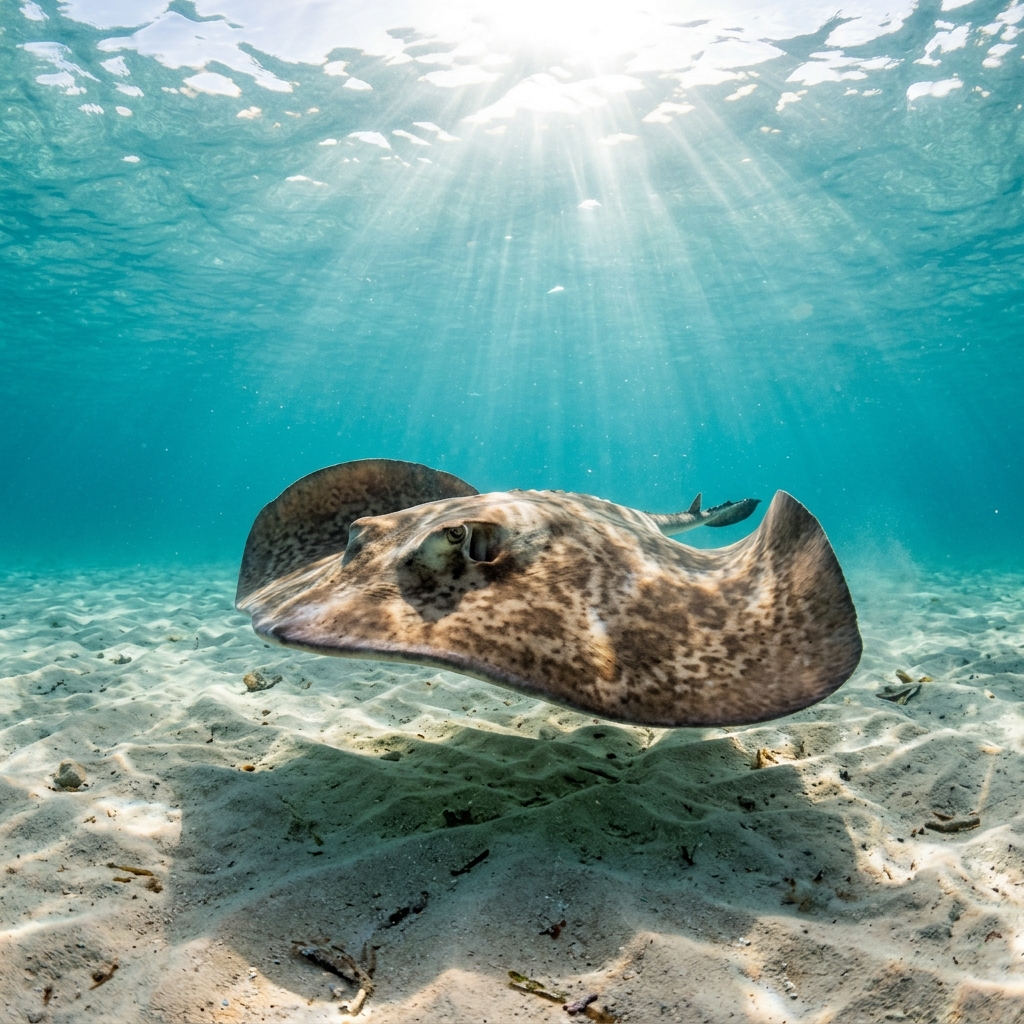
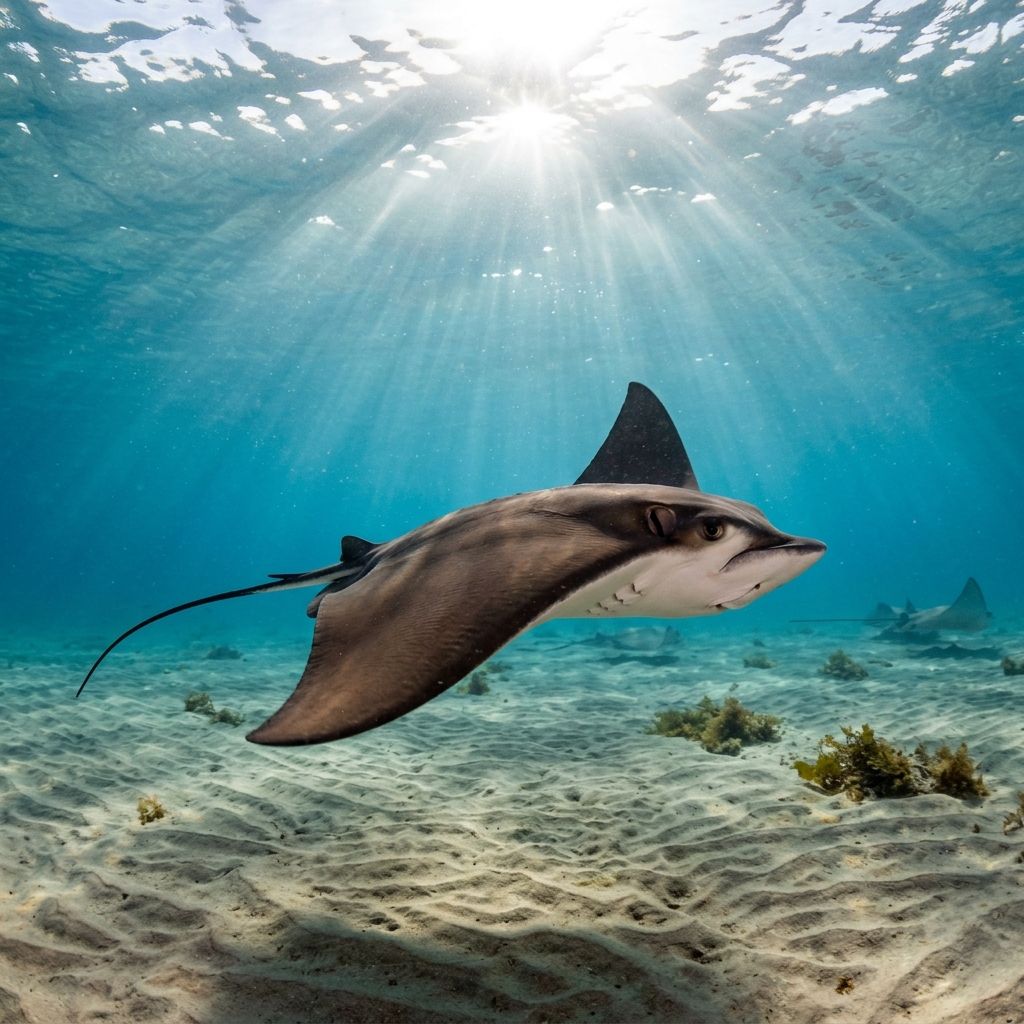
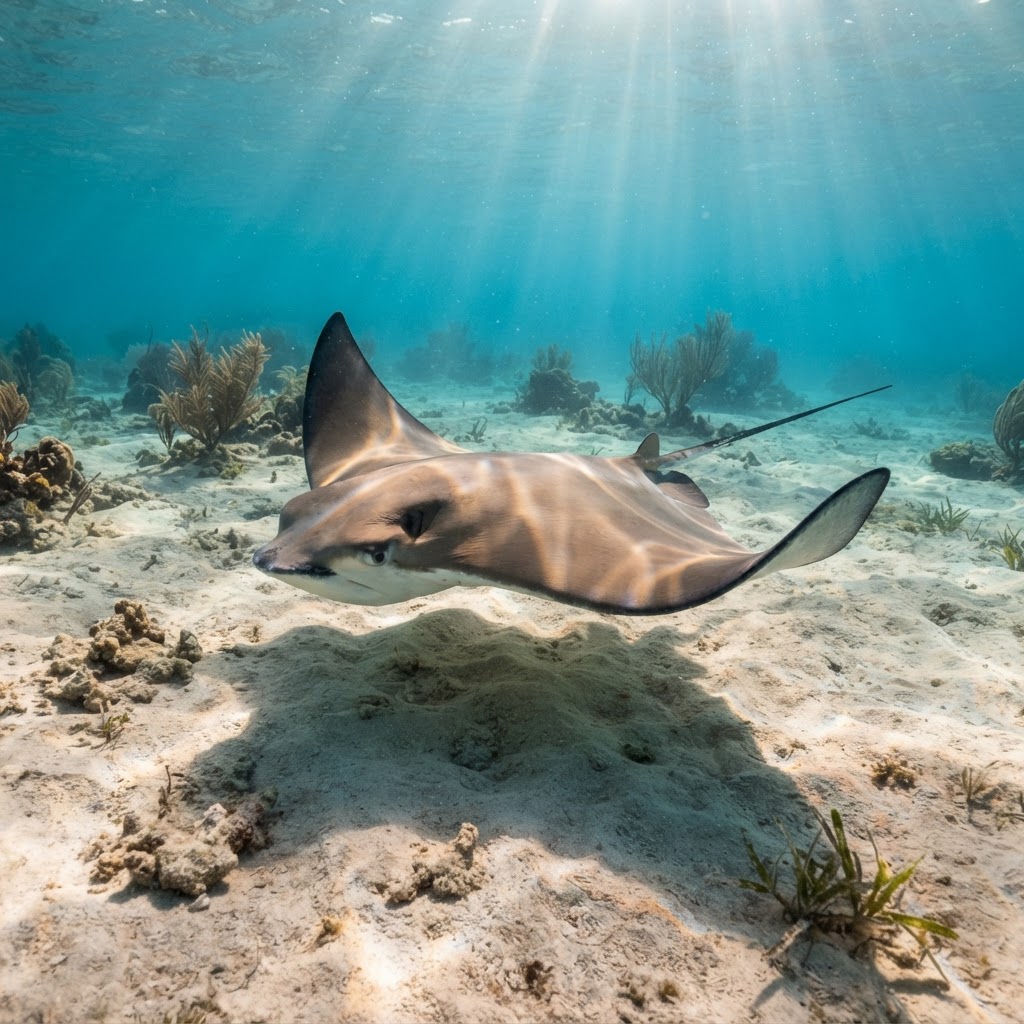
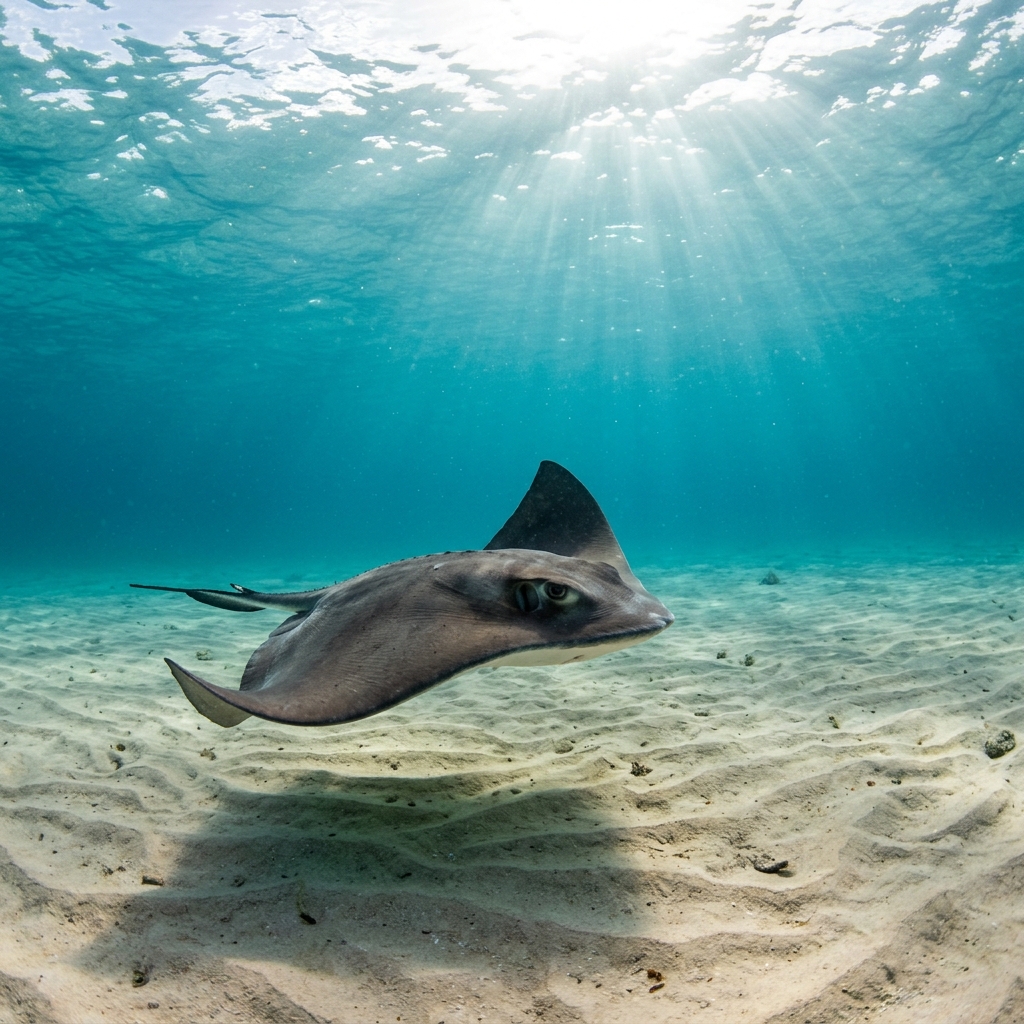
A distinctive notch or indentation in the centre of the head gives cownose rays their name and separates them instantly from other rays at a glance. The broad, diamond-shaped pectoral fins (the wide 'wings') taper to sharp tips, and the long, slender tail extends well beyond the disc. Colouration is typically brown to olive-grey on top with a pale underside. Males can be identified by a pair of claspers visible near the base of the tail.
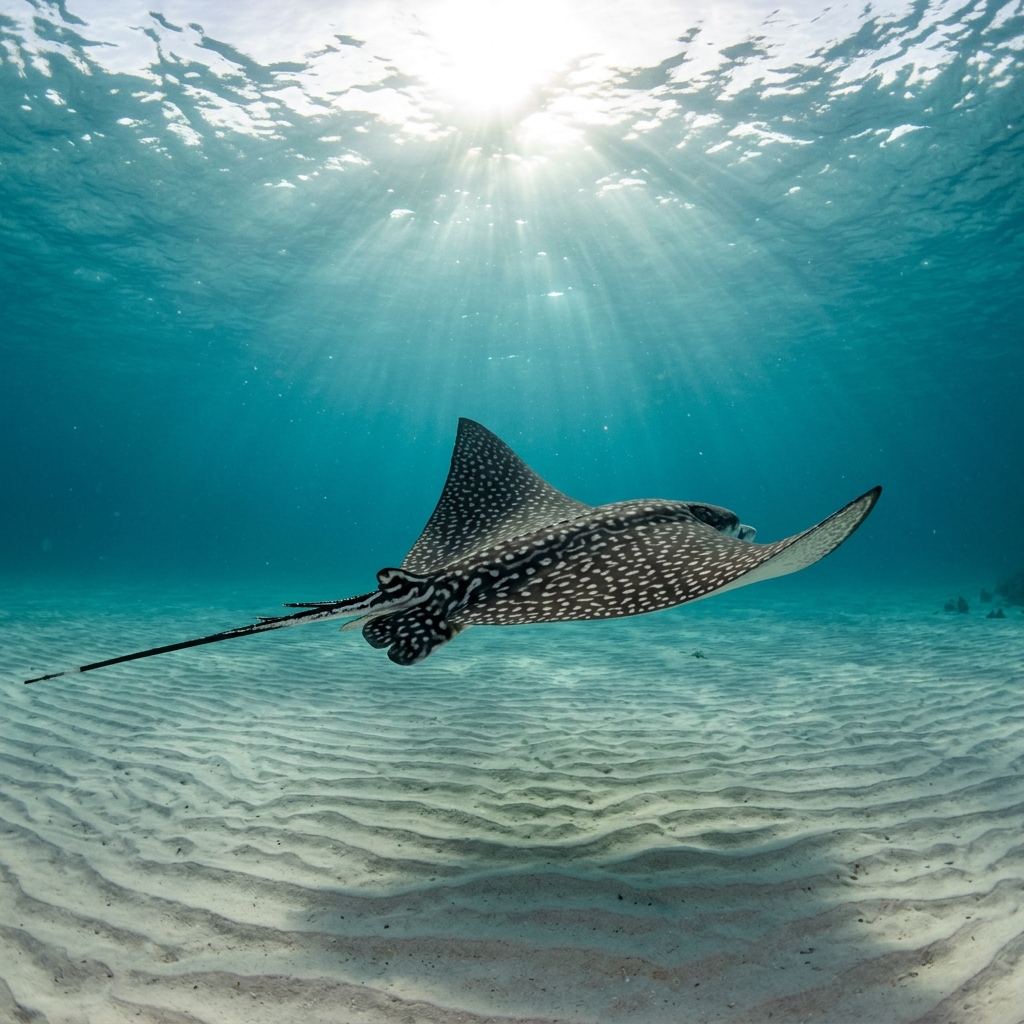
Cownose rays are typically encountered gliding steadily above sandy or mixed-bottom areas, using their large pectoral wings in a smooth, bird-like flapping motion. They tend to be wary of divers and will usually angle away rather than hover, so slow, non-pursuit behaviour gives the best chance of a close look. They are often seen singly or in small groups, occasionally cruising in open water just above the seafloor.
Cownose rays are strong, wide-ranging swimmers and are known in other parts of the world to form large migratory schools numbering in the thousands, though such aggregations have not been documented in the Australian records logged here.
There is not enough seasonal data to point to a peak month, so cownose rays should be treated as a year-round possibility in Australian waters. The observed water-temperature range spans roughly 8 to 27 °C, suggesting they can tolerate a wide range of conditions along the temperate-to-subtropical Australian coast.
Reef neighbours a diver could mistake it for. Use the identification notes above to tell them apart.
All logged sightings are from Australia, with the overwhelming majority concentrated along New South Wales, making that coastline the go-to destination for this family. A small number of records also come from Queensland. Encounters tend to be uncommon rather than reliable, so treat any sighting as a bonus rather than a certainty.
Mapping where Cownose Rays is logged…
Logged dive encounters are concentrated in Australia, particularly along the New South Wales coast, with a smaller number of records from Queensland. Sightings are uncommon at most sites, so they are a welcome surprise rather than a guaranteed encounter.
There is not enough monthly sighting data to identify a clear season in Australia. The observed temperature range is broad, from around 8 to 27 °C, which suggests they may be present year-round depending on local conditions.
Look for the distinctive notch or double-lobe shape at the front of the head, which no other common ray in the region shares. The wings taper to sharp tips and the tail is very long and whip-like. Overall colouration is brown to olive-grey above with a pale belly.
Cownose rays are not considered dangerous to divers. They are shy animals that typically swim away when approached. Like all rays with a tail spine, it is sensible to avoid handling or cornering them, but unprovoked incidents are not documented.
Size data for this family varies by species, but most cownose rays reach disc widths in the range of 80 to 120 cm, with some individuals growing larger. Females tend to be slightly larger than males on average.
Site and sighting data is aggregated from diver logs, iNaturalist and GBIF. For taxonomy and conservation status: