Rhinoptera steindachneri
Spot the Pacific Cownose Ray in Mexico, the Galápagos and Coiba. Here's how to ID it underwater and where divers have logged it along the Eastern Pacific coast.
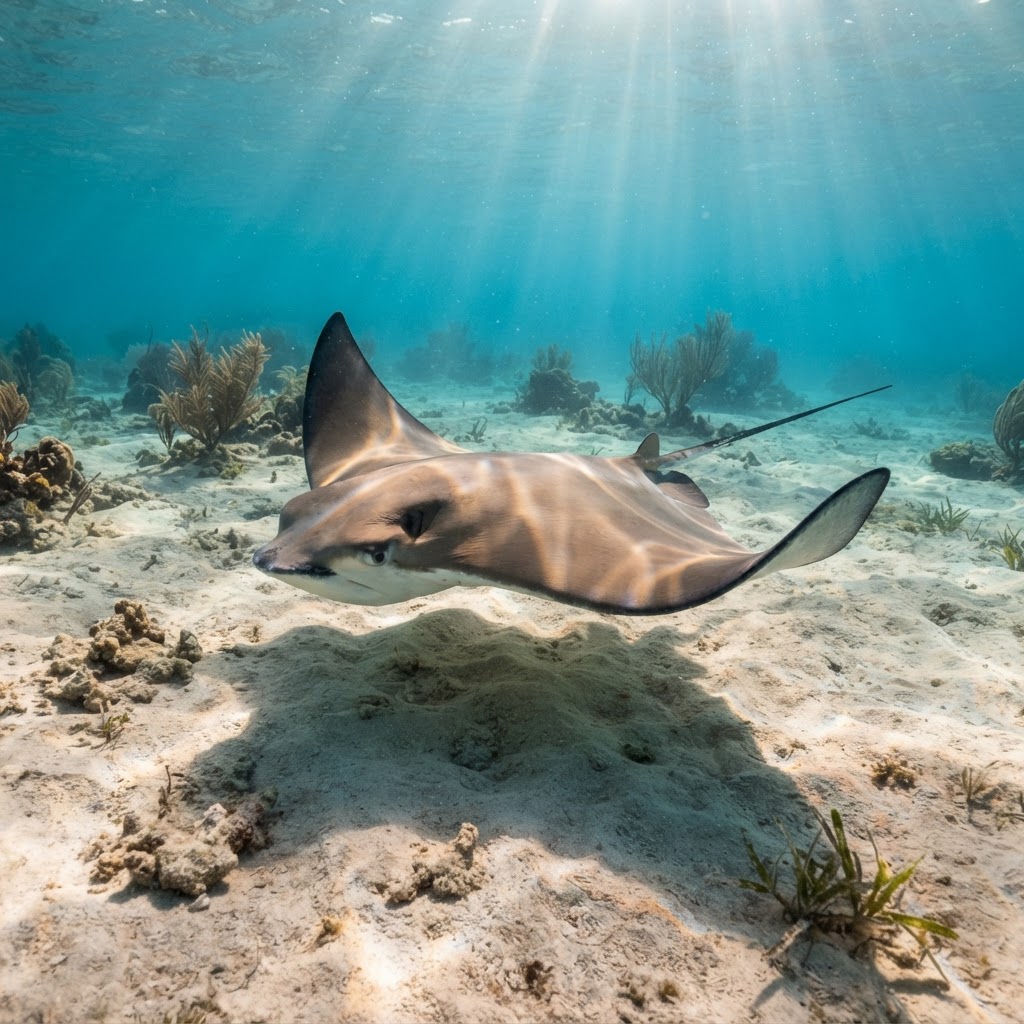
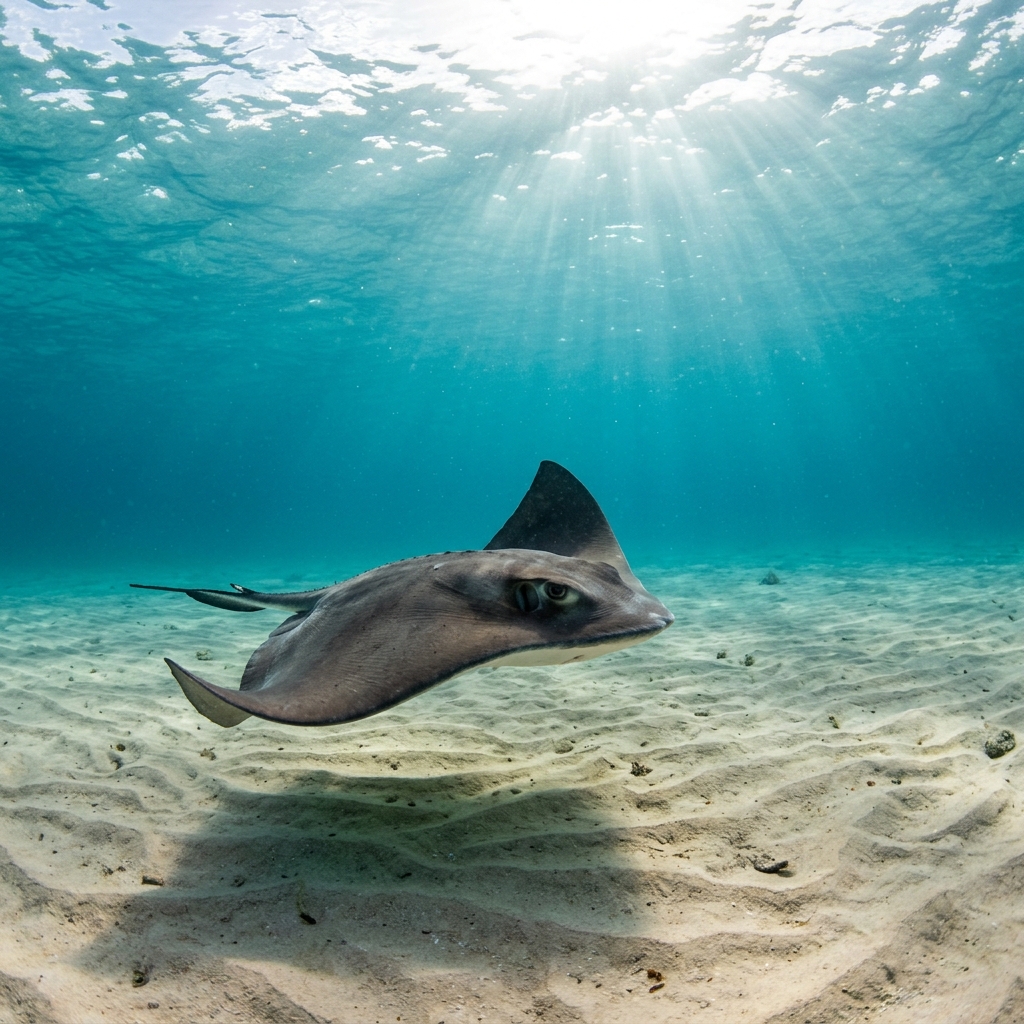
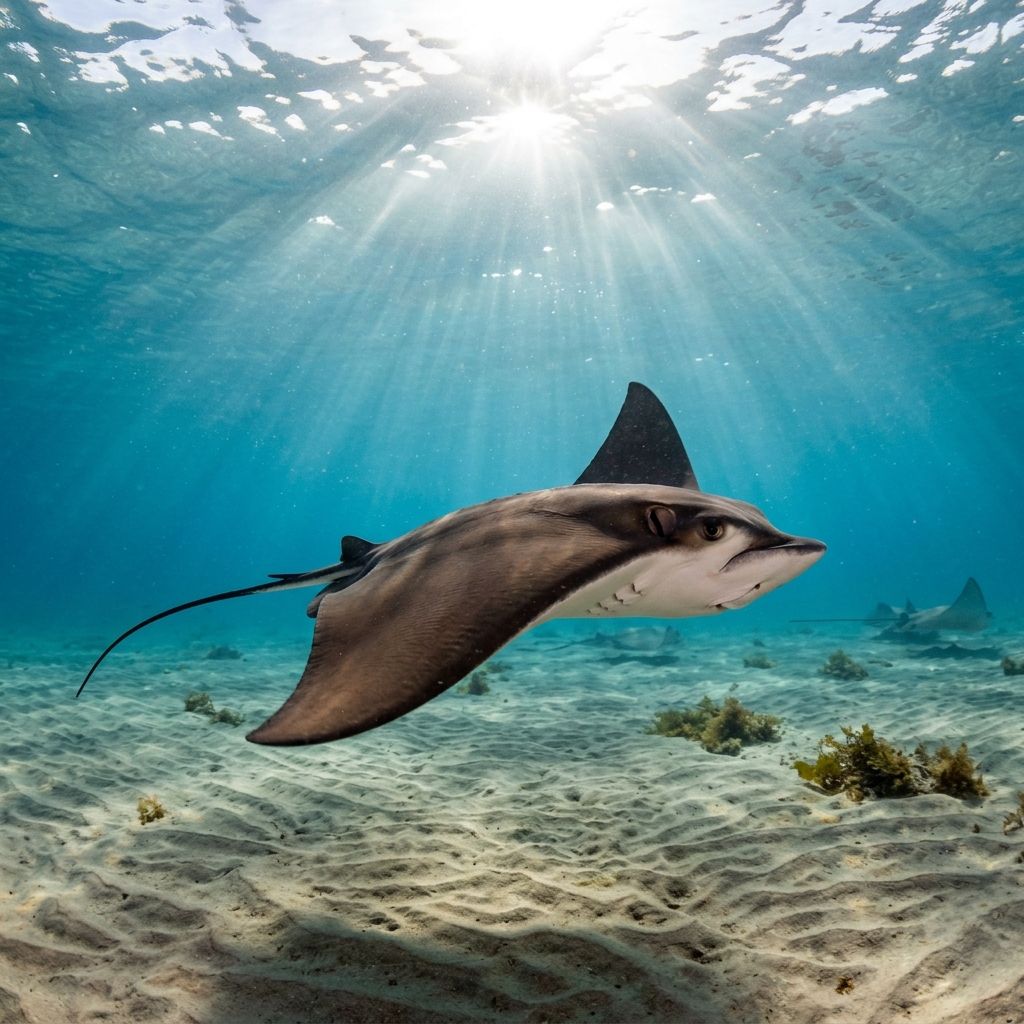
A broad, diamond-shaped pectoral disc with a chocolate-brown to olive-grey dorsal surface and a white to pale underside is the first thing you notice. The clinching feature is the deeply bilobed (double-lobed) snout, which gives the front of the head a distinctive notched, cow-nose appearance unlike most other rays. The long, whip-like tail is noticeably longer than the disc width, typically with one or more venomous spines at its base. In the water, the wingbeat-style swimming motion makes it instantly recognisable as a cownose rather than a stingray.
Pacific Cownose Rays are typically seen cruising slowly in mid-water or just above sandy or rocky bottoms, often alone or in small groups. They use their distinctive snout and specialised crushing tooth plates to dig out and grind hard-shelled invertebrates from the substrate. Encounters with divers tend to be relaxed; the ray will usually continue on its path or angle away gradually rather than bolting.
Like other cownose rays, this species gives birth to fully developed, live young (a process called aplacental viviparity), typically producing just one or two pups per litter, which makes population recovery from decline particularly slow.
No clear seasonal peak has emerged from the data, so it is treated as a year-round resident across its range. The species has been observed in water temperatures from roughly 20 to 29 °C, which covers most of its Eastern Pacific habitat throughout the year.
Most of the logged dive sites fall along the Eastern Pacific coast, with Mexico leading the count, particularly in Baja California and the Revillagigedo Archipelago. The Galápagos Islands of Ecuador and Coiba National Park in Panama are also strong regions for encounters. Costa Rica's Nicoya Peninsula and Isla del Caño round out the core range.
Mapping where Pacific Cownose Ray is logged…
The best-documented dive regions are Baja California and the Revillagigedo Archipelago in Mexico, the Galápagos Islands in Ecuador, and Coiba National Park in Panama. Costa Rica's Nicoya Peninsula and Isla del Caño are also solid options along this Eastern Pacific range.
No concentrated season has been identified from diver observations, so encounters are possible year-round. The species is comfortable in water temperatures from around 20 to 29 °C, which spans most conditions found at its key Eastern Pacific dive sites throughout the year.
Look for the deeply bilobed, notched snout that sets it apart from all common stingrays. The broad diamond-shaped disc is dark brown above and white below, and the tail is long and whip-like. That double-lobed cow-nose front end is the single most reliable field mark.
They are not considered dangerous. Like all cownose rays they carry venomous tail spines, but these are purely defensive and only a risk if the ray is grabbed, stood on, or cornered. Normal dive behaviour around them carries essentially no risk.
Precise size data for this species is limited in the scientific literature, but cownose rays in the Rhinoptera genus typically reach disc widths of around 60 to 90 cm in adulthood. In the water they appear noticeably smaller than a manta or eagle ray.
They are currently listed as Near Threatened by the IUCN. The main concern is that females typically produce only one or two pups per litter, meaning populations recover slowly from any sustained pressure. Divers can help by maintaining distance and reporting sightings to citizen-science platforms.
Site and sighting data is aggregated from diver logs, iNaturalist and GBIF. For taxonomy and conservation status: