Rhinoptera neglecta
Diver-logged in New South Wales, this angular brown ray glides over sandy reef edges in 19-25C water year-round.
Safety warning
It carries a venomous spine at the base of the tail, the same defensive weapon found in other rays, and can deliver a serious sting if stepped on or handled. Give it space, avoid touching or cornering it, and shuffle your feet if you're wading through sandy shallows where one might be resting.
If you're stung
Venomous tail barbGeneral first-aid guidance, not a substitute for professional medical care. In an emergency, call your local emergency number.
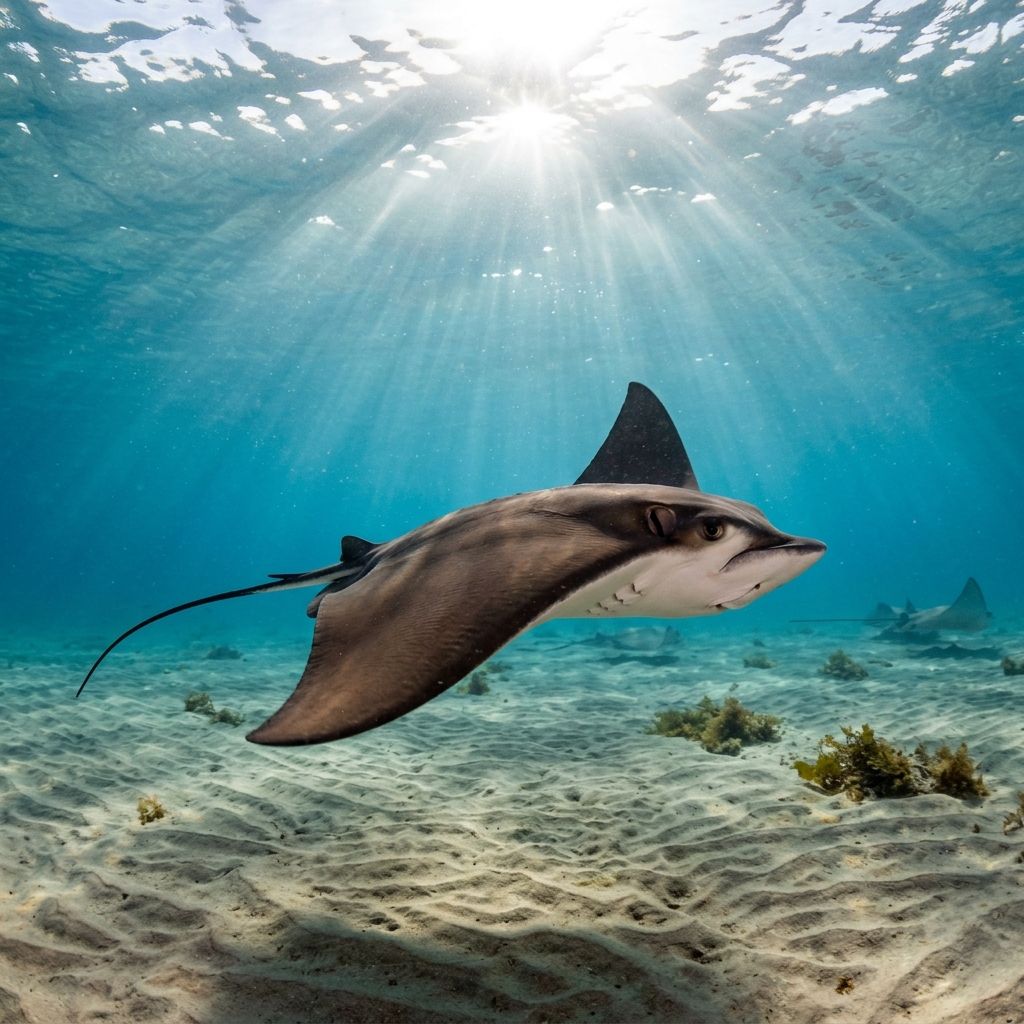
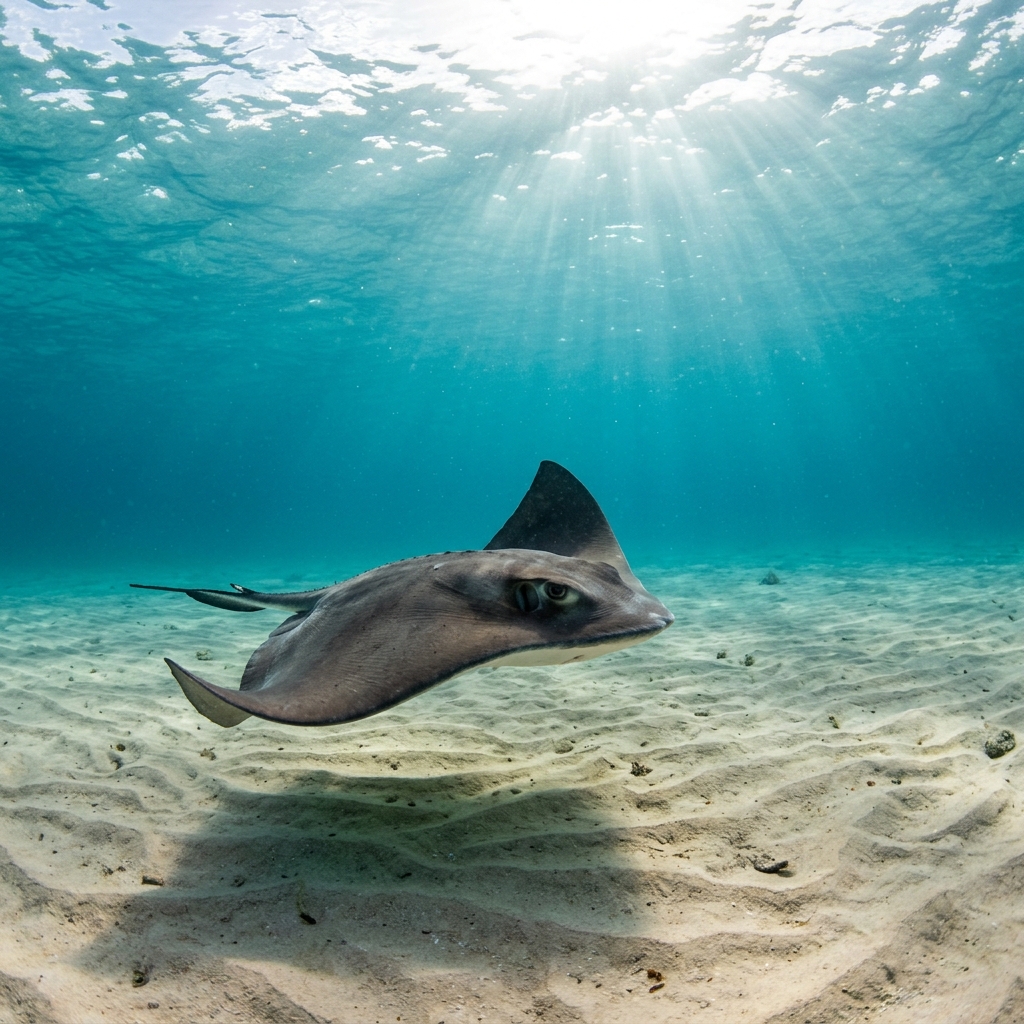
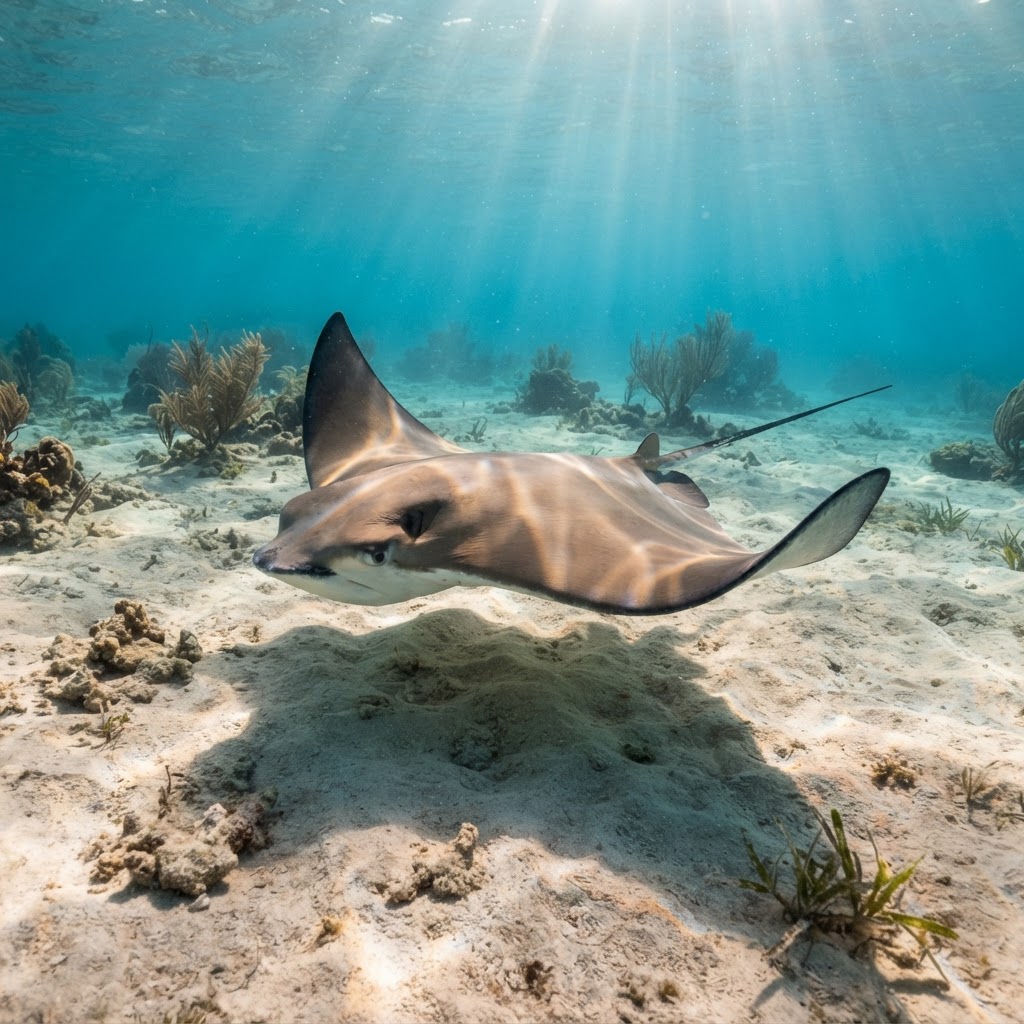
Look for a flattened, diamond-shaped brown body about 60cm across with a distinctive notched or double-lobed head profile, which gives it the 'cownose' look. It swims with slow, wing-like beats of its pectoral fins, often close to the bottom or in loose groups. The tail is long and whip-like, trailing well behind the body, and there are no obvious spots or bright markings, just a plain tan-to-brown upper surface fading to pale underneath.
Divers typically spot it cruising slowly over sand patches or reef edges, sometimes alone and sometimes in small loose groups, likely working the bottom for buried prey. It tends to keep a comfortable distance and will usually move off unhurried rather than bolt if approached calmly. Most logs describe fairly open, low-relief terrain rather than tight reef structure, so keep an eye on sandy channels and flats near the reef.
Cownose rays feed by grubbing through sand and sediment for buried molluscs and crustaceans, using their split, cow-like snout to root out prey that's out of sight to divers.
No clear seasonal pattern shows up in the sighting data, so it's best treated as a year-round possibility. It's been logged in water from about 19 to 25C, a range that covers much of the diving season along the New South Wales coast.
Reef neighbours a diver could mistake it for. Use the identification notes above to tell them apart.
Most reliably logged along New South Wales in Australia, with sites also reporting it in Queensland. Sightings are uncommon rather than guaranteed at most of these locations, so treat it as a possible bonus rather than a target species on any single dive.
Mapping where Australian Cownose Ray is logged…
New South Wales is the strongest area for sightings, with additional logs from Queensland. Even there it's an uncommon find, so it's a nice surprise rather than a sure thing on any given dive.
There's no strong season in the data, so sightings happen year-round. It's been recorded in water between roughly 19 and 25C, which spans most of the diving calendar in its range.
They carry a venomous tail spine and can sting if threatened or stepped on, but they're not aggressive towards divers. Keep your distance, don't handle them, and watch your footing in sandy areas.
Look for a brown, diamond-shaped body around 60cm across with a notched, double-lobed head and a long whip-like tail. It swims with slow wingbeats low over sand or reef edges rather than darting around.
They typically reach around 60cm across the body, making them a mid-sized ray rather than a giant. The tail adds considerable extra length beyond the body itself.
It uses its split, cow-nose-shaped snout to root through sand for buried molluscs and crustaceans rather than hunting in open water. Watching one work a sand patch is often the giveaway sign it's nearby.
Site and sighting data is aggregated from diver logs, iNaturalist and GBIF. For taxonomy and conservation status: