Heterodontus zebra
Spot the zebra-striped bullhead shark across Japan's Izu Peninsula and Shikoku reefs. Here's where divers find it and how to tell it apart.
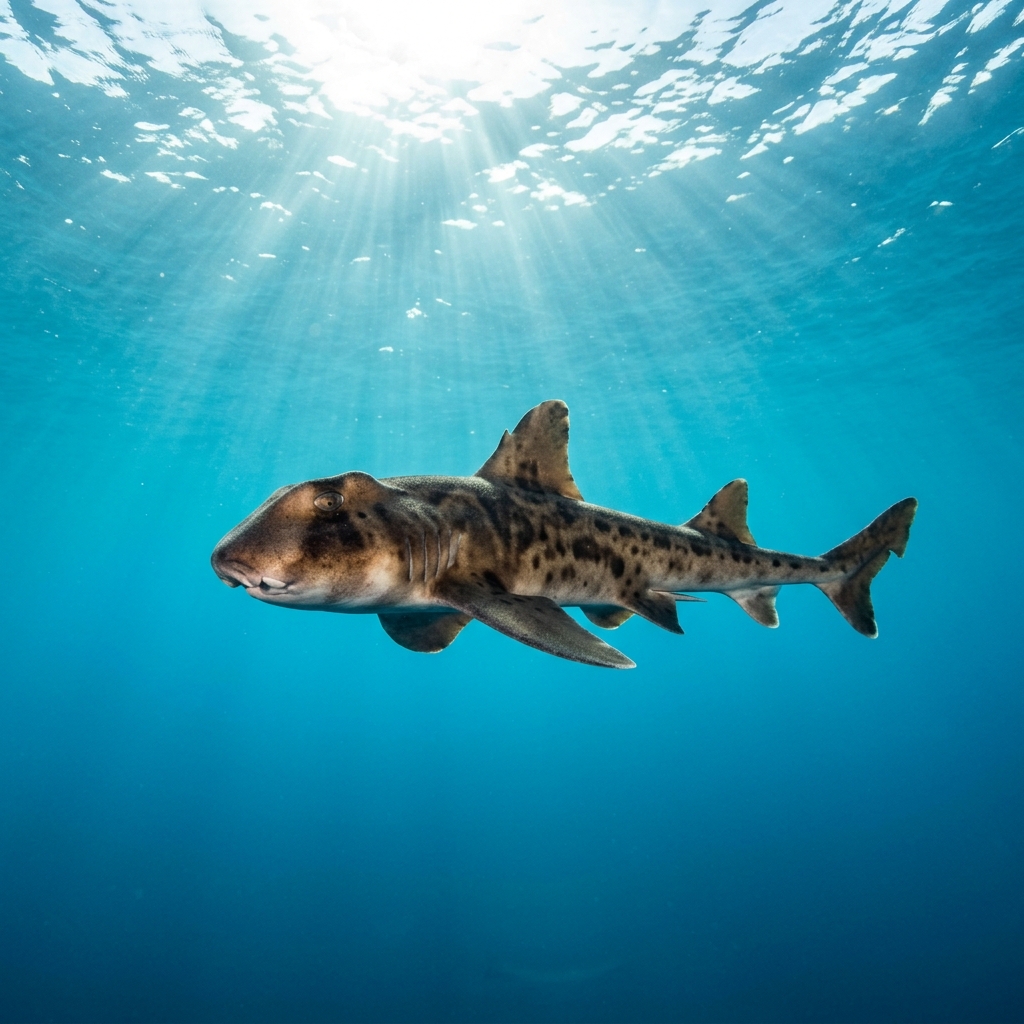
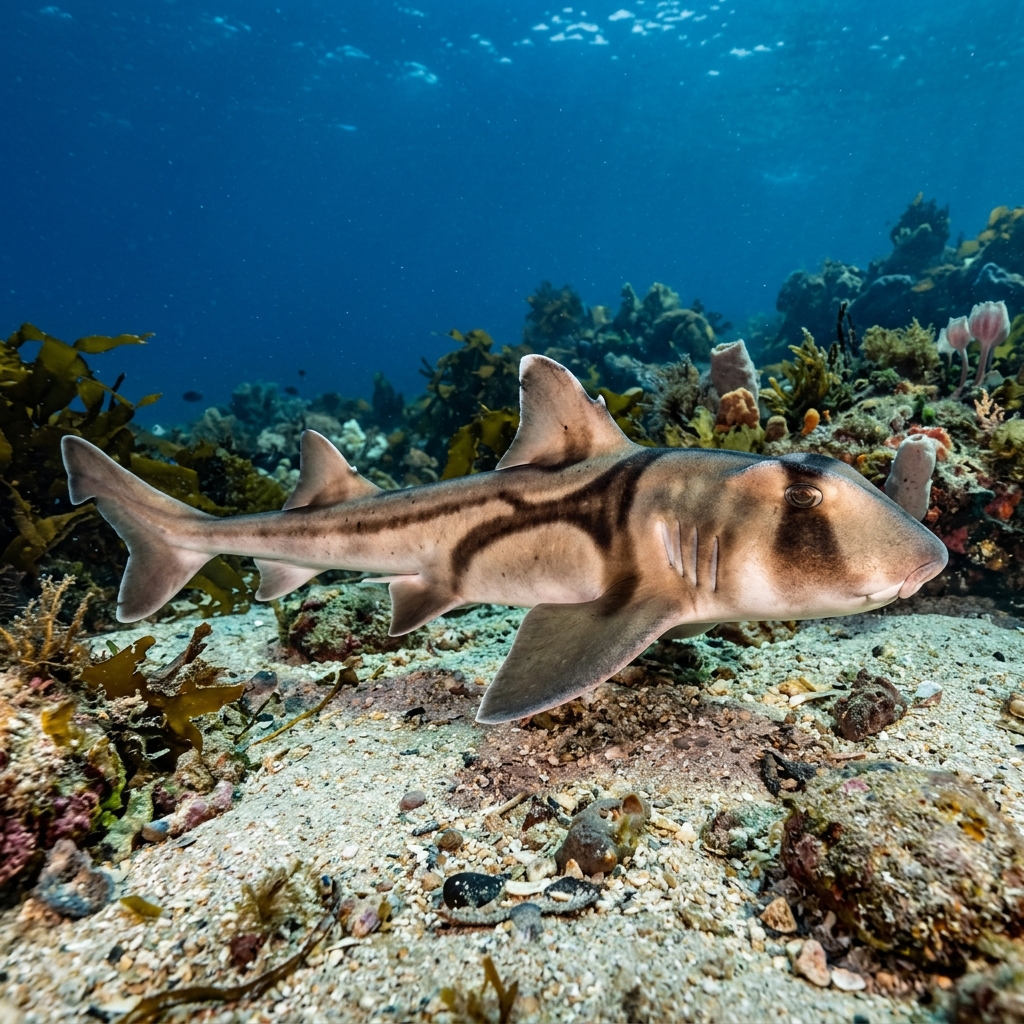
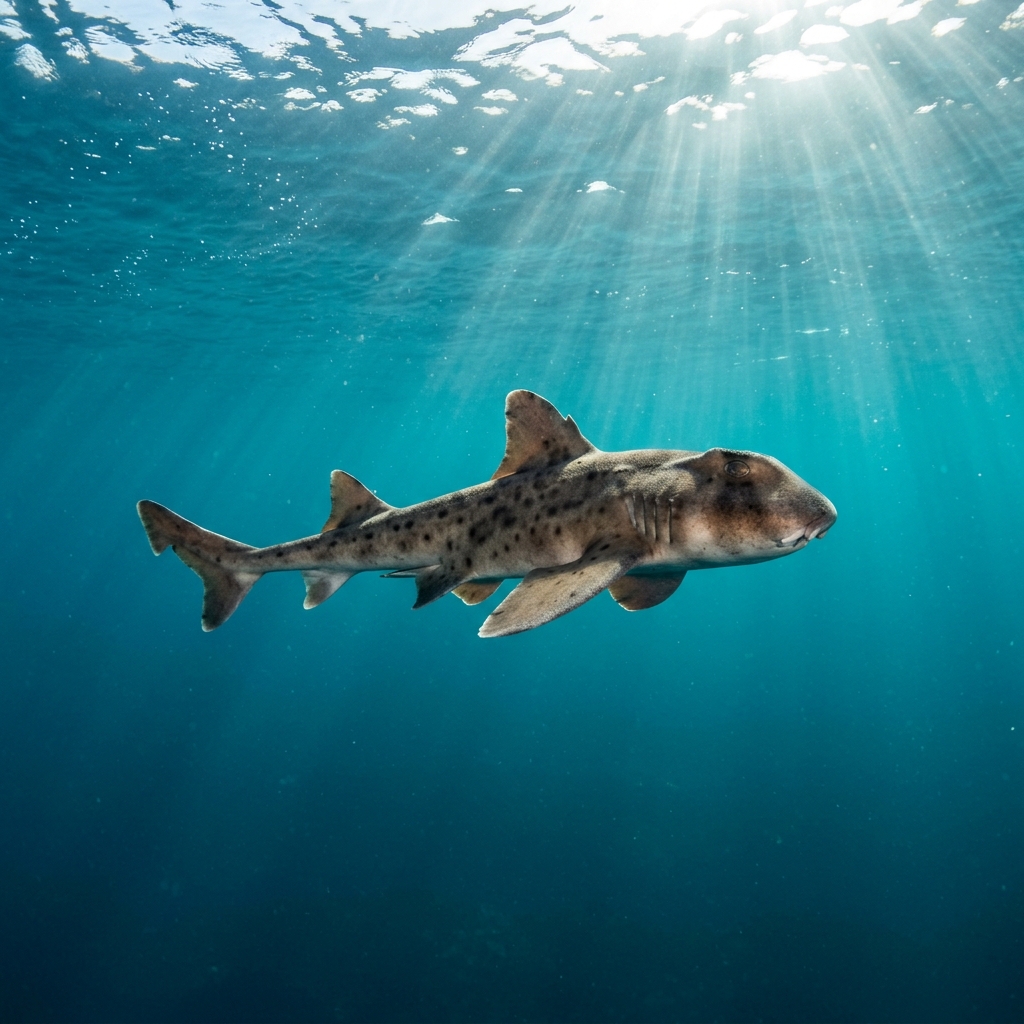
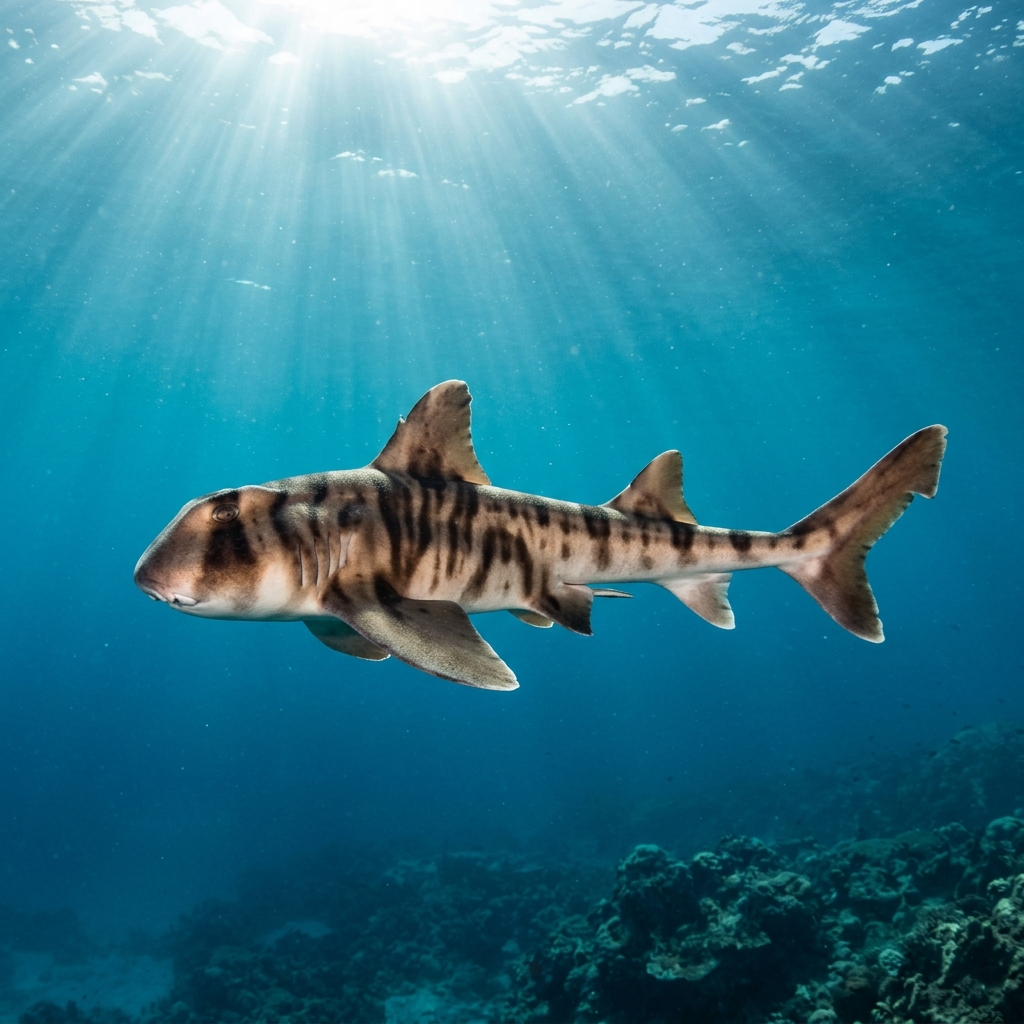
Bold, dark vertical stripes on a pale cream or whitish body make this one of the easier bullhead sharks to pick out underwater. It has the family's characteristic pig-like snout with prominent ridges above each eye, giving it an almost sculpted, angular head. Adults are a slender, elongated bullhead by comparison to relatives, and the striped pattern runs from head to tail rather than fading mid-body. The two dorsal fins each carry a stout spine at the leading edge, a useful confirmation if you get a close look.
Like other members of the family, zebra bullhead sharks are nocturnal hunters that spend the day resting wedged into rock crevices, under ledges, or among kelp and reef rubble. On night dives they become active, moving slowly along the bottom in search of hard-shelled invertebrates. They are not wary of divers but are easily disturbed if approached directly, so a slow, low approach gives the best view.
Heterodontid sharks lay uniquely shaped eggs with a spiral, auger-like casing that the female screws into rock crevices by mouth to anchor them against currents. If you find one of these corkscrew egg cases on a Japanese reef, you are almost certainly looking at evidence of a local resident.
There is not yet enough monthly sighting data to pinpoint a peak season, so it is best treated as a year-round target wherever it occurs. Its observed water-temperature range of roughly 15 to 27 °C fits the temperate-to-warm conditions found along Japan's Pacific coast across most of the year.
Reef neighbours a diver could mistake it for. Use the identification notes above to tell them apart.
Japan dominates sightings by a wide margin, with the Izu Peninsula and Hachijojima together accounting for the largest concentration of known sites, followed by the Shikoku and Chugoku coasts. Beyond Japan, divers have a reasonable chance along the Western Australian coast and around Hainan, China, with smaller pockets of sites recorded in Vietnam's Cham Islands, Taiwan, and South Korea.
Mapping where Zebra Bullhead Shark is logged…
Japan is by far the best destination, particularly the Izu Peninsula, Hachijojima, and the Shikoku and Chugoku coastlines. Outside Japan, Western Australia and Hainan, China are the next most promising areas, with additional sites recorded around Vietnam's Cham Islands, Taiwan, and South Korea.
Sighting records do not yet show a clear seasonal peak, so diving year-round is a reasonable approach. Along Japan's temperate Pacific coast, where most sites cluster, water temperatures stay within the shark's comfort range for much of the year.
Look for bold, dark vertical stripes running the full length of a pale body and the heavy ridges arching above each eye. The striped pattern separates it from the Port Jackson shark, which has a harness-like saddle mark rather than full-body stripes, and from the crested bullhead shark, which carries a more muted, blotchy pattern.
Zebra bullhead sharks typically reach around 120 cm in length, though precise size data from dive observations is limited. They appear slender compared to some bullhead relatives, and on the reef they read as a medium-small, bottom-hugging shark.
No. Zebra bullhead sharks pose no threat to divers. They are slow-moving, bottom-dwelling animals that rely on camouflage and crevice-sheltering rather than flight or aggression. A slow, calm approach is all that is needed to observe them without causing disturbance.
Site and sighting data is aggregated from diver logs, iNaturalist and GBIF. For taxonomy and conservation status: