Heterodontus francisci
Find horn sharks along the US Pacific Coast and Baja California in water from 16-24°C. Best sightings run Jan, Oct. Here's where to look and what to expect.
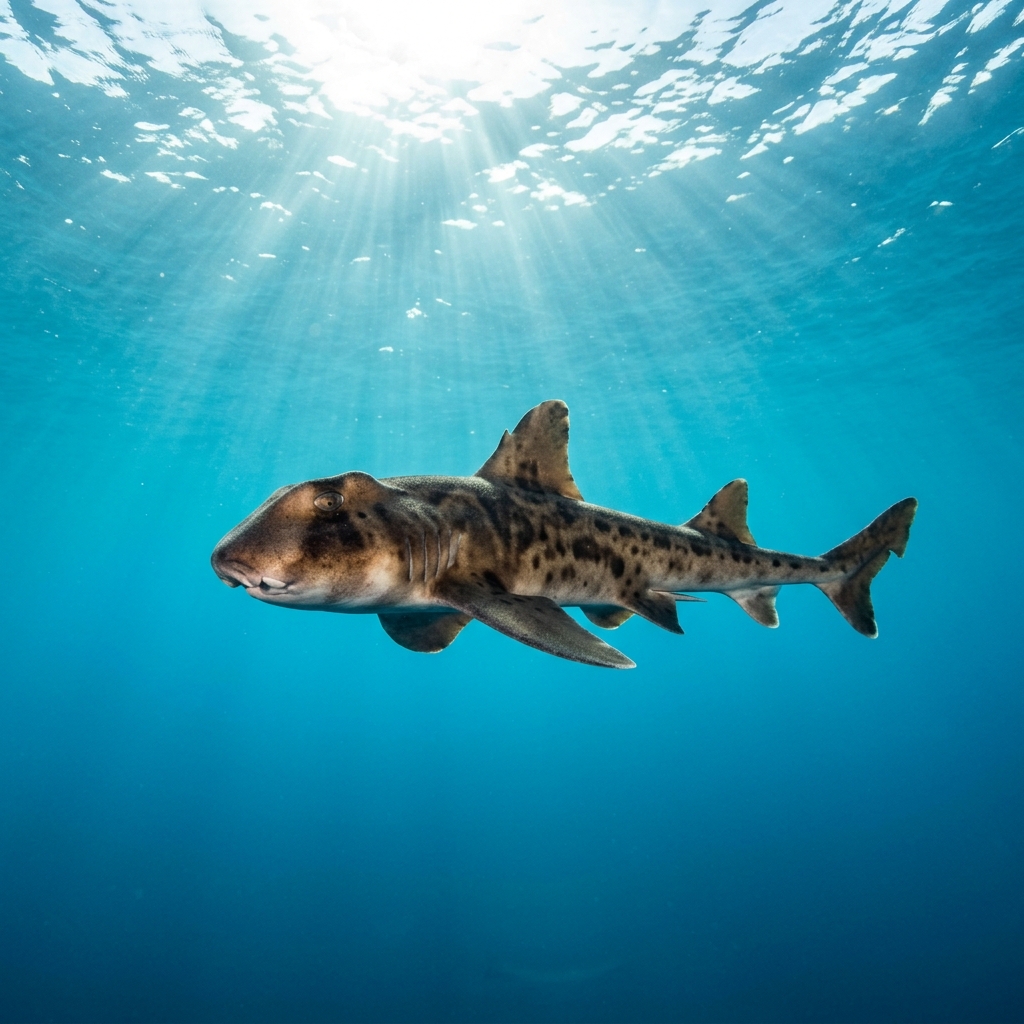
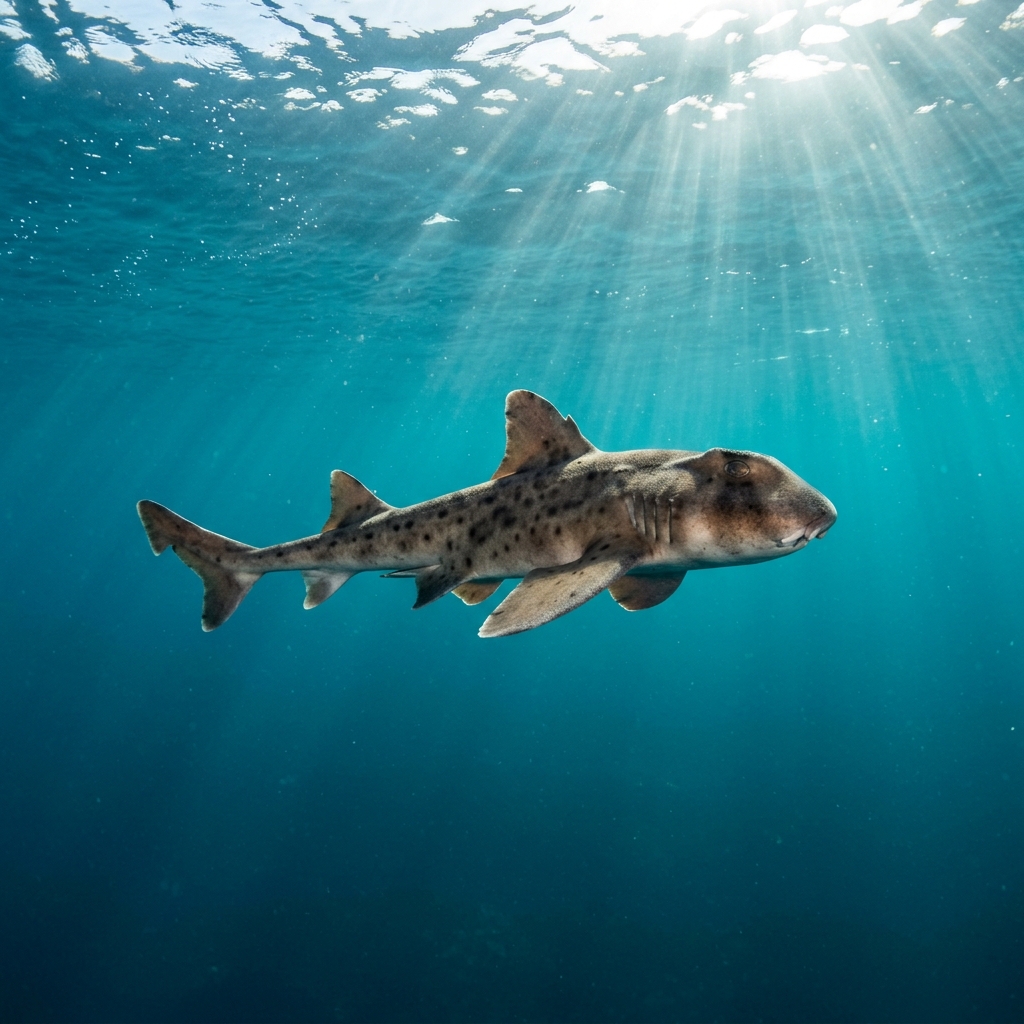
A stocky, blunt-headed shark with a distinctly pig-like snout and two prominent spines sitting in front of each dorsal fin, the feature that gives it its family name. Body colouration is brown or grey with scattered dark spots across the head and flanks. Adults typically settle on the bottom, so you are looking down at a hunched, heavy-bodied shark rather than one actively swimming mid-water. Juveniles carry more strongly contrasting spots that fade somewhat with age.
Horn sharks are nocturnal hunters that spend the day wedged into rocky crevices, under ledges, or resting motionless on sandy patches among kelp, which is exactly where divers find them. They are slow-moving and generally indifferent to a calm diver who approaches without rushing; shine a torch into a rocky nook during a night dive and you may catch one actively foraging. By day, the classic encounter is simply spotting a small, spotted shark parked on the bottom, looking entirely unbothered.
Horn sharks lay distinctive spiral-shaped egg cases, sometimes called 'auger eggs', which the female uses her mouth to wedge into rock crevices. If you find one of these corkscrew capsules on a dive, it is a strong indicator of local breeding activity.
Northern Hemisphere sightings concentrate between January and October, suggesting the species is most accessible to divers across the cooler months of the year, which aligns with its preference for water between roughly 16 and 24°C. Midsummer to late autumn on the US Pacific Coast and Baja California covers the heart of that window.
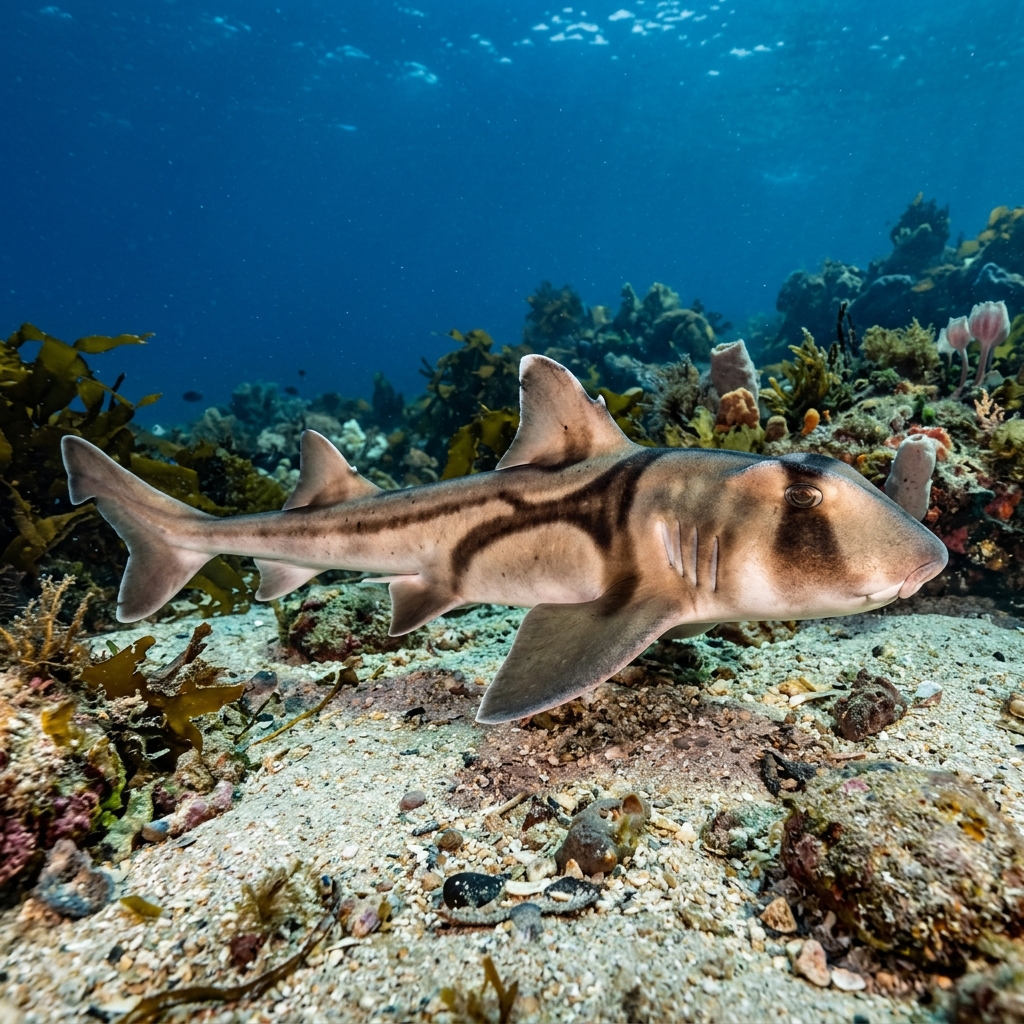
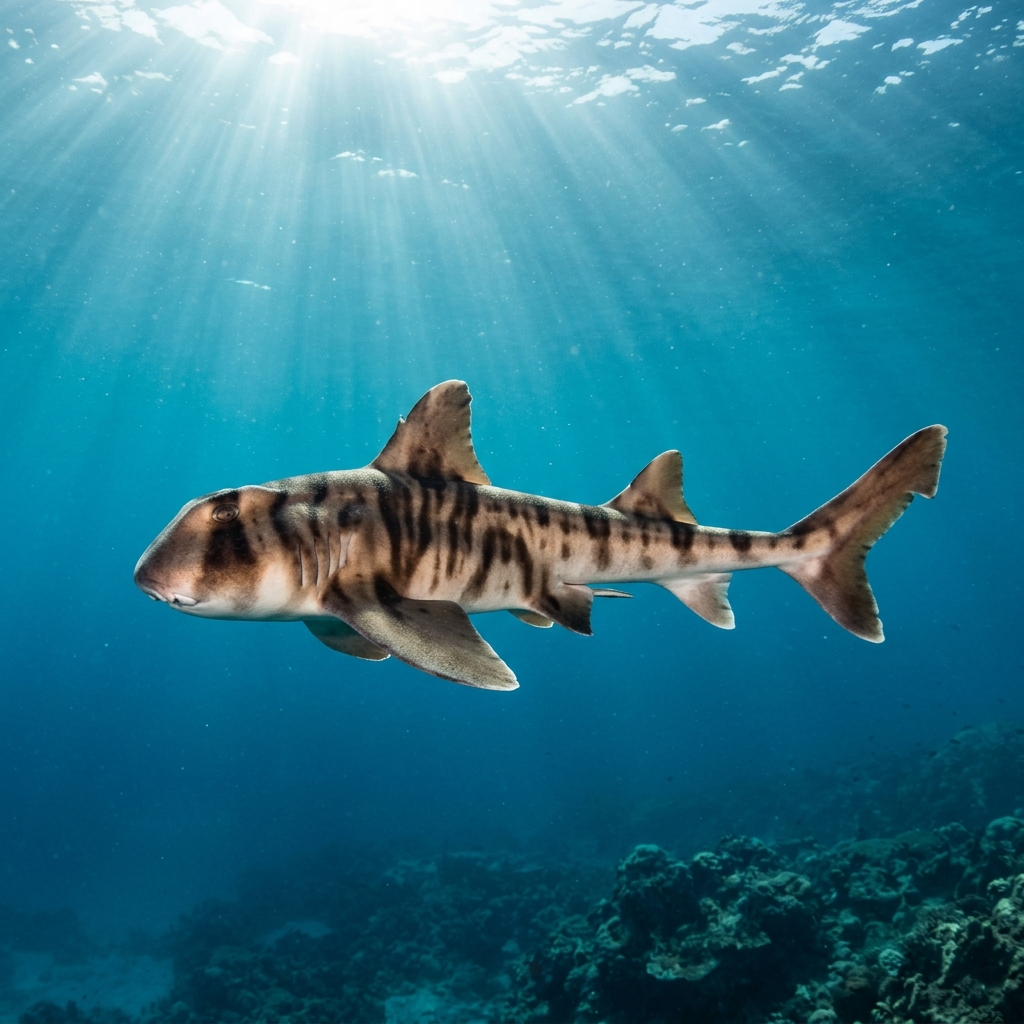
Reef neighbours a diver could mistake it for. Use the identification notes above to tell them apart.
The overwhelming majority of logged sightings come from the US Pacific Coast, making California the go-to destination; rocky reefs and kelp beds from southern to central California produce the most encounters. Baja California, both the Northern Pacific strip and the broader Baja region, is the next most reliable area, and a smaller but consistent population turns up in the Galapagos Islands.
Mapping where Horn Shark is logged…
The US Pacific Coast, particularly California's rocky reefs and kelp forests, is by far the most reliable place to see them. Baja California in Mexico is the next best option, and the Galapagos Islands offer sightings further south for divers already in that region.
On the US Pacific Coast and Baja California, sightings are reported from January through October, with the species absent or rarely logged in November and December. They favour cooler water around 16-24°C, so the productive season tracks that temperature range.
No. Horn sharks are small, slow, and not considered dangerous. They will generally stay put or move away slowly if approached. Avoid handling them, they can bite if harassed, but an unprovoked encounter carries no real risk.
Look for the blunt, pushed-in snout, the two obvious spines in front of each dorsal fin, and a spotted brown or grey body resting on the bottom. No other shark in its California range has that combination of pig-like face and prominent dorsal spines.
Horn sharks are a small species, typically reaching around 1 metre in length at adulthood. In the water they look compact and heavyset rather than slender, which helps distinguish them from other bottom-resting sharks.
They are crushers rather than biters, using broad, flat molar-like teeth at the back of the jaw to crack open sea urchins, crabs, shrimps, and hard-shelled molluscs. Their teeth can take on a purple tinge from eating urchins, an easy ID clue if you get close enough.
Site and sighting data is aggregated from diver logs, iNaturalist and GBIF. For taxonomy and conservation status: