Xestospongia muta
Spot Caribbean Barrel Sponges on reefs across Roatán, Grand Cayman, and the Yucatán year-round. ID tips, top dive sites, and sighting frequency explained.
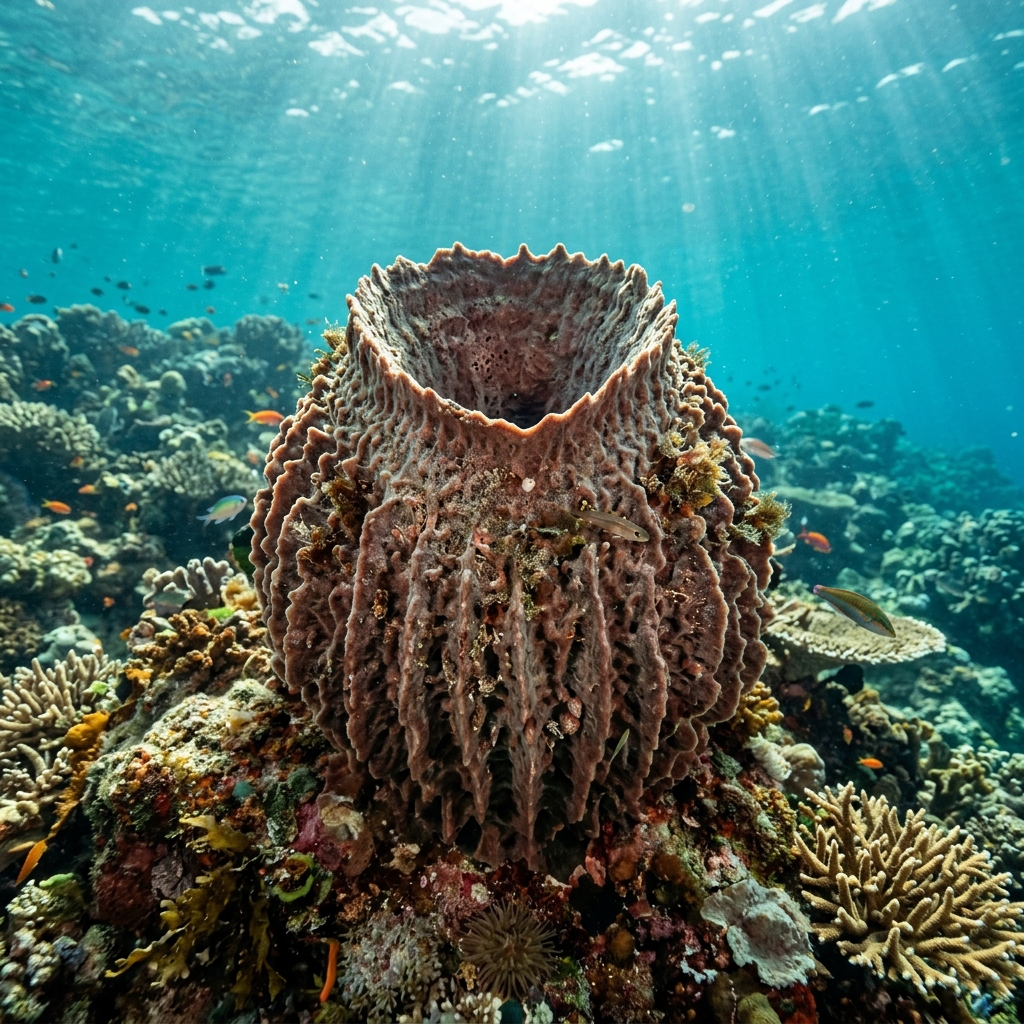
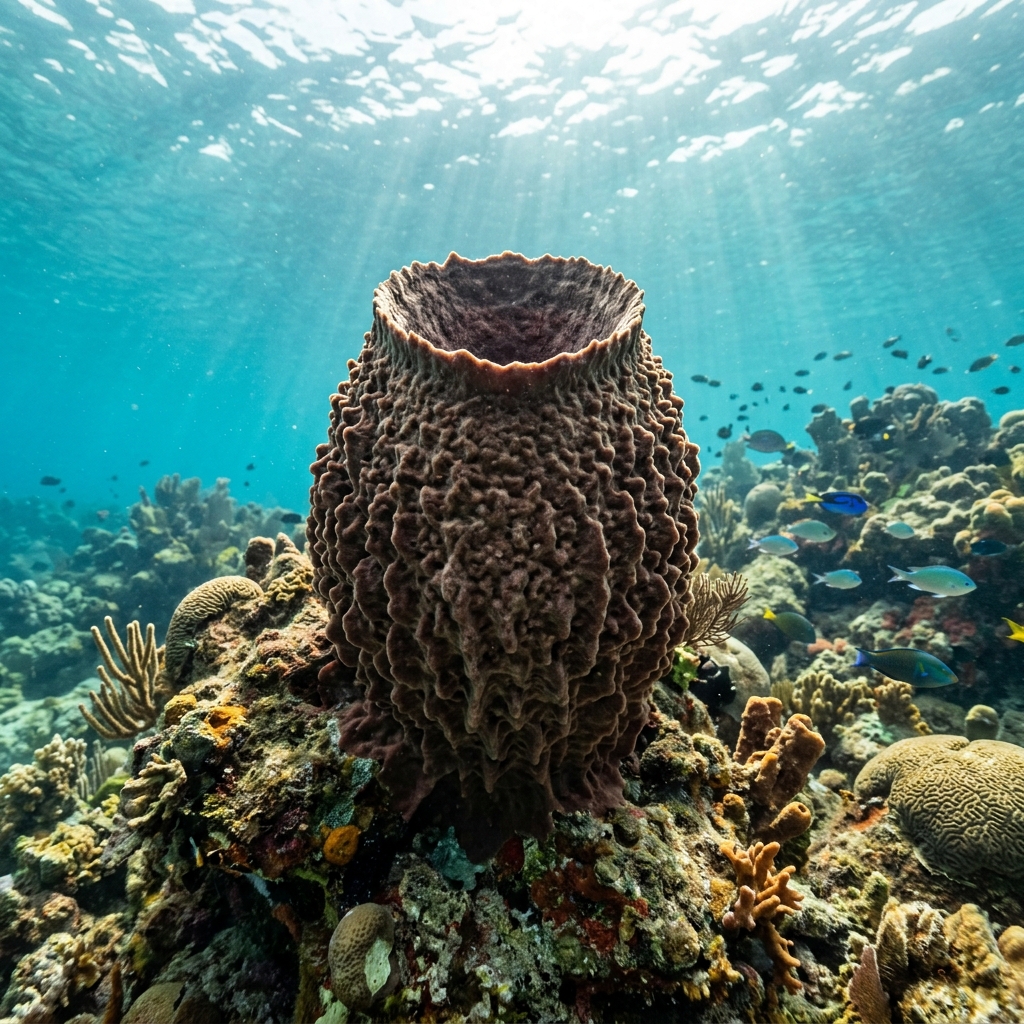
Look for a large, barrel- or vase-shaped structure rising from the reef, with a wide open osculum (the central cavity opening at the top). Colour runs from reddish-brown and purple-grey to dusty mauve, often with a roughened, ridged outer surface. In the water these sponges can grow to human-torso height or larger, making them hard to overlook once your eye is in. The circular rim of the opening is usually clean and well-defined, which helps separate this species from more encrusting or irregular forms.
Caribbean Barrel Sponges are sessile (fixed to the reef and unable to move), so you will always find them anchored to hard substrate, most often on sloping reef walls or open rubble areas with good water flow. Divers typically see them sitting upright in open reef, their cavity sometimes hosting small fish, shrimps, or brittle stars sheltering inside. They pose no threat and do not react to divers, but their porous surface is fragile, so accidental contact can cause lasting damage.
These sponges are among the longest-lived animals on Caribbean reefs, with some individuals estimated to be hundreds of years old, making what looks like a simple lump of reef actually one of the oldest living things a diver is likely to encounter.
Present year-round on tropical reefs with no concentrated season, consistent with its preference for warm water in the 27 to 29 °C range typical of Caribbean and Indo-Pacific reef zones.
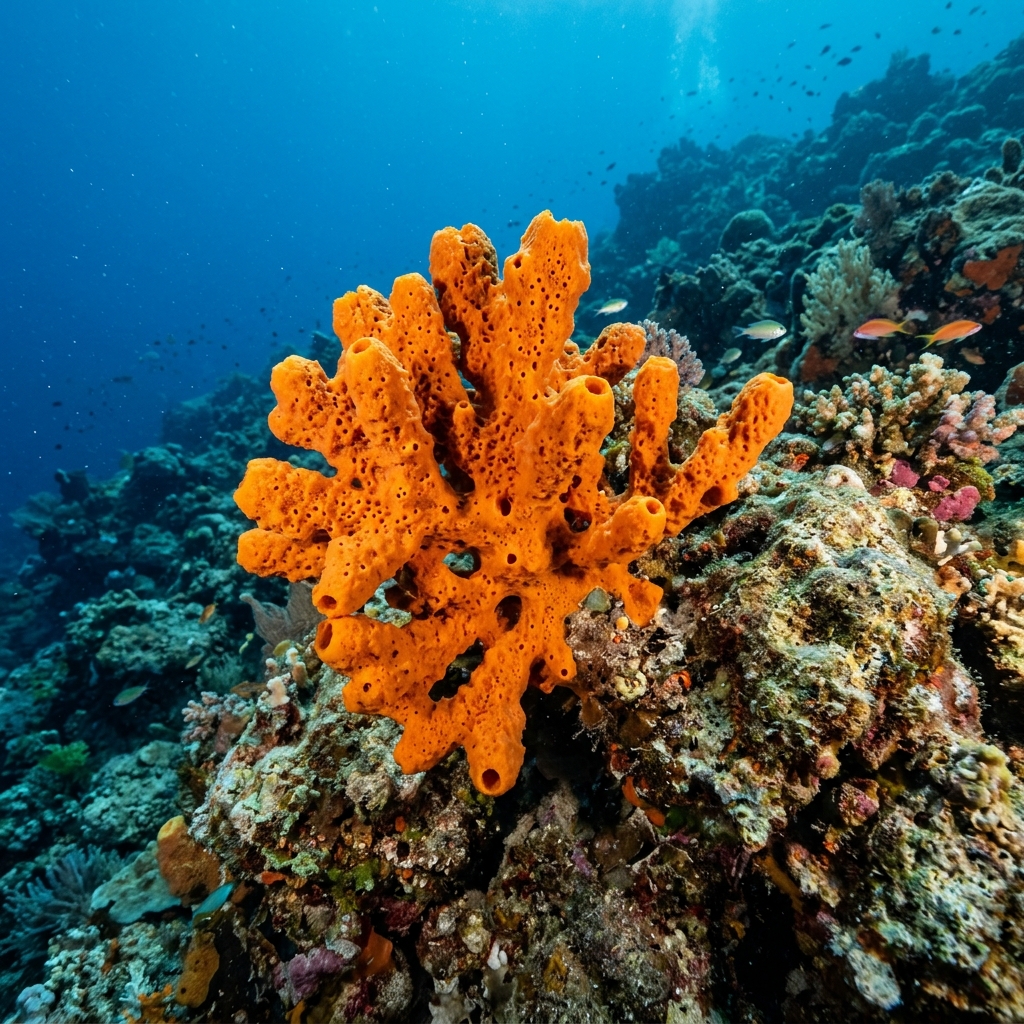
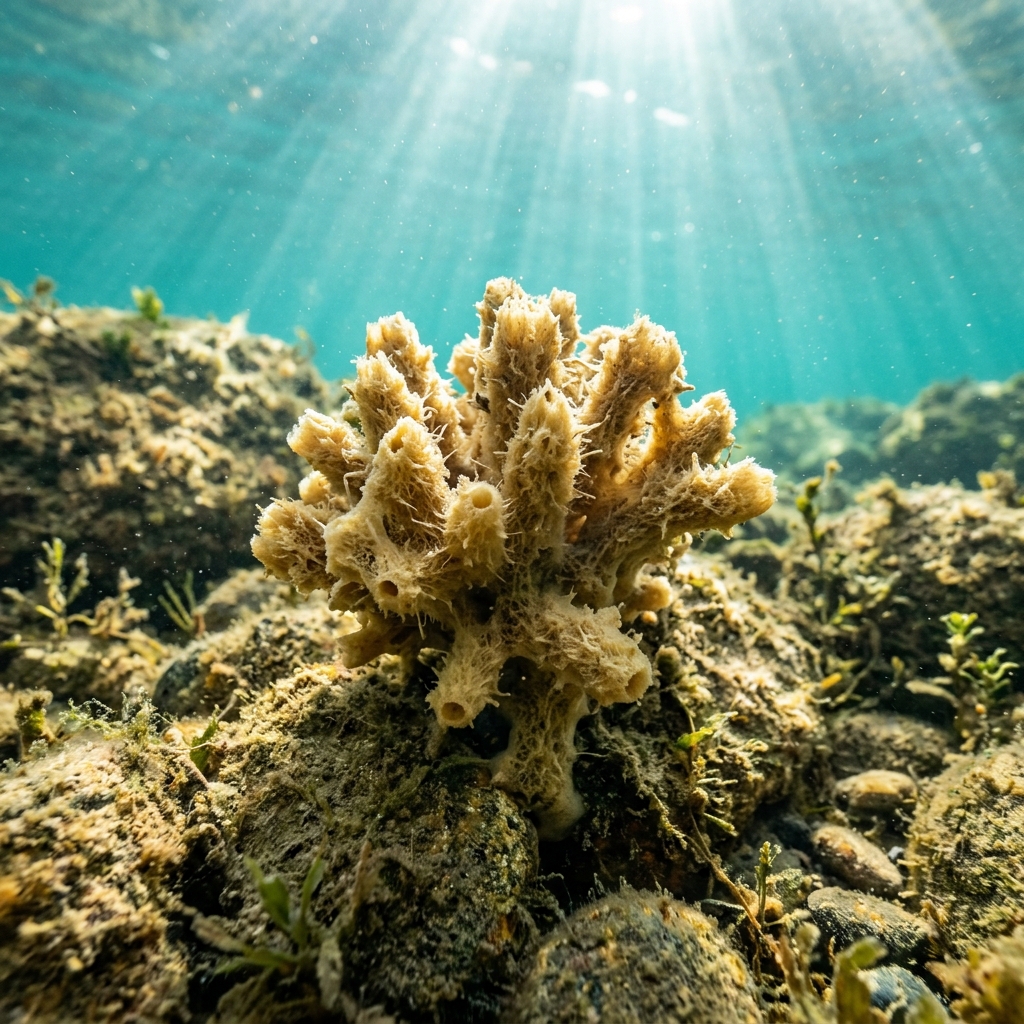
Reef neighbours a diver could mistake it for. Use the identification notes above to tell them apart.
Most reliably logged in the Caribbean and western Atlantic, with the Yucatán Peninsula, Roatán, Grand Cayman, and the US Virgin Islands standing out as top-performing regions. Strong populations are also recorded in the Perhentian and Redang Islands of Malaysia and across Palawan in the Philippines, reflecting a broader Indo-Pacific presence. Mexico, the Cayman Islands, and Honduras collectively account for a large share of all recorded sightings.
Mapping where Caribbean Barrel Sponge is logged…
They are most commonly logged in the Caribbean, particularly around the Yucatán Peninsula, Roatán, Grand Cayman, and the US Virgin Islands. The Perhentian and Redang Islands in Malaysia and Palawan in the Philippines are also reliable spots, showing this sponge has a wide tropical range beyond the Caribbean.
Year-round. These sponges are permanent reef residents and show no seasonal absence. Their preferred water temperature of 27 to 29 °C matches the conditions on tropical reefs across all months, so timing your dive around this species specifically is not necessary.
Key on the classic barrel or vase shape, a wide open top cavity with a clean circular rim, and a rough, ridged outer surface in shades of reddish-brown, purple-grey, or dusty mauve. Their substantial size, often comparable to a large bucket or bigger, makes them straightforward to spot on open reef.
They are among the larger sponge species on Caribbean reefs, with mature individuals commonly reaching 1 metre or more in height and width. Very old specimens can be considerably larger, rivalling the size of a rain barrel or small bathtub.
Some individuals are estimated to be several hundred years old, placing them among the longest-lived animals on coral reefs. Growth is slow, so a large sponge you see on a dive may have been there for many human lifetimes. This makes every contact with them particularly damaging.
Site and sighting data is aggregated from diver logs, iNaturalist and GBIF. For taxonomy and conservation status: