Petrosiidae
Find giant barrel sponges across Florida, the Maldives, and the Philippines. Learn how to spot these ancient reef structures year-round in warm and temperate waters.
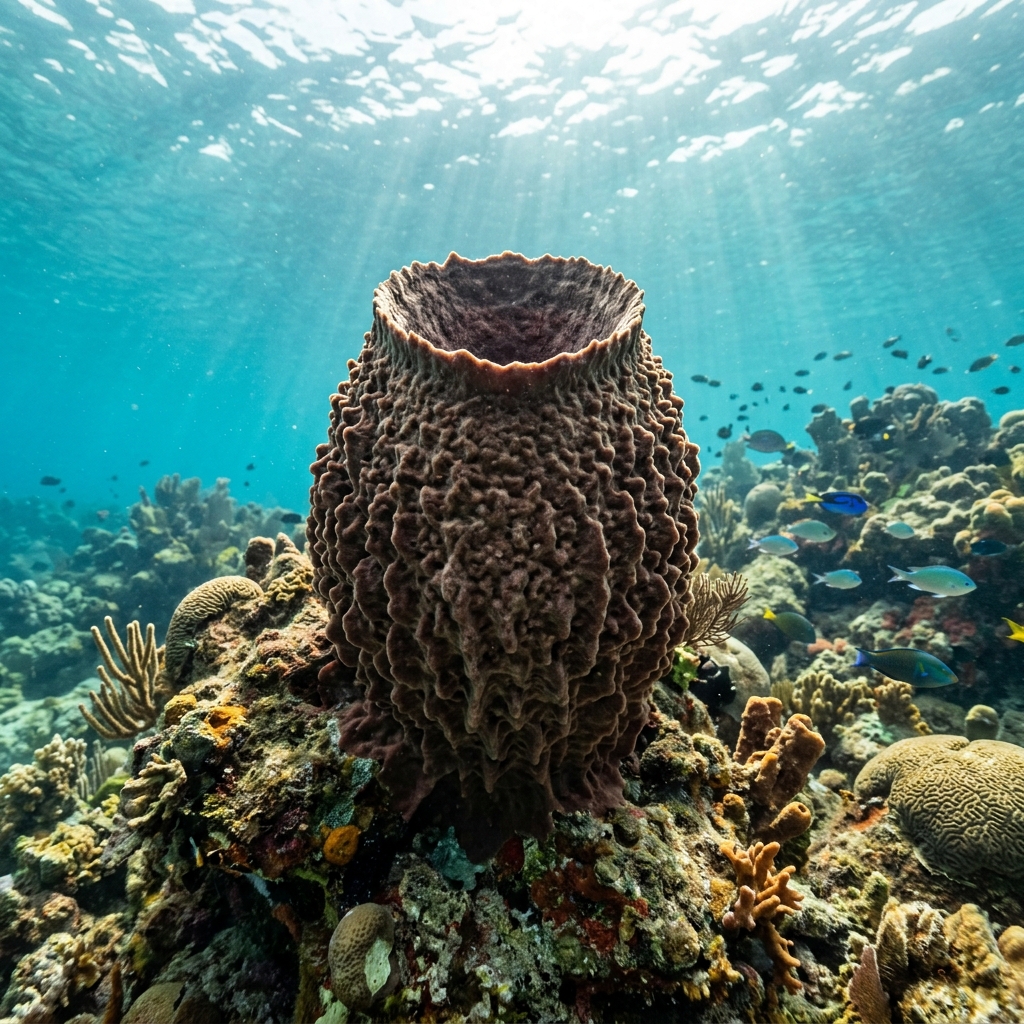
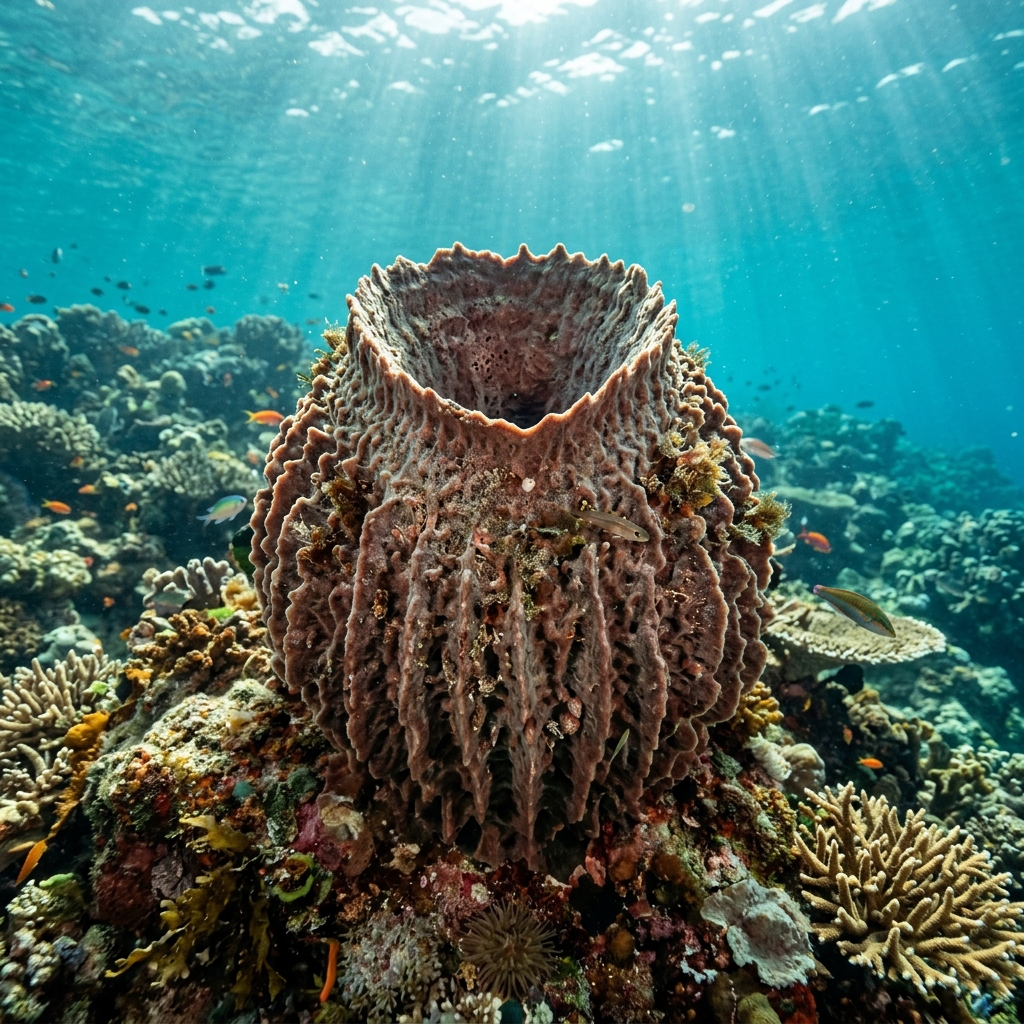
Barrel sponges in the Petrosiidae family are best known by their large, upright vase or barrel shape, often wide enough for a diver to sit inside. Colouration ranges from grey and brown to deep rose-purple depending on the species and location. The inner surface of the barrel is typically ridged or textured, while the outer wall is rough and encrusting. On the reef they stand out as dominant, solitary structures that tower above surrounding corals.
Barrel sponges are sessile (permanently fixed to the reef) and do nothing dramatic, they simply sit and filter enormous volumes of water through their body walls. What makes them compelling to divers is their scale and their role as reef landmarks; fish, shrimp, and even small eels frequently shelter inside or around them. They do not react to divers, so you can observe closely at any time of day without disturbing them.
Some large barrel sponge individuals are estimated to be hundreds of years old, making them among the longest-lived animals on the reef. That outsized barrel you hover over may well have been growing since before the first modern scuba dive.
Sightings span the full temperature range of 15.6 to 29.1°C, meaning barrel sponges are present on tropical and temperate reefs year-round. No concentrated season has emerged from the data, so there is no wrong month to look for them.
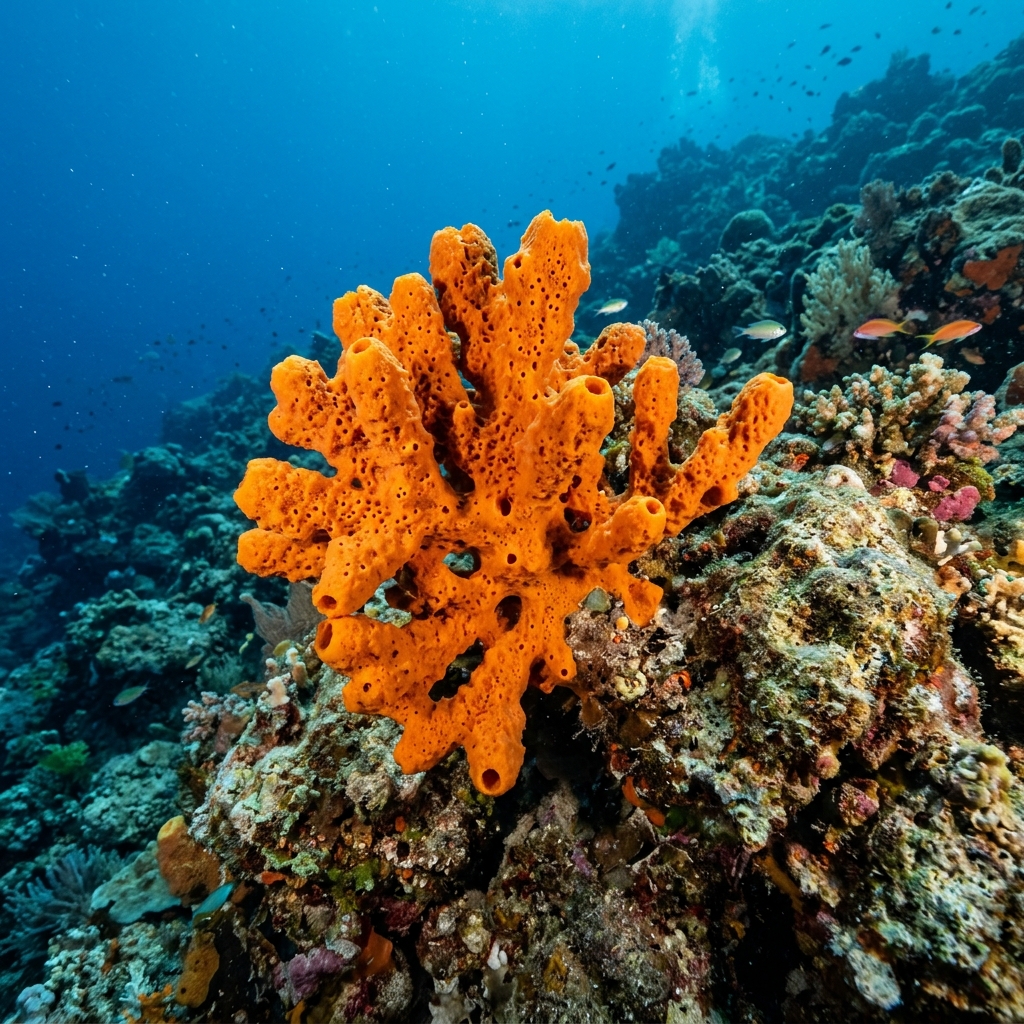
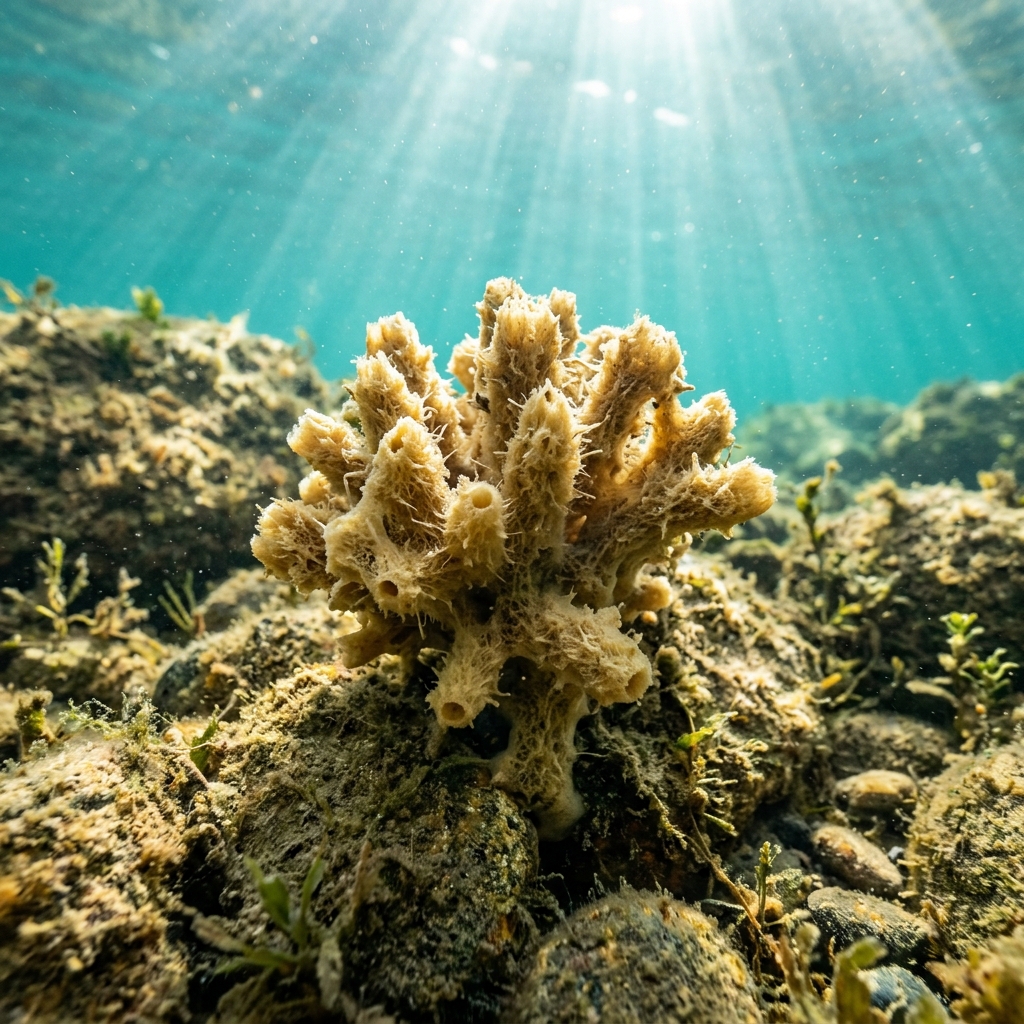
Reef neighbours a diver could mistake it for. Use the identification notes above to tell them apart.
Barrel sponges in this family are logged across a wide spread of dive destinations, with particularly strong representation in Florida and the broader south-eastern United States, the Maldives, Queensland and Western Australia, the Philippines, Indonesia, Greece, and Italy. The Maldivian atolls and Queensland's reefs are especially reliable spots to find large, well-developed specimens. Temperate Mediterranean sites around Attica and Sicily also host healthy populations, showing how widely this family ranges.
Mapping where Giant Barrel Sponge is logged…
They are found across a remarkable range of dive destinations. Top spots include Florida and the south-eastern United States, the Maldivian atolls, Queensland and Western Australia, the Philippines, Indonesia, and Mediterranean sites in Greece and Italy. Whether you are on a tropical coral reef or a temperate rocky wall, barrel sponges are likely nearby.
Because this family tolerates water temperatures from around 16°C up to 29°C, barrel sponges are present on reefs year-round in most destinations. There is no defined peak season, so any dive trip is a good opportunity to find them.
Look for a large upright vase or barrel shape rising from the reef, often in grey, brown, or purple tones. The inner cavity is ridged, and the outer surface is rough and firm. Their sheer size sets them apart from most other sponges, mature specimens can easily exceed a metre across.
Large individuals can reach well over a metre in diameter and stand nearly as tall, though size varies between species in the family. On the reef they are often the biggest single invertebrate structure visible, which is part of what makes them so easy to spot.
Some large barrel sponge individuals are thought to be several hundred years old, based on growth rate estimates. This makes them among the most ancient animals a diver is likely to encounter on any reef. Their longevity makes physical damage from careless diving particularly costly, as recovery takes decades.
Site and sighting data is aggregated from diver logs, iNaturalist and GBIF. For taxonomy and conservation status: