Spongillidae spp.
Freshwater sponges grow in lakes and rivers across Central Germany, Switzerland, and Florida. Here's where divers find them and how to spot them.
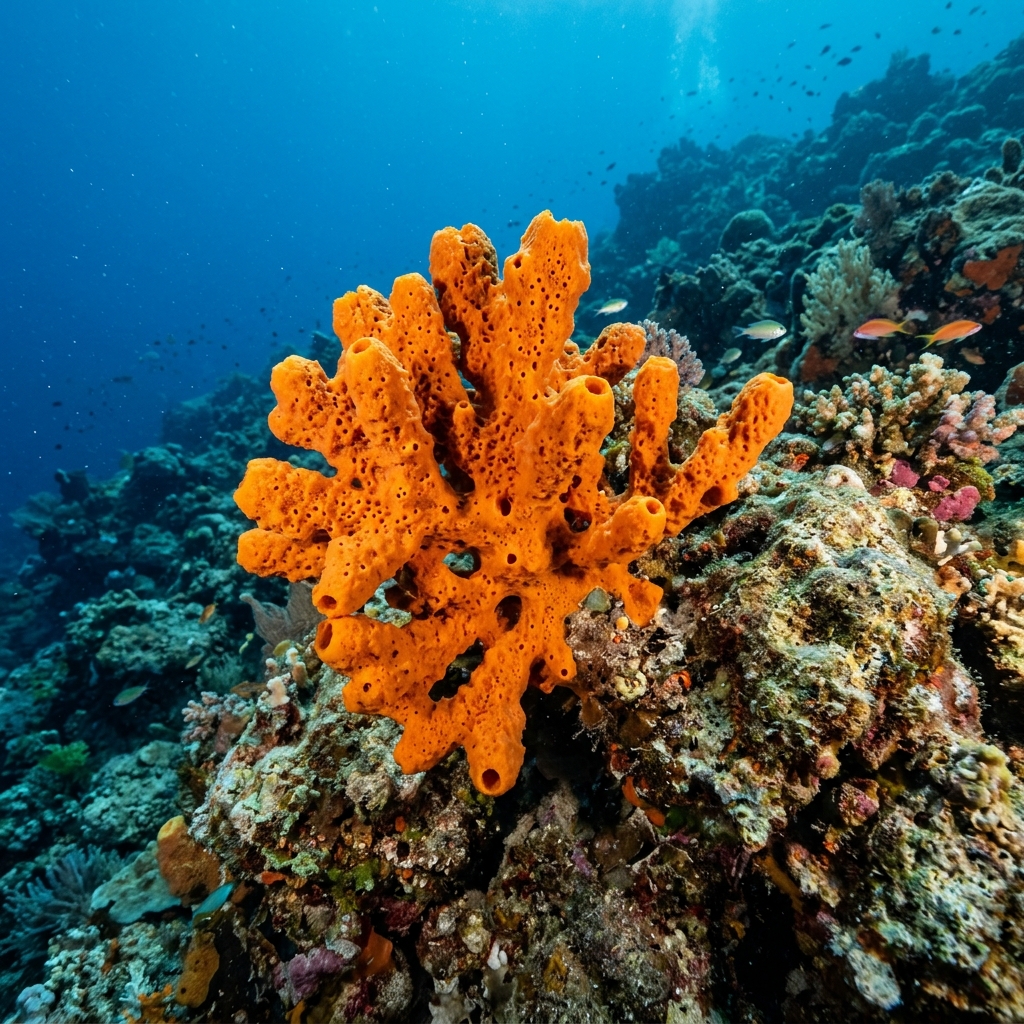
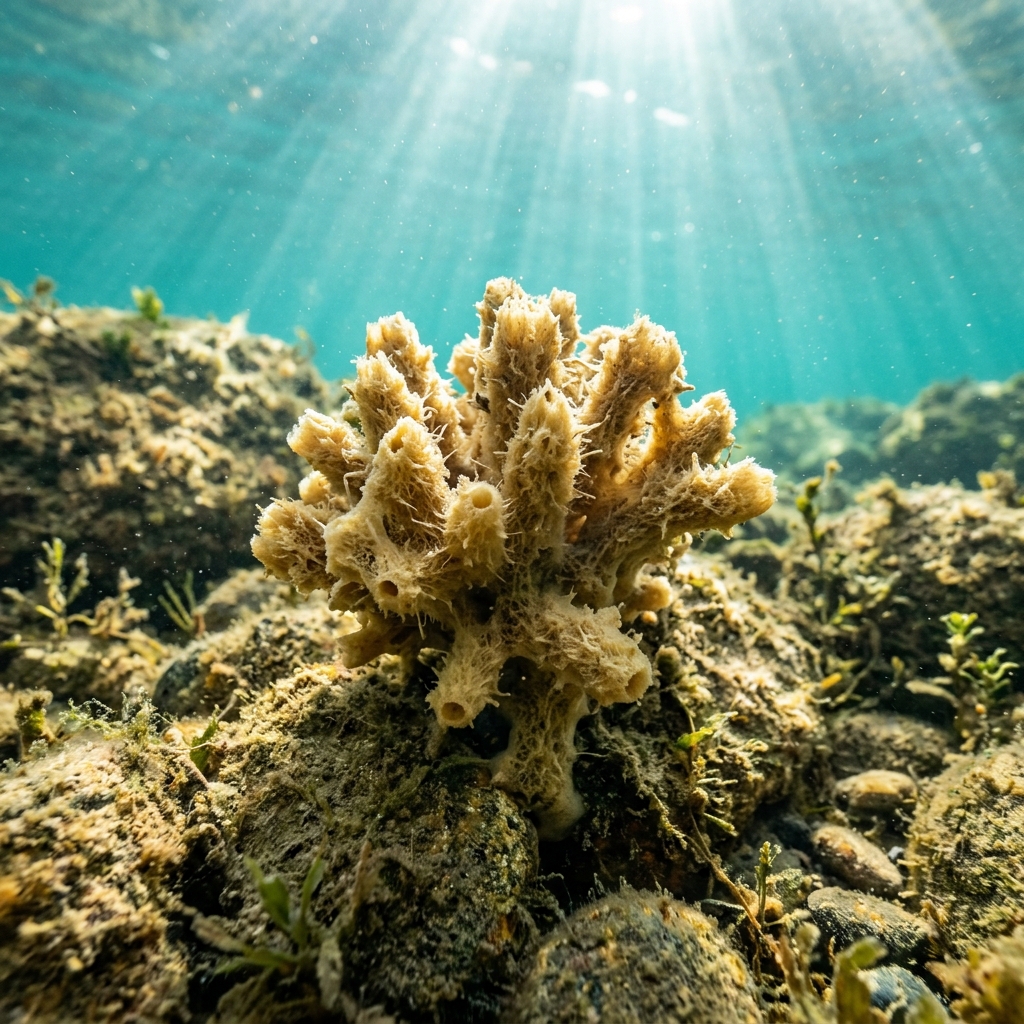
Most freshwater sponges appear as encrusting or lobed masses growing on submerged rocks, roots, and woody debris, typically in shades of green, yellow, or grey-brown. The green colouration comes from symbiotic algae (zoochlorellae) living within the sponge tissue, making sun-exposed colonies the brightest. Texture is rough or lumpy rather than smooth, and colonies range from a thin film to a fist-sized cushion. Look for the substrate they favour: shaded undersides of logs and stones in still or slow-moving freshwater.
Freshwater sponges are sessile (permanently fixed in place) filter feeders, drawing water through tiny pores to capture microscopic particles. You will not see movement, but you can watch the oscula (exhaled water openings) on the surface of larger colonies. They do not react to divers, so you can take your time observing growth patterns and the small invertebrates that often shelter among their lobes.
Freshwater sponges can produce dormant capsules called gemmules that survive freezing and desiccation, allowing colonies to regenerate from scratch each spring in lakes that ice over completely in winter.
Available data does not point to a defined season, so freshwater sponges can be treated as a year-round target. Their observed temperature range runs from just above freezing to around 28 degrees Celsius, meaning they persist across the cold-water lakes of northern Europe and the warmer waterways of Florida alike.
Freshwater sponges are most widely logged across Central and Northern Europe, with Germany leading by a wide margin, particularly the Central Germany, Berlin and Brandenburg, and Southern Germany regions. Switzerland and the Netherlands are also strong areas, especially the lake-rich Vinkeveense Plassen and Limburg Lakes districts. In North America, Florida and the broader southeastern United States represent the main diving opportunity.
Mapping where Freshwater Sponge is logged…
Central Europe is your best bet, particularly German lakes and rivers, Swiss lakes, and the lake districts of the Netherlands such as Vinkeveense Plassen and the Limburg Lakes. In the United States, Florida and the southeastern states offer the most dive sites where they appear.
They can be found year-round. Their temperature tolerance is wide, from near-freezing alpine lakes to warm subtropical waterways, so there is no single best season. Visibility in the water body you choose matters more than time of year.
Look for encrusting or lumpy growths on submerged wood, rocks, and roots in freshwater. The bright green colour of sun-exposed colonies is the most reliable field cue, caused by algae living inside the sponge tissue. Grey or yellow-brown forms occur in shaded spots. No marine sponge shares this freshwater habitat.
Colony size varies considerably across the family. Many colonies form thin crusts only a centimetre or two thick, while well-established specimens in nutrient-rich lakes can build up into lumpy cushions the size of a human fist or larger. They tend to spread laterally across their substrate rather than growing tall.
They produce structures called gemmules, tiny armoured capsules packed with cells, that can survive a lake freezing solid or drying out entirely. When conditions improve, the cells inside the gemmule activate and rebuild a whole new colony, making freshwater sponges remarkably resilient for such a simple animal.
Site and sighting data is aggregated from diver logs, iNaturalist and GBIF. For taxonomy and conservation status: