Aetomylaeus bovinus
Bull rays are most reliably logged around the Canary Islands, particularly Tenerife and El Hierro. Here's how to spot one and where to find it.
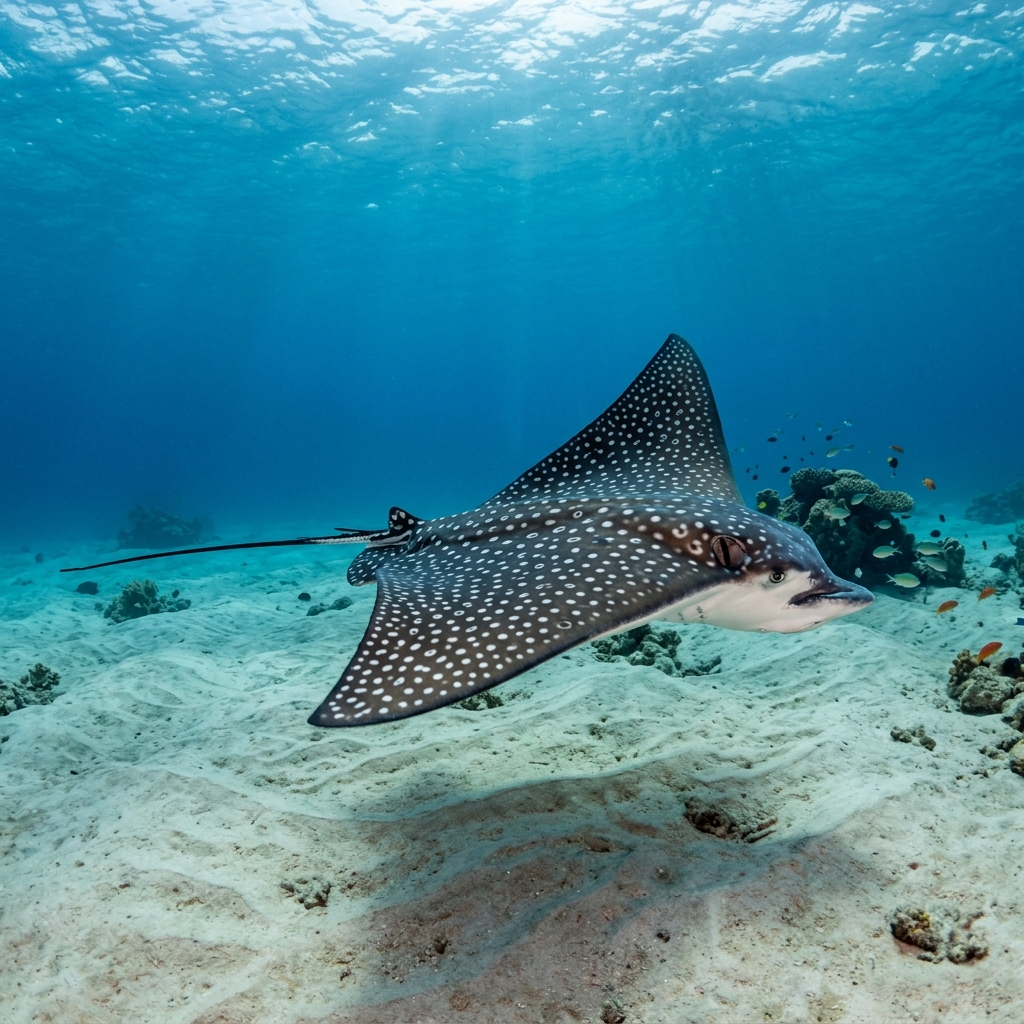
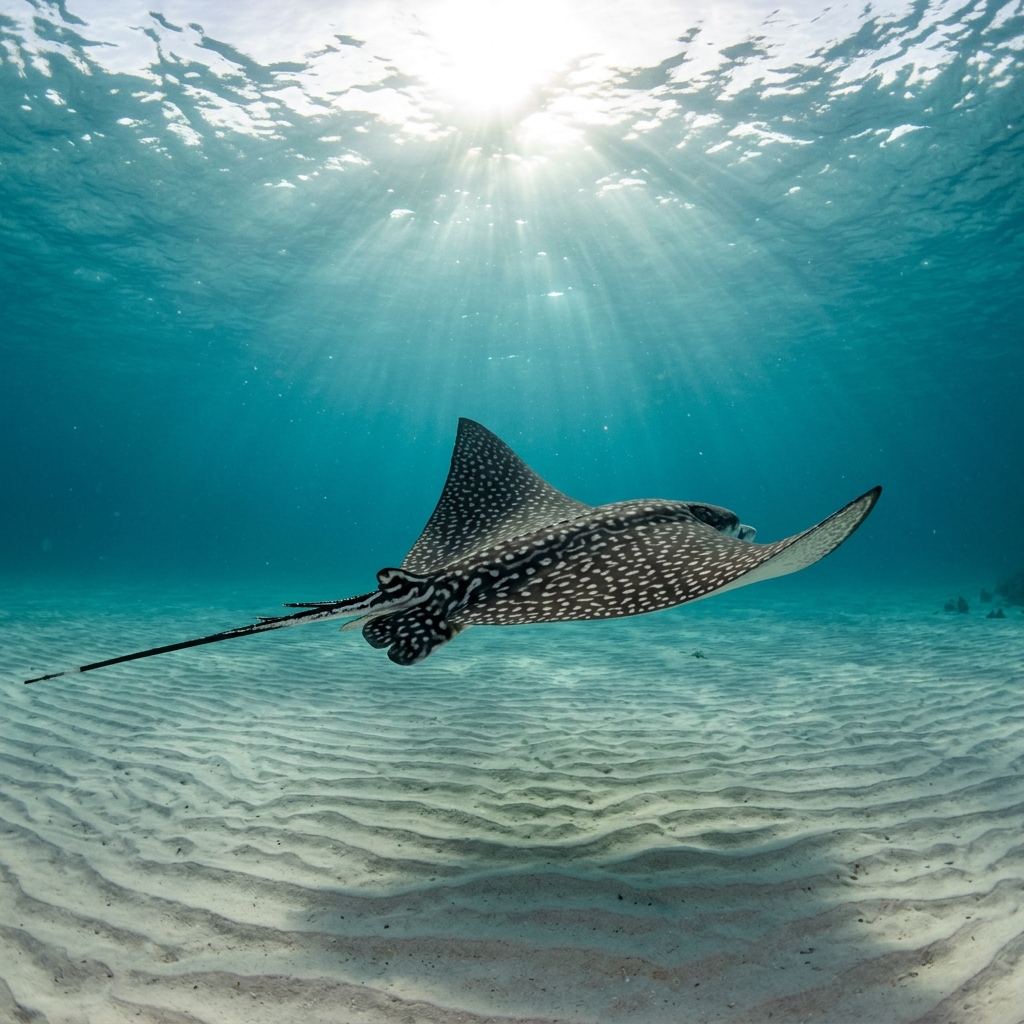
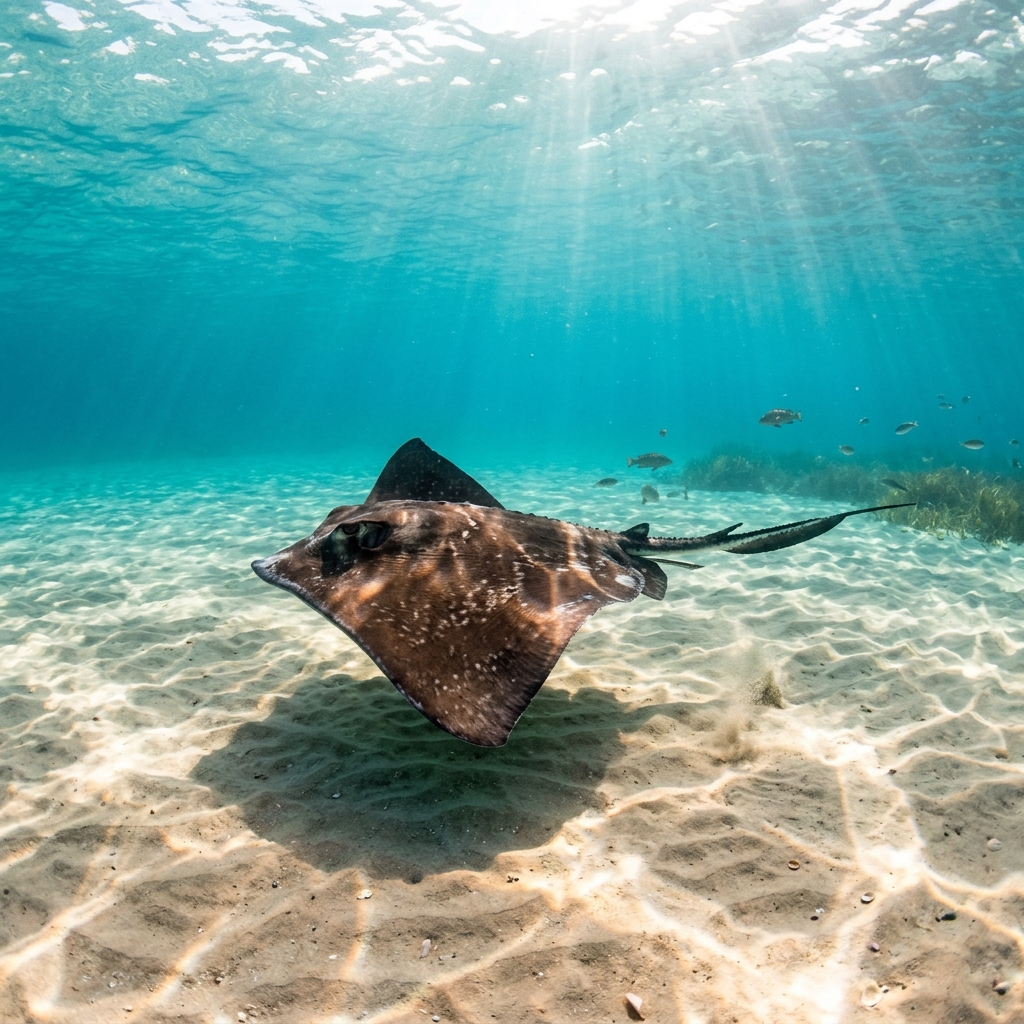
A broad, diamond-shaped pectoral disc with a distinctly rounded snout sets this ray apart from most others you'll encounter in the Canary Islands. The dorsal surface is olive to greyish-brown, often with a faint iridescent sheen, while the underside is pale white. In the water it looks notably hefty and wide-winged compared to smaller benthic (bottom-dwelling) rays, and the long, whip-like tail is clearly visible when it swims overhead. Look for the rounded, blunt head protruding slightly forward of the disc as a key identification point.
Bull rays are typically seen cruising slowly just above sandy or mixed bottoms, sometimes in small groups but often alone. They tend to be unhurried around divers and will usually continue on their path rather than flee, though sudden movements will send them off. Encounters tend to be brief mid-water passes rather than extended reef rests.
This species is listed as Critically Endangered across its range, making every sighting in the Canary Islands significant for population monitoring. Reporting observations with photos to citizen-science platforms contributes directly to understanding whether the local Atlantic population is stable or declining.
There is not enough monthly sighting data to identify a peak season, so encounters should be treated as possible year-round. Observed water temperatures at sighting sites range from around 16 to 24°C, consistent with the Canary Islands' relatively cool, stable Atlantic conditions throughout the year.
Reef neighbours a diver could mistake it for. Use the identification notes above to tell them apart.
Almost all logged sightings come from the Canary Islands, with Tenerife and El Hierro together accounting for the majority of records. Lanzarote also contributes a meaningful share of sightings. Outside these islands there are currently no verified dive-site records in the Fin dataset.
Mapping where Bull Ray is logged…
The Canary Islands are by far the best-documented place to dive with bull rays, with Tenerife, El Hierro, and Lanzarote holding the strongest records. Most encounters happen over sandy or mixed terrain at these Atlantic island sites. No other countries currently have verified sightings in dive records.
There is not enough monthly sighting data to pinpoint a season, so encounters should be considered possible throughout the year. The Canary Islands' water temperature stays in the 16 to 24°C range, which aligns with the temperatures at which bull rays are most often logged.
Look for a wide diamond-shaped disc with a rounded, blunt snout that projects slightly beyond the disc's leading edge. The back is olive-brown and the belly is white, and the very long whip-like tail is a reliable cue. The rounded snout distinguishes it from the spotted eagle ray, which has a more pointed, duck-billed snout.
Yes. The bull ray is listed as Critically Endangered by the IUCN, the highest threat category before extinction in the wild. Population declines have been recorded across the Mediterranean and eastern Atlantic. Divers encountering one in the Canary Islands should avoid disturbing it and log the sighting with a photo if possible.
Bull rays are not considered dangerous to divers. Like all rays they carry a venomous tail spine as a defensive measure, but they are not aggressive and encounters are typically calm. Standard etiquette applies: stay calm, move slowly, and give the animal space.
The Bull Ray is listed as critically endangered by the IUCN. Observe from a distance, avoid touching or feeding it, and report sightings to local marine research organisations.
The bull ray is classified as Critically Endangered on the IUCN Red List, reflecting severe population declines across its range. If you encounter one, keep your distance, avoid chasing or touching it, and consider submitting a photo observation to iNaturalist to support ongoing monitoring.
Site and sighting data is aggregated from diver logs, iNaturalist and GBIF. For taxonomy and conservation status: