Sphyrna tiburo
Spot the bonnethead by its uniquely shovel-shaped head in Florida, the Bahamas, and Cuba. Year-round sightings in warm Atlantic and Gulf waters.
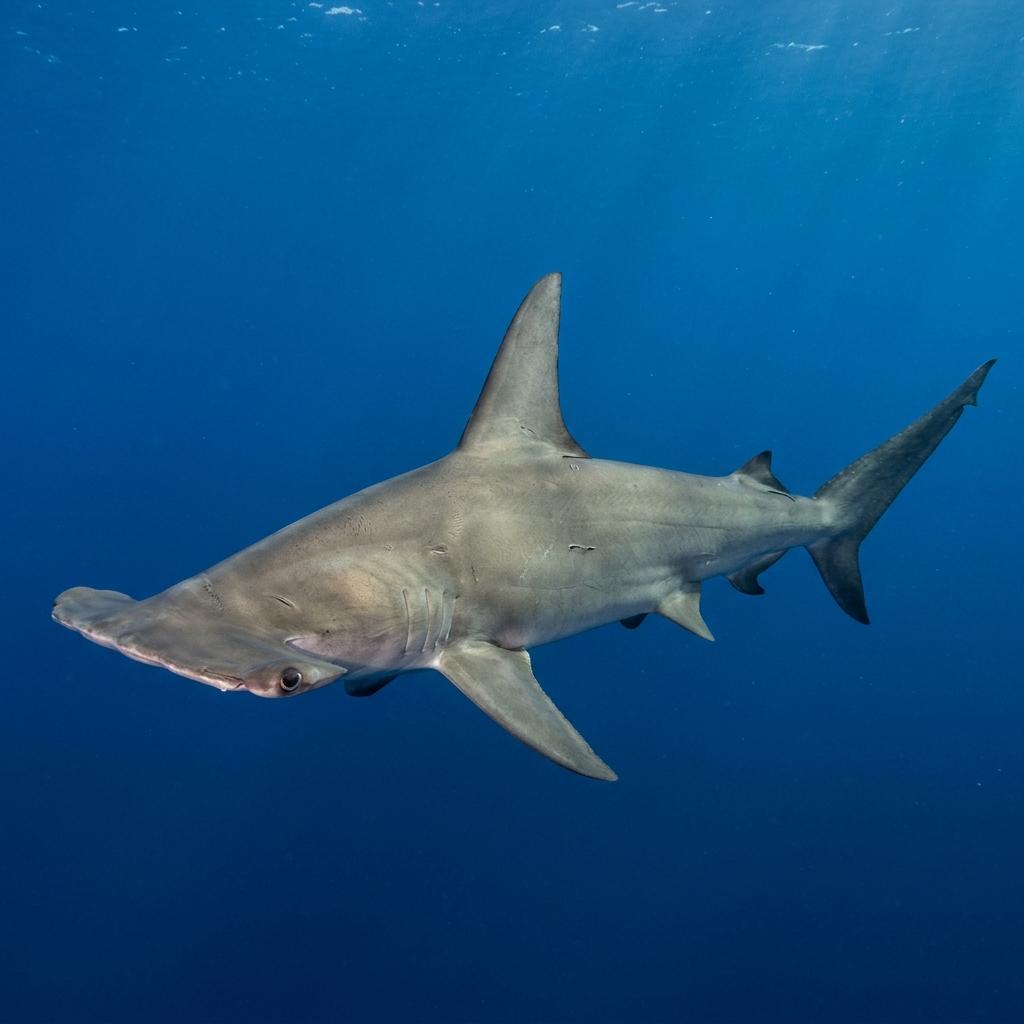
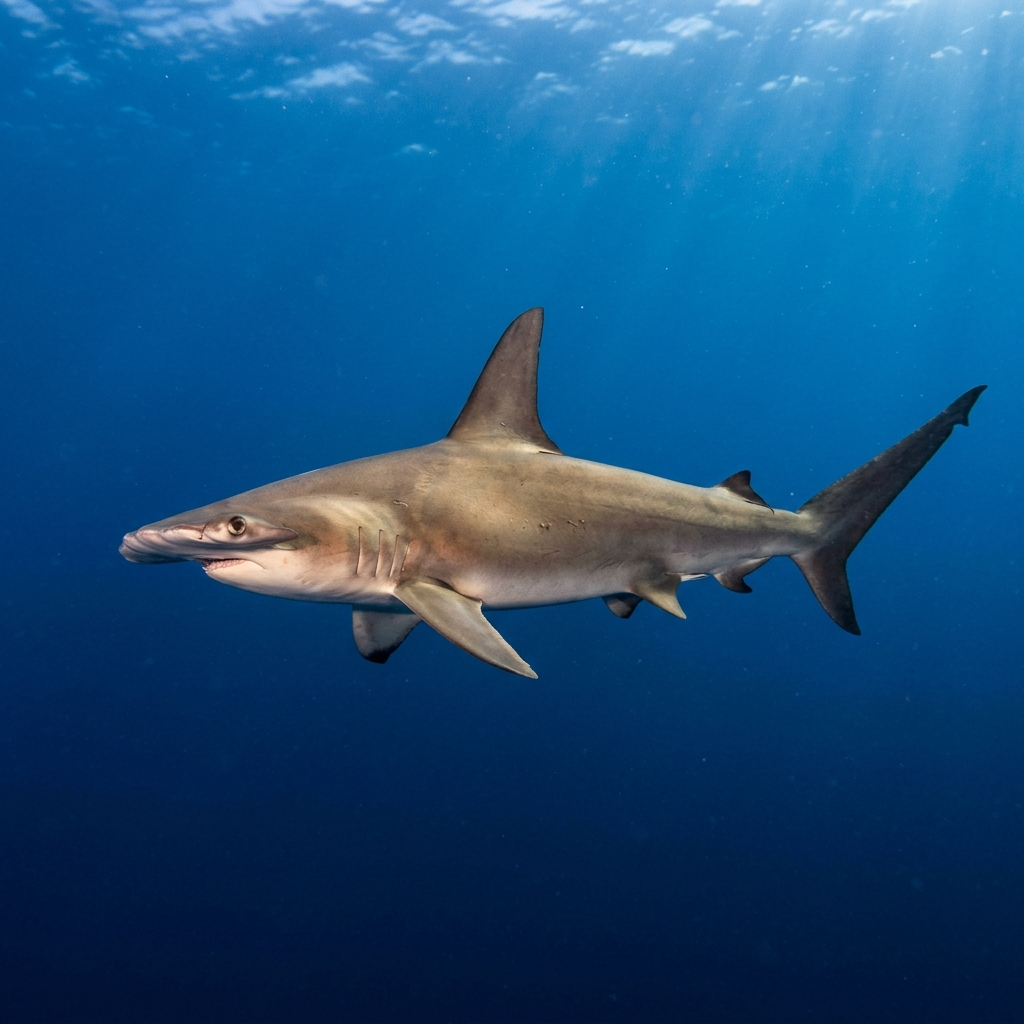
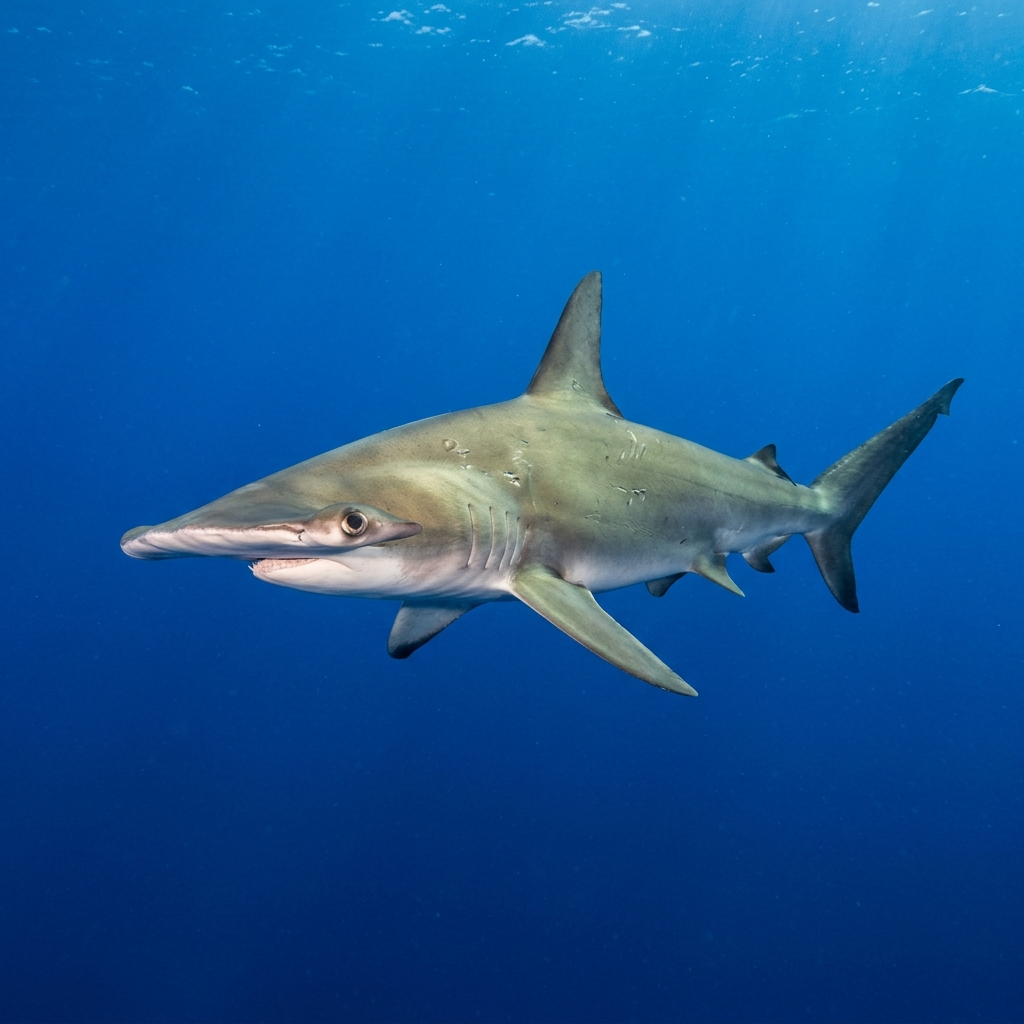
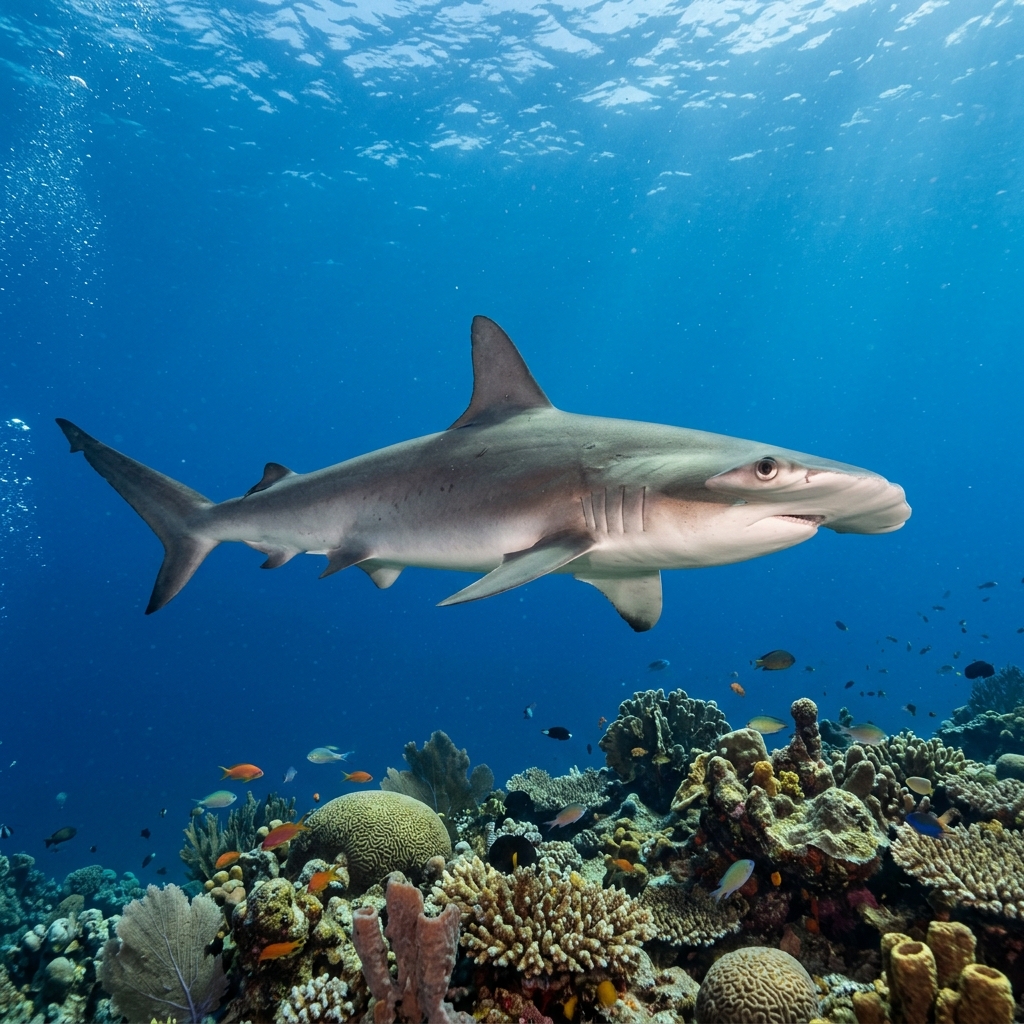
A small hammerhead, typically around a metre long, with a distinctly smooth, rounded, shovel-shaped head (cephalofoil) that sets it apart from any other hammerhead at a glance. Its body is grey-brown above and paler below, without bold markings. Adult females develop a noticeably broader, more bulbous cephalofoil compared to the slimmer, more uniformly rounded head of males, which is useful for telling the sexes apart mid-water.
Bonnetheads are shy animals that almost always swim away rather than towards a diver, so most encounters are brief glimpses as one cruises purposefully along the reef. They are active hunters by day, and your best chance of watching one for more than a few seconds is catching it intent on foraging rather than already spooked. They can form small schools, but solitary individuals are the norm on dives.
Bonnetheads are the only sharks confirmed to regularly digest plant material, seagrass included, making them partial omnivores, an unusual trait in a group otherwise defined by carnivory.
No clear seasonal peak has emerged from the sighting data, so treat encounters as possible year-round. The species is observed across a water-temperature range of roughly 22 to 28 °C, which matches warm tropical and subtropical reef conditions throughout its range.
Reef neighbours a diver could mistake it for. Use the identification notes above to tell them apart.
Florida and the broader southeastern United States holds the strongest concentration of logged sites, making it by far the most reliable region to encounter one. Cuba's Jardines del Rey and Canarreos Archipelago, along with the Bahamas' Grand Bahama area and Brazil's northeast coast, round out the best options. Mexico's Yucatán Peninsula and Venezuela's central coast are also worth checking if you're diving the wider Caribbean.
Mapping where Bonnethead is logged…
Florida and the southeastern United States has the greatest spread of known sites. Cuba (especially Jardines del Rey), the Bahamas, Brazil's northeast coast, and Mexico's Yucatán Peninsula are the other standout areas. Venezuela and Belize also have sites within the species' range.
There is no strong seasonal pattern in the sighting data, so encounters are possible year-round across warm Atlantic and Gulf waters. The species favours temperatures of roughly 22 to 28 °C, which persist all year on the tropical reefs where it is most often logged.
No. Bonnetheads are consistently shy and non-aggressive. The far more likely outcome of an encounter is watching it disappear into the blue, not the other way around.
Look for the head shape first: it is smooth and shovel-like rather than the tall arc of a scalloped hammerhead or the flat, wide blade of a great hammerhead. It is also noticeably smaller than those species, typically around a metre. Females have a broader, more bulbous cephalofoil than males.
Most adults are around 105 cm, making them the smallest of the hammerhead sharks by a wide margin. Their compact size combined with the rounded head makes them straightforward to tell apart from larger hammerhead species.
Yes, the bonnethead is currently listed as Endangered on the IUCN Red List. Populations have declined significantly due to fishing pressure and habitat loss, which makes every in-water sighting worth logging for science.
The Bonnethead is listed as endangered by the IUCN. Observe from a distance, avoid touching or feeding it, and report sightings to local marine research organisations.
The bonnethead is currently listed as Endangered. If you encounter one, avoid approaching or chasing it, and report sightings through citizen-science platforms to help researchers track population trends.
Site and sighting data is aggregated from diver logs, iNaturalist and GBIF. For taxonomy and conservation status: