Heptranchias perlo
Spot the Sharpnose Sevengill Shark in cool Atlantic and Mediterranean waters. Most logged in Brittany, the British Isles, and the Adriatic. Here's where to look.
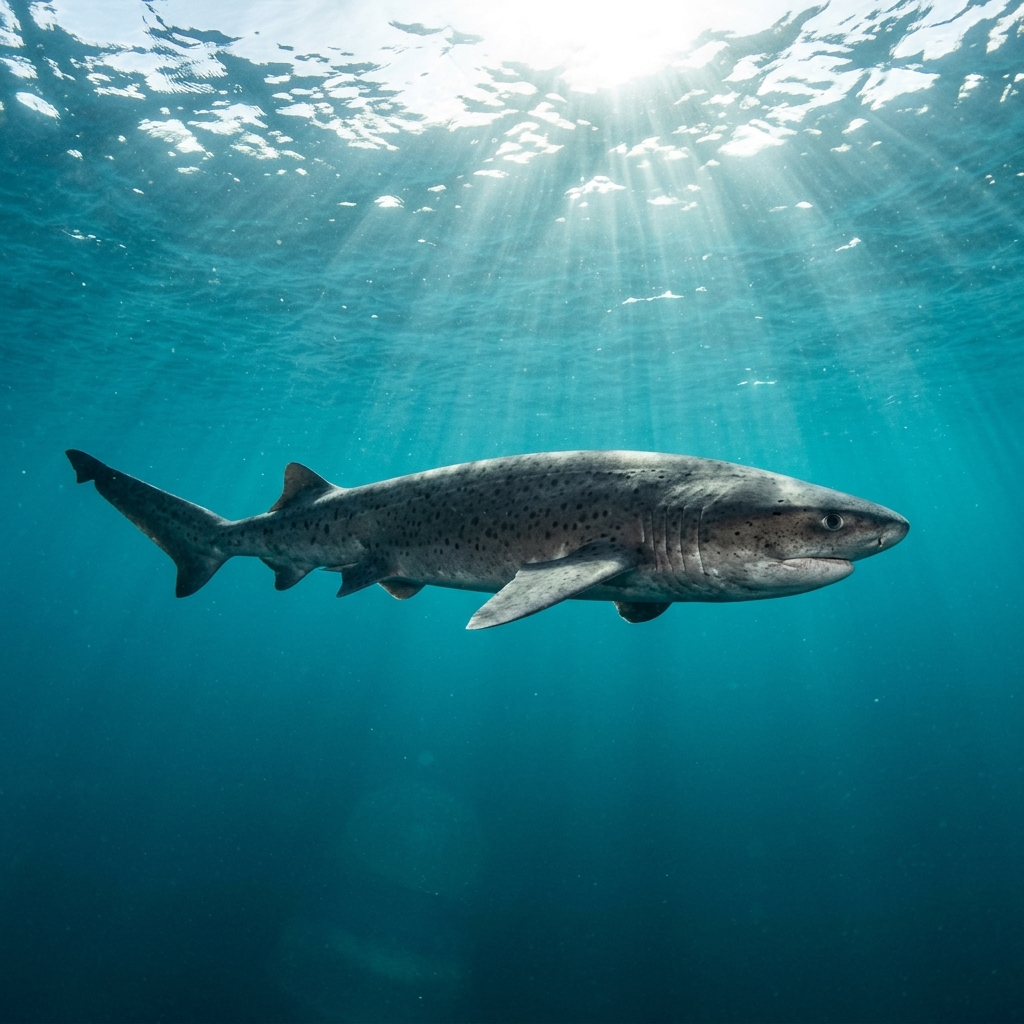
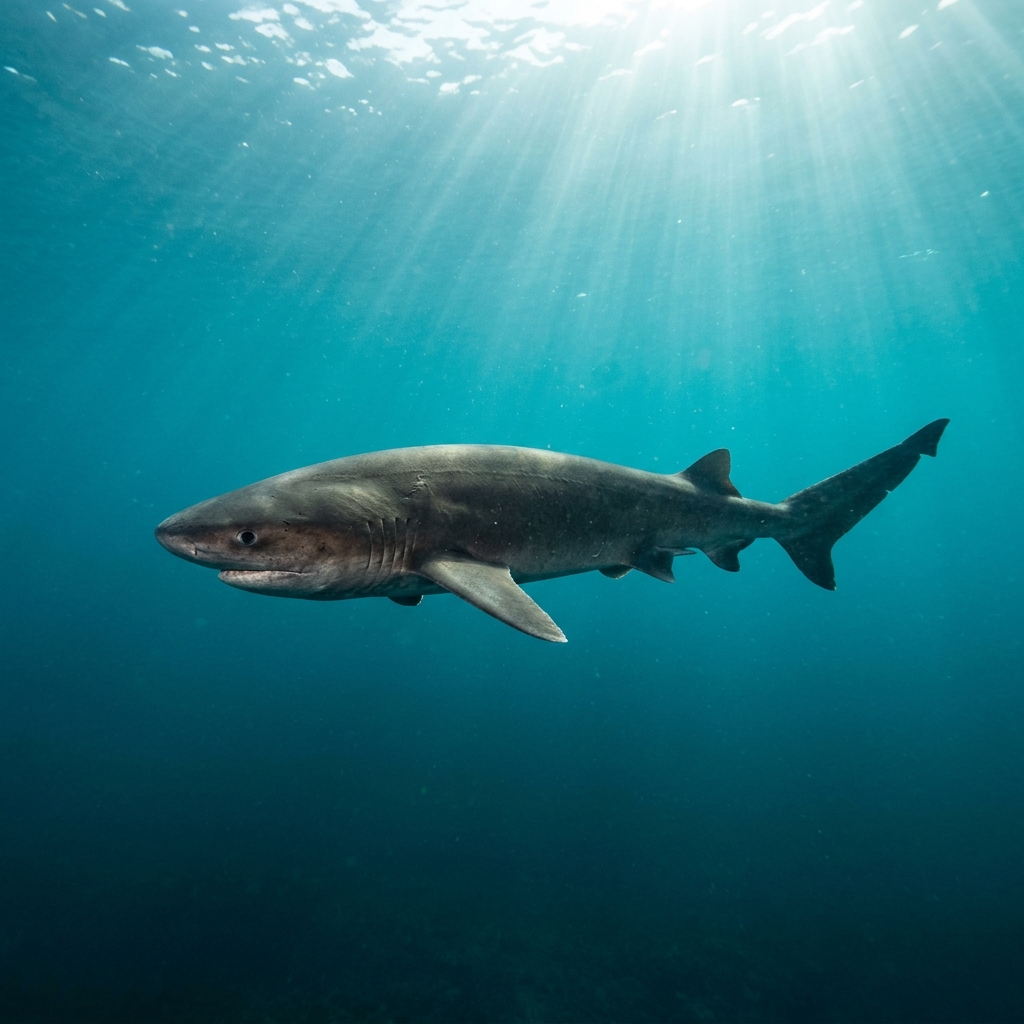
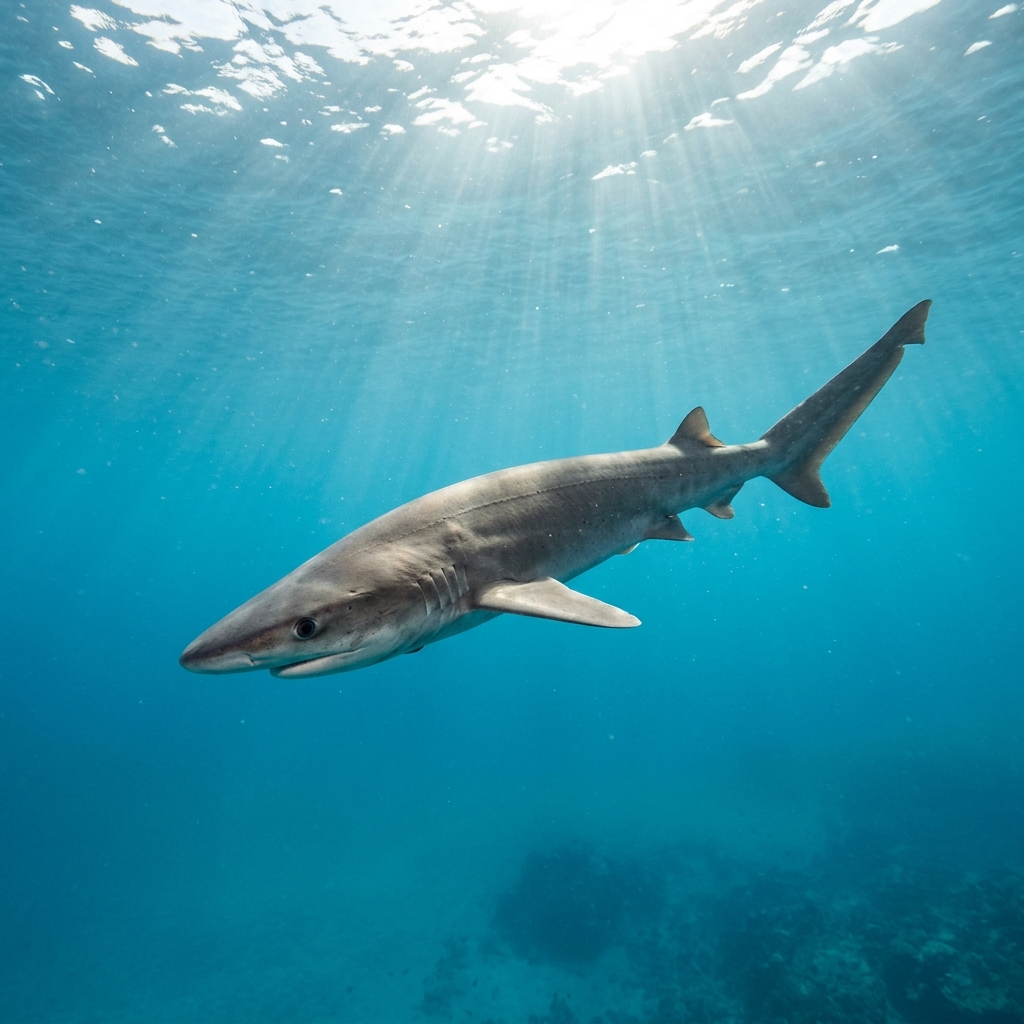
Seven gill slits on each side (most sharks have five) are the immediate giveaway underwater. Pair that with a narrow, sharply pointed snout, a slender build, and a single dorsal fin set far back towards the tail, and nothing else in temperate Atlantic or Mediterranean waters looks quite like it. Colouration is greyish-brown above and paler below, sometimes with small dark spots scattered across the flanks.
This is a deep-water and open-water species that divers encounter far less often than its broad range might suggest, with sightings rated uncommon to rare at recorded sites. When seen, it typically moves slowly through the water column at depth. It poses no threat to divers and will generally keep its distance.
As one of the most primitive sharks alive today, the sevengill sharks retain a body plan little changed from ancient lineages, and the sharpnose sevengill in particular is thought to inhabit some of the deepest depths of any hexanchid shark, regularly recorded well below typical recreational diving limits.
There is not enough seasonal data to point to a peak period, so it is best treated as a year-round possibility. Its observed temperature range of roughly 8.5 to 18.7 °C means it is most at home in the cool-temperate waters that characterise the North Atlantic and Mediterranean throughout the year.
Reef neighbours a diver could mistake it for. Use the identification notes above to tell them apart.
Most sightings are logged in European waters, with the strongest presence in the United Kingdom, France, and Germany, followed closely by Italy, Croatia, Ireland, and Spain. The regions with the highest concentration of records include Brittany and Normandy, Northern Germany, the Southwest Coast of Ireland, and South Coast England. It also appears across the Adriatic in Central Dalmatia and around the islands of Sardinia and Tuscany.
Mapping where Sharpnose Sevengill Shark is logged…
The best-represented regions in diver records are Brittany and Normandy in France, the South Coast of England, Southwest Ireland, Northern Germany, and the Sardinia and Tuscany coastline of Italy. Croatia's Central Dalmatia and western Scotland also feature in the data. All are cool-temperate, often surge-exposed dive environments.
No clear seasonal peak has emerged from logged sightings, so your best approach is to treat it as a year-round target. Its preference for cold water between about 8.5 and 18.7 °C means it does not retreat seasonally the way warmer-water species do.
Look for seven gill slits rather than the usual five, a distinctly narrow and pointed snout, a slender grey-brown body, and a single dorsal fin positioned far back near the tail. That combination is unique among sharks you are likely to encounter in European waters.
Adults typically reach around 1.4 metres, making this a relatively slender, medium-sized shark. It is noticeably smaller and more streamlined than its cousin the broadnose sevengill, which can exceed 3 metres.
They are currently assessed as Near Threatened by the IUCN. The main concern is accidental capture in commercial fishing gear across the Atlantic and Mediterranean. Logging diver sightings with photos and location details contributes useful data to researchers monitoring the species.
Site and sighting data is aggregated from diver logs, iNaturalist and GBIF. For taxonomy and conservation status: