Notorynchus cepedianus
Spot the broadnose sevengill shark in cool waters from South Australia to British Columbia. Know what to look for and where sightings are logged.
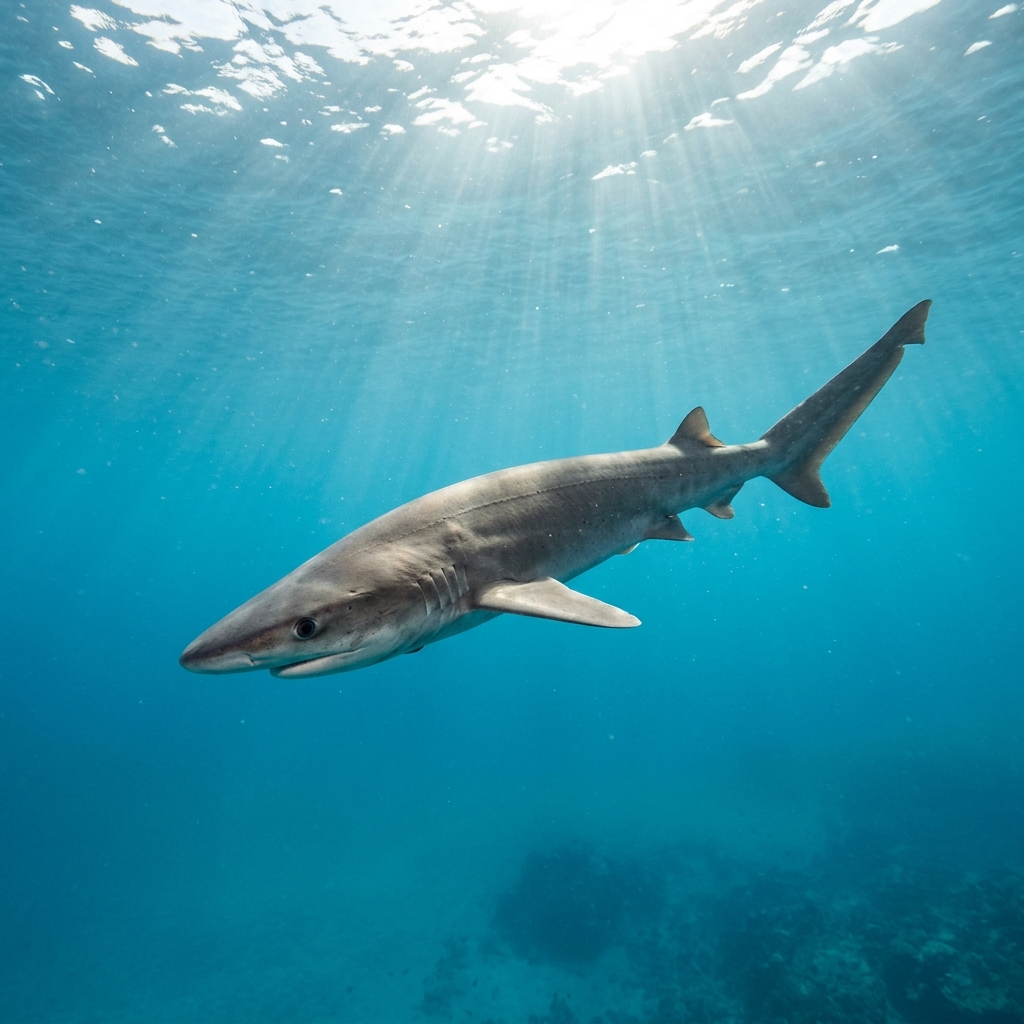
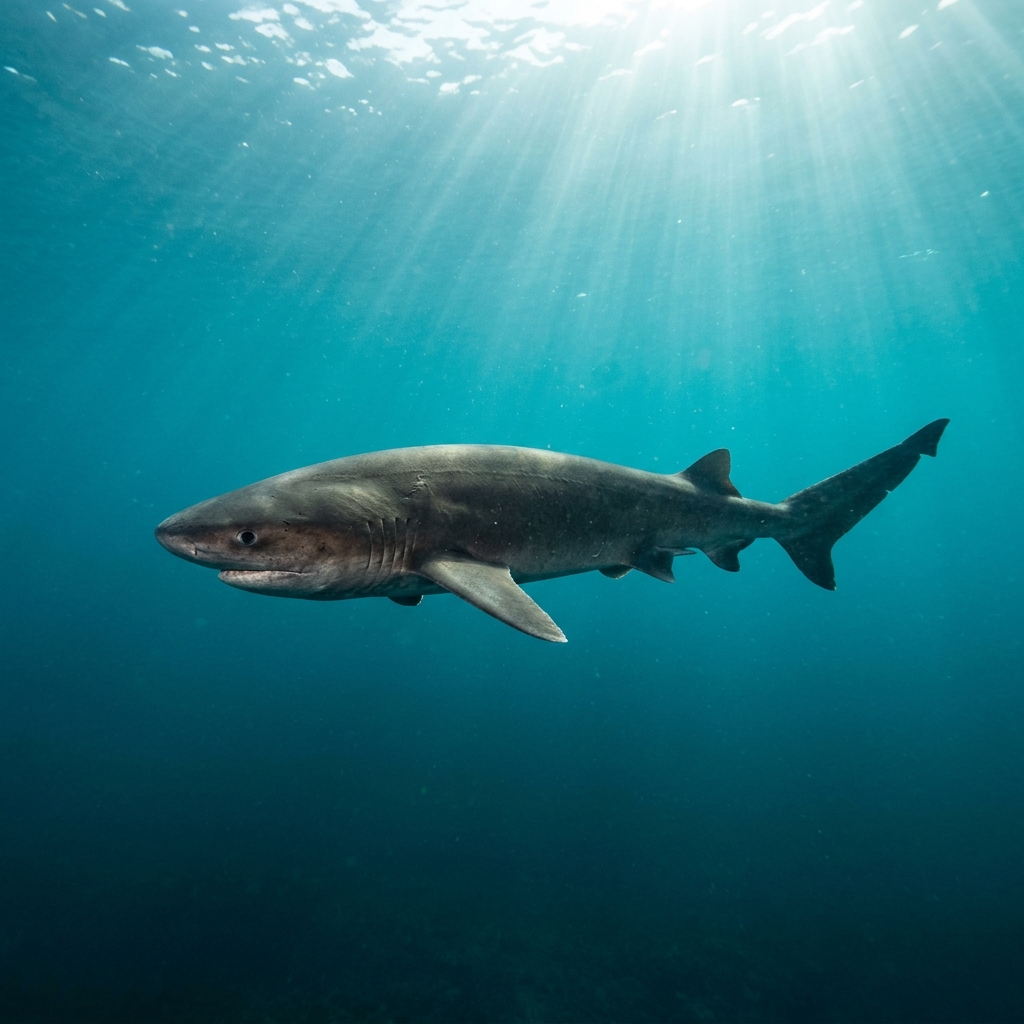
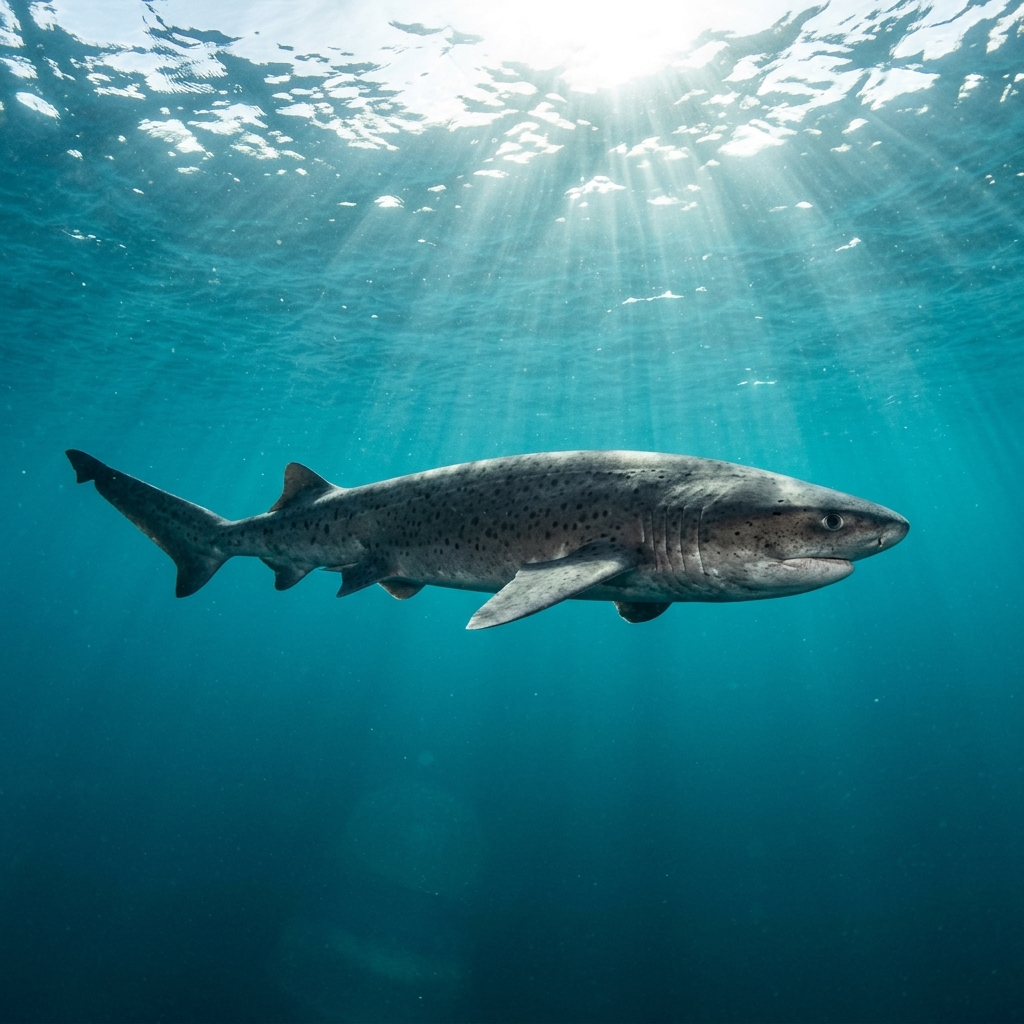
Seven gill slits on each side of the head are the instant giveaway, most sharks have five, so counting them rules everything else out. The body is broad and heavy, greyish-brown on top with scattered small black and occasionally white spots that contrast clearly against the flank. The head is notably wide and blunt, giving the shark a flattened, almost cow-like profile compared with the slender six-gill species. Adults are large enough to command attention in open water, often appearing to cruise slowly past before disappearing into blue.
Broadnose sevengills are typically seen cruising steadily through open water or just above rocky reefs, moving with a slow, deliberate sweep of the tail. They tend to be relatively unfazed by divers at a respectful distance, often maintaining course rather than fleeing, though individuals in shallower bays can be bolder and more investigative. Encounters are most commonly single animals or small, loose groups rather than aggregations.
Unlike most sharks, sevengills retain anatomical features linked to ancient lineages, including that extra gill slit, making them among the most primitive-looking sharks a diver is likely to encounter in temperate waters.
No clear seasonal peak has emerged from the sighting data, so encounters should be treated as possible year-round wherever the shark occurs. It favours cool to cold water roughly between 7 and 19 degrees Celsius, so the best windows in any given region align with those temperature conditions.
Reef neighbours a diver could mistake it for. Use the identification notes above to tell them apart.
Most sightings are logged along the cool-temperate coastlines of Australia, particularly South Australia and Tasmania, and across New Zealand's Fiordland and central coastal waters. The Pacific Coast of the United States and British Columbia in Canada also hold solid records, and the species is documented further afield in South Africa's Western Cape and along the Patagonia coast of Argentina.
Mapping where Broadnose Sevengill Shark is logged…
The strongest records come from South Australia, Tasmania, and across New Zealand, particularly around Fiordland and the central coast. The Pacific Coast of the United States, British Columbia in Canada, South Africa's Western Cape, and the Patagonia coast of Argentina also have logged sightings. All these locations share cool, temperate water conditions the species favours.
There is no well-defined season in the available sighting data, so encounters are possible year-round in suitable habitat. The species is tied to cool water between roughly 7 and 19 degrees Celsius, so plan dives when local conditions fall within that temperature range.
Count the gill slits, seven on each side is definitive. The body is broad and stocky with a wide, blunt snout, and the grey-brown flanks are scattered with small dark spots. This combination of a heavy build, wide head, and seven gill slits separates it from every common shark you are likely to encounter in temperate waters.
They are listed as Vulnerable by the IUCN. Slow growth, late maturity, and pressure from coastal fishing and habitat change are the main concerns. Divers can contribute by logging sightings with location and depth data, which helps researchers track where populations remain healthy.
Adults typically reach around 2.5 to 3 metres in length, with large females occasionally exceeding that. In the water they look impressively bulky due to the wide, heavy-set body, noticeably more substantial than a similarly-long reef shark.
The Broadnose Sevengill Shark is listed as vulnerable by the IUCN. Observe from a distance, avoid touching or feeding it, and report sightings to local marine research organisations.
The broadnose sevengill is listed as Vulnerable on the IUCN Red List, with coastal habitat pressures and slow reproduction contributing to population concerns. If you encounter one, avoid chasing or cornering it, and report your sighting through Fin or iNaturalist to help build the data picture for this species.
Site and sighting data is aggregated from diver logs, iNaturalist and GBIF. For taxonomy and conservation status: