Hexanchus griseus
Spot the Bluntnose Sixgill Shark in Croatia's Central Dalmatia or the US Pacific Coast. A deep-water shark seen in waters as cool as 8°C.
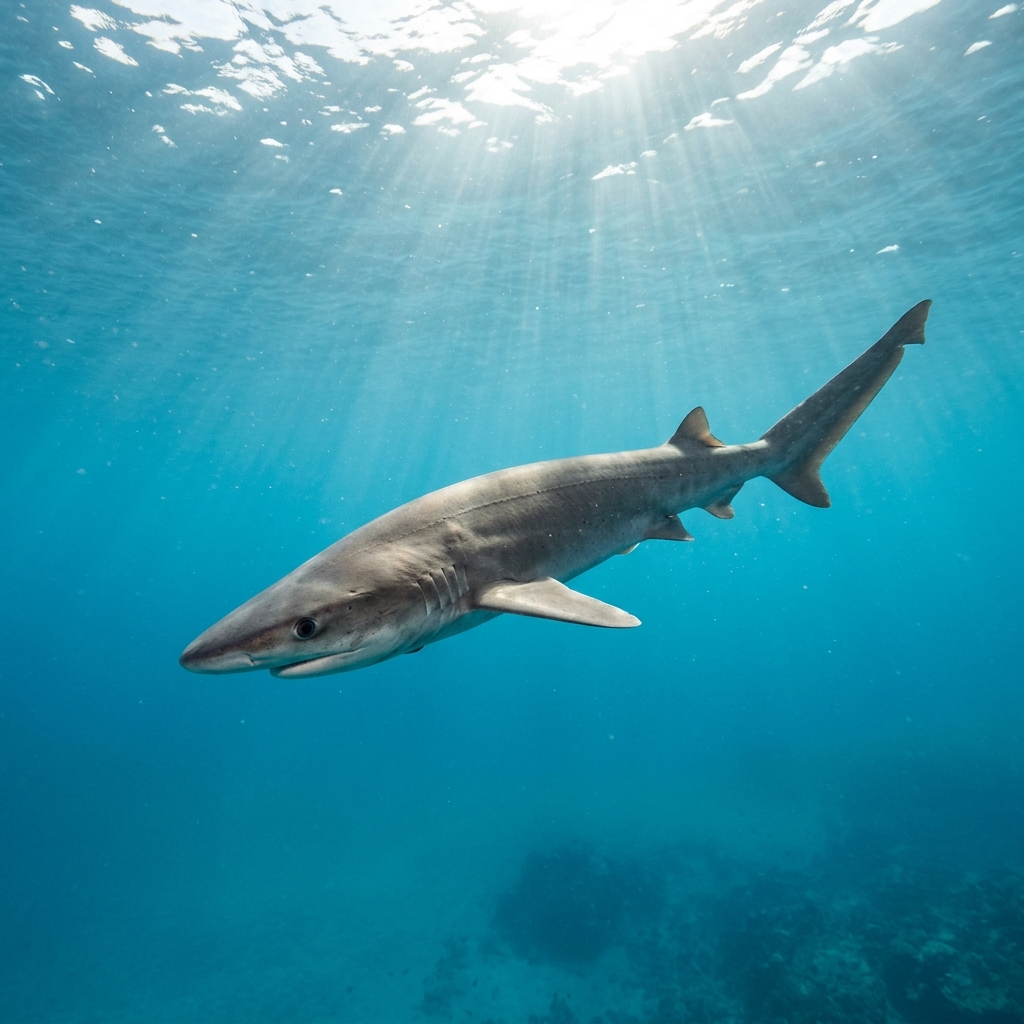
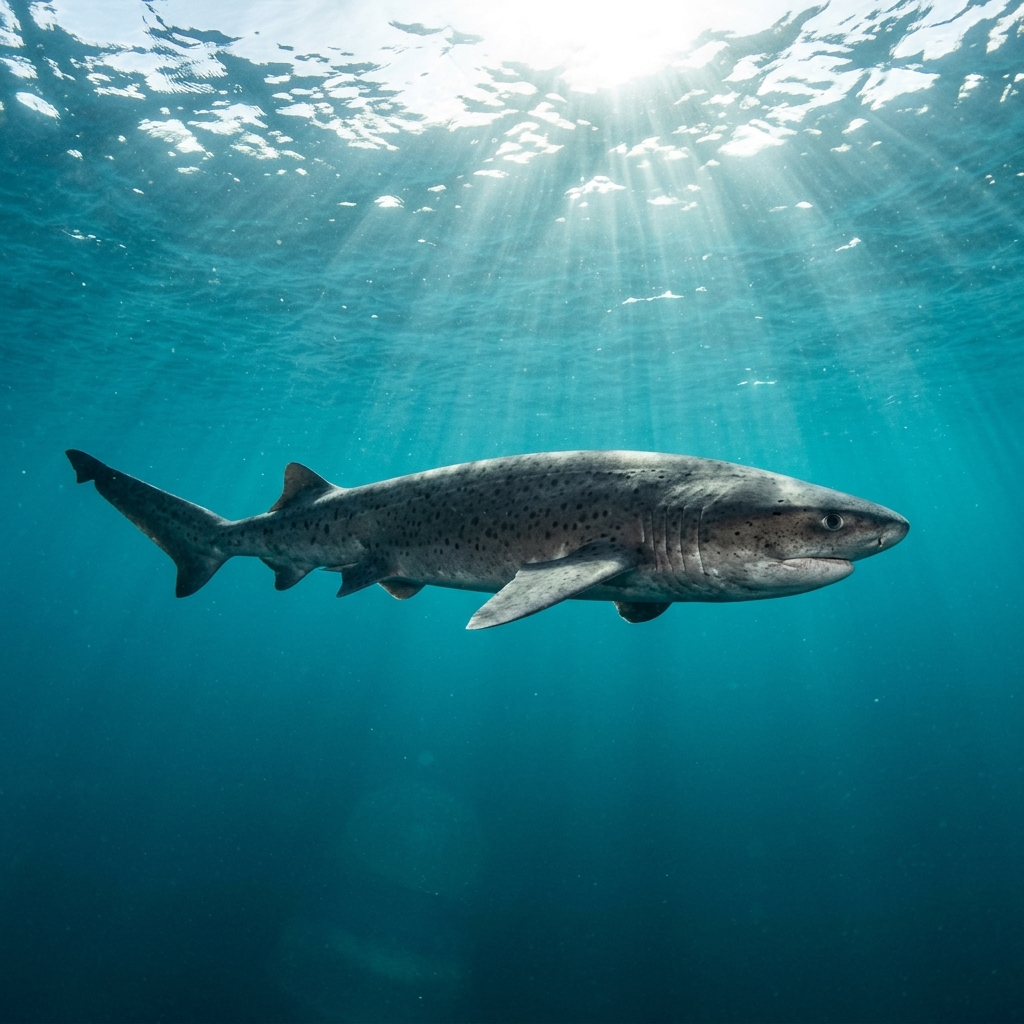
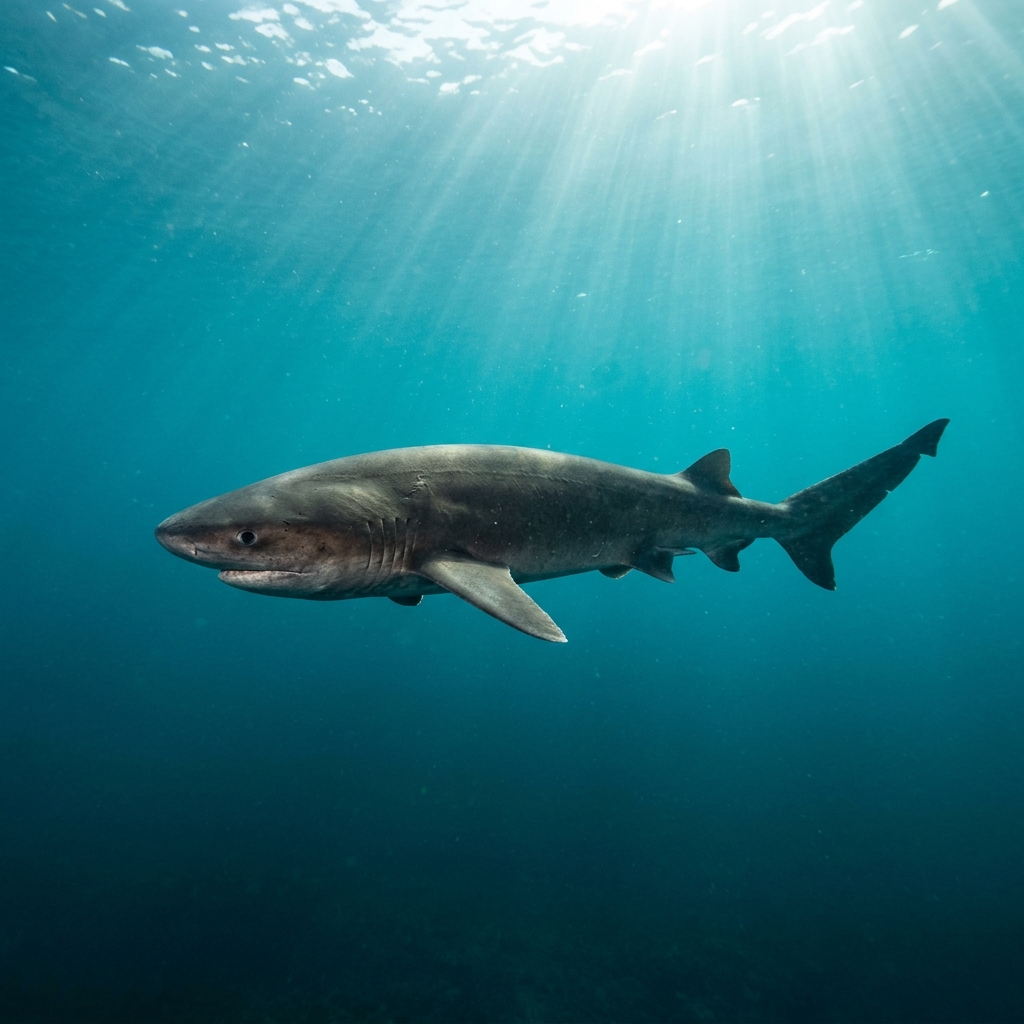
Six gill slits on each side are the single clearest feature, every other common shark has five. The body is broad and heavy-set, uniformly grey to brownish-grey with a pale underside and a subtle pale stripe along the lateral line. The single dorsal fin sits far back near the tail rather than midway along the body, giving the silhouette a distinctly different look from most sharks divers encounter. Eyes are large and greenish, adapted to low light.
Bluntnose sixgill sharks are typically encountered moving slowly through deeper or darker water, often close to the bottom or mid-water rather than patrolling a shallow reef. They tend to be unhurried around divers and rarely show defensive behaviour. Sightings are most often of solitary individuals drifting at depth.
The six gill slits are a primitive trait shared with sharks that appear in the fossil record hundreds of millions of years ago, making this one of the least-modified shark body plans still swimming today.
There is not enough seasonal data to point to a peak window, so sightings should be treated as possible year-round. The species tolerates water as cold as 8°C and has been logged up to around 22°C, so it is not restricted to warm-season diving.
Most sightings on record come from Central Dalmatia, Croatia, making the Adriatic the standout destination for encountering this species. A smaller cluster of observations comes from the Pacific Coast of the United States. Both regions reflect the shark's preference for cool, deeper water.
Mapping where Bluntnose Sixgill Shark is logged…
The vast majority of logged diver sightings come from Central Dalmatia, Croatia, making the Adriatic the most reliable region to target. A smaller number of observations come from the Pacific Coast of the United States. At most sites it is classed as uncommon, so encounters are a bonus rather than a guarantee.
There is no clearly identified peak season from diver observation data, so encounters are treated as possible at any time of year. The species is comfortable in water ranging from around 8°C to just over 21°C, meaning seasonal temperature swings in Croatia and the US Pacific Coast do not obviously push them away.
Count the gill slits. Six on each side is the definitive tell, no other large shark commonly encountered by divers shares this trait. The single dorsal fin placed far back near the tail, the broad heavy body, large greenish eyes, and uniform grey-brown colouration all reinforce the ID.
They are not considered dangerous to divers. Encounters are typically calm; the shark tends to move slowly and shows little interest in divers. As with any large shark, maintain a respectful distance and avoid erratic movements.
They are one of the largest sharks in the world, with adults commonly reaching 4 to 5 metres and large females recorded beyond that. Their bulk is noticeable underwater; the body is thick and heavy rather than streamlined, which helps distinguish them from similarly sized open-water sharks.
They are currently listed as Near Threatened by the IUCN. Their slow growth, late maturity, and low reproductive output mean populations recover slowly from any pressure. Divers can contribute by logging sightings accurately on citizen-science platforms.
Site and sighting data is aggregated from diver logs, iNaturalist and GBIF. For taxonomy and conservation status: