Cymodoceaceae spp.
Sea grass beds thrive across tropical reefs from Florida to the Maldives and the Philippines. Here's where divers encounter them and what to look for.
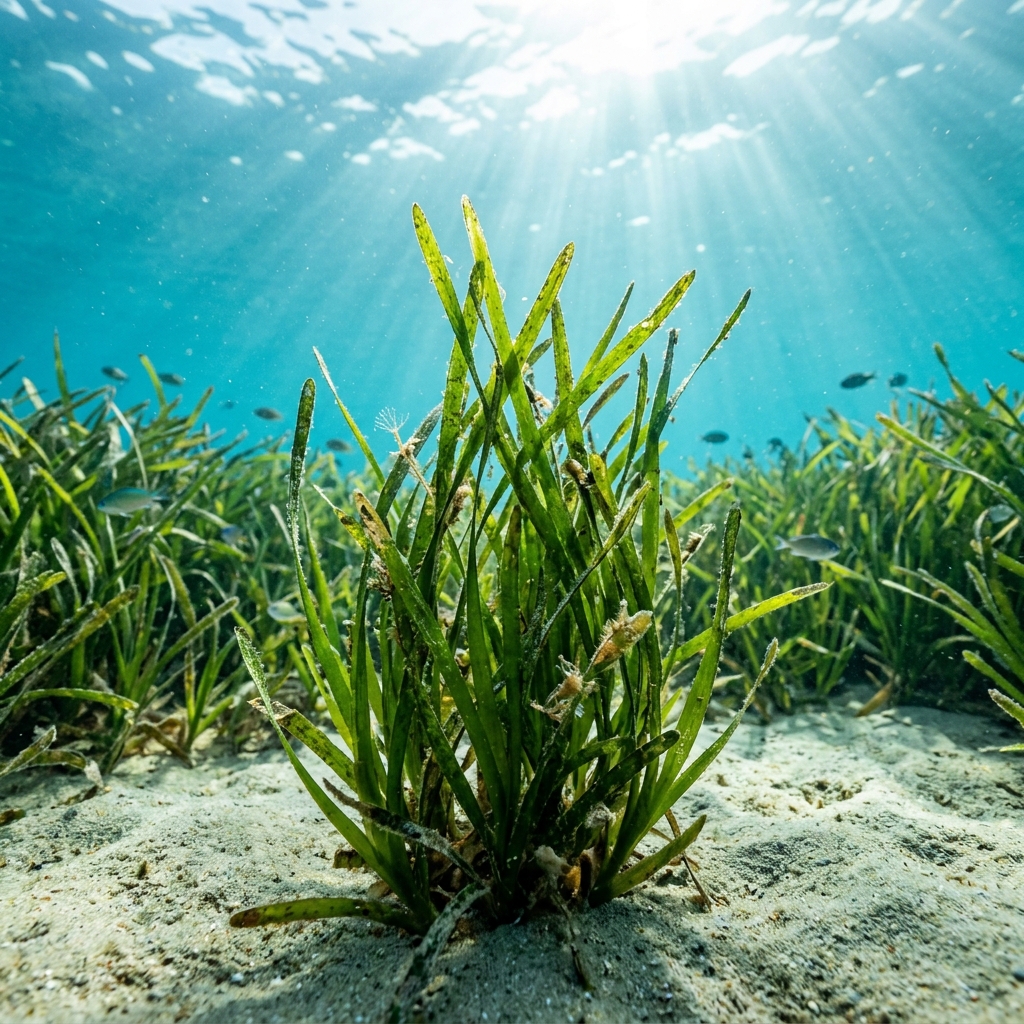
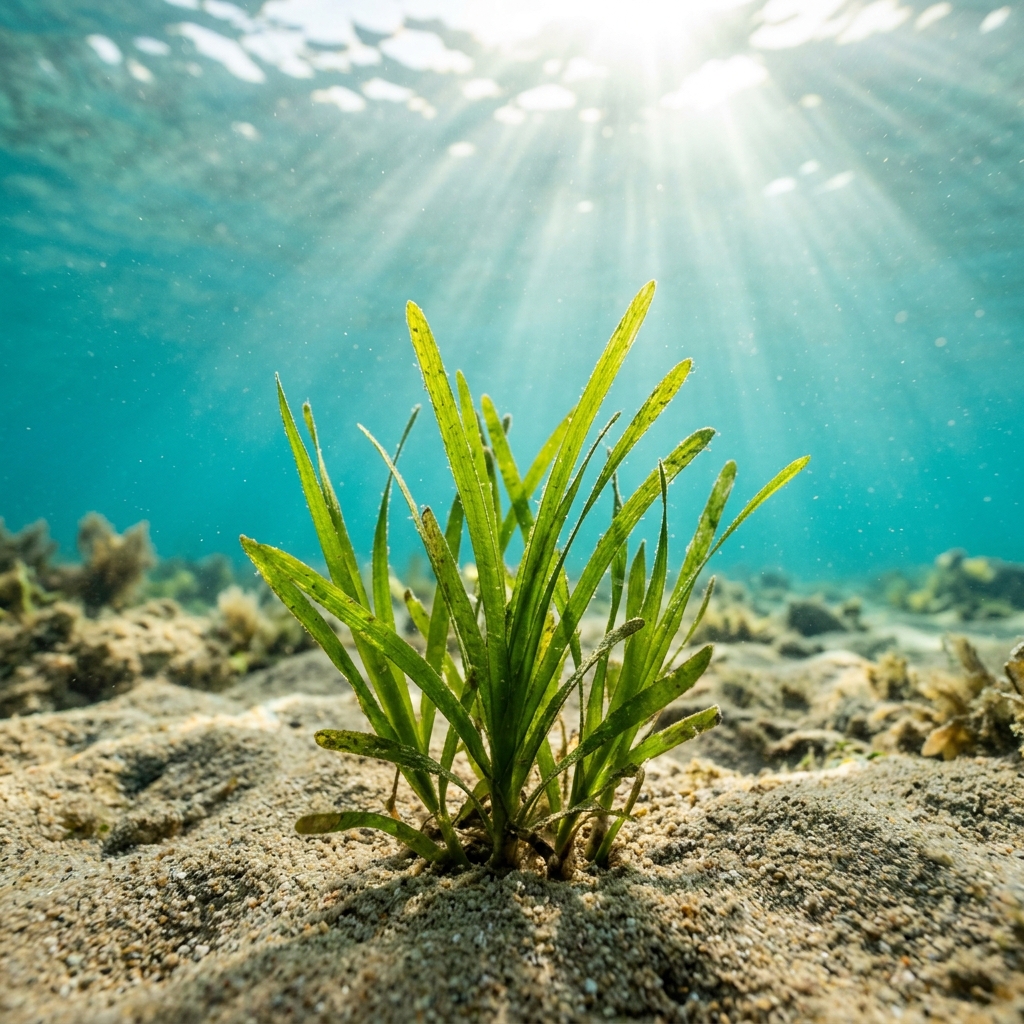
Cymodoceaceae sea grasses form dense underwater meadows of narrow, ribbon-like or strap-shaped blades that are typically bright to mid-green, growing directly from sandy or silty seafloors in shallow coastal water. The blades are flattened and smooth, often with fine parallel veins, and arise from a network of creeping rhizomes (underground stems) that knit the sediment together. Unlike algae, the blades grow from the base rather than the tip, so older, grazed ends can look frayed or brown. The overall impression underwater is of a rolling, grassy carpet that sways with the current.
Sea grass doesn't move toward or away from divers, but the meadows are anything but static: blades sway rhythmically with surge and current, and the beds are constantly being grazed by turtles, dugongs, sea urchins, and fish whose movement you'll notice long before you spot the grazers themselves. Look along the edges where the grass meets open sand for hunting predators ambushing prey animals that live among the blades. During a safety stop or shallow dive, hovering just above a sea grass bed reveals a surprising amount of wildlife activity in the leaf litter.
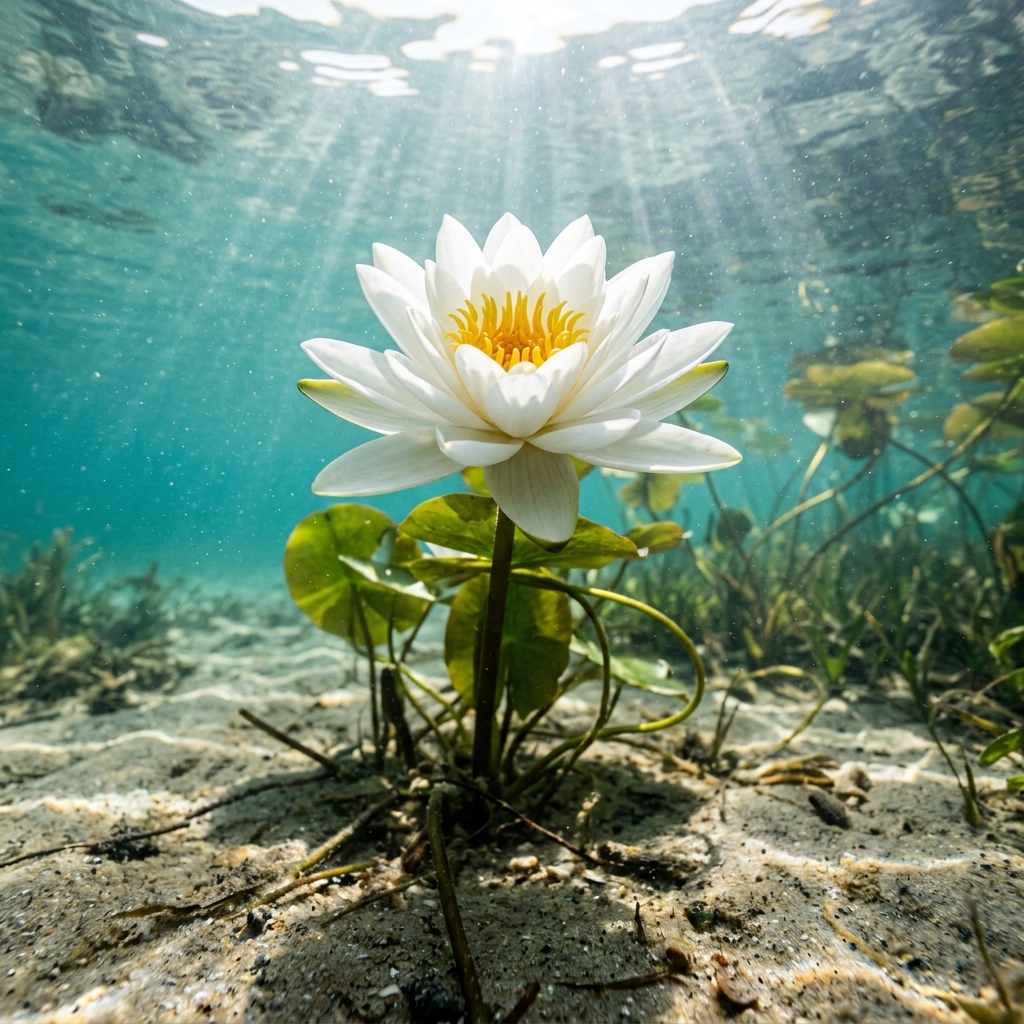
Cymodoceaceae sea grasses are flowering plants, not algae or mosses. They produce tiny, pollen-bearing flowers that are pollinated underwater by water currents, making them one of the few fully submerged flowering plants on the planet. This makes every meadow a true flowering garden, even if the blooms are easy to miss.
Sighting data shows no concentrated season, so sea grass beds are effectively a year-round feature wherever they occur. The observed water-temperature range of roughly 21 to 29 °C aligns with tropical and warm-temperate reef conditions, meaning you can expect to encounter beds on any dive in those regions regardless of month.
Reef neighbours a diver could mistake it for. Use the identification notes above to tell them apart.
Sea grass from the Cymodoceaceae family is logged across a wide band of tropical and subtropical coastlines, with the strongest representation in Florida and the Southeast United States, the Maldives, and the Philippines and Indonesia. Australia also has a strong presence, particularly in Queensland and Western Australia. Brazil's Rio de Janeiro and São Paulo coast and Thailand's sites round out the major hotspots.
Mapping where Sea Grass is logged…
Cymodoceaceae sea grass beds are found across tropical and warm-subtropical coastlines worldwide. Reliable encounters have been logged in Florida, the Maldives, the Philippines, Indonesia, Australia, and Brazil, among many other regions. They typically grow in the shallows, making them accessible on snorkel dives as well as scuba.
Sea grass meadows in this family are present year-round wherever conditions suit them. Water temperatures between roughly 21 and 29 °C are the sweet spot, which covers most tropical reef destinations in every season. There is no single peak month based on available data.
Look for dense carpets of narrow, flat, green blades growing up from sandy or silty seabed, with no air pockets or float organs. The blades have parallel veins and grow from a base, so tips may appear worn. Distinguishing Cymodoceaceae from Posidonia seagrass is tricky: Posidonia blades tend to be broader and its dead leaf material often forms fibrous 'mats' on the seabed, whereas Cymodoceaceae species generally have narrower, more ribbon-like blades.
Sea grass poses no risk to divers. The blades are soft and flexible. The main practical concern is buoyancy control: kicking into a sea grass bed can uproot rhizomes and damage the habitat, so it's worth hovering rather than kneeling.
Sea grass meadows are nursery habitat for juvenile fish, invertebrates, and crustaceans, and feeding grounds for larger animals including sea turtles and dugongs. Seahorses, pipefish, and small cephalopods use the blades for camouflage. Looking closely at the base of the blades often reveals nudibranchs, tiny crabs, and shrimp that many divers overlook.
Site and sighting data is aggregated from diver logs, iNaturalist and GBIF. For taxonomy and conservation status: