Nautilus macromphalus
A striped, coiled-shell cephalopod logged uncommonly in the Loyalty Islands, New Caledonia, in warm 22-28C water year-round.
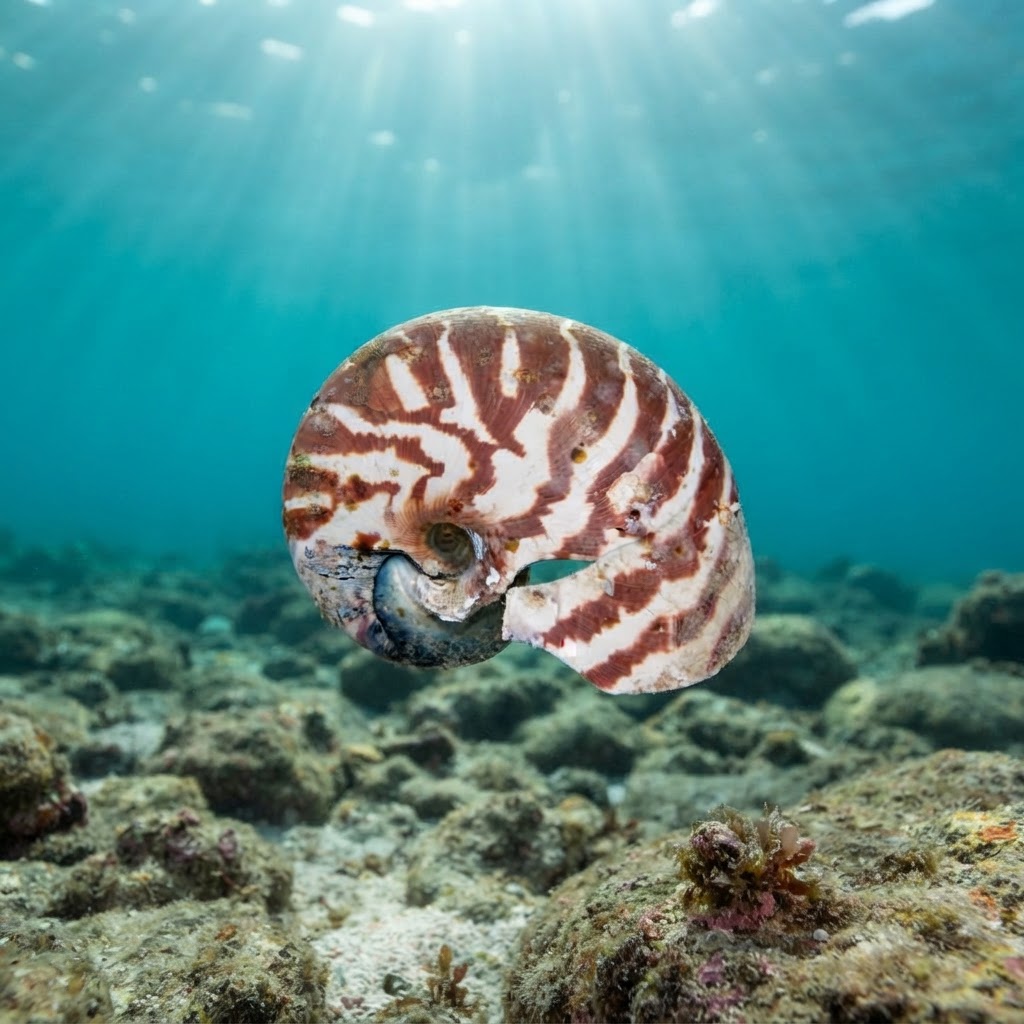
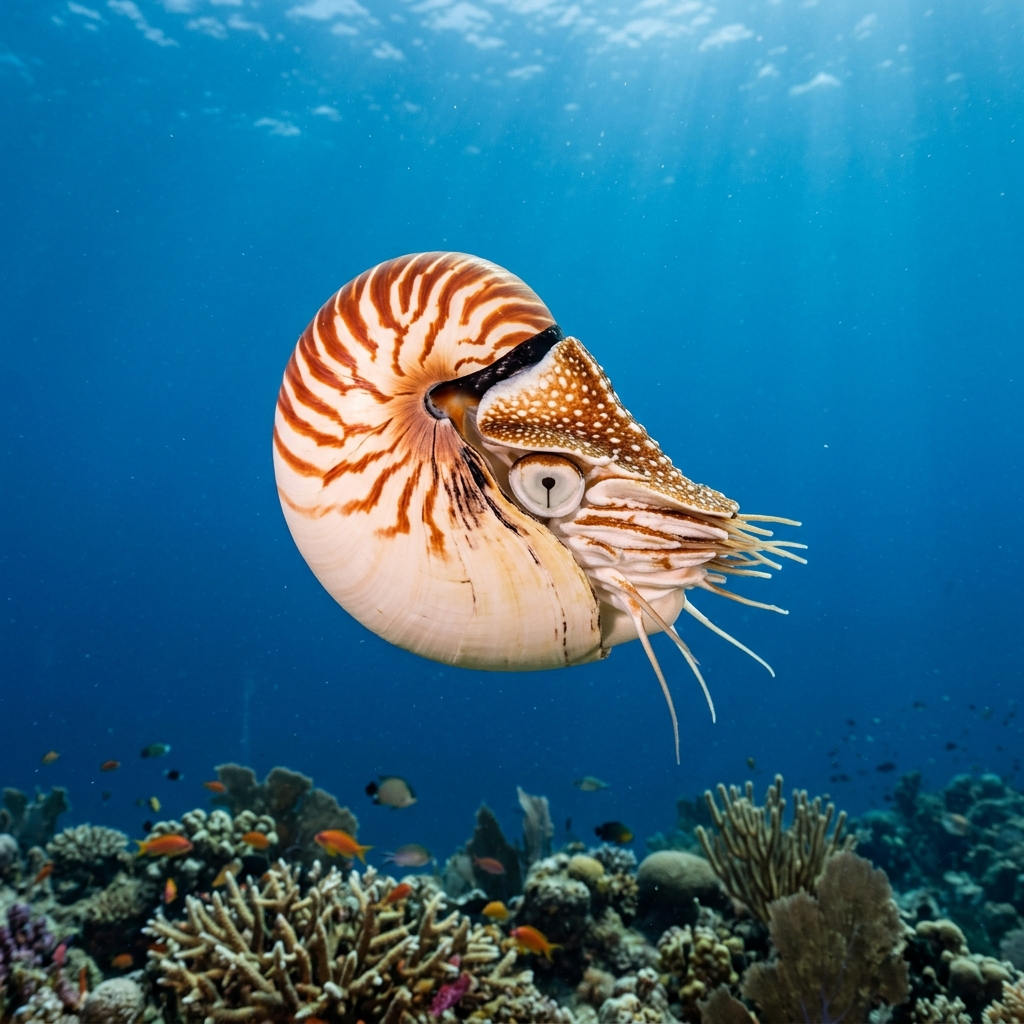
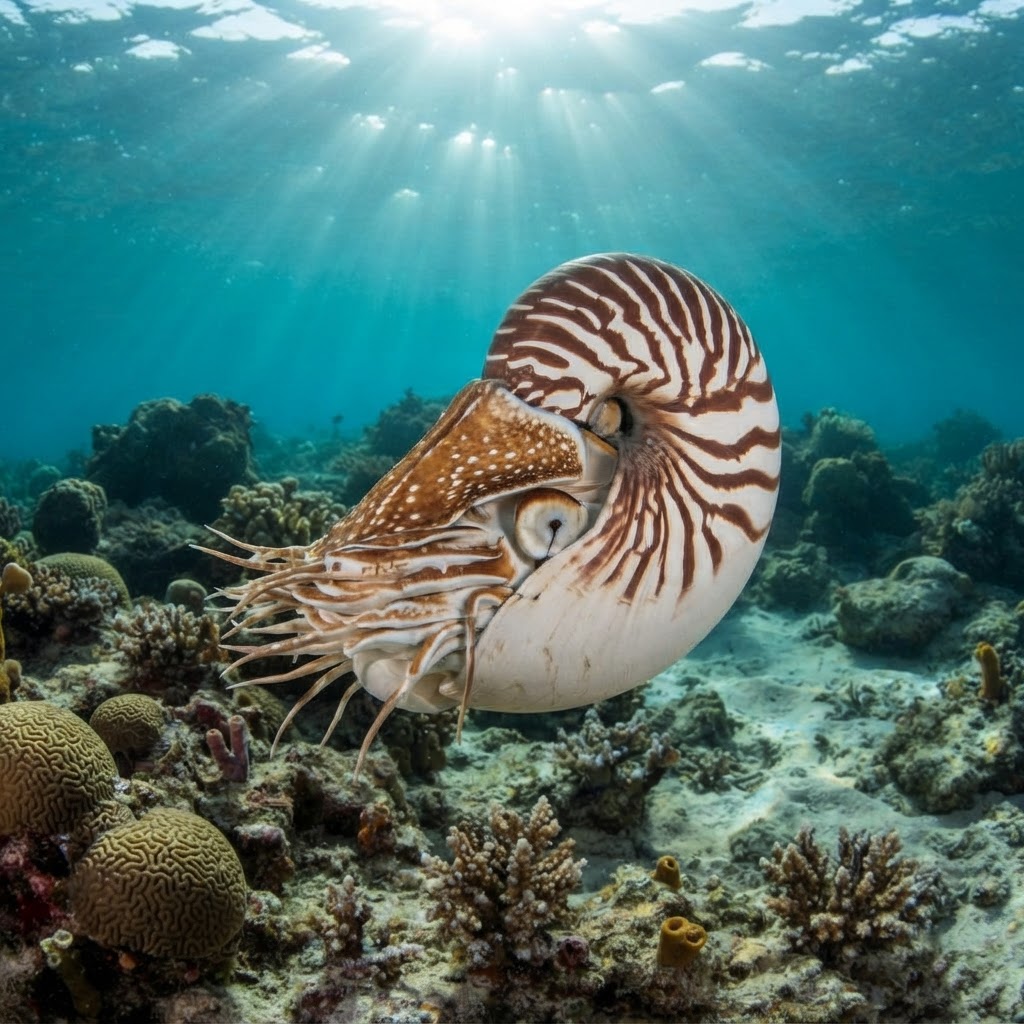
A coiled, ridged shell about 11 cm across, banded with brown-orange stripes over a cream background, is the giveaway. Look for the tightly curled shape and the small, deep umbilicus (navel-like indent) on the shell's underside that gives this species its common name. Numerous short tentacles cluster around the mouth, and large pinhole-style eyes sit low on the head, quite unlike any fish or typical mollusc silhouette on the reef.
Divers who encounter this nautilus typically find it drifting or resting near deeper reef walls and dropoffs, moving with slow jet-propelled pulses rather than active swimming. It tends to stay unbothered by divers, retreating into its shell if approached too closely rather than fleeing outright. Most sightings happen away from shallow daytime reef traffic, consistent with a species that is more active at night and at depth.
Unlike squid and octopus, nautiluses keep their ancestral external shell and use it as a buoyancy tank, pumping gas and fluid between internal chambers to control how they float or sink.
Sightings don't show a clear season, and the observed water temperature range of 21.9 to 27.9 C spans most of the year in this part of the Pacific, so it's best treated as a year-round possibility rather than tied to specific months.
Reef neighbours a diver could mistake it for. Use the identification notes above to tell them apart.
Divers logging this species have found it in the Loyalty Islands region of New Caledonia, currently the only confirmed spot in the data. It is a real specialty sighting rather than a species you can plan a trip around at multiple destinations, so New Caledonia is the place to look.
Mapping where Bellybutton Nautilus is logged…
The one confirmed diver sighting comes from the Loyalty Islands region of New Caledonia. Outside this area it isn't a species divers are logging, so New Caledonia is currently the destination for it.
There isn't enough data to point to a specific season, and the water stays warm enough (roughly 22 to 28C) across much of the year for it to be a year-round possibility.
Look for a coiled shell around 11 cm wide with brown and cream stripes, and a distinctive small navel-like indent on its underside. Short tentacles ring the mouth and the eyes are simple pinhole structures rather than lens eyes.
They typically reach around 11 cm across the shell, making them one of the smaller nautilus species divers might encounter.
It keeps an external shell divided into gas-filled chambers, which it uses like a built-in buoyancy tank to rise and sink instead of swimming to change depth.
Site and sighting data is aggregated from diver logs, iNaturalist and GBIF. For taxonomy and conservation status: