Goniistius gibbosus
Bold black-and-white striped reef fish, most reliably logged around Western Australia in water from 15 to 23C. Here's where to find one.
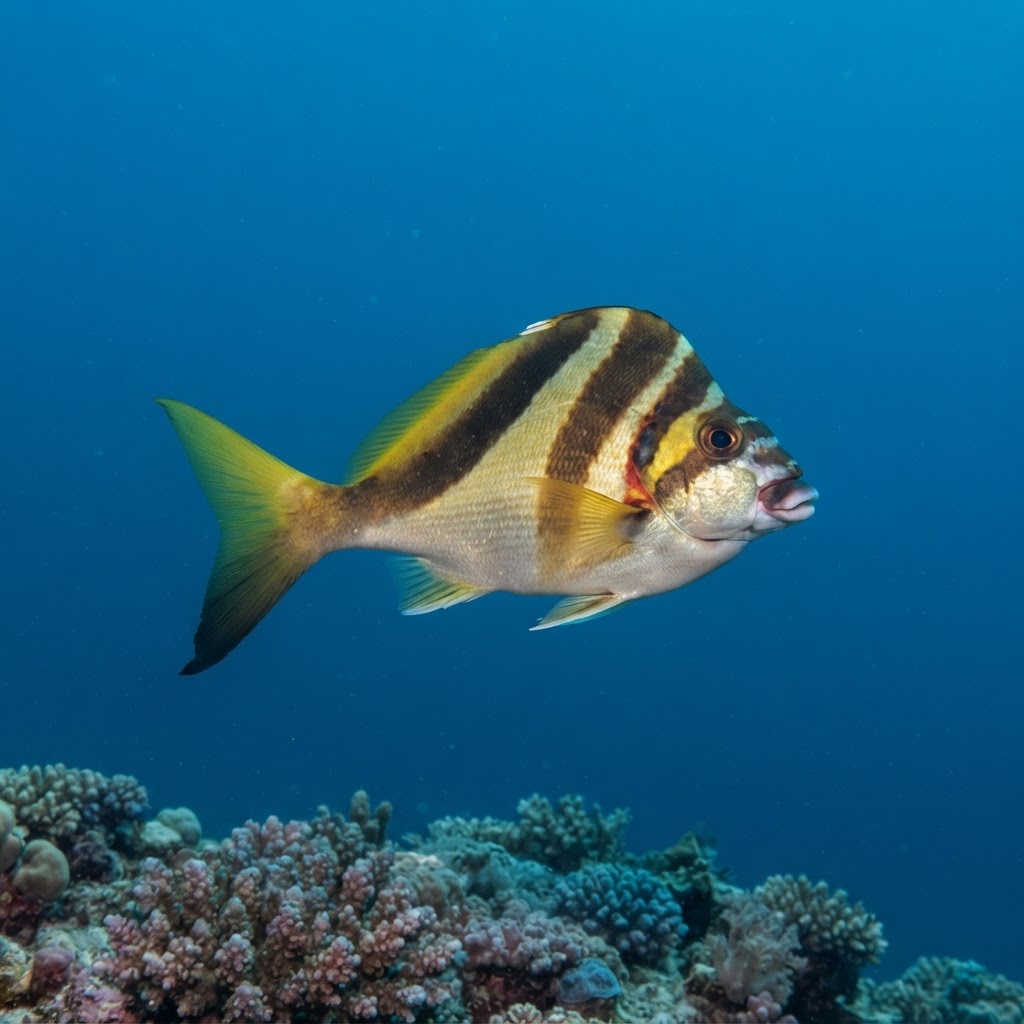
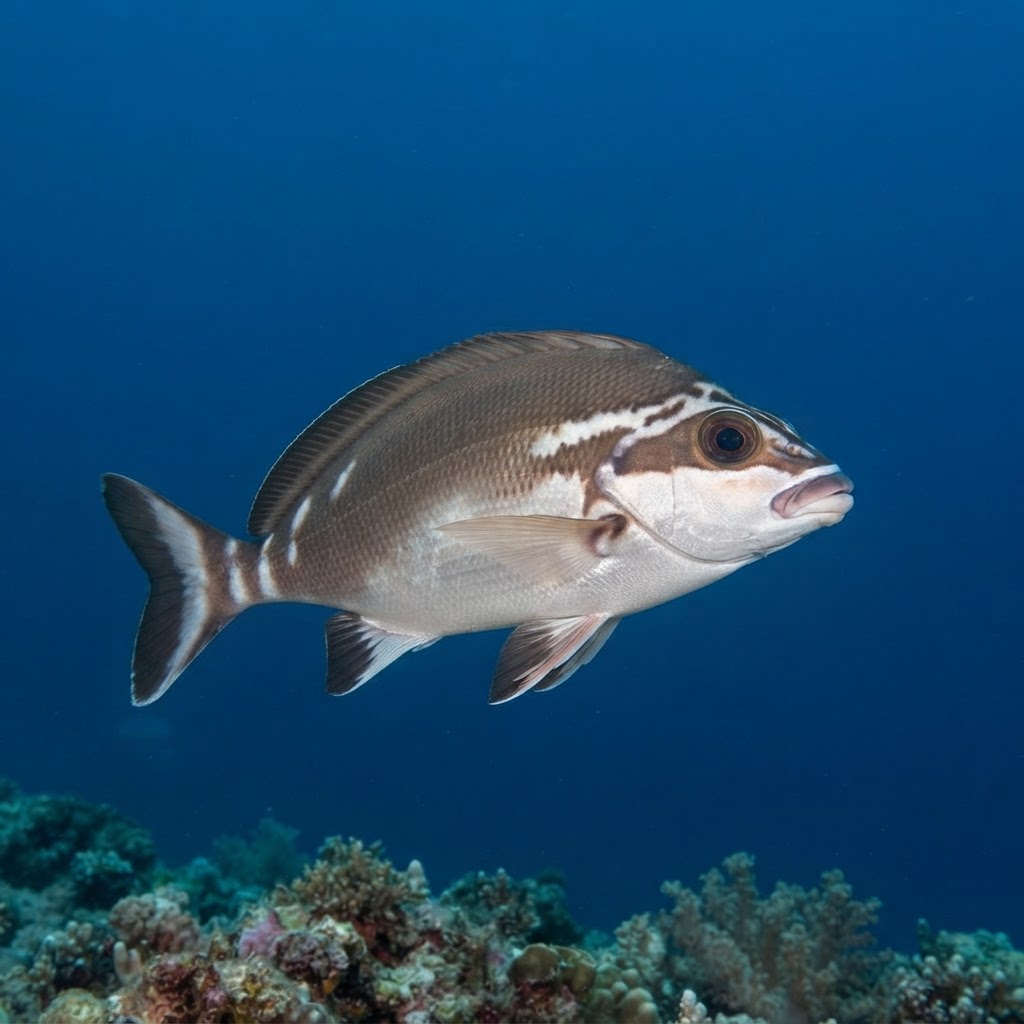
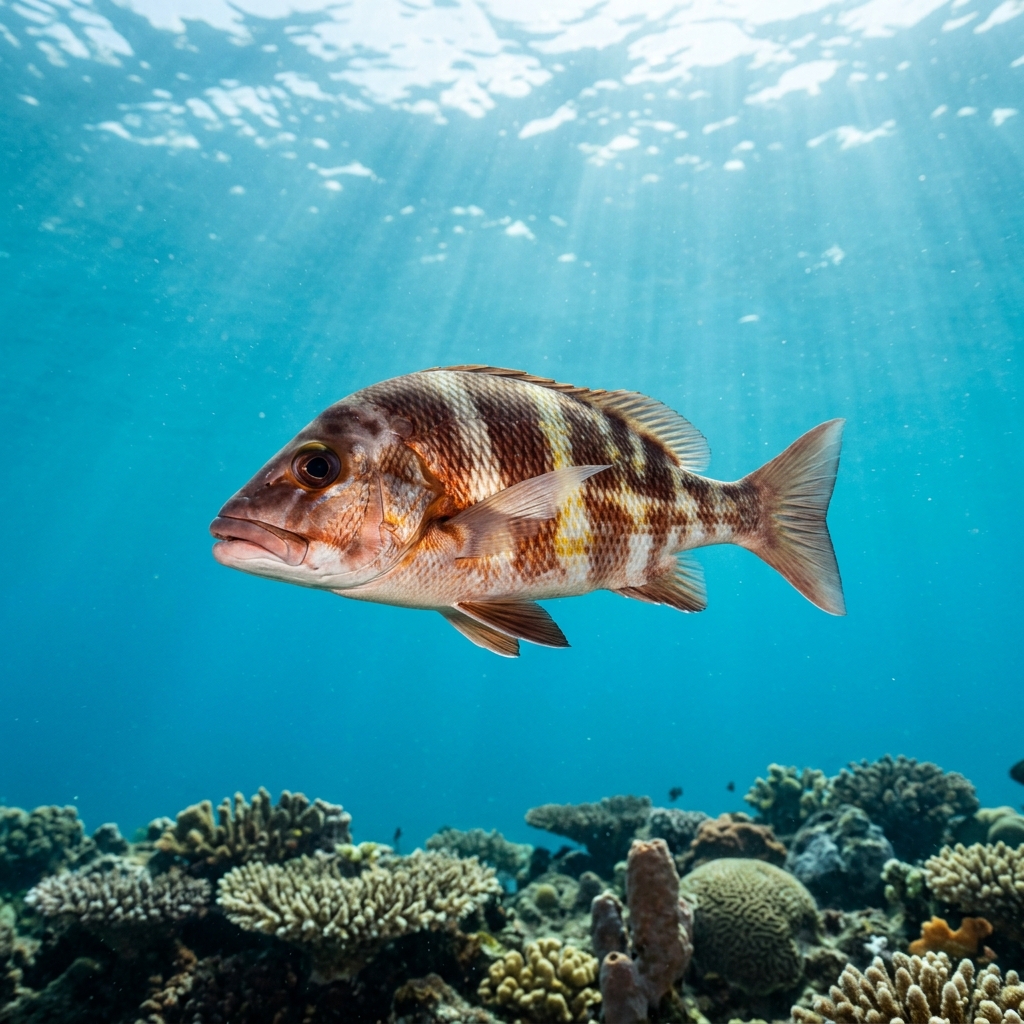
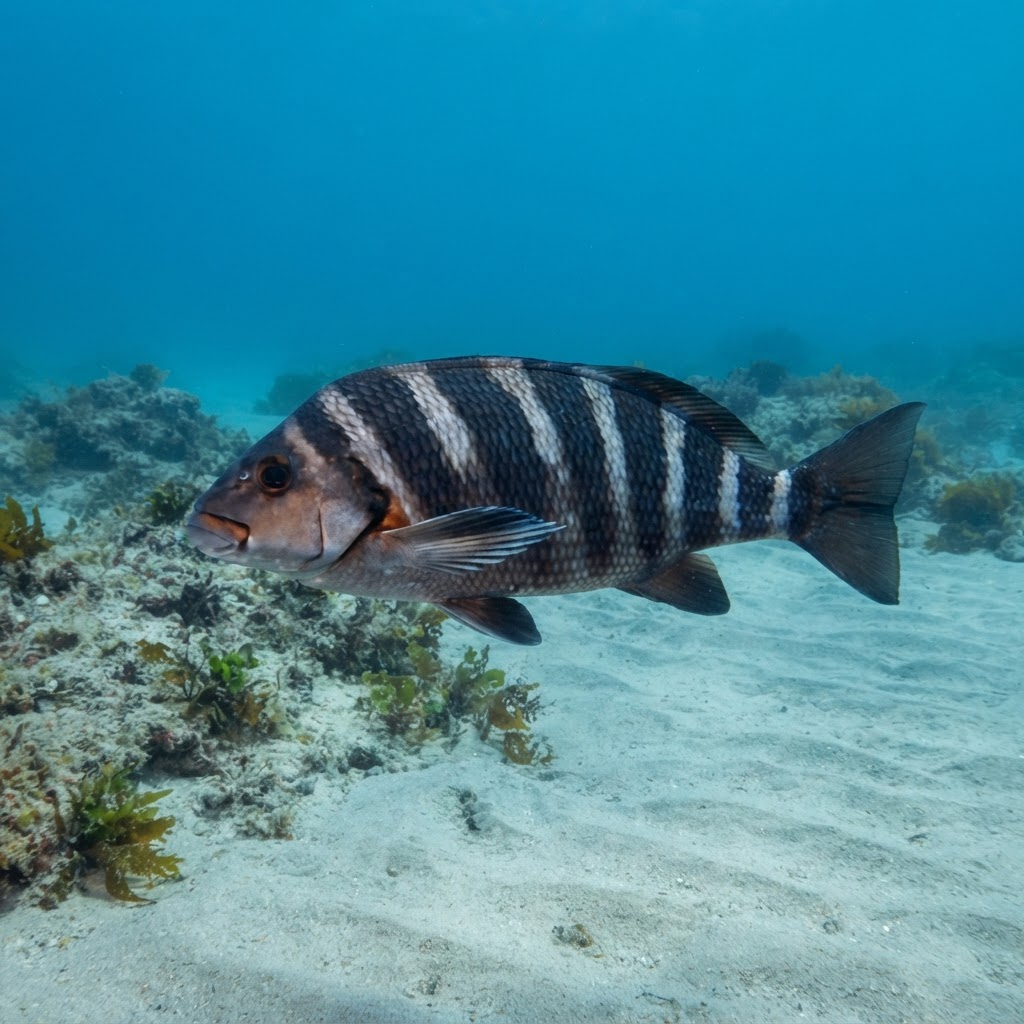
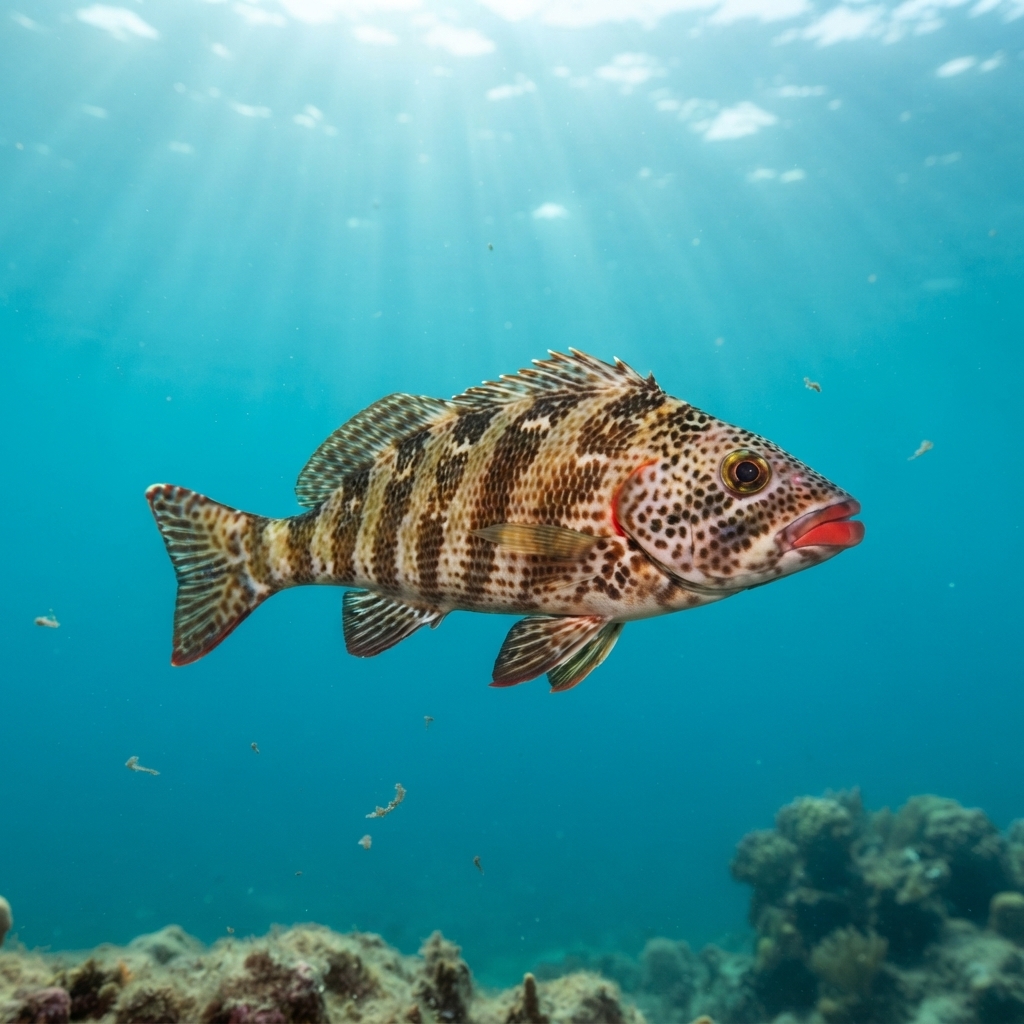
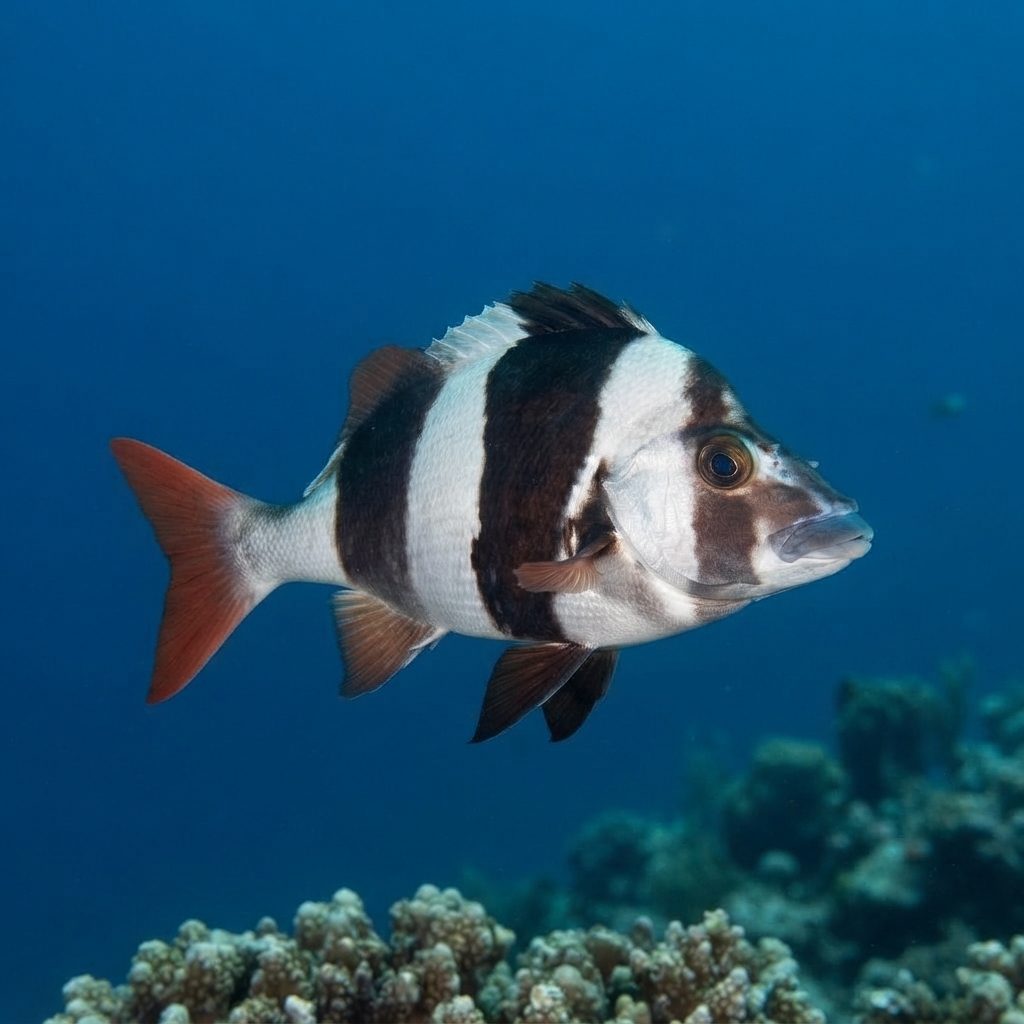
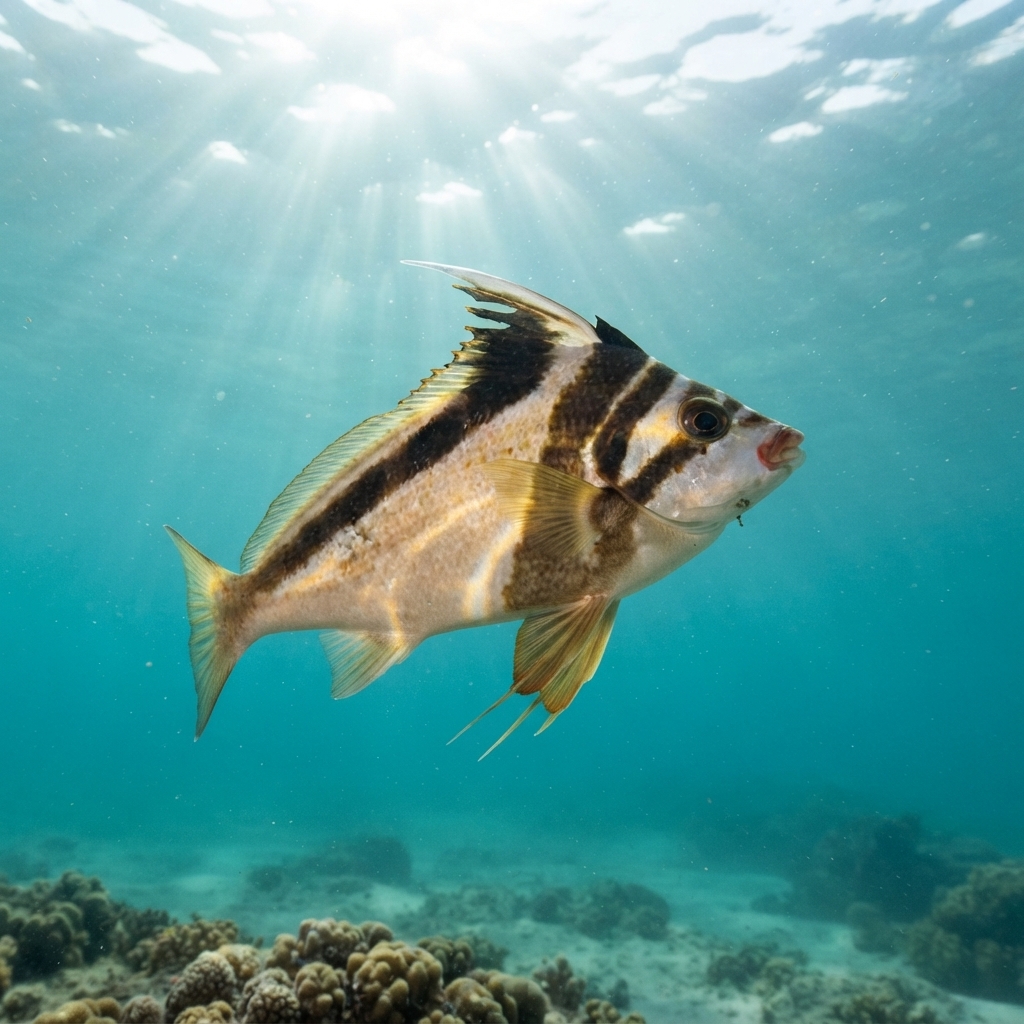
Look for a stocky, deep-bodied fish around 21cm with strong black-and-white banding running down the body, giving it the same bold contrast as its namesake bird. The head and upper body carry dark stripes that break up against a paler belly, and the tail and fins often show a similar barred pattern rather than solid colour. It has the chunky, blunt-nosed profile typical of morwongs, quite different from the slender, spiny-finned look of unrelated reef fish sharing its habitat.
Divers most often find this species hovering or picking around low reef structure and rocky ledges, behaving like a typical temperate reef forager rather than an open-water swimmer. It tends to keep a low profile against the reef rather than approaching divers, and most logs describe it as an uncommon sighting rather than something that schools in numbers. Its patterning helps it blend into dappled light and shadow along broken rock and reef edges.
Its bold black-and-white striping is unusual among temperate reef fish in Western Australia, making it one of the more visually distinctive morwongs a diver can pick out at a glance rather than having to check fin counts or subtle colour differences.
Sightings don't show a clear seasonal pattern, and with a comfortable range of roughly 15.3 to 23.3C it appears to be a year-round resident on the reefs it inhabits rather than a seasonal visitor. Plan around good diving conditions in Western Australia rather than a specific month.
Reef neighbours a diver could mistake it for. Use the identification notes above to tell them apart.
Almost every logged sighting comes from Australia, with Western Australia standing out as the clear stronghold for this species. If you're diving temperate reef and rocky reef sites along the Western Australian coast, this is one of the morwongs you're most likely to run into, even though it typically shows up as an uncommon rather than everyday find.
Mapping where Western Crested Morwong is logged…
The strongest sightings by far come from Western Australia, where it turns up across a good number of temperate reef and rocky reef sites. Outside Australia it isn't a species divers commonly log.
There's no strong seasonal pattern in the sighting data, and its temperature range of roughly 15 to 23C spans most of the diving calendar in Western Australia, so it's considered a year-round species rather than a seasonal target.
Check for a stocky, blunt-nosed fish around 21cm long with bold black-and-white stripes running along the body and fins. The strong contrast is the quickest giveaway compared with other reef fish sharing the same rocky habitat.
They typically reach around 21cm in length, a modest size that fits comfortably among other small to mid-sized temperate reef fish found on the same rocky reefs.
No, they pose no threat to divers and are simply a reef-associated fish to watch and photograph rather than something to be cautious around.
Site and sighting data is aggregated from diver logs, iNaturalist and GBIF. For taxonomy and conservation status:
Crested Morwong
172 sites