Chiloscyllium spp.
Nocturnal reef sharks common in Sulawesi, Luzon, and Queensland, resting under ledges in 23-30C water year-round.
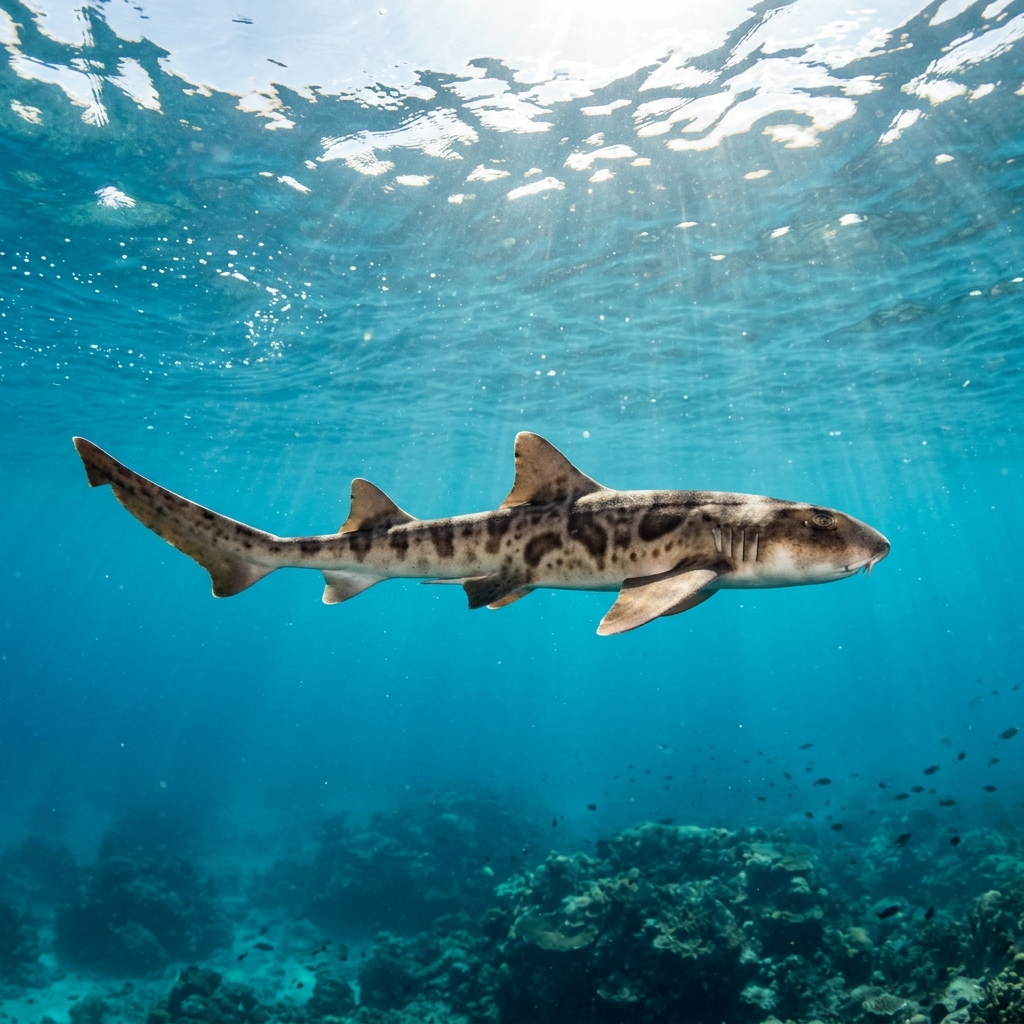
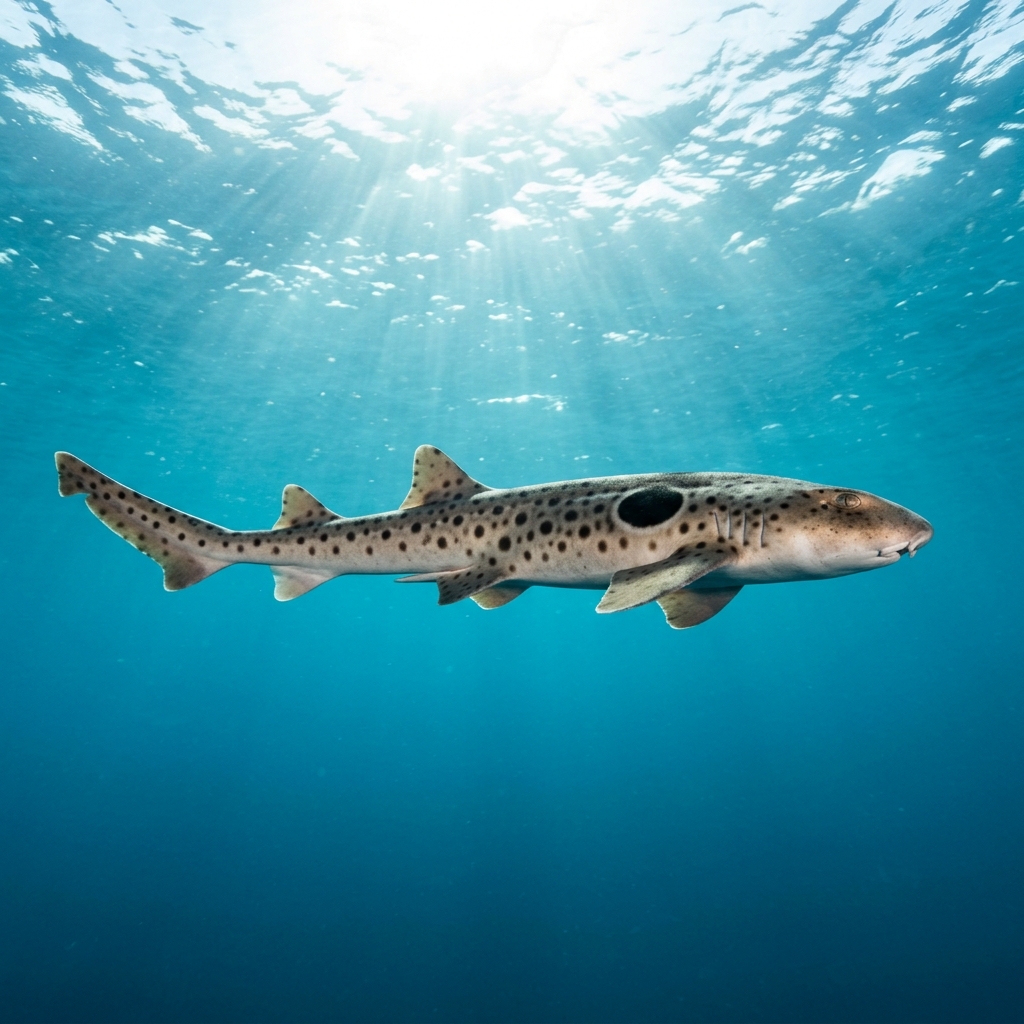
Slim, elongated body with a rounded snout and small barbels near the mouth, usually curled up motionless under a coral ledge or in a sandy gap rather than swimming in open water. Colouring ranges across the genus from plain grey-brown to distinct dark bands or scattered dark spots, so pattern alone is not a reliable ID between species. Two features that hold across the group: a long, low tail fin that makes up a large share of total body length, and a habit of resting flat on the substrate with the body slightly bent.
Divers most often find these sharks tucked under coral ledges, in crevices, or resting on sand during the day, staying still enough to be mistaken for a rock at first glance. They become more active after dark, when they hunt low over the reef and in sandy patches for small invertebrates, and by day they generally ignore divers and make no attempt to flee unless approached closely.
Several species in this genus can survive extended periods with very low oxygen and even brief air exposure in tide pools, an adaptation that lets them shelter in shallow reef flats other sharks avoid.
No clear seasonal pattern shows up in the data, and with a comfortable range of roughly 23 to 30C across its Indo-Pacific reefs, it is logged year-round rather than during any particular month.
Reef neighbours a diver could mistake it for. Use the identification notes above to tell them apart.
Most reliably logged across Indonesia and the Philippines, with strong numbers in Sulawesi, Luzon, Palawan, Mindanao, and the Visayas, and a solid presence in Queensland and Western Australia. Thailand, Malaysia, Japan (notably Okinawa and the Ryukyu Islands), Vietnam, and India also turn up sightings, making this one of the more widespread small sharks on Indo-Pacific reef dives.
Mapping where Bamboo Shark is logged…
Sulawesi and the Philippines (Luzon, Palawan, Mindanao, Visayas) are the strongest regions, alongside Queensland and Western Australia. Thailand, Malaysia, Japan's Okinawa and Ryukyu Islands, Vietnam, and India also have regular sightings.
There's no strong seasonal pattern in sightings, and warm reef temperatures year-round mean they're present on Indo-Pacific reefs in any month.
No. They're small, slow-moving, and spend most of the day motionless under ledges, posing no threat to divers who leave them undisturbed.
Look for a slender, elongated shark resting flat on sand or wedged under a ledge, with a long low tail fin and small barbels near the mouth. Colour and banding vary by species, so posture and habitat are often the better clues.
Some species in this genus tolerate very low oxygen levels and brief air exposure, letting them shelter in shallow tide pools and reef flats that would stress most other sharks.
Site and sighting data is aggregated from diver logs, iNaturalist and GBIF. For taxonomy and conservation status: