Astrophyton muricatum
Spot basket starfish across the Caribbean, from Roatán to Martinique. Know when to look and how to tell them apart from Gorgon's Head.
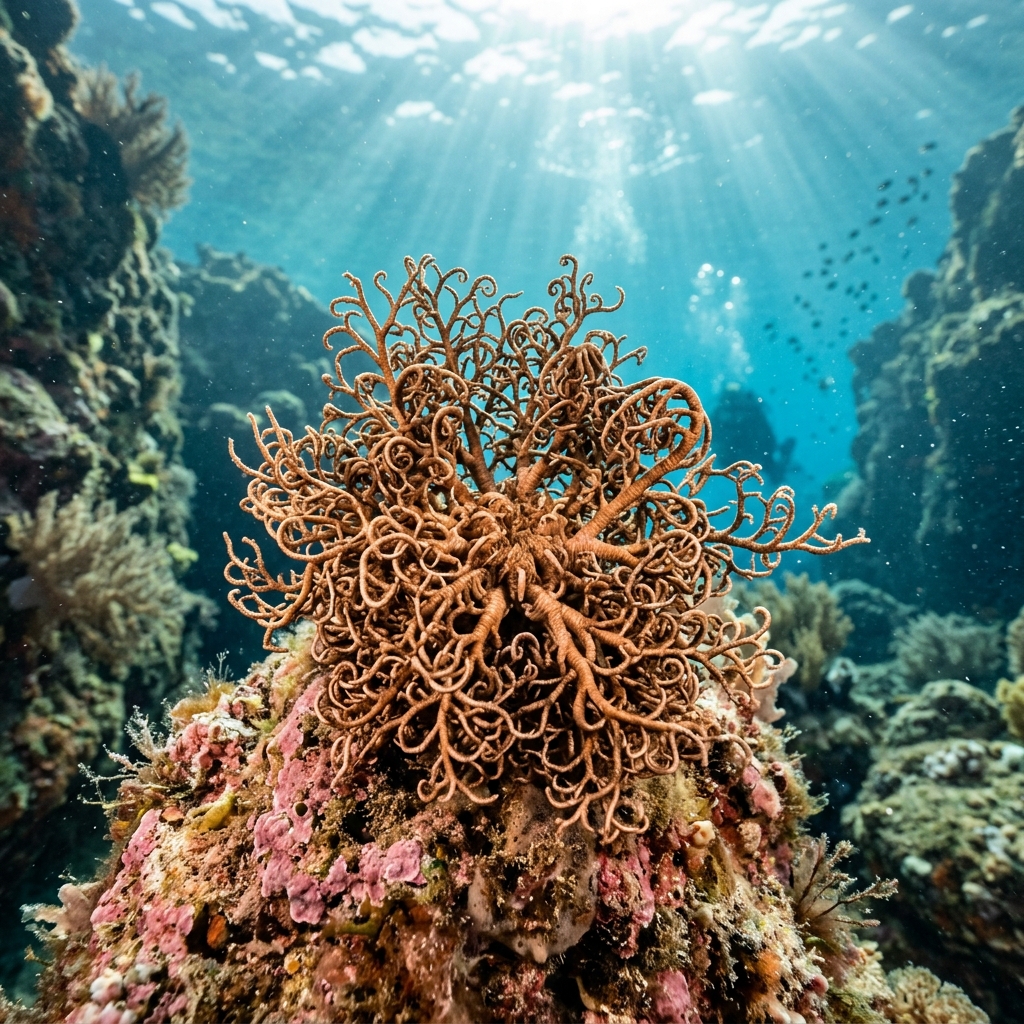
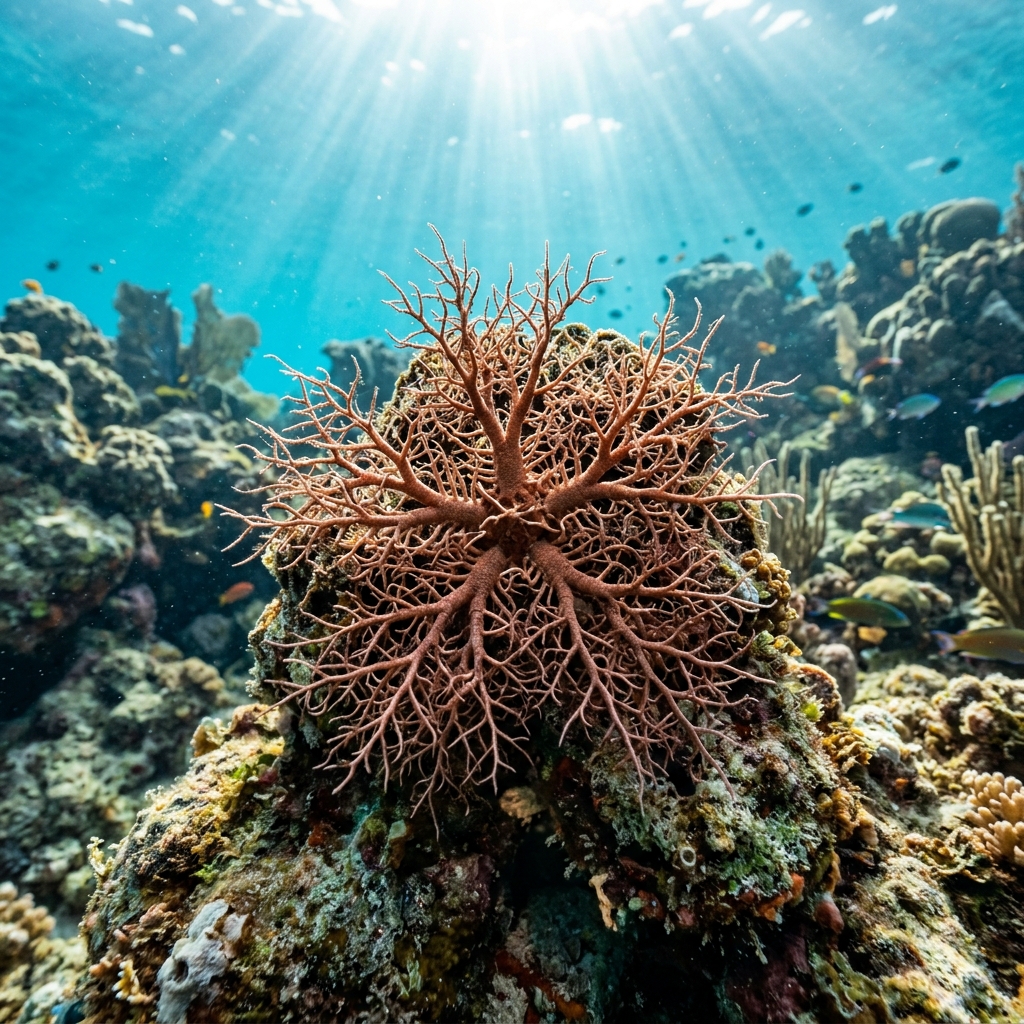
When fully extended at night, the arms branch repeatedly into hundreds of fine, curling tendrils, creating a broad, net-like structure that can span well over half a metre. By day it contracts into a tight, fist-like ball and tucks against a sea fan or coral head, looking far less dramatic. Colouration ranges from pale cream to golden-brown. The sheer complexity of the branching pattern, no other Caribbean echinoderm (spiny-skinned invertebrate) comes close in scale, is the single best field mark.
Basket starfish are nocturnal feeders: after dark they unfurl their elaborately branched arms into the current to trap plankton and fine organic particles drifting past. On daylight dives you will almost always find them contracted and wedged into the base of a gorgonian fan or beneath a coral overhang, effectively invisible unless you know what a curled mass of pale tendrils looks like. Night dives are by far the better bet for seeing them fully open and active.
The branching of the arms is not just decorative, each tiny terminal branch is lined with tube feet that act like sticky fingers, snagging zooplankton from the passing current. A single animal can filter a surprising volume of water in one night.
Sightings concentrate between December and August across Northern Hemisphere Caribbean sites. The species favours warm water in the 26 to 29 °C range, so conditions on these tropical reefs are suitable for most of that window.
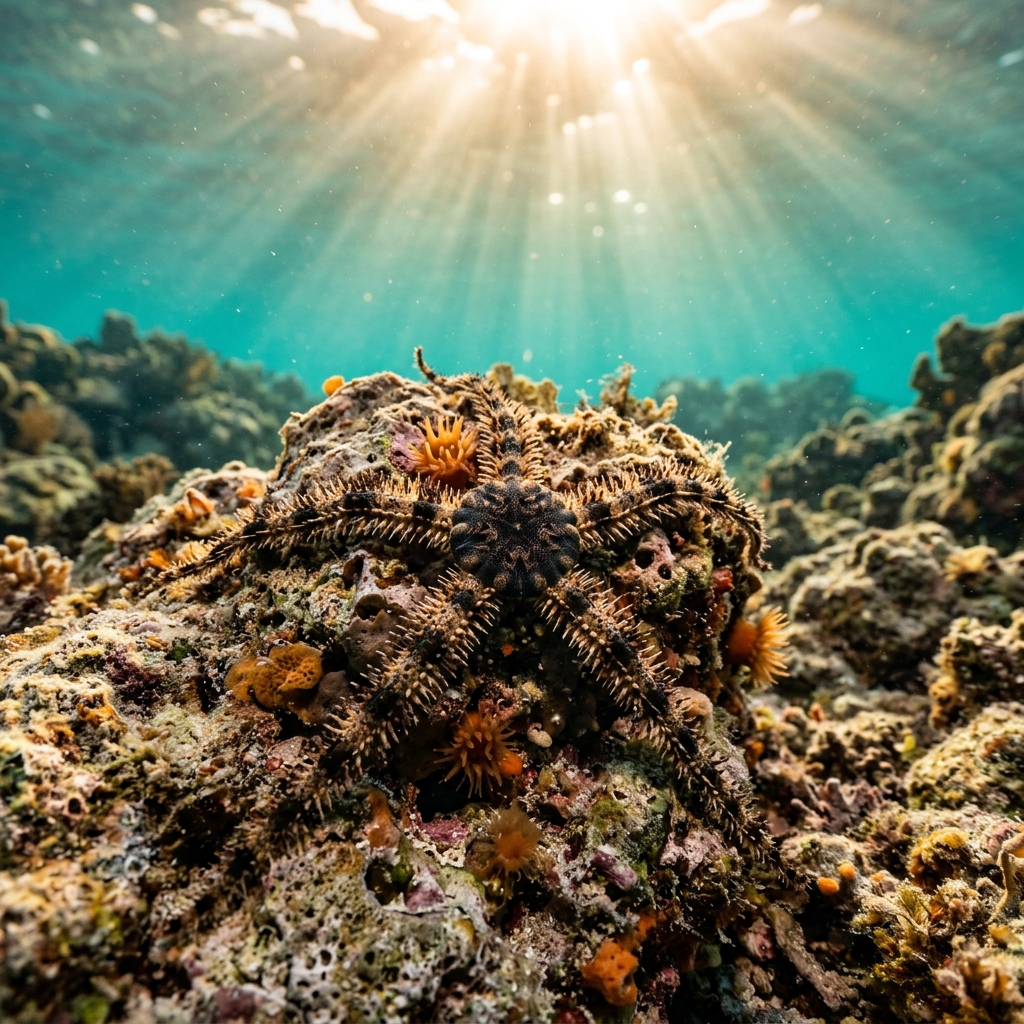
Reef neighbours a diver could mistake it for. Use the identification notes above to tell them apart.
Most commonly logged across the Caribbean, with the strongest concentrations in the Yucatán Peninsula and Roatán, Honduras. The Cayman Islands, Martinique, the British Virgin Islands, Sint Maarten, and the US Virgin Islands also see regular sightings, and Bonaire rounds out the reliable destinations further south.
Mapping where Basket Starfish is logged…
The Caribbean is the place to go. The Yucatán Peninsula and Roatán in Honduras lead the records, followed by the Cayman Islands, Martinique, the British Virgin Islands, Sint Maarten, the US Virgin Islands, and Bonaire. Sightings are uncommon at most sites, so targeted night dives give the best odds.
Across Caribbean sites, sightings are most regularly reported from December through August. The species likes warm water around 26 to 29 °C, and that range is available across most of the region throughout those months.
At night, look for a broad, net-like spread of hundreds of curling, repeatedly branching tendrils reaching out into the current, no other Caribbean invertebrate looks quite like it when open. During the day it contracts into a dense, fist-shaped mass wedged against a coral or gorgonian, appearing cream to golden-brown.
When fully extended at night the arm span can reach well over half a metre across, making a fully open animal one of the more striking things you can encounter on a Caribbean night dive. Contracted during the day, the same animal fits into roughly a grapefruit-sized ball.
No. Basket starfish pose no risk to divers. They are passive filter feeders and have no venom, spines, or defensive mechanism that could harm you. Give them space on night dives to avoid disturbing their feeding behaviour.
Site and sighting data is aggregated from diver logs, iNaturalist and GBIF. For taxonomy and conservation status: