Best for intermediate divers, 10-22m, boat entry, moderate current.
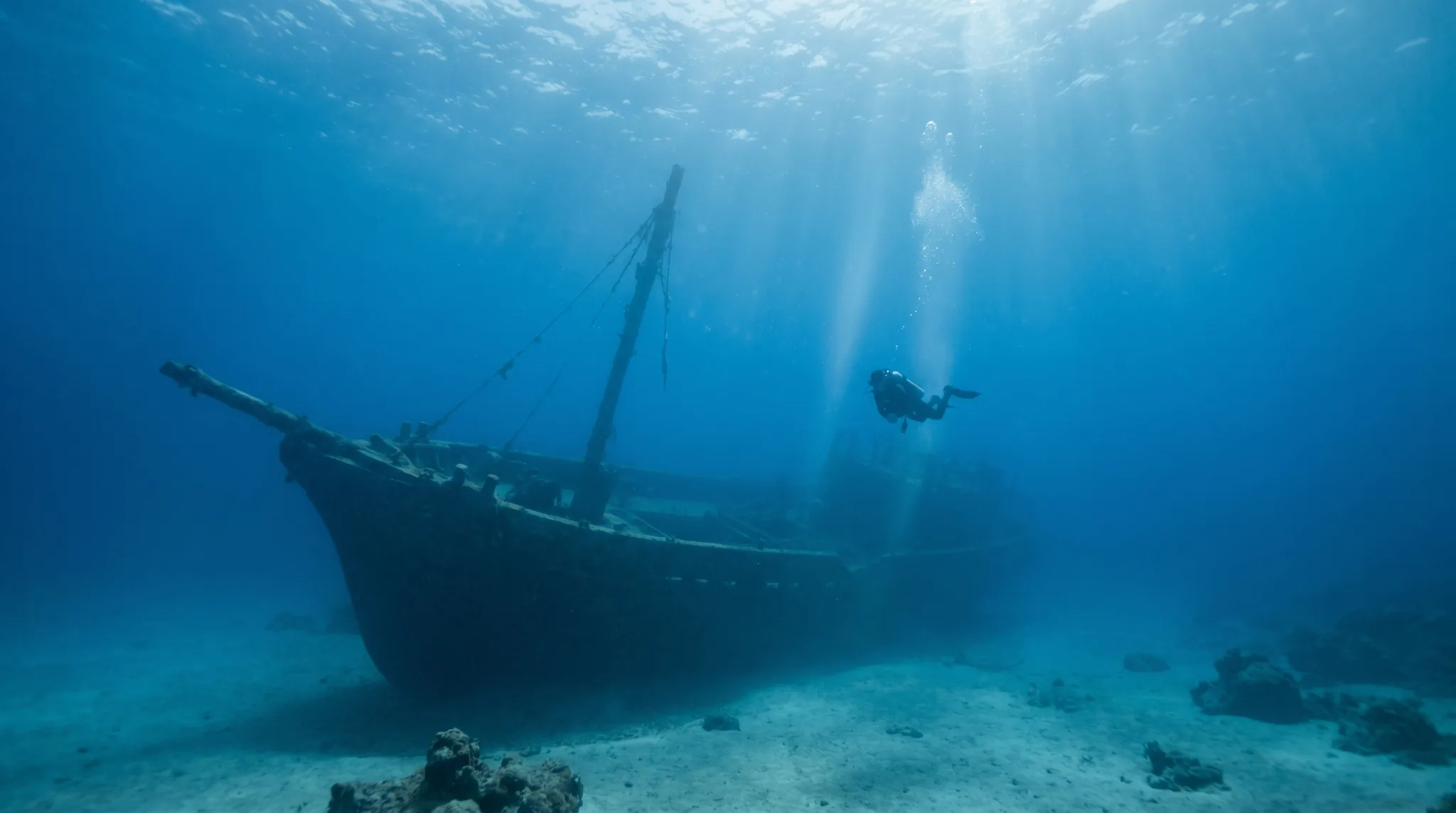
The SS Conch is a historic steam-powered oil tanker that sank in 1903 after striking a rock. Located 3000 metres offshore from Hikkaduwa, this wreck sits at depths ranging from 10 to 22 metres, with an average depth of 17 metres. The site is well-preserved, offering opportunities for penetration into the cabin area. Divers should be prepared for moderate currents, surge, and potential overhead environments within the structure. Due to the depth and hazards including entanglement and variable visibility between 5 and 15 metres, this site is suited for intermediate divers. Access is strictly by boat, with typical dives lasting approximately 53 minutes.
6.19870, 80.05401
If you are feeling adventurous and have a good dive master, you can enter the wreck, but be aware that some exits and entrances are very small.
Boat time is 30 minutes.
Recorded at this site
Depth
10-22m
Visibility
5-15m
Skill Level
Intermediate
Entry
Boat
Boat required
Water Temp
28-30°C
Current
Moderate
Typical Dive
53 min
Best Time
Apr, Oct
The wreck lies at depths between 10 and 22 metres, with an average depth of 17 metres.
No, this site is rated for intermediate divers due to the depth, potential for strong currents, and overhead environments within the wreck.
The site is located 3000 metres from shore and requires a boat for access.
The best months for diving this site are April and October.
Divers should be aware of the depth, potential for entanglement, overhead environments, strong currents, surge, and low visibility.
Diving at S S Conch in Hikkaduwa requires the following certifications: Open Water, Wreck. Always dive within your training limits.
A rashguard or 2mm shorty is recommended for diving at S S Conch in Hikkaduwa. Water temperatures range from 28°C to 30°C.
Expect moderate currents at S S Conch in Hikkaduwa. Good buoyancy control and some drift diving experience is helpful.
Visibility at S S Conch in Hikkaduwa typically ranges from 5 metres to 15 metres. Conditions vary with weather, tides, and seasons.