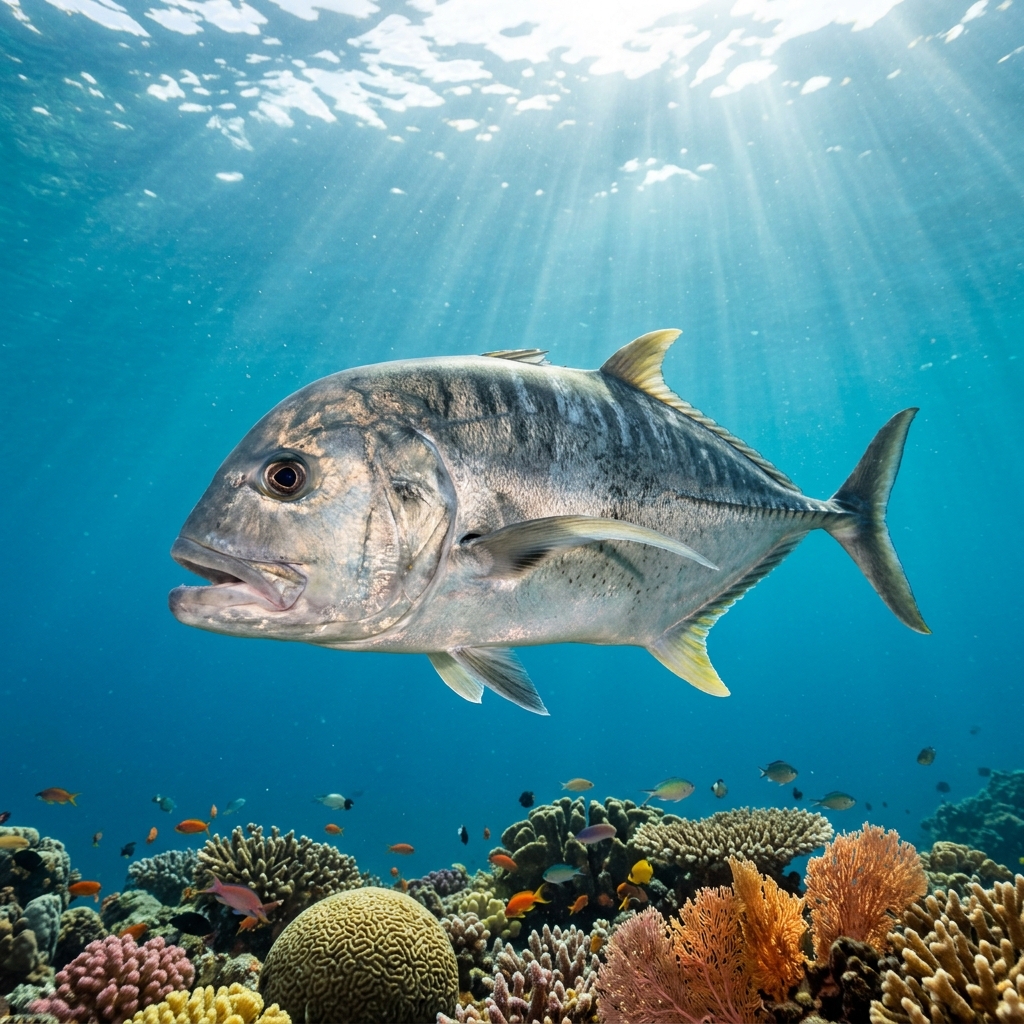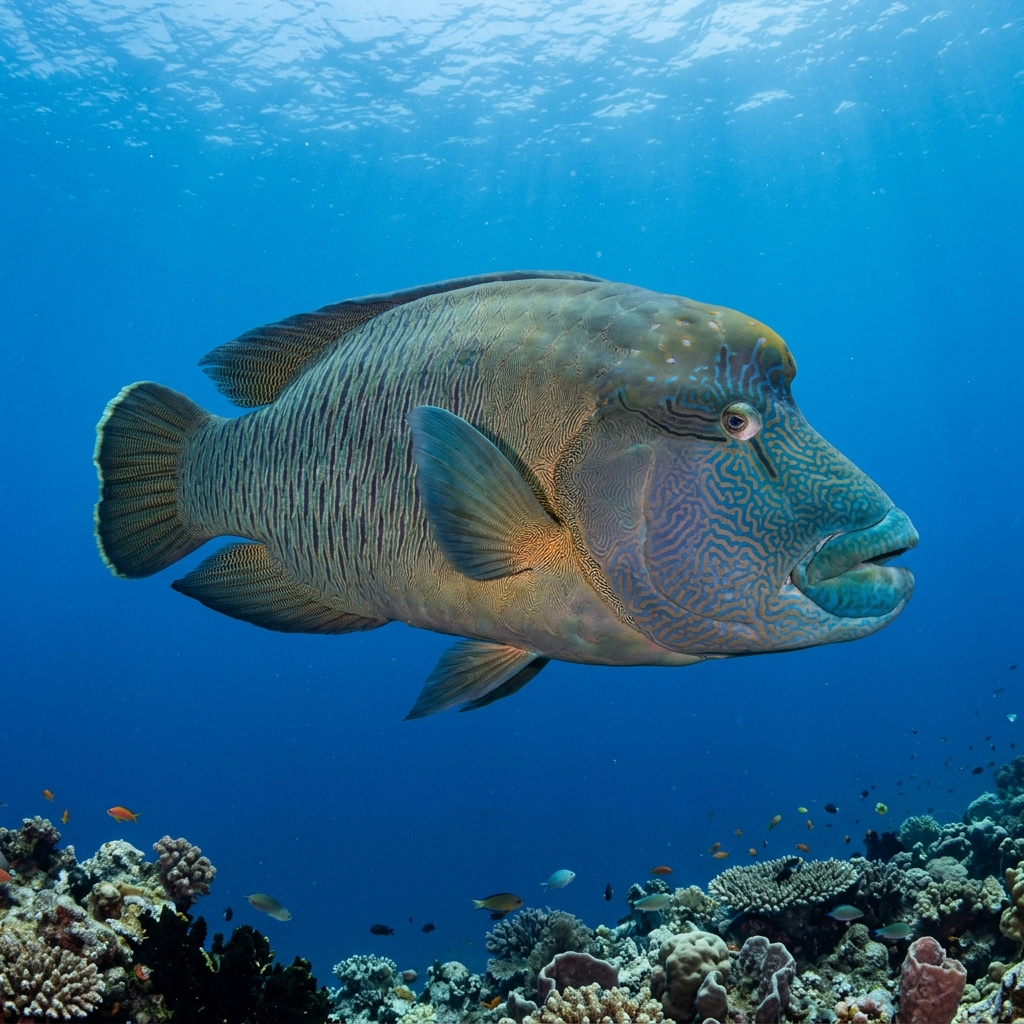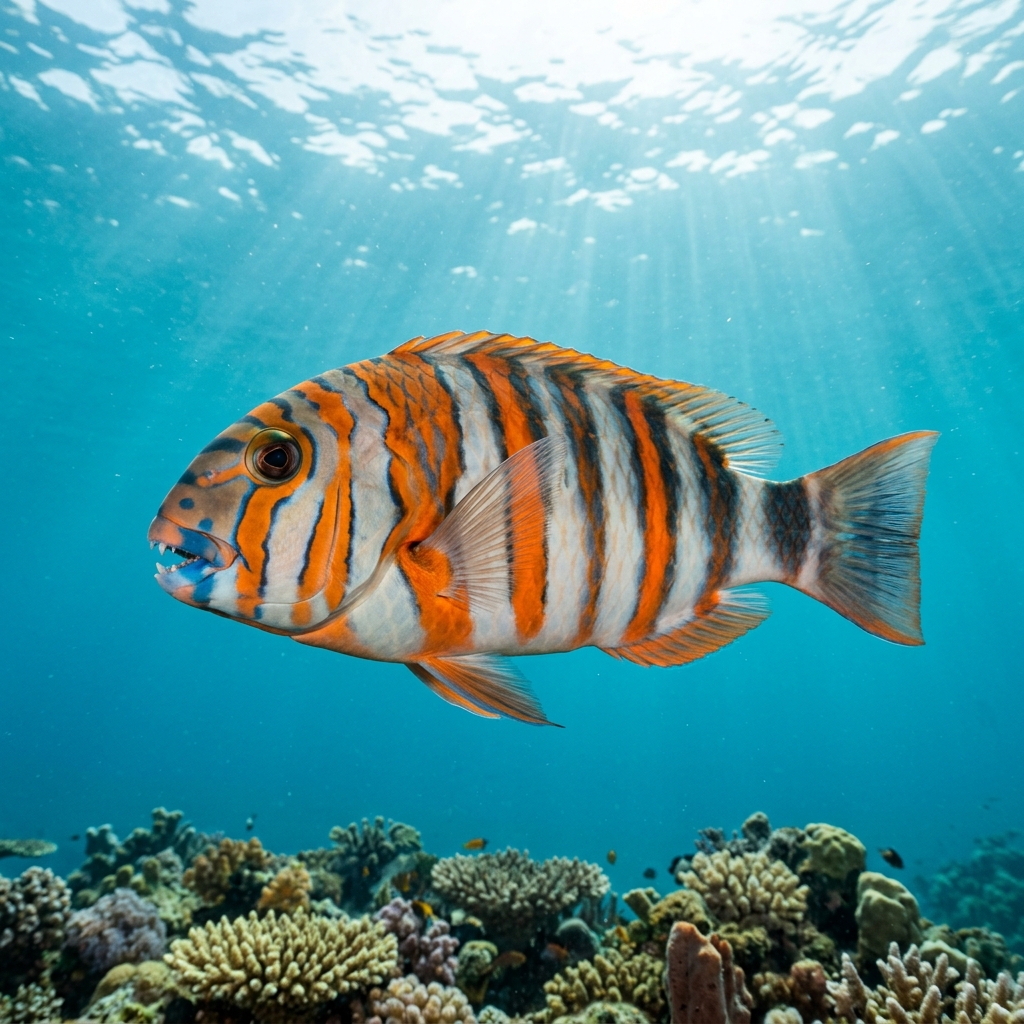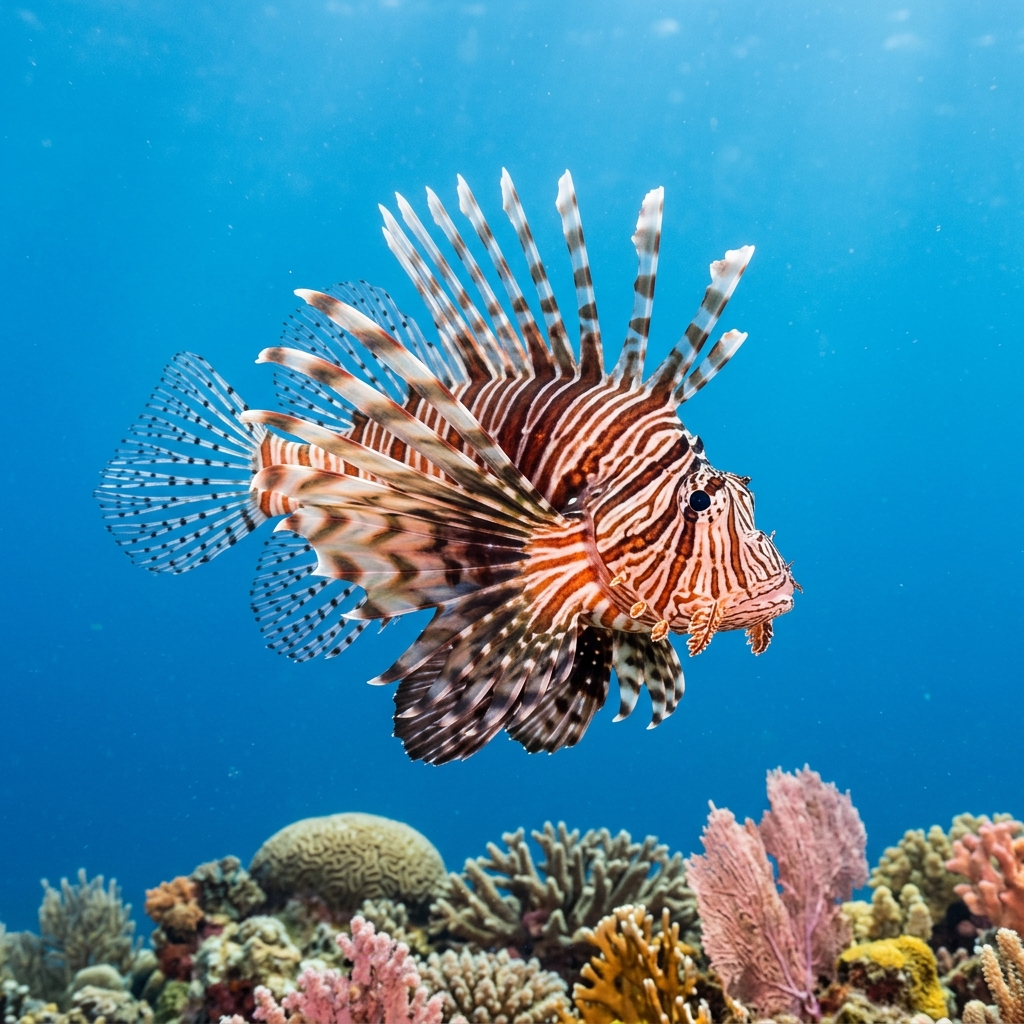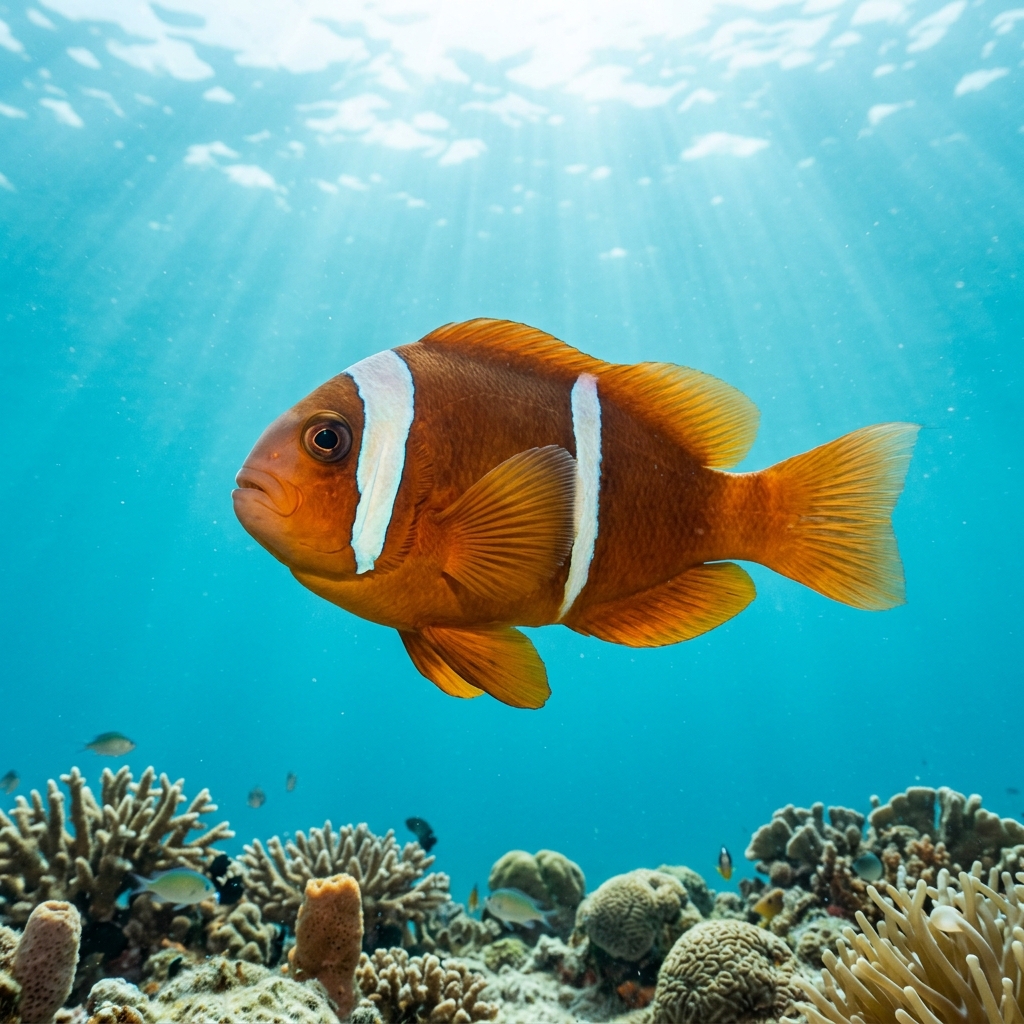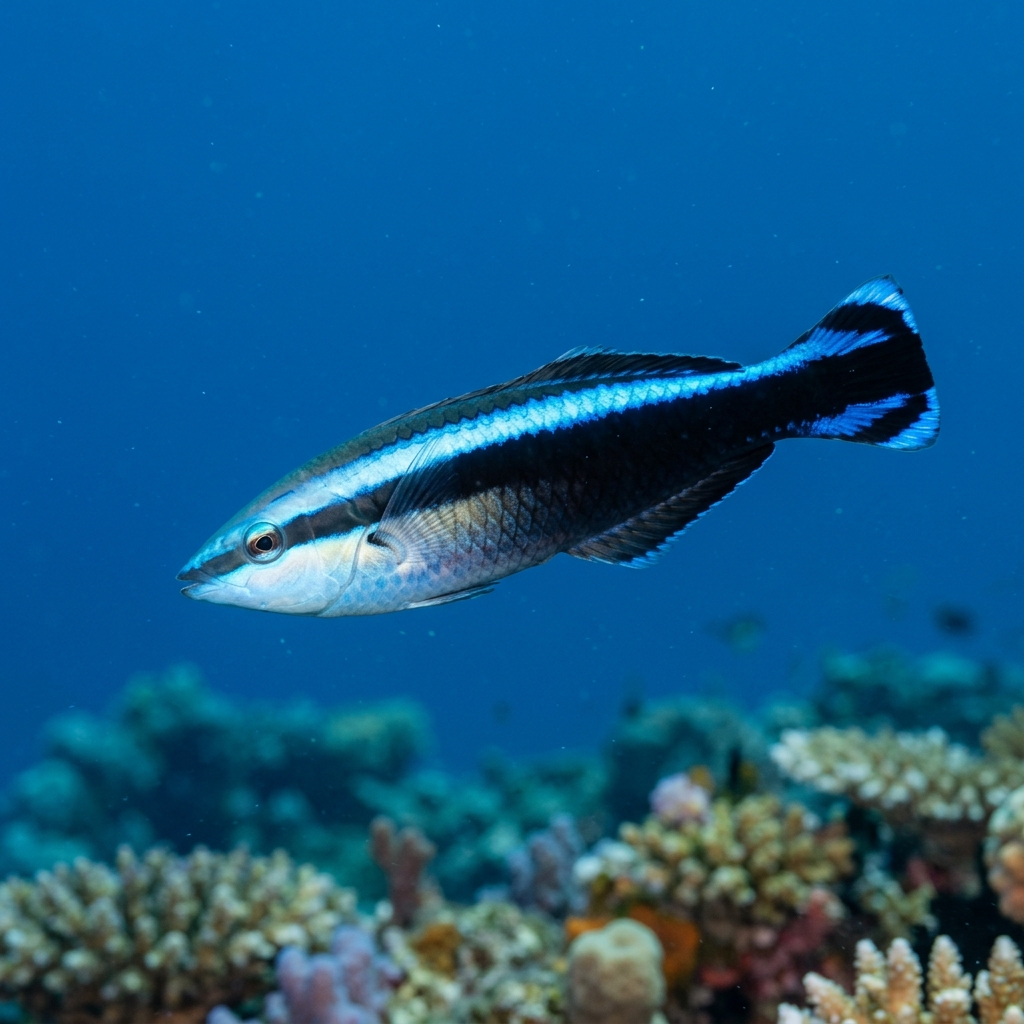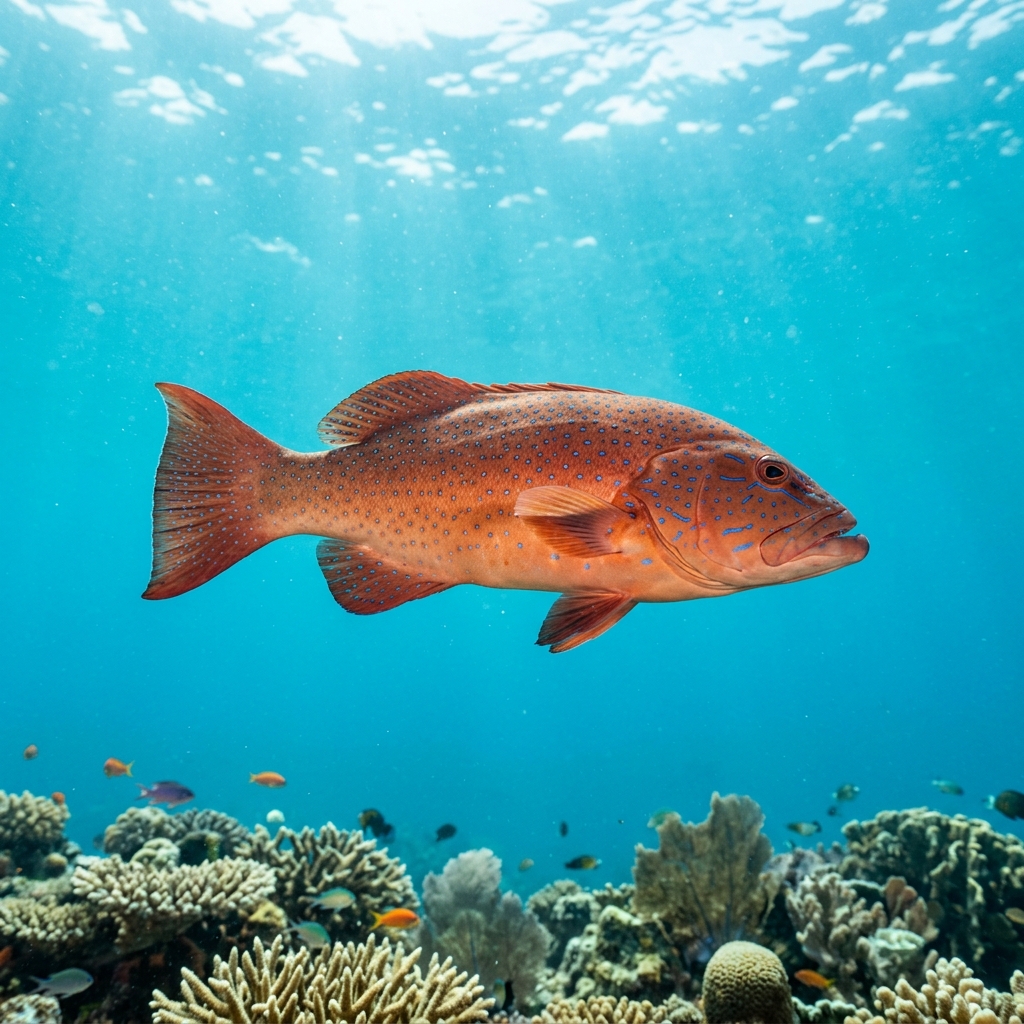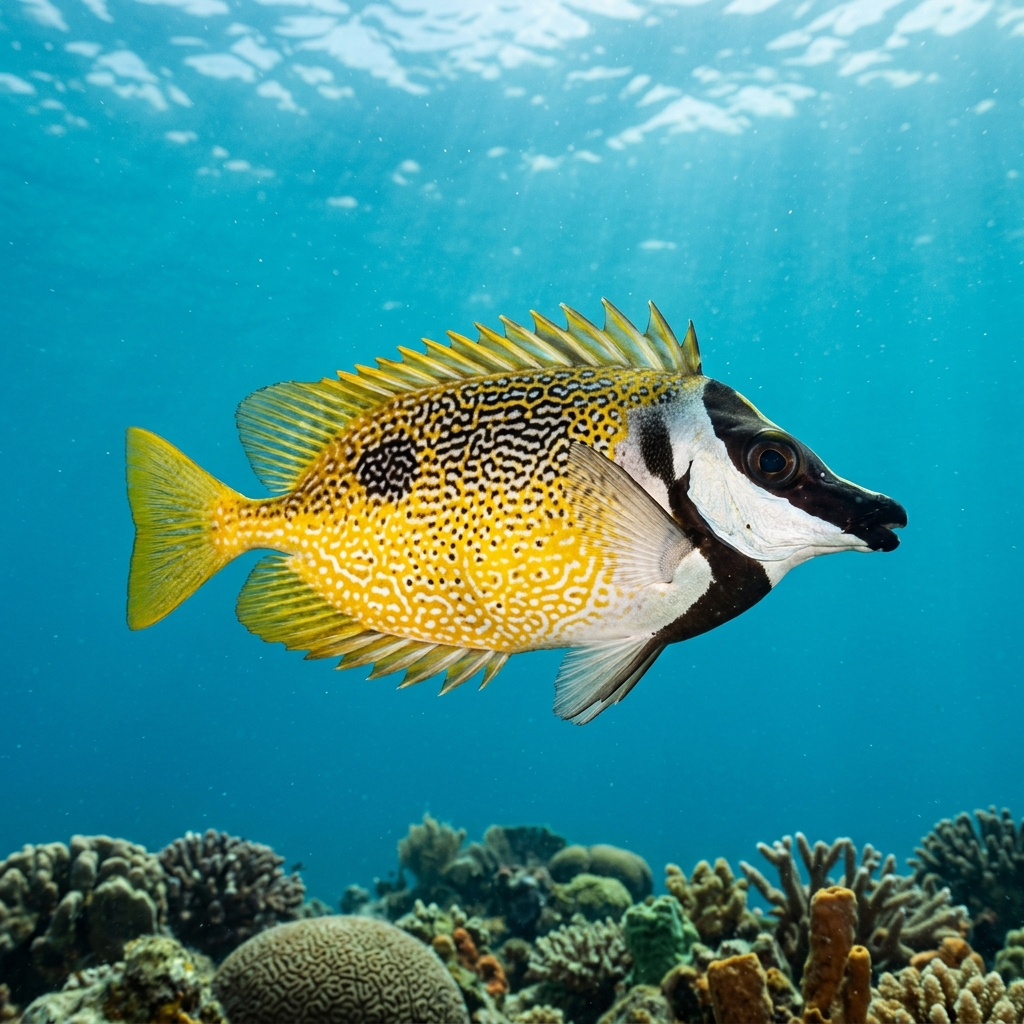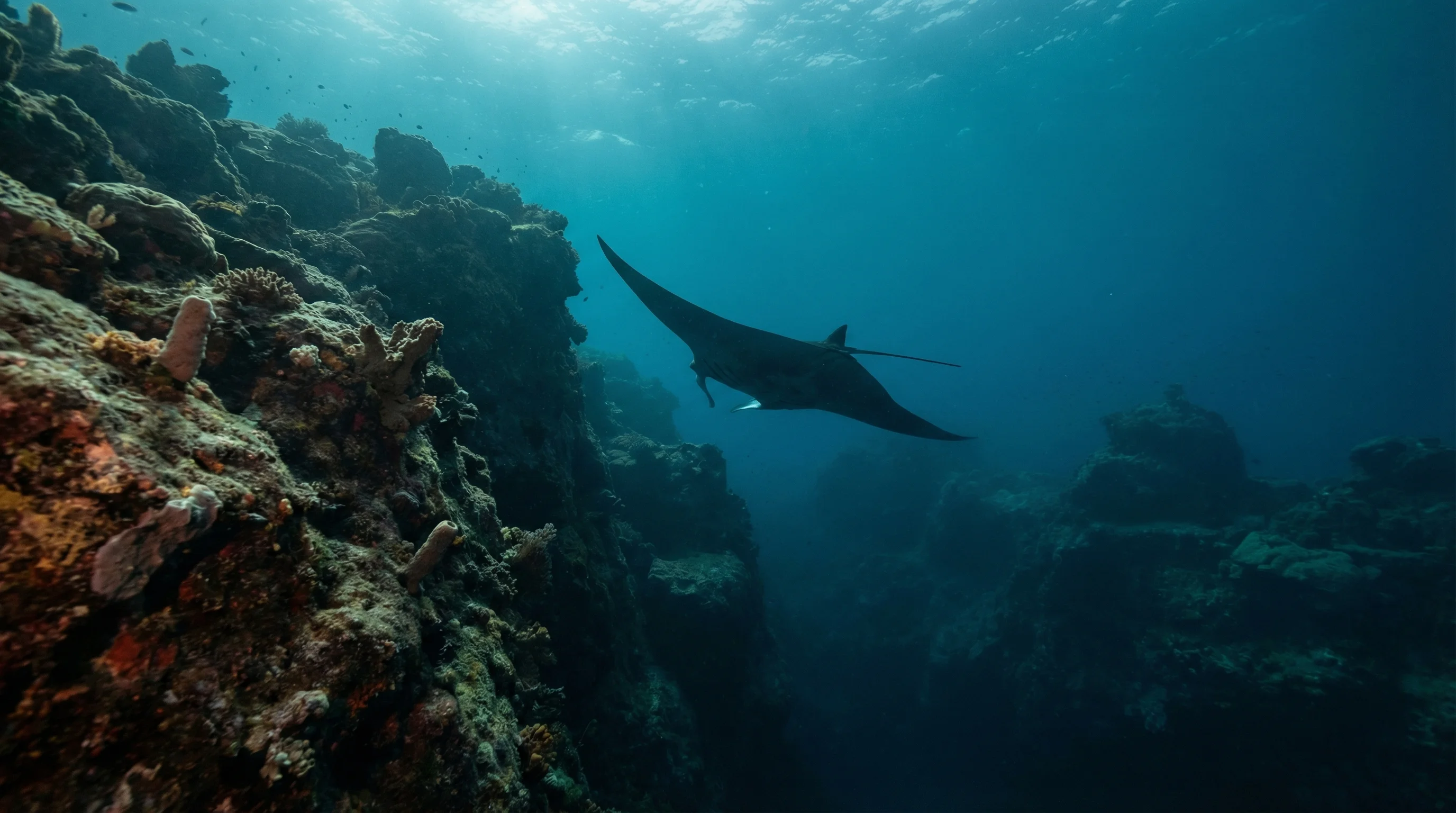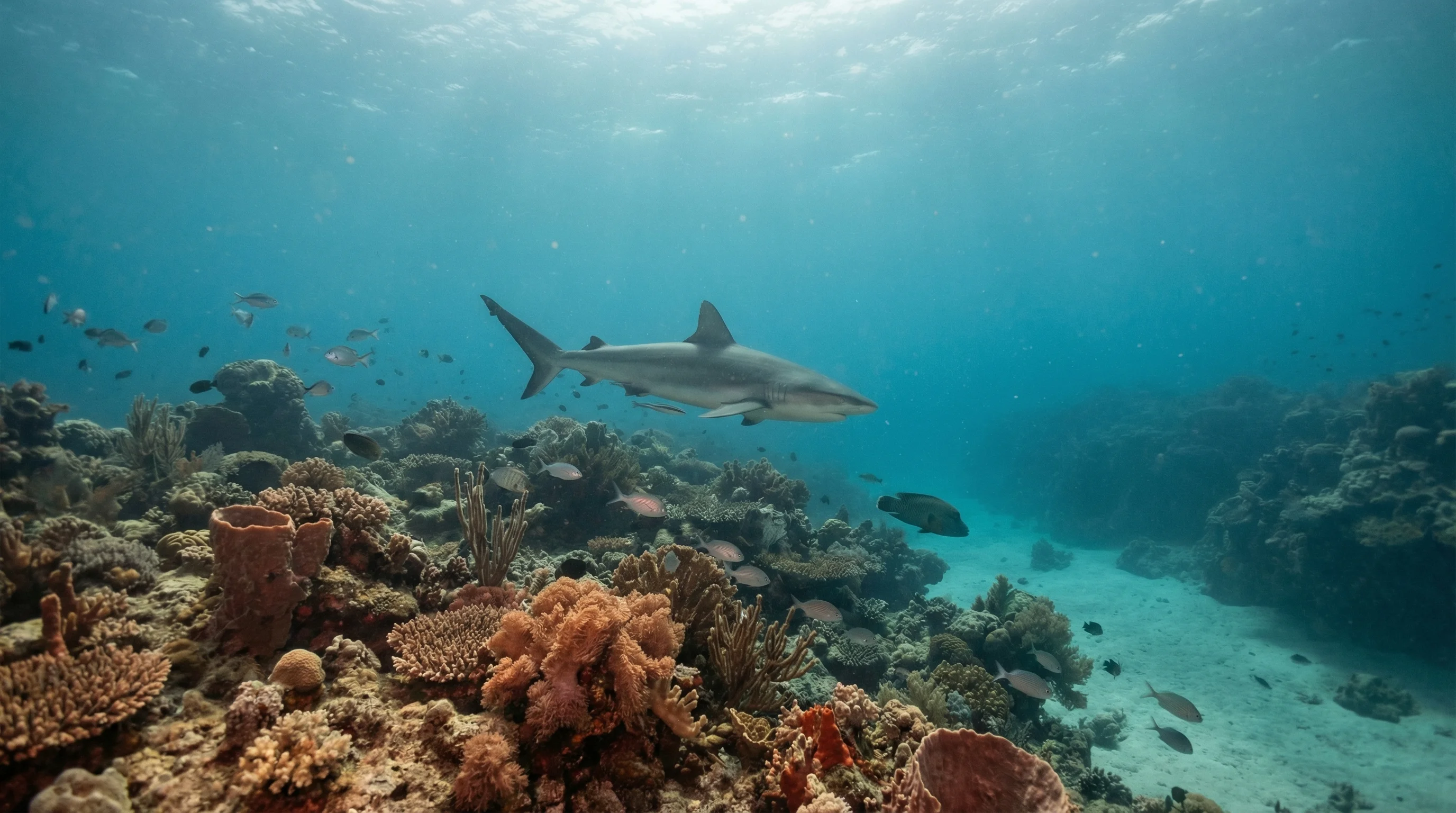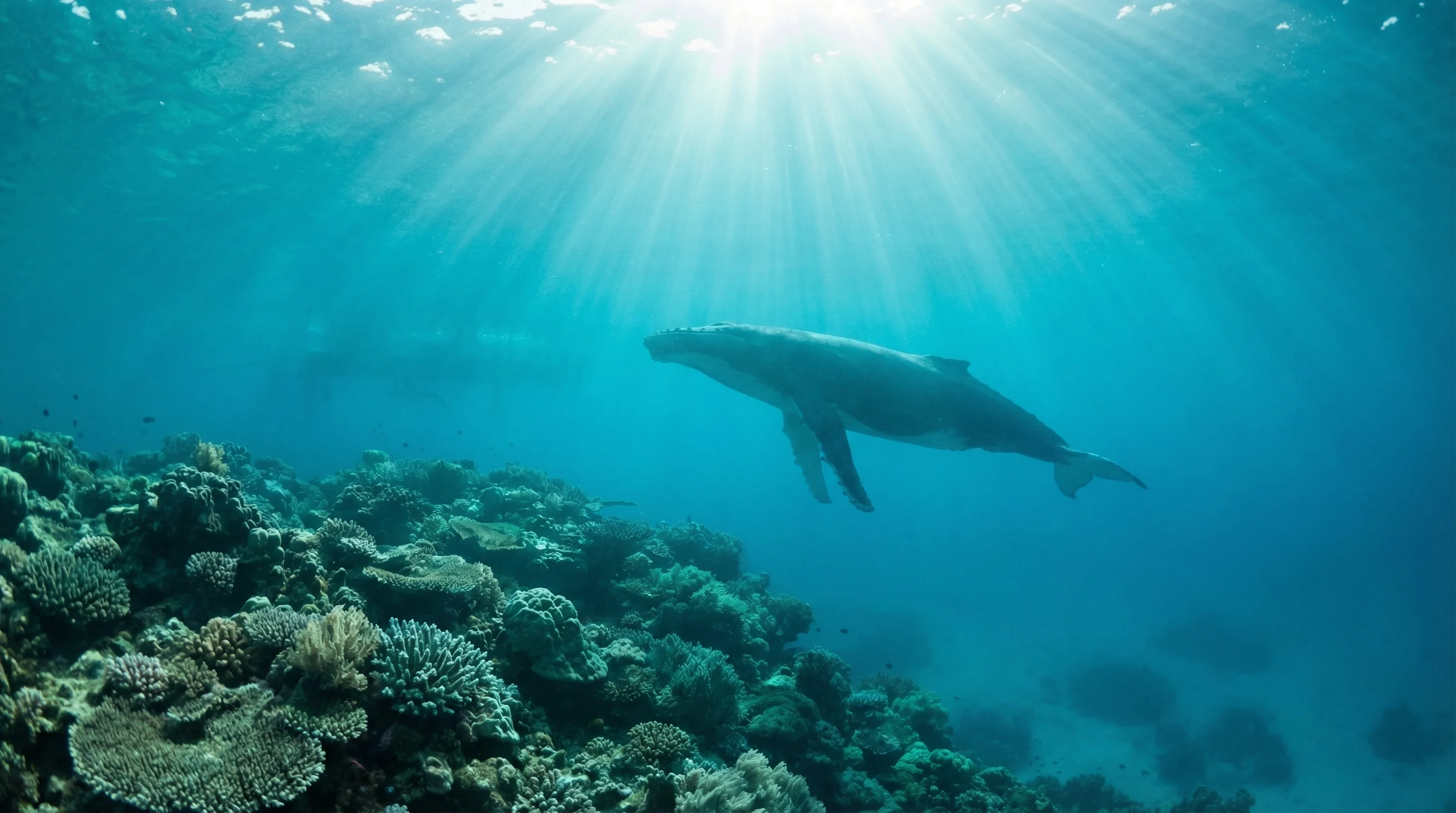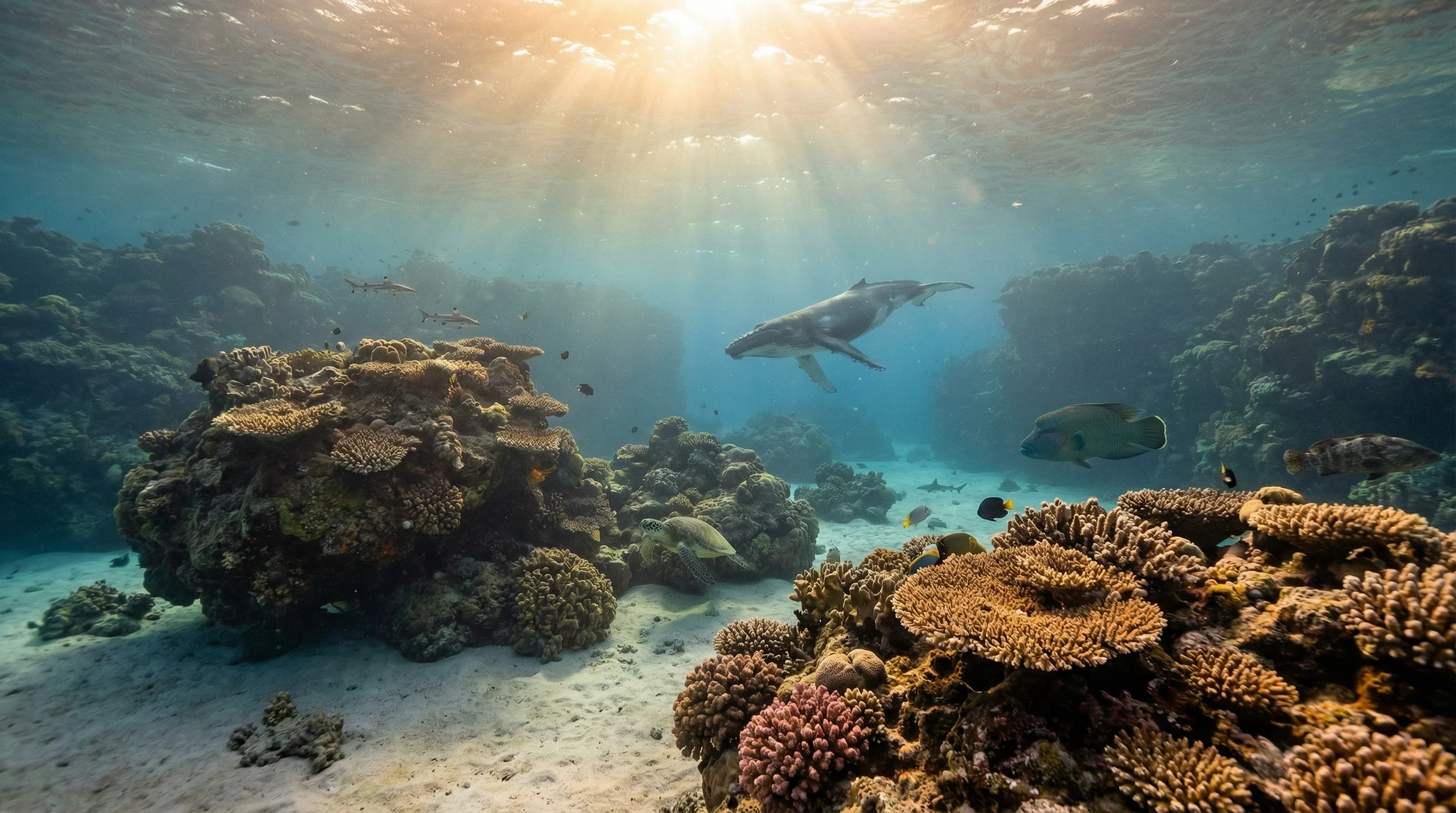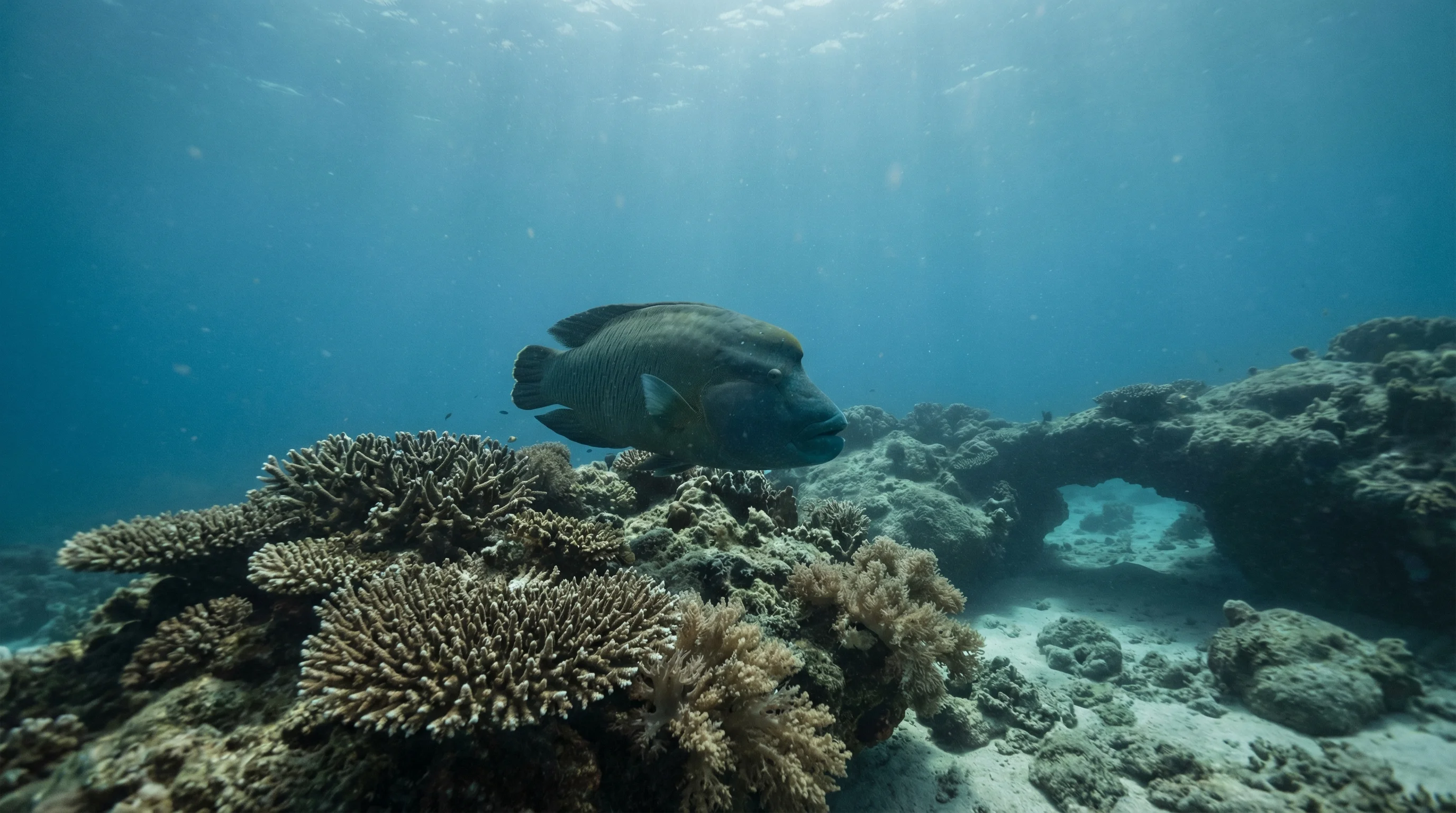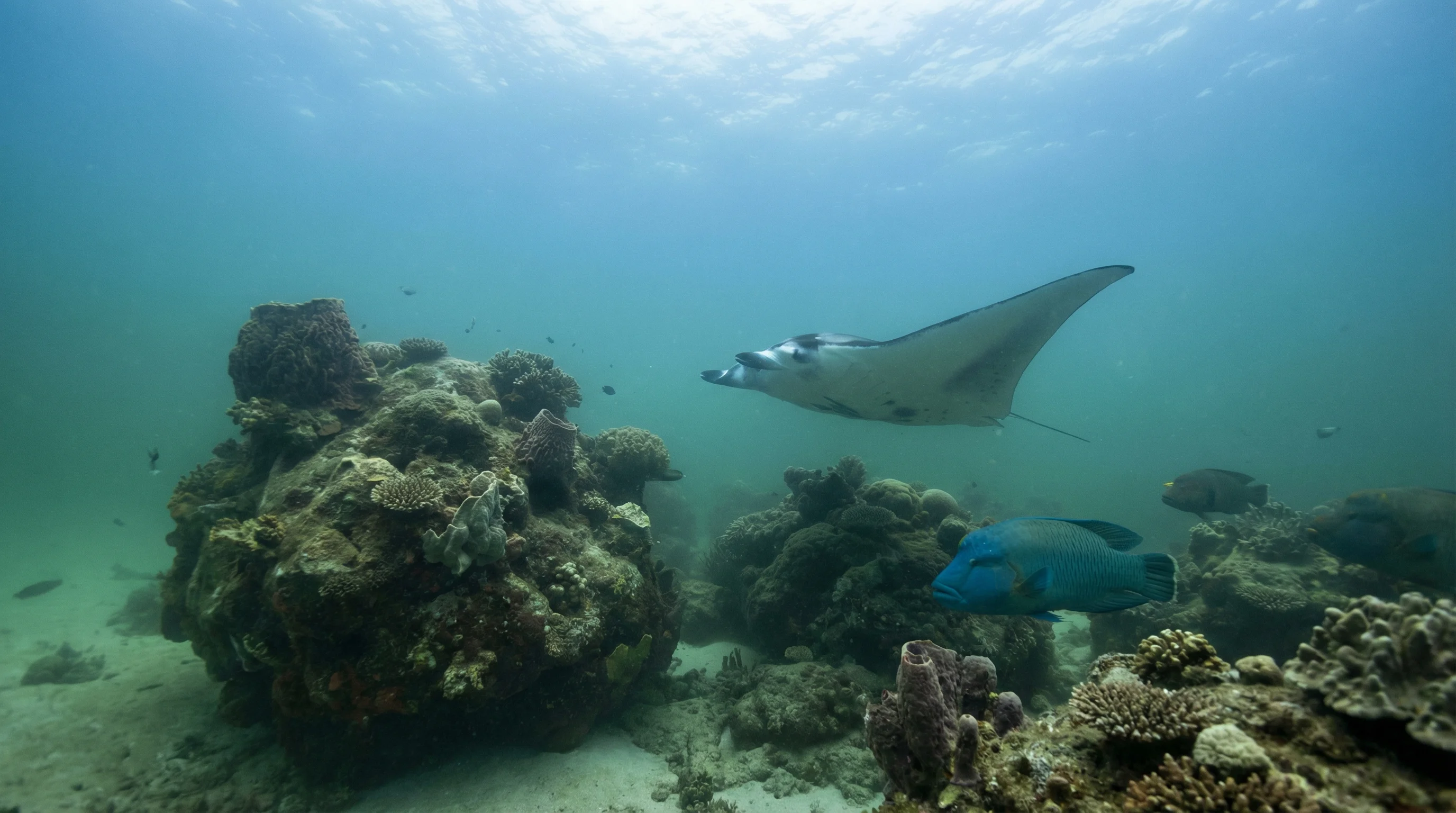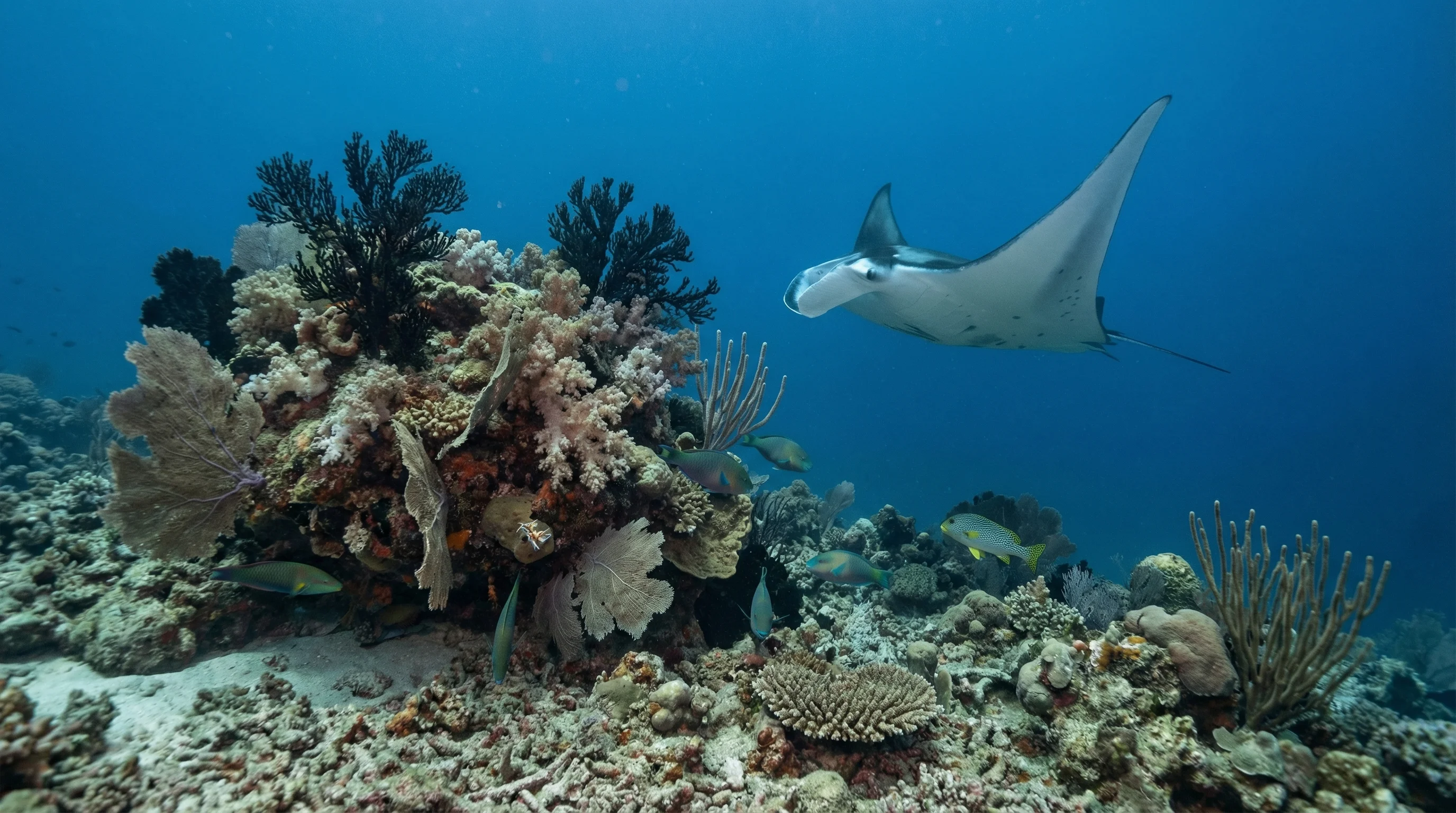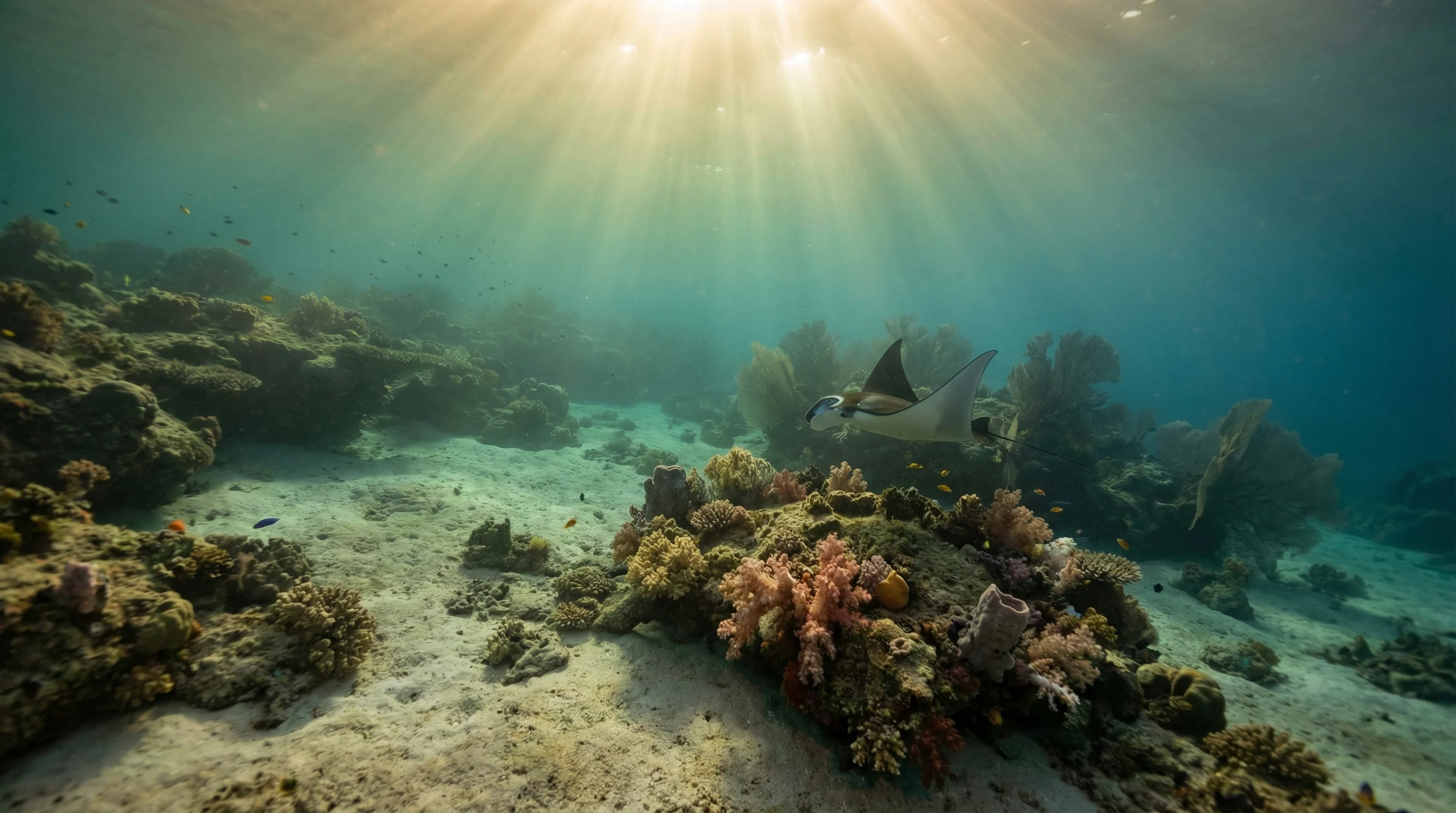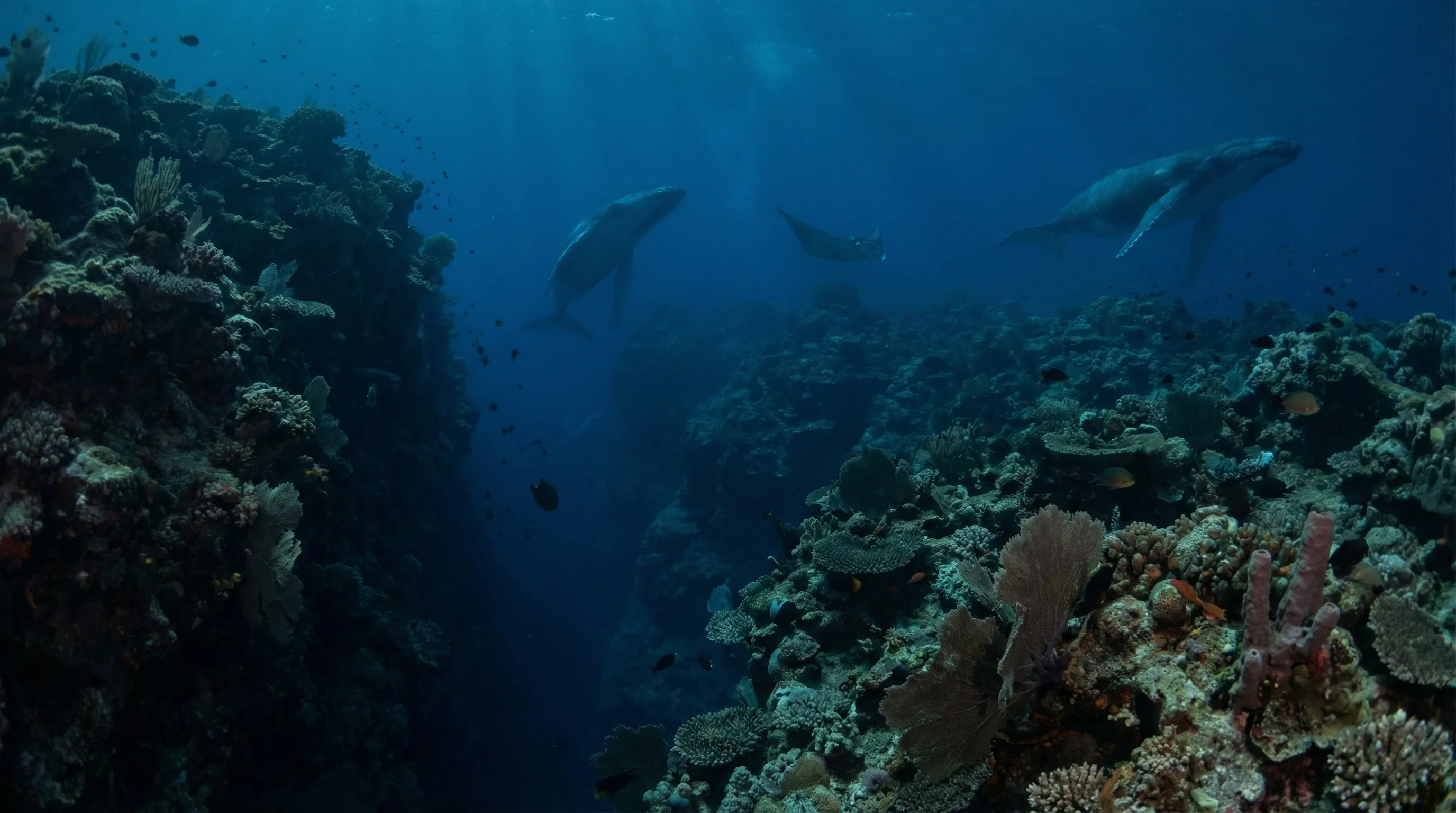

Bait Reef sits in the outer Great Barrier Reef, offering shallow coral gardens that drop away into dramatic walls and canyons. You can explore depths from 1 to 75 metres here, though beginners will find plenty to see in the top 10 metres. Visibility ranges from 6 to 40 metres depending on conditions, with the clearer days offering stunning views down the reef face. The shallow areas are home to clownfish darting amongst anemones, colourful cuttlefish, and giant clams wedged into the coral. As you venture slightly deeper, you might spot reef sharks cruising the walls, sea turtles gliding past, and the occasional Maori wrasse. During winter months, humpback whales migrate through these waters. Keep an eye out for wobbegong sharks resting under ledges and be cautious of lionfish near the reef structure. Moderate currents flow through the site, which bring nutrients but require awareness. Watch for jellyfish in the water column, particularly during summer. The reef's pinnacles and small caves create natural meeting points for marine life. Boat access only, with basic facilities including showers and toilets. The calm winter months from May through October offer the most reliable conditions for new divers.
-19.80749, 149.07383
Visit between May and October for the best visibility and the chance of spotting humpback whales passing through on their migration. Always check current conditions with your boat operator before the dive, as the moderate current at Bait Reef can strengthen unexpectedly around the wall sections.
Access is via boat, typically a full-day tour from Airlie Beach or Hamilton Island. The journey takes approximately 2 hours each way.
Stinger (jellyfish) season runs from October to May, during which protective suits are highly recommended. Species include the dangerous Box Jellyfish and Irukandji. Reef sharks (white-tip and black-tip) are present but generally not aggressive.
Depth
1-75m
Visibility
6-40m
Skill Level
Beginner
Entry
Boat
Boat required
Water Temp
21-29°C
Current
Moderate
Typical Dive
45 min
Best Time
Year-round
Bait Reef in the Whitsundays, Queensland, offers encounters with manta rays, sea turtles, reef sharks, and Maori wrasse amongst vibrant coral gardens. Divers frequently spot giant clams, colourful clownfish, and lionfish throughout the reef system. During migration season, humpback whales pass through the surrounding waters, adding spectacular surface intervals to dive trips.
Bait Reef requires an Open Water certification for shallow dives, whilst the deeper sections extending to 75 metres demand Advanced and Deep Diver certifications. The site's varied depth profile means beginners can explore the upper reef areas from 1 metre, whilst technical divers can access dramatic drop-offs and deeper structures. All diving is boat-based with guided tours available from Whitsundays operators.
The optimal months for diving Bait Reef are May through October and January through February when water temperatures range from 21°C to 29°C. Visibility peaks during the winter months (May to October) at up to 40 metres, whilst summer months offer warmer waters and increased marine activity. These months also provide calmer seas and reduced stinger jellyfish presence compared to the November-December period.
Bait Reef descends from 1 metre at the shallowest sections to 75 metres at its deepest points. The varied depth profile makes it accessible for snorkellers and beginner divers in the shallows, whilst offering advanced diving opportunities on deeper walls and structures. Most recreational dives stay between 10 and 30 metres where visibility ranges from 6 to 40 metres.
Bait Reef is classified as beginner-friendly, with shallow areas starting at 1 metre that provide excellent conditions for newly certified divers. However, moderate currents and potential hazards including jellyfish, lionfish, and reef sharks require proper supervision and briefing. Guided tours with equipment rental are available, making it an ideal training ground for Open Water divers building experience.
Bait Reef is accessed exclusively by boat from the Whitsundays, as no shore access exists to this outer reef location. Dive operators provide full facilities including showers, toilets, equipment rental, and guided tours during day trips from the mainland. There is no entry fee for diving or snorkelling at Bait Reef, with costs limited to boat charter and equipment hire.
Divers at Bait Reef must navigate moderate to strong currents, particularly around deeper sections and channels. Marine hazards include jellyfish (especially during stinger season), reef sharks, and venomous lionfish hiding amongst coral structures. The extreme depth to 75 metres and potential surge conditions require proper planning, whilst close attention to buoyancy prevents damage to the fragile reef ecosystem.
Bait Reef offers snorkelling opportunities in the shallow 1-metre sections, though the site is rated modest for snorkelling compared to its diving potential. The best snorkelling occurs over the reef flat where clownfish, small reef fish, and occasionally turtles can be observed. Snorkellers should exercise caution regarding jellyfish and moderate currents, and trips include access to showers, toilets, and equipment rental through Whitsundays operators.
Yes, equipment rental is available at or near Bait Reef in Whitsundays. Contact local dive operators for specific gear availability and prices.
A 3mm wetsuit is recommended for diving at Bait Reef in Whitsundays. Water temperatures range from 21°C to 29°C.