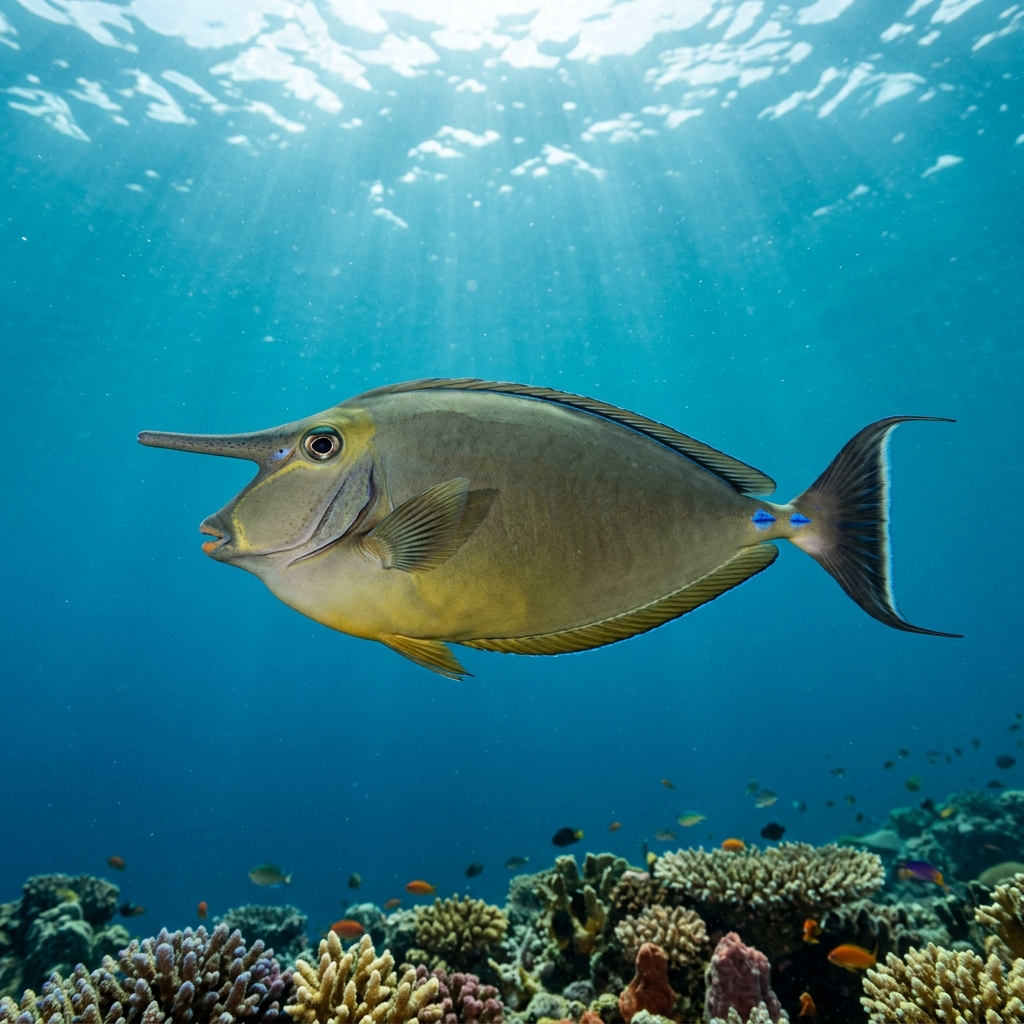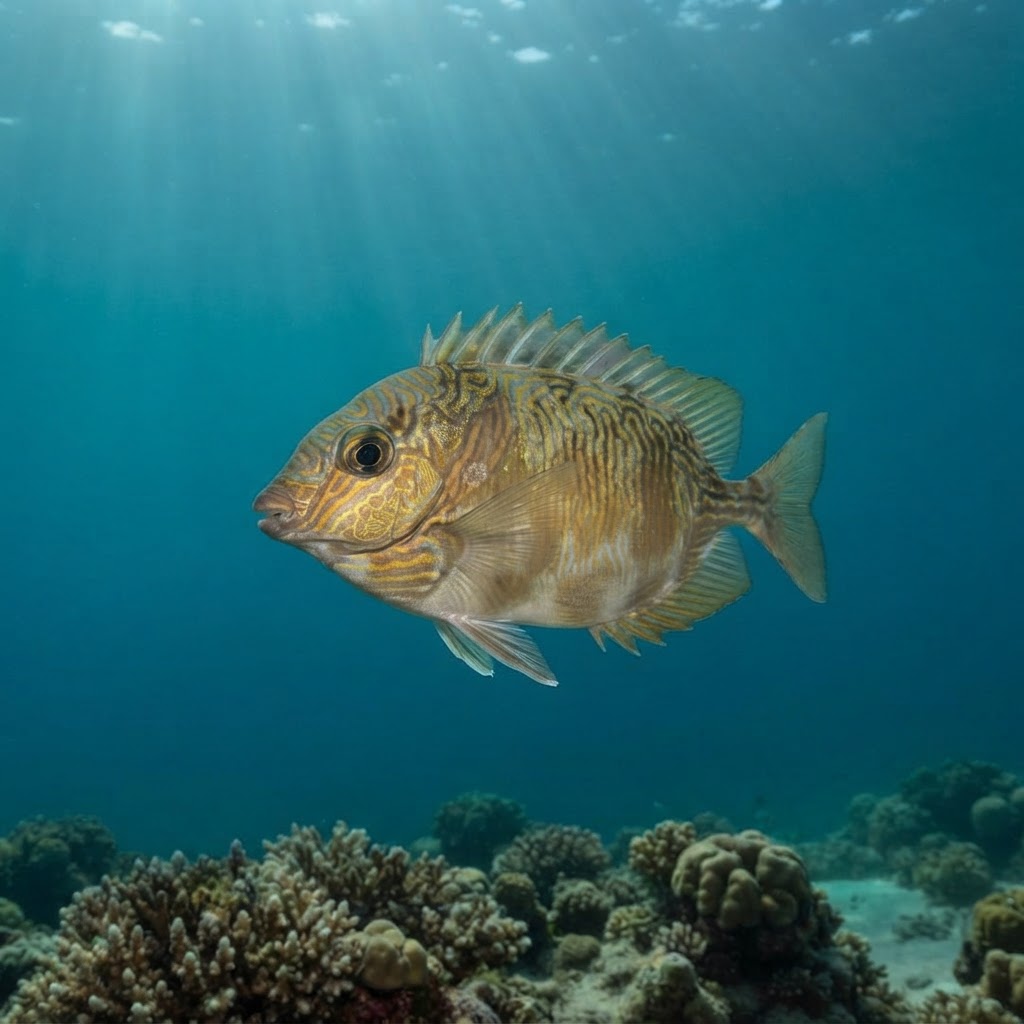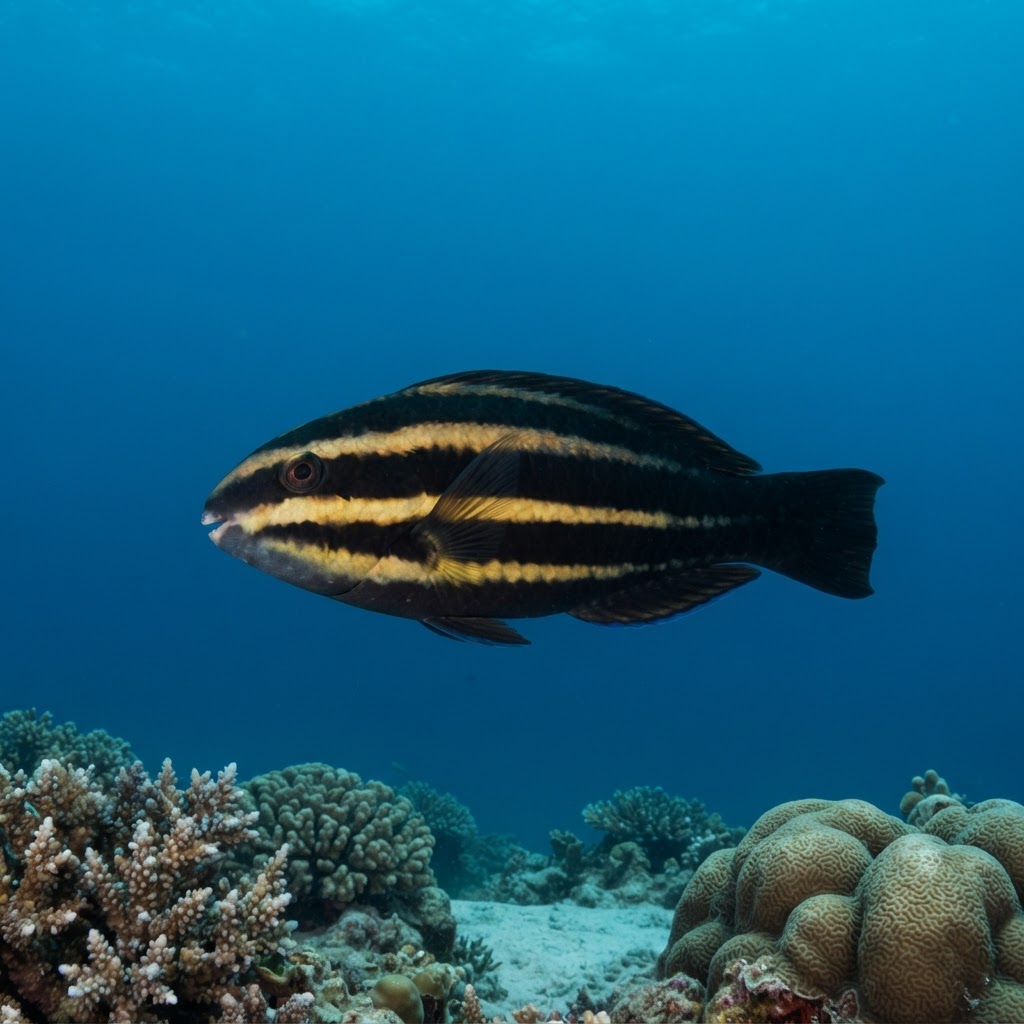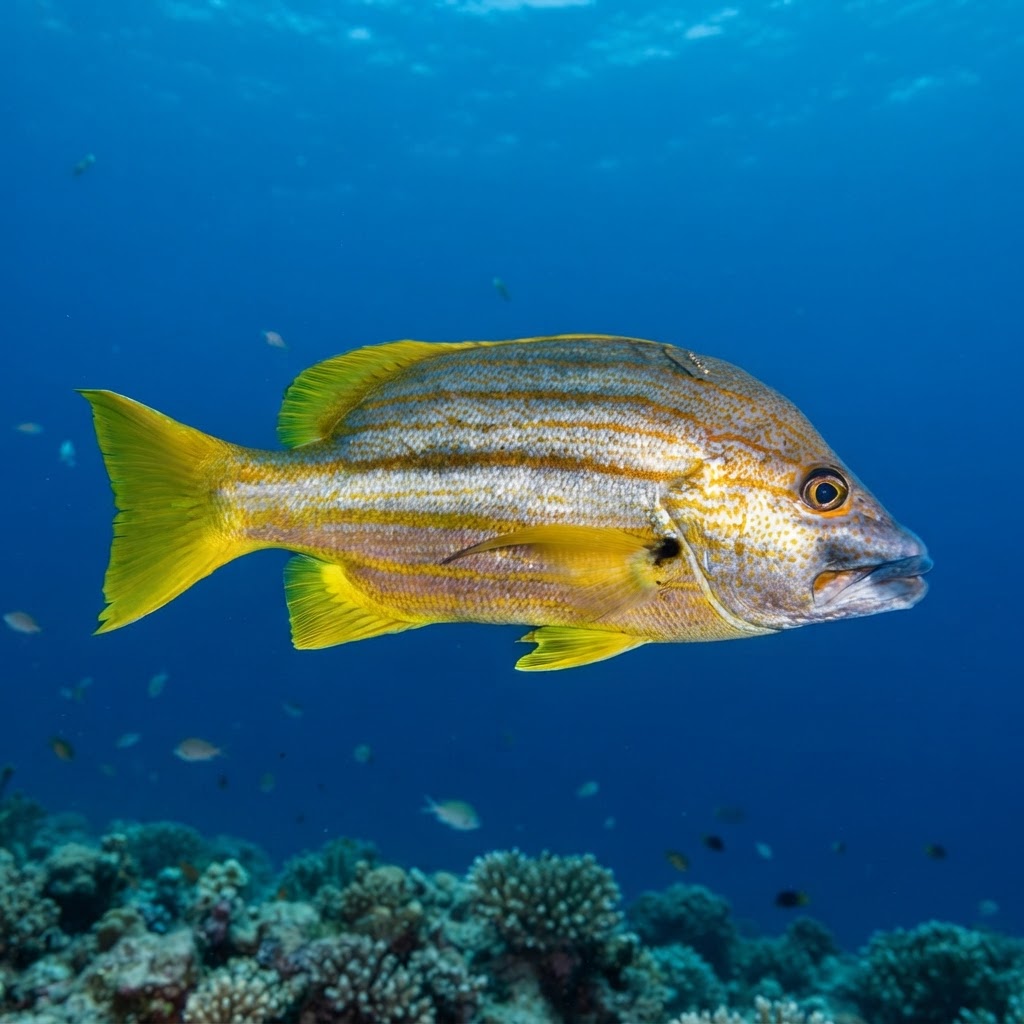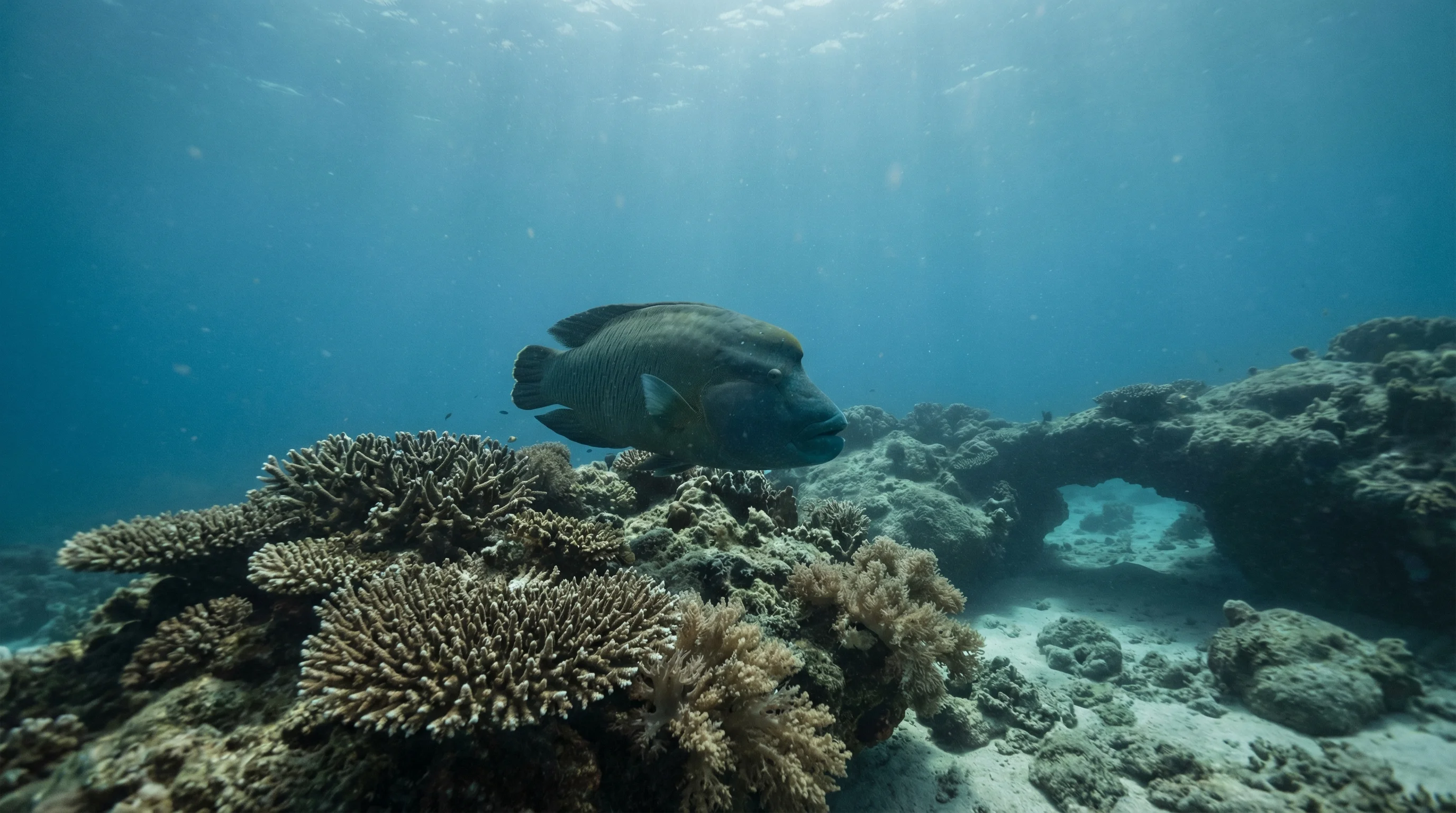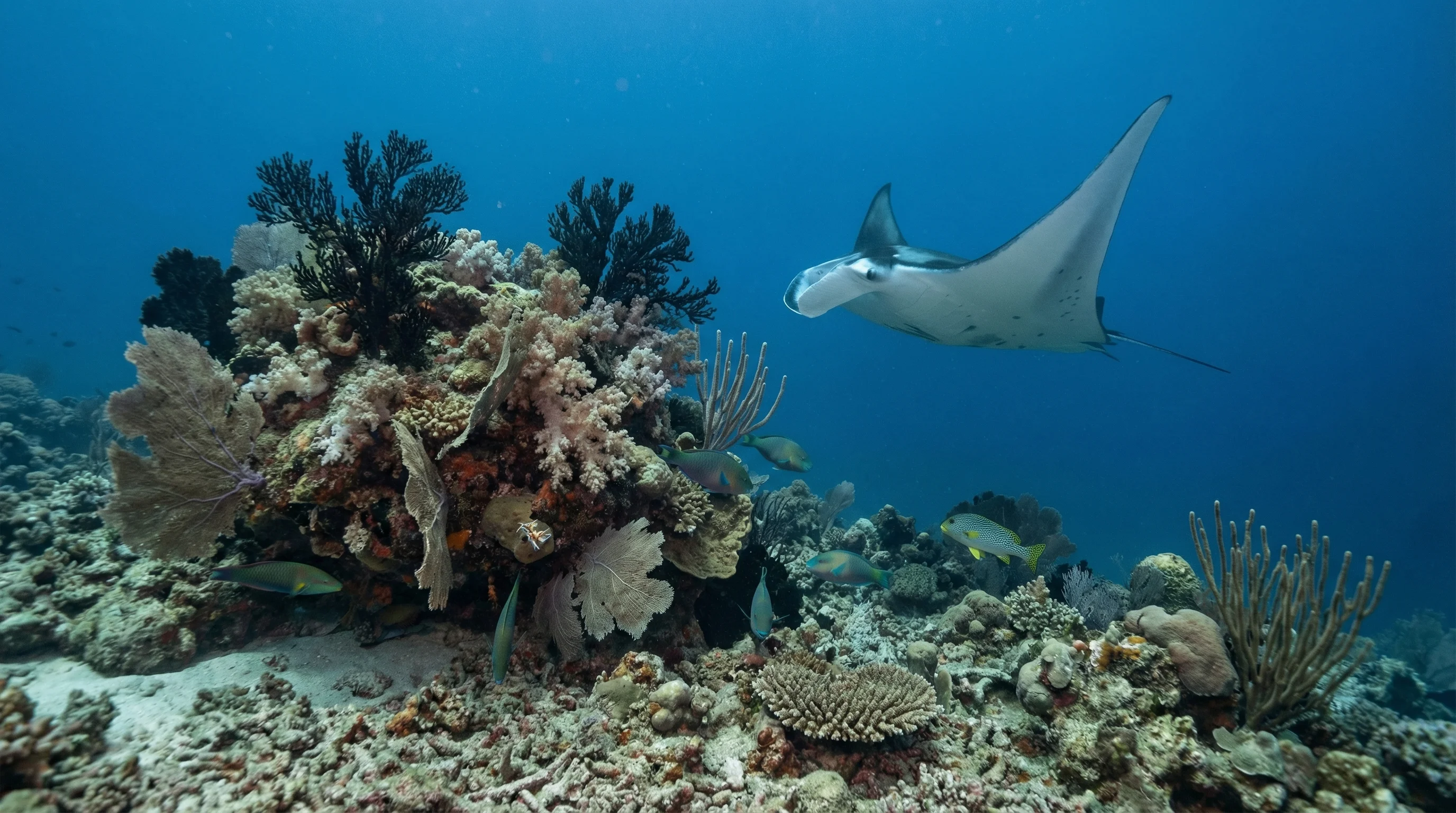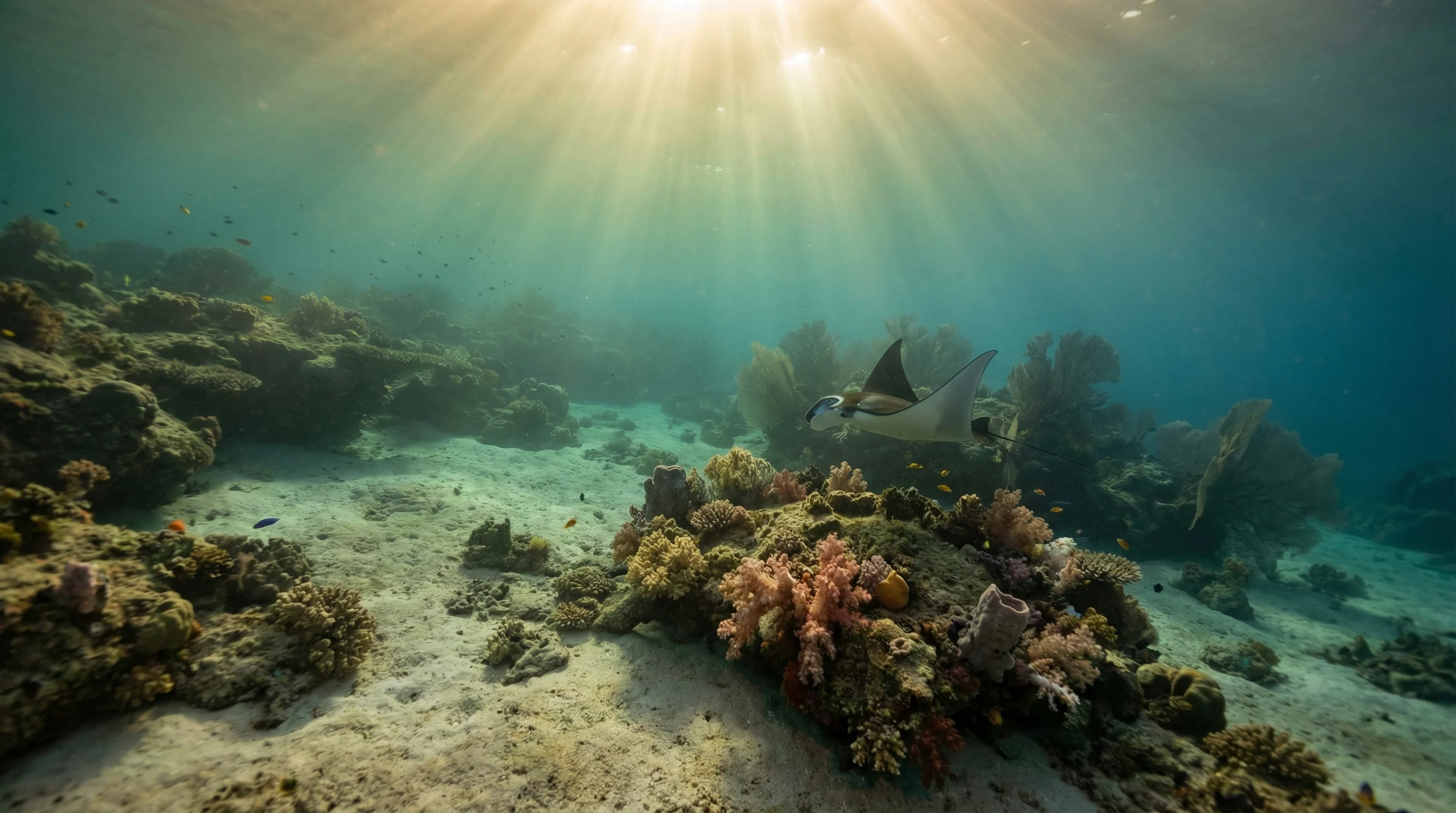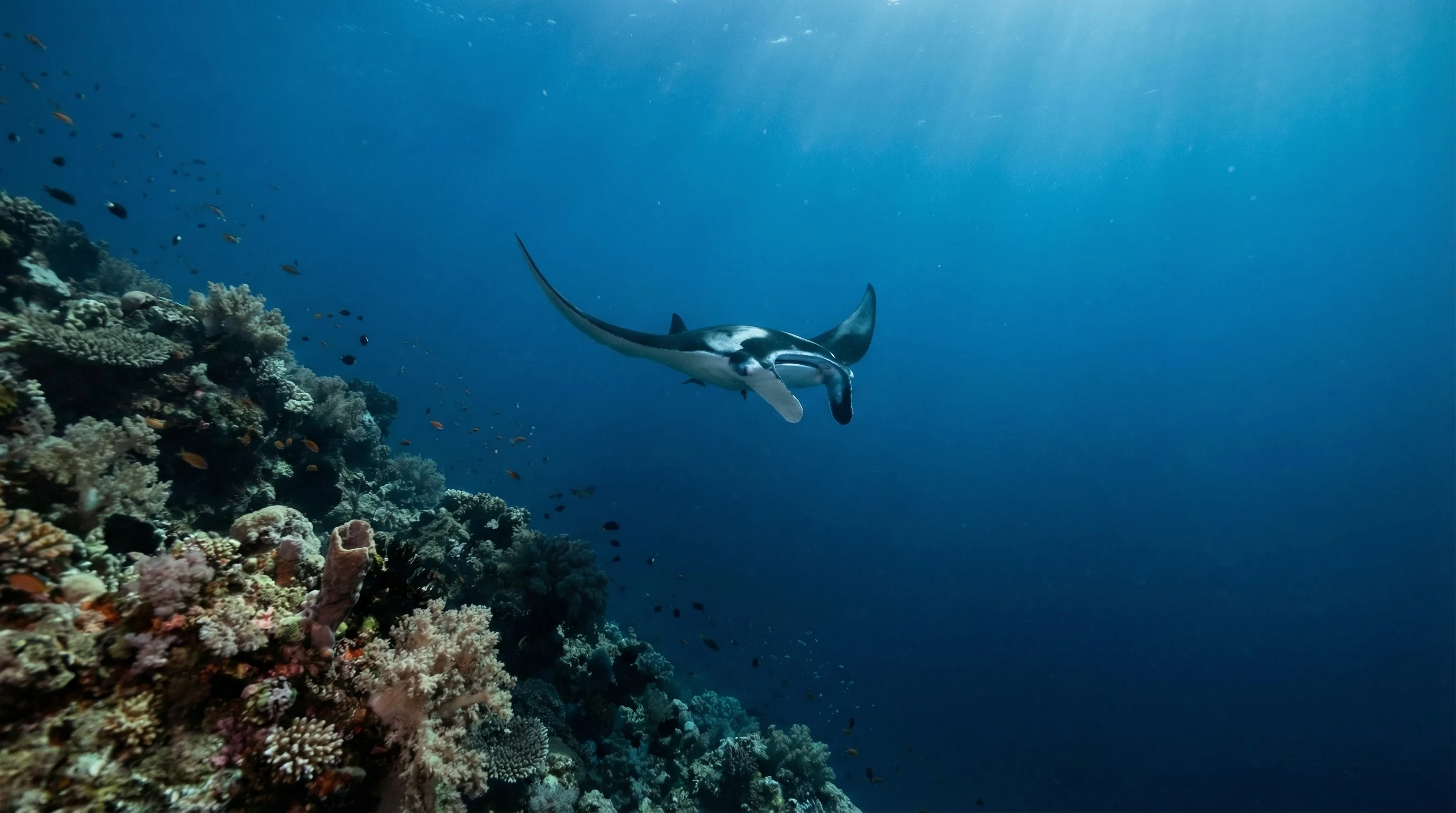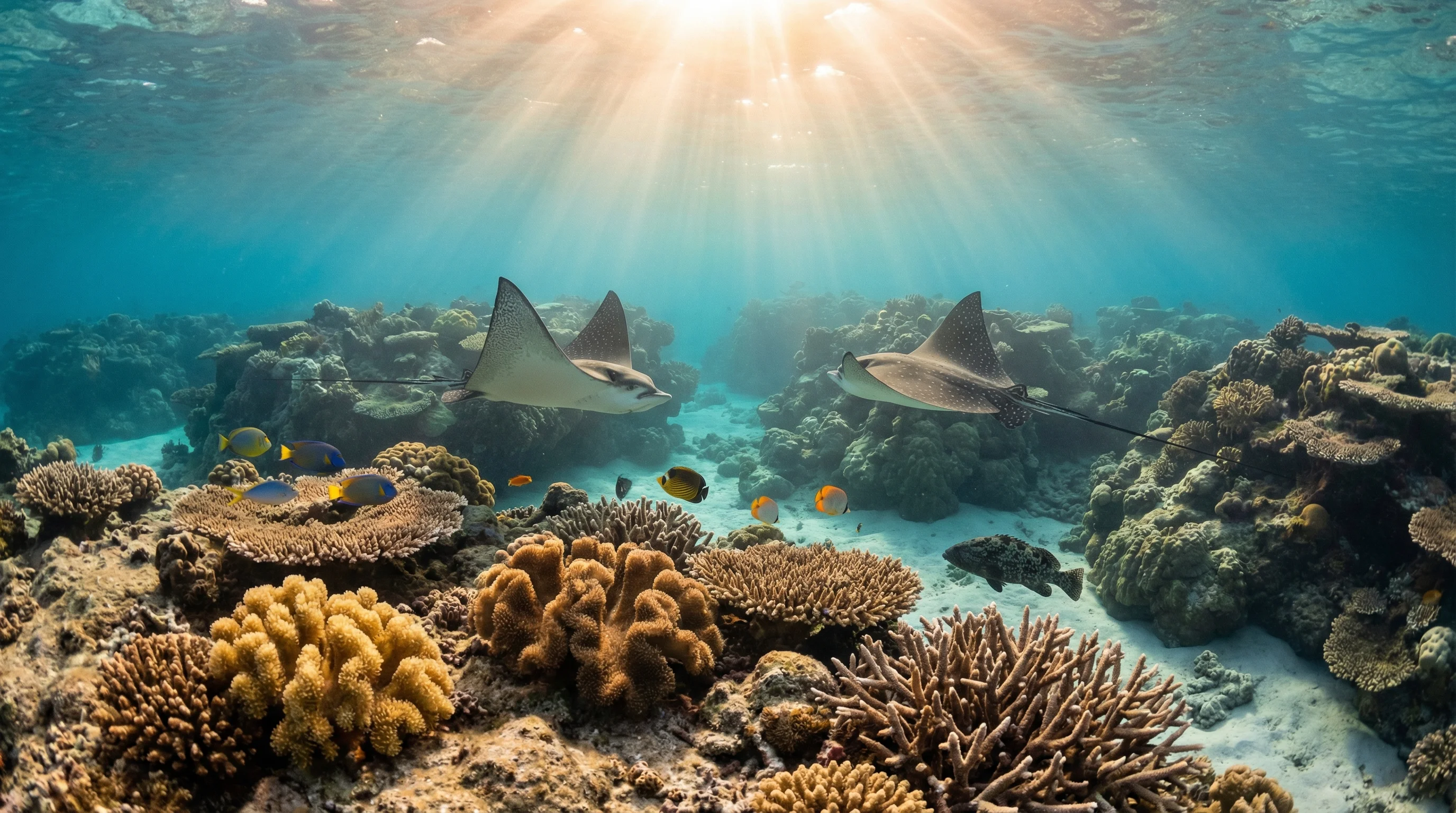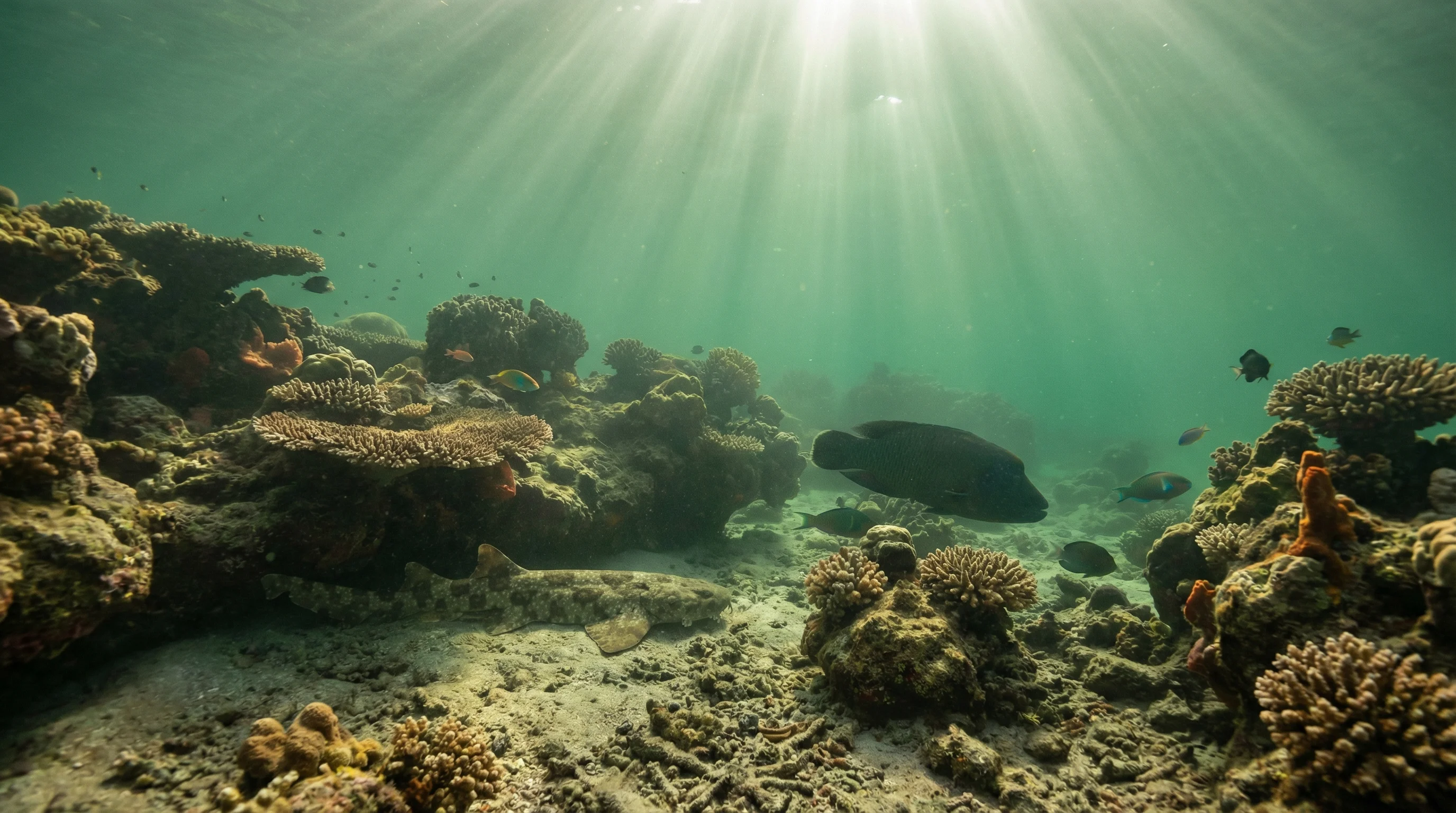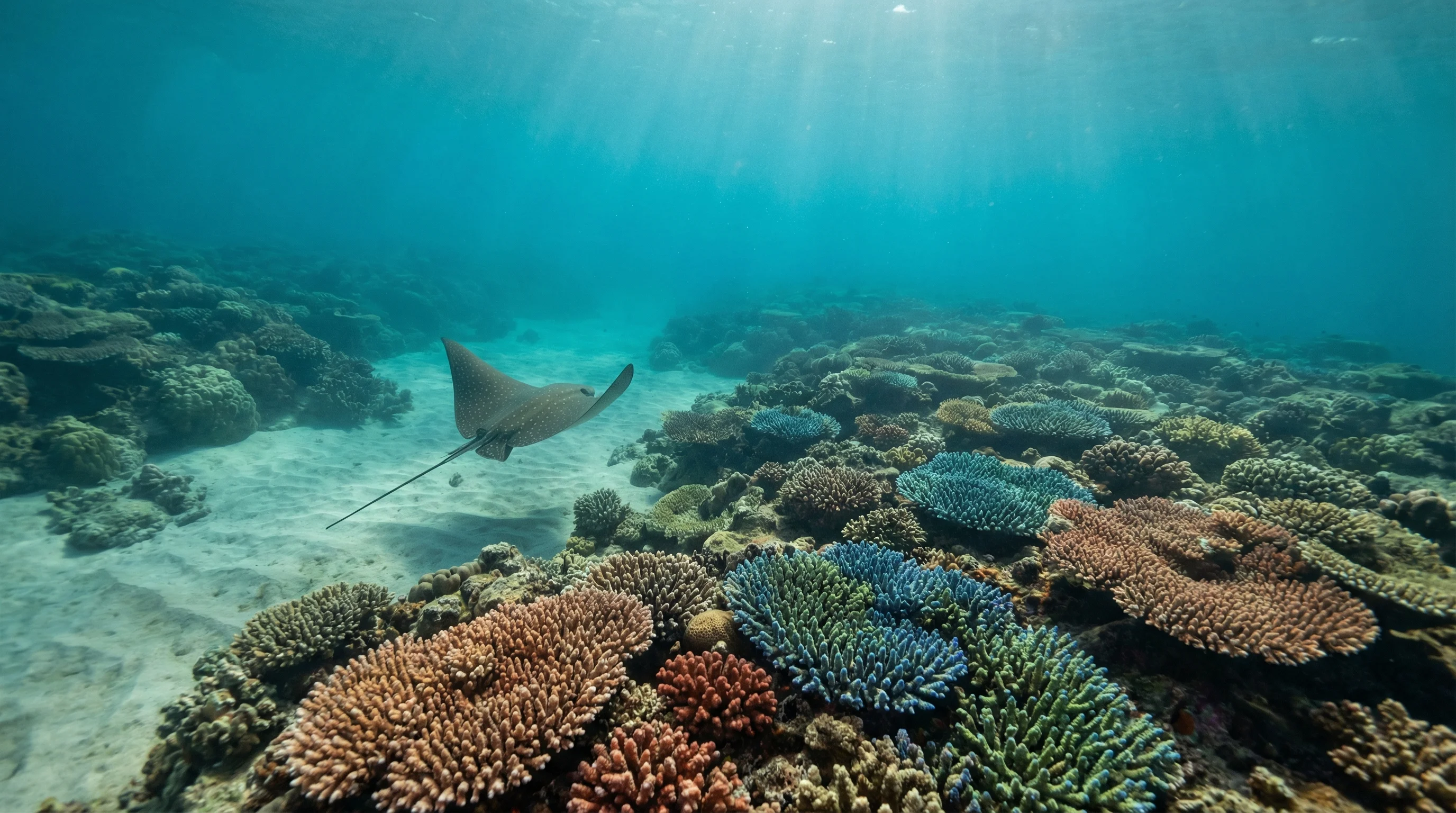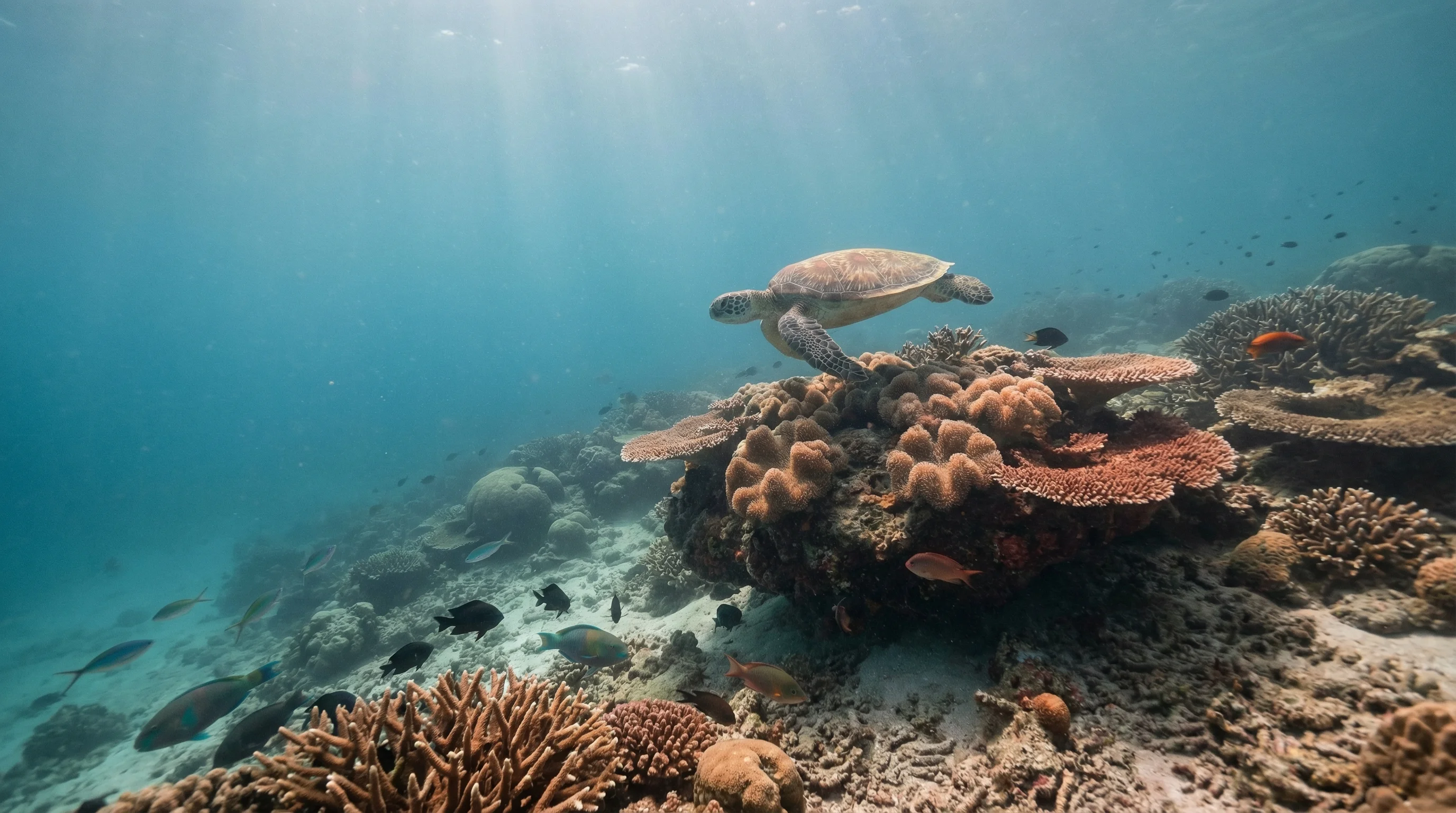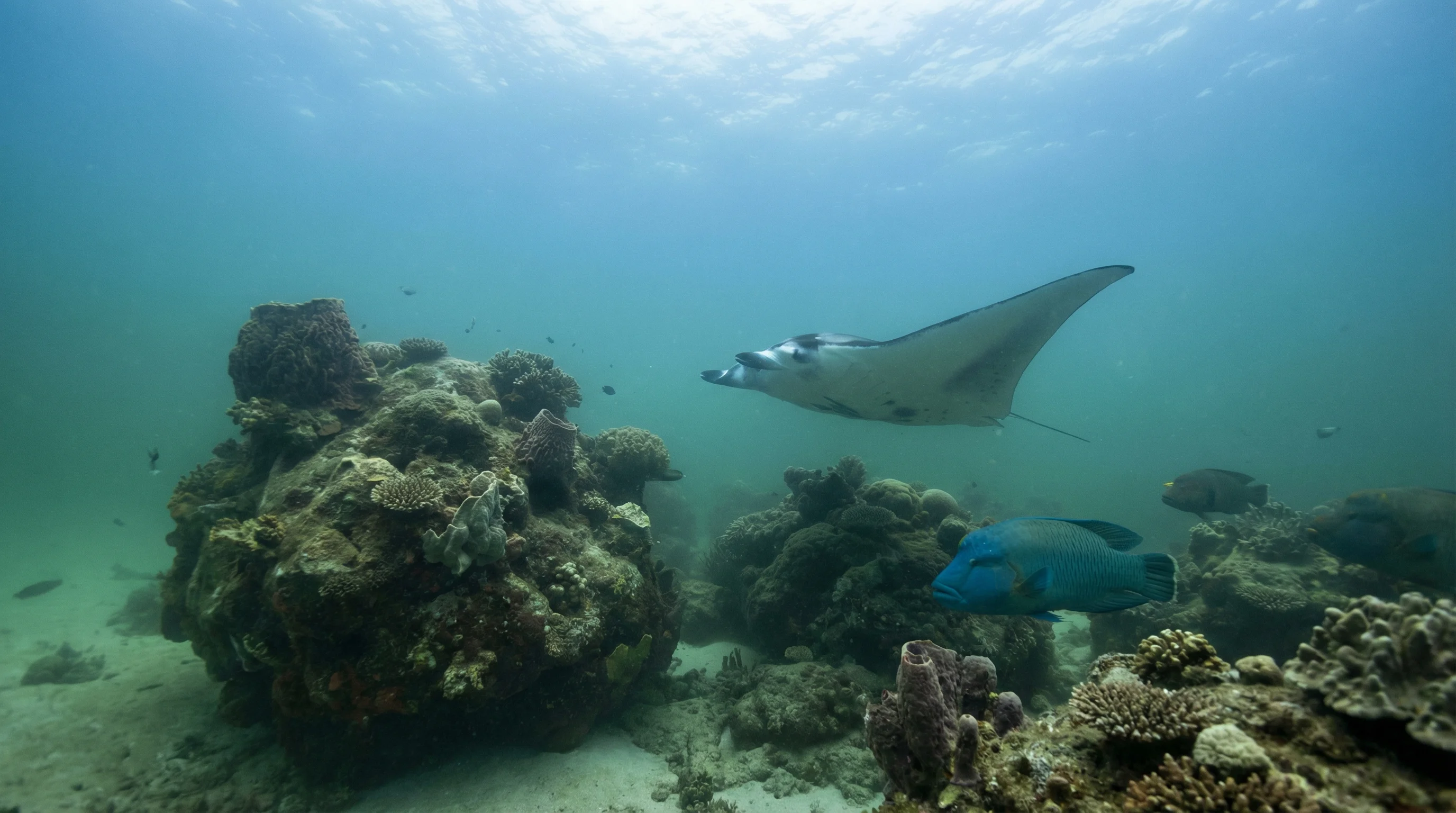
Best for beginner divers, 3-18m, boat entry, moderate current.
Wrasse Bay is a reef site located on the northern side of Hook Island, offering depths between 3 and 18 metres with an average of 10 metres. This site is suitable for beginner divers, though it requires boat access and careful planning around slack tide due to moderate currents. Visibility typically ranges from 3 to 15 metres. Water temperatures remain warm throughout the year, ranging from 22C to 29C. Divers should be aware of stinger season from October to May, during which full-body protective suits are recommended. Guided tours are available to assist with navigating the local conditions and currents.
-20.06250, 148.95970
Book a guided tour rather than a self-guided charter here, as an experienced guide will read the current and position you in the right spot to catch manta ray sightings when conditions allow. The site is most reliably calm between May and November, so that window gives you the best chance of hitting the cleaner visibility end of the range.
The site is accessible only by boat, with most dive charters departing from Coral Sea Marina in Airlie Beach.
Recorded at this site
Depth
3-18m
Visibility
3-15m
Skill Level
Beginner
Entry
Boat
Boat required
Water Temp
22-29°C
Current
Moderate
Typical Dive
45 min
Best Time
Jan, Feb, Mar, Apr, May, May, Jun, Jul, Aug, Sep, Oct, Oct, Nov, Nov, Dec
Yes, the site is suitable for beginners as depths range from 3 to 18 metres, though divers should be mindful of moderate currents.
Access to this site is by boat only. Guided tours and boat charters are available from the region.
The depth at Wrasse Bay ranges from 3 to 18 metres, with an average depth of 10 metres.
The site is accessible year-round, with the most reliably calm conditions occurring between May and November.
Hazards include strong currents, sharks, and jellyfish. Stinger season runs from October to May, and full-body protective suits are recommended during this time.
Diving at Wrasse Bay in Airlie Beach requires the following certifications: Open Water. Always dive within your training limits.
A 3mm wetsuit is recommended for diving at Wrasse Bay in Airlie Beach. Water temperatures range from 22°C to 29°C.
Expect moderate currents at Wrasse Bay in Airlie Beach. Good buoyancy control and some drift diving experience is helpful.
Visibility at Wrasse Bay in Airlie Beach typically ranges from 3 metres to 15 metres. Conditions vary with weather, tides, and seasons.