Dasyatidae spp.
80cm
1-30m
1383 sites
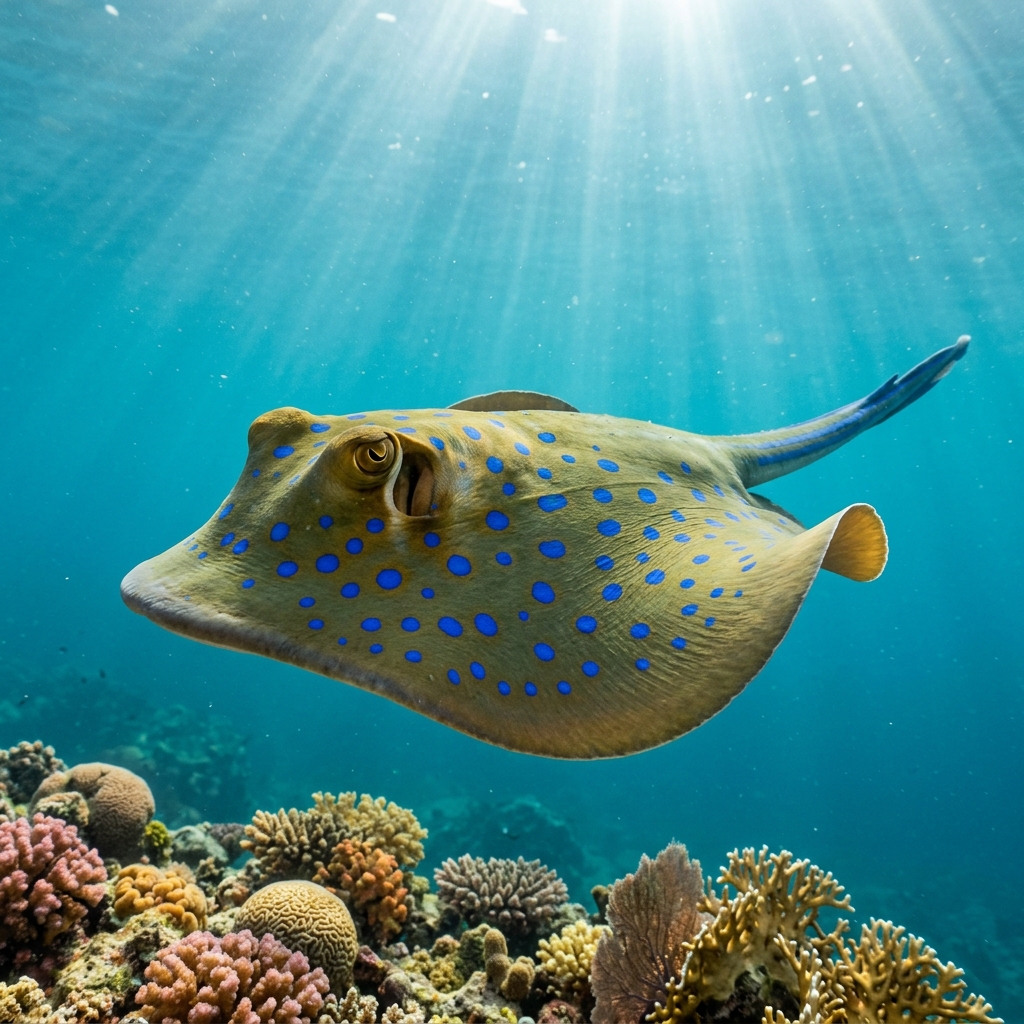
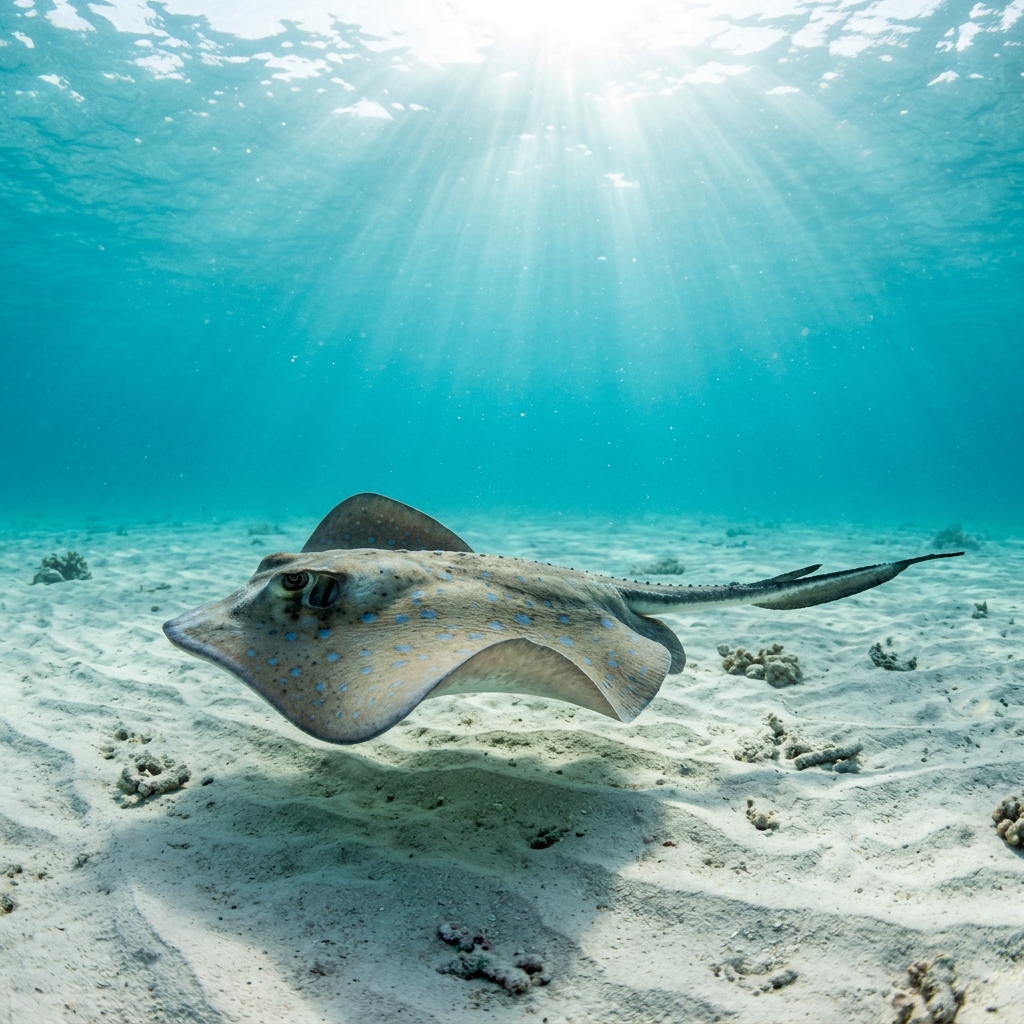
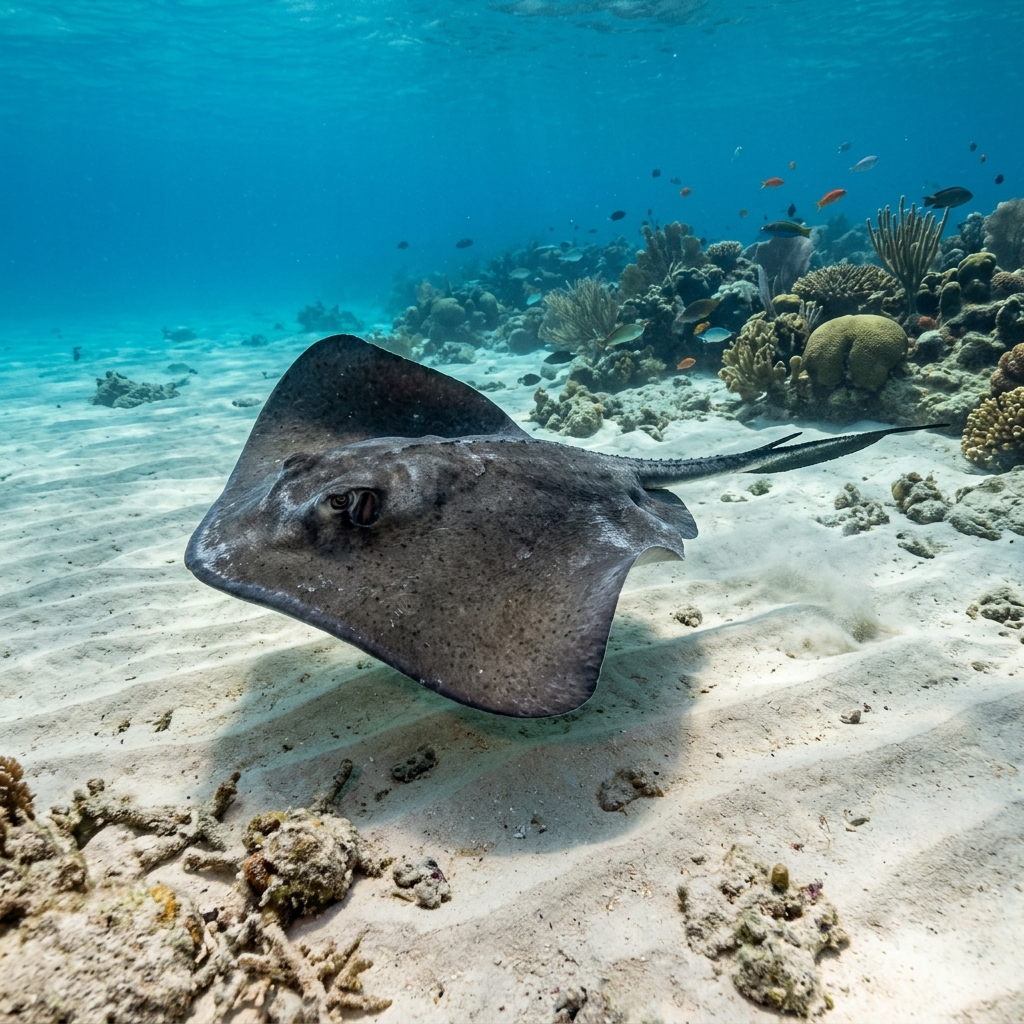
Stingrays are easily identified by their flattened, disc-like body shape, often described as diamond or kite-shaped. Their coloration typically blends with the sandy bottom, ranging from brown and grey to mottled patterns. A long, whip-like tail is a key feature, usually longer than the body and equipped with a venomous spine. Look for their characteristic undulating swimming motion as they glide effortlessly through the water. When at rest, they often bury themselves in the sand, leaving only their eyes and spiracles (breathing holes) visible.
Dasyatidae
Stingrays, belonging to the Dasyatidae family, are a common and captivating sight for divers and snorkellers worldwide. These flattened cartilaginous fish glide gracefully through the water, their diamond or disc-shaped bodies and long, whip-like tails instantly recognizable. Reaching a typical size of 80cm, stingrays are often found in shallow, sandy areas, from 1 to 30 meters deep, where they bury themselves to ambush prey or avoid detection. Divers frequently encounter them resting on the seabed, near coral reefs, or even swimming in open water. Seeing a stingray gracefully flap its 'wings' is a truly memorable underwater experience. Remember to shuffle your feet when walking on sandy bottoms to avoid accidentally stepping on a buried ray, as they possess a venomous tail spine for defense.
Safety Warning
Venomous tail spine can cause serious injury. Shuffle feet when walking on sand to avoid stepping on buried rays.