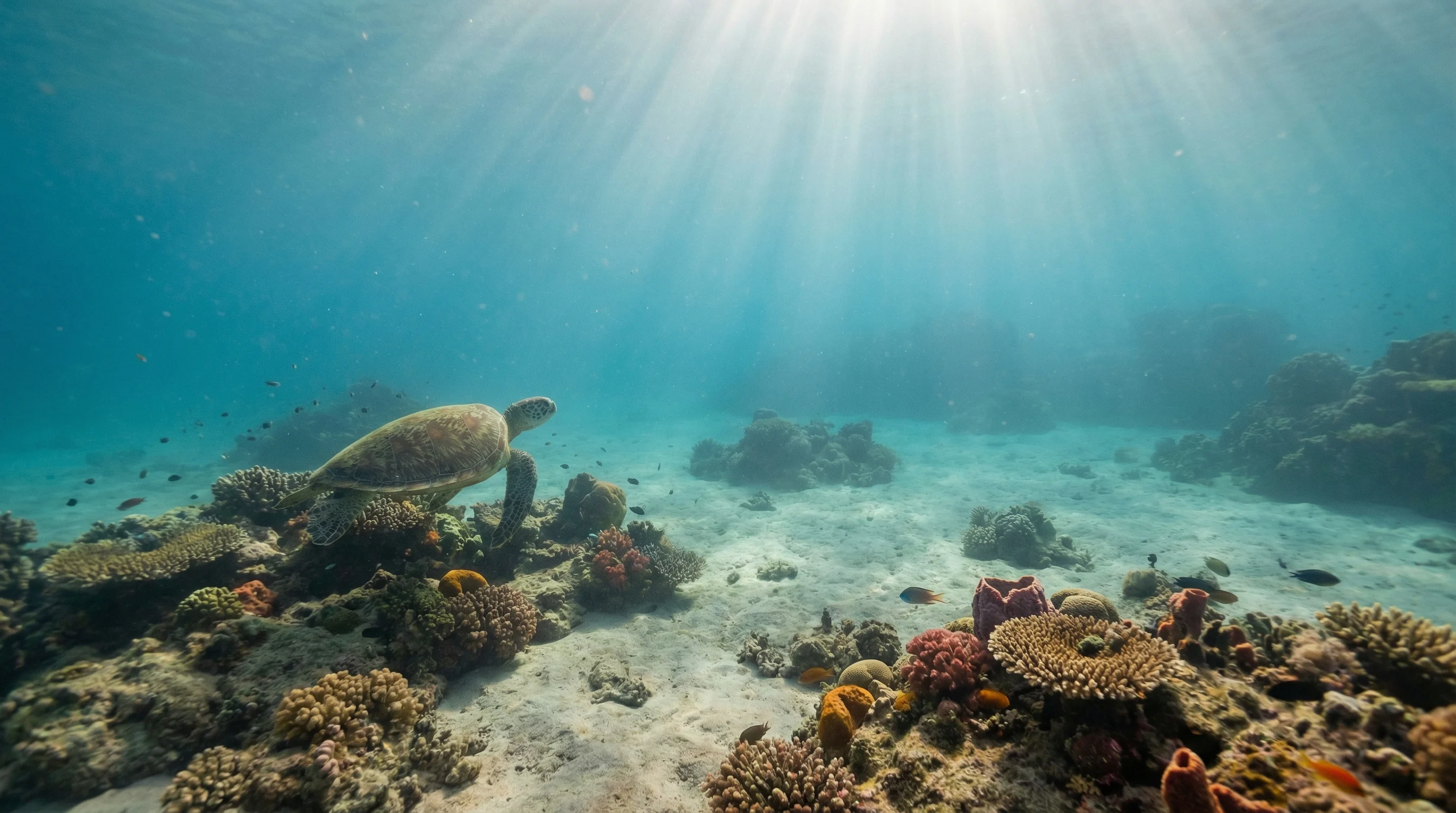
Best for beginner divers, 0-5m, boat entry, mild current.
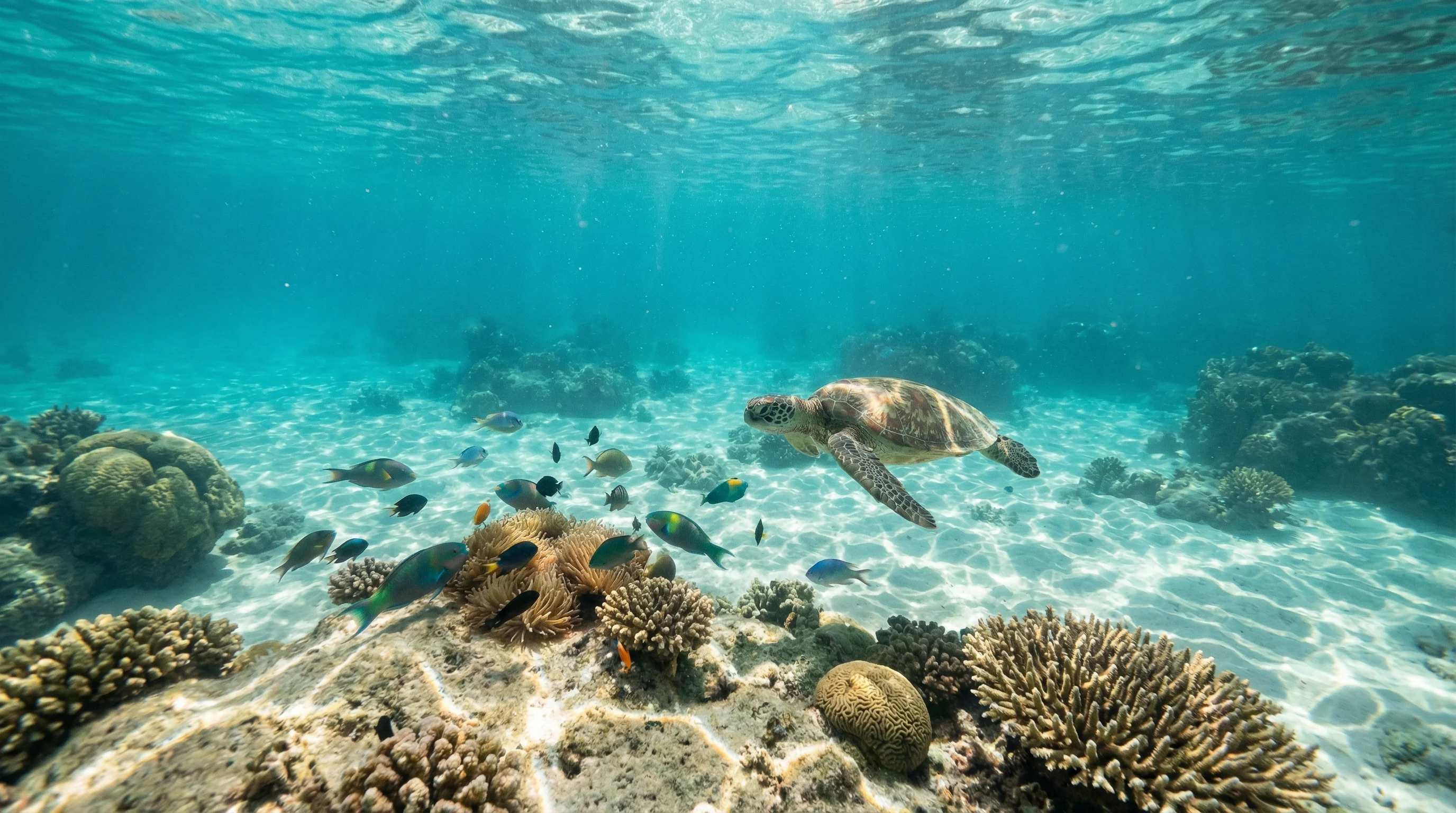
Chance Bay on Hamilton Island is a shallow, protected reef site suitable for beginners. The area features depths ranging from 0 to 5 metres with an average of 2 metres, providing a relaxed environment for snorkelling. Visibility typically spans 10 to 20 metres, allowing for clear observation of the reef structure. The bay is generally calm, though conditions can be more exposed during south-easterly winds. Access to the site is exclusively by boat. Visitors should be aware of marine stingers, particularly between October and May, and are advised to wear a stinger suit during these months. Toilets are available at the site.
-20.30310, 149.04330
Visit between May and November for the most settled conditions and the best chance of clear water. If jellyfish are visible on the surface before entry, it is worth waiting a short while or choosing a slightly different spot to enter.
The site is on Whitsunday Island and can only be reached by boat, either private vessel or commercial tour from Airlie Beach or Shute Harbour. Anchoring is permitted in the bay.
Accessible only by boat.
Expected in this region. No sightings logged here yet.
Depth
Up to 5m
Visibility
10-20m
Skill Level
Beginner
Entry
Boat
Boat required
Water Temp
22-29°C
Current
Mild
Typical Dive
60 min
Best Time
May, Jun, Jul, Aug, Sep, Oct, Nov
Yes, the site is well-suited for beginners due to its shallow depths of 0 to 5 metres and mild currents.
Yes, Chance Bay is a designated snorkel site with a rating of 3 out of 5.
Chance Bay is accessible only by boat.
The best months to visit for the most settled conditions and clearest water are May, June, July, August, September, October, and November.
A key hazard is the presence of jellyfish, or marine stingers, particularly between October and May. It is recommended to wear a stinger suit during these months.
Diving at Chance Bay in Whitsundays requires the following certifications: Open Water. Always dive within your training limits.
A 3mm wetsuit is recommended for diving at Chance Bay in Whitsundays. Water temperatures range from 22°C to 29°C.
Chance Bay in Whitsundays typically has mild currents that most divers can handle comfortably.
Visibility at Chance Bay in Whitsundays typically ranges from 10 metres to 20 metres. Conditions vary with weather, tides, and seasons.