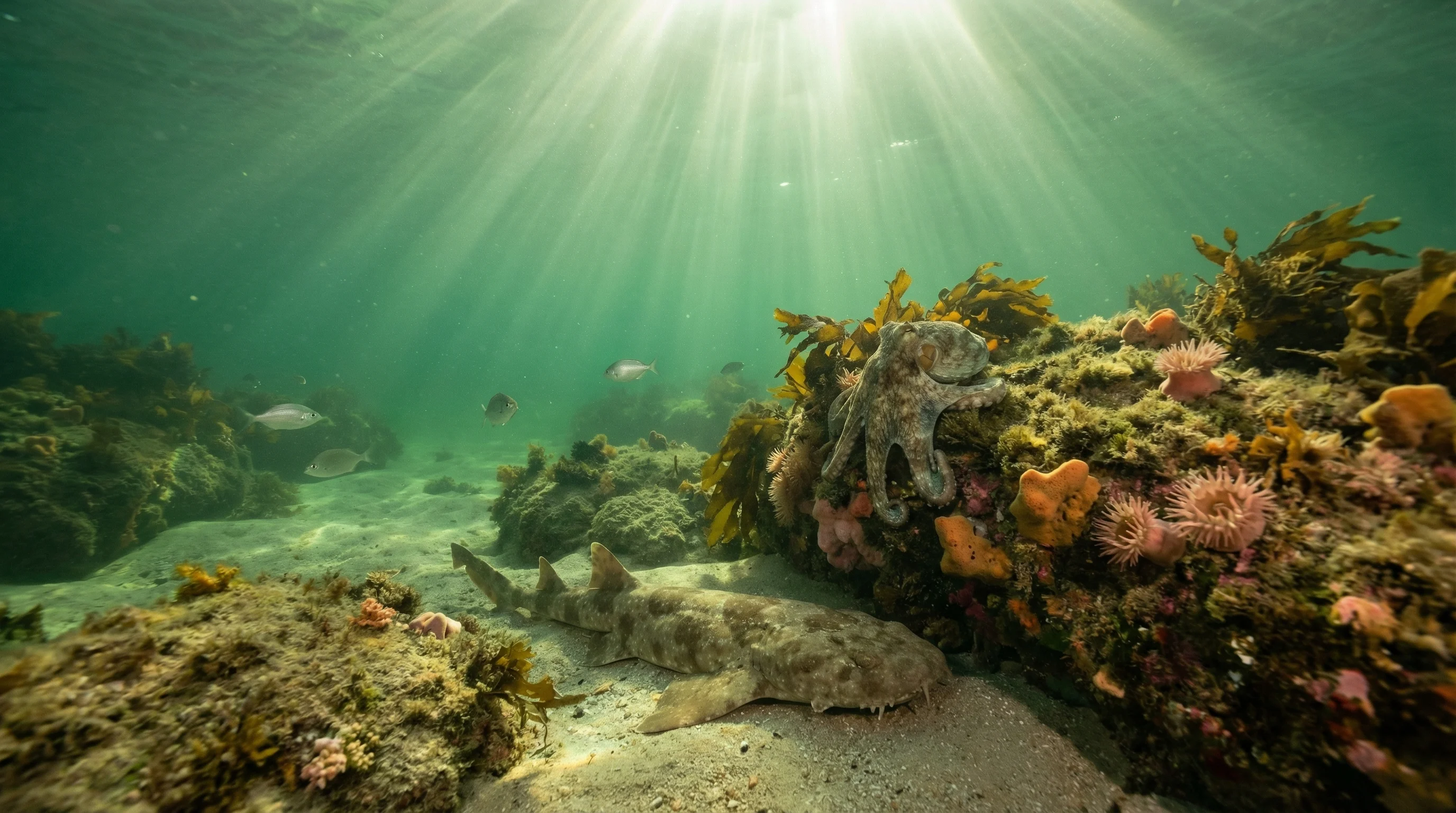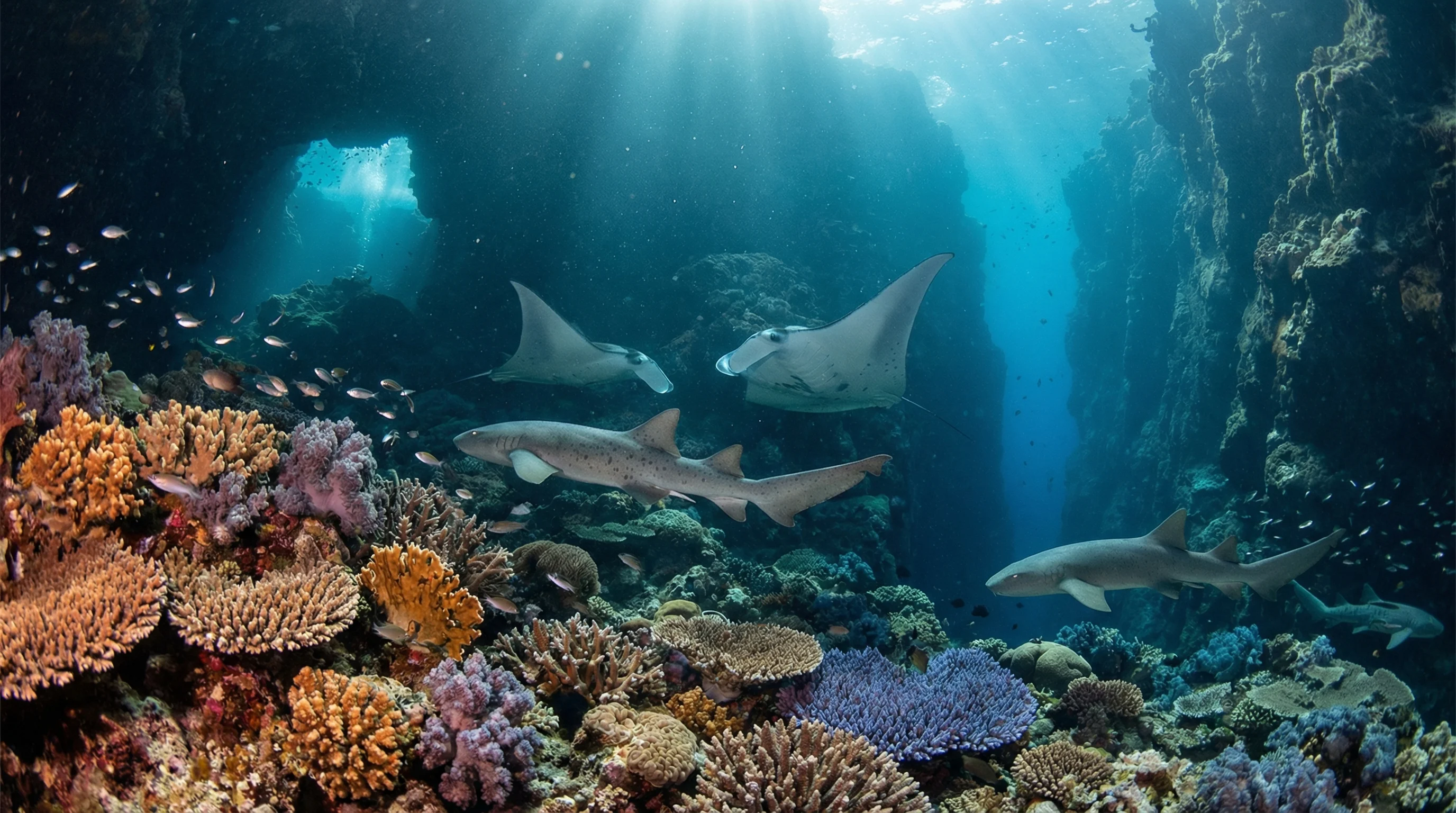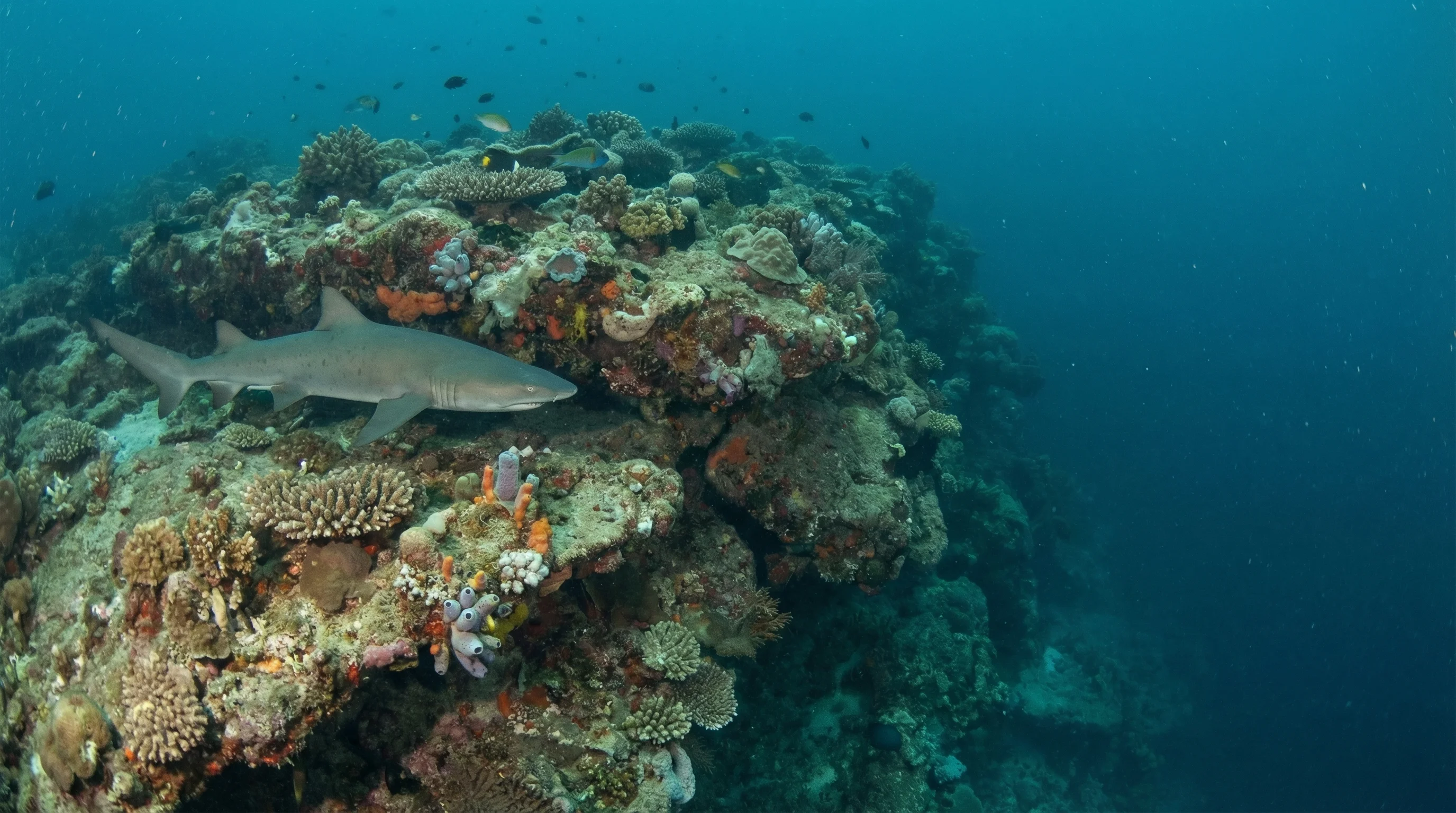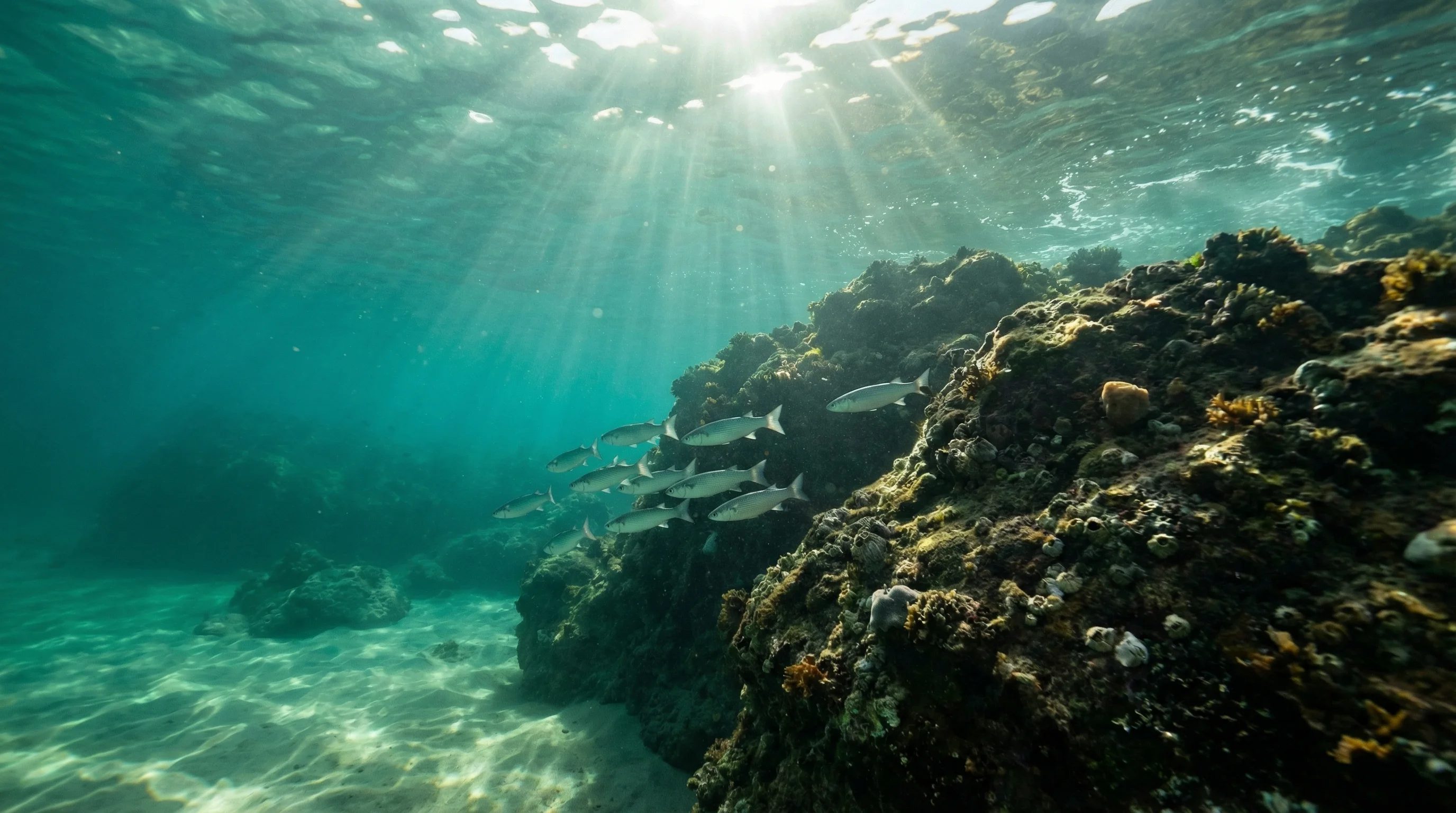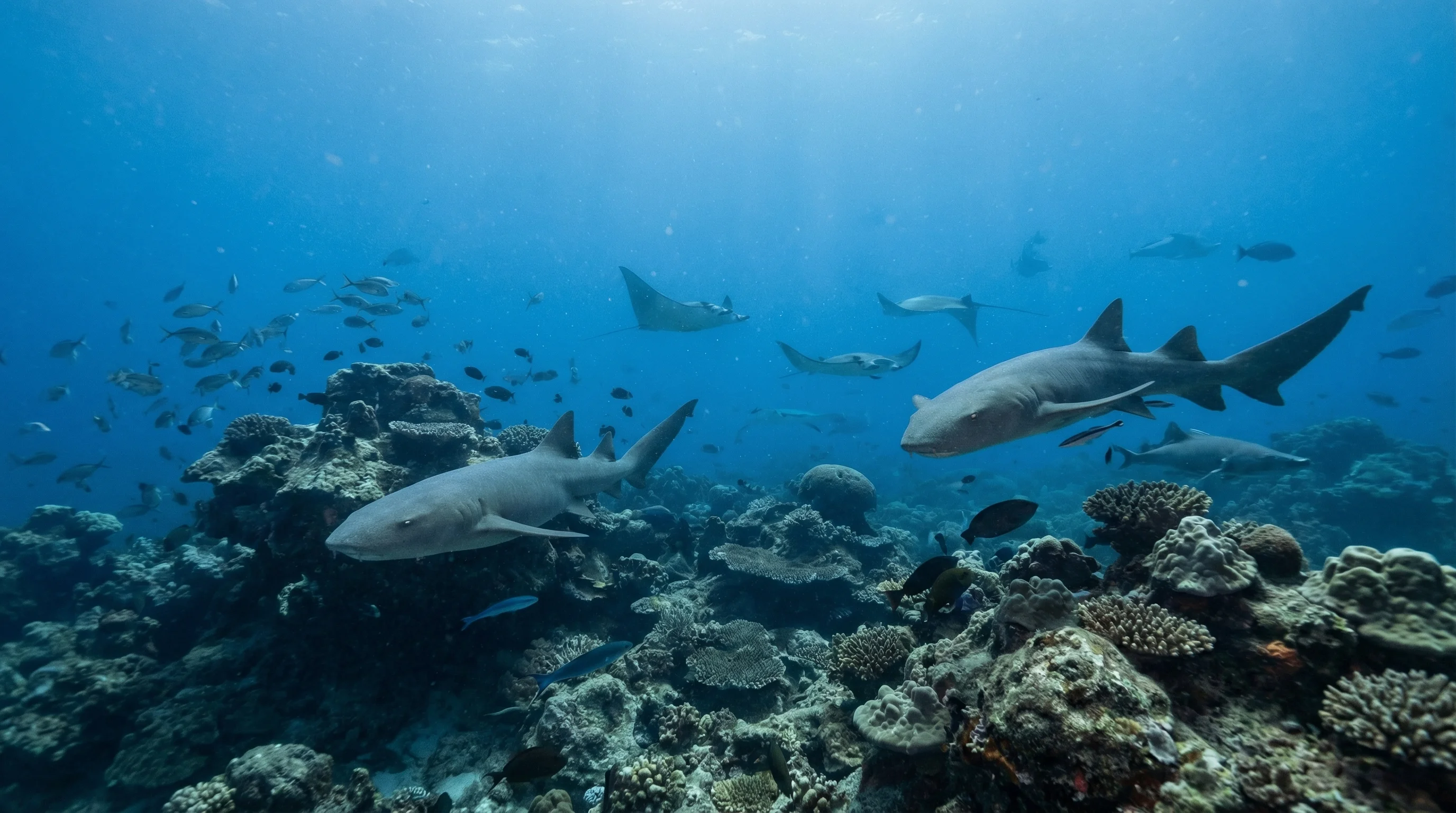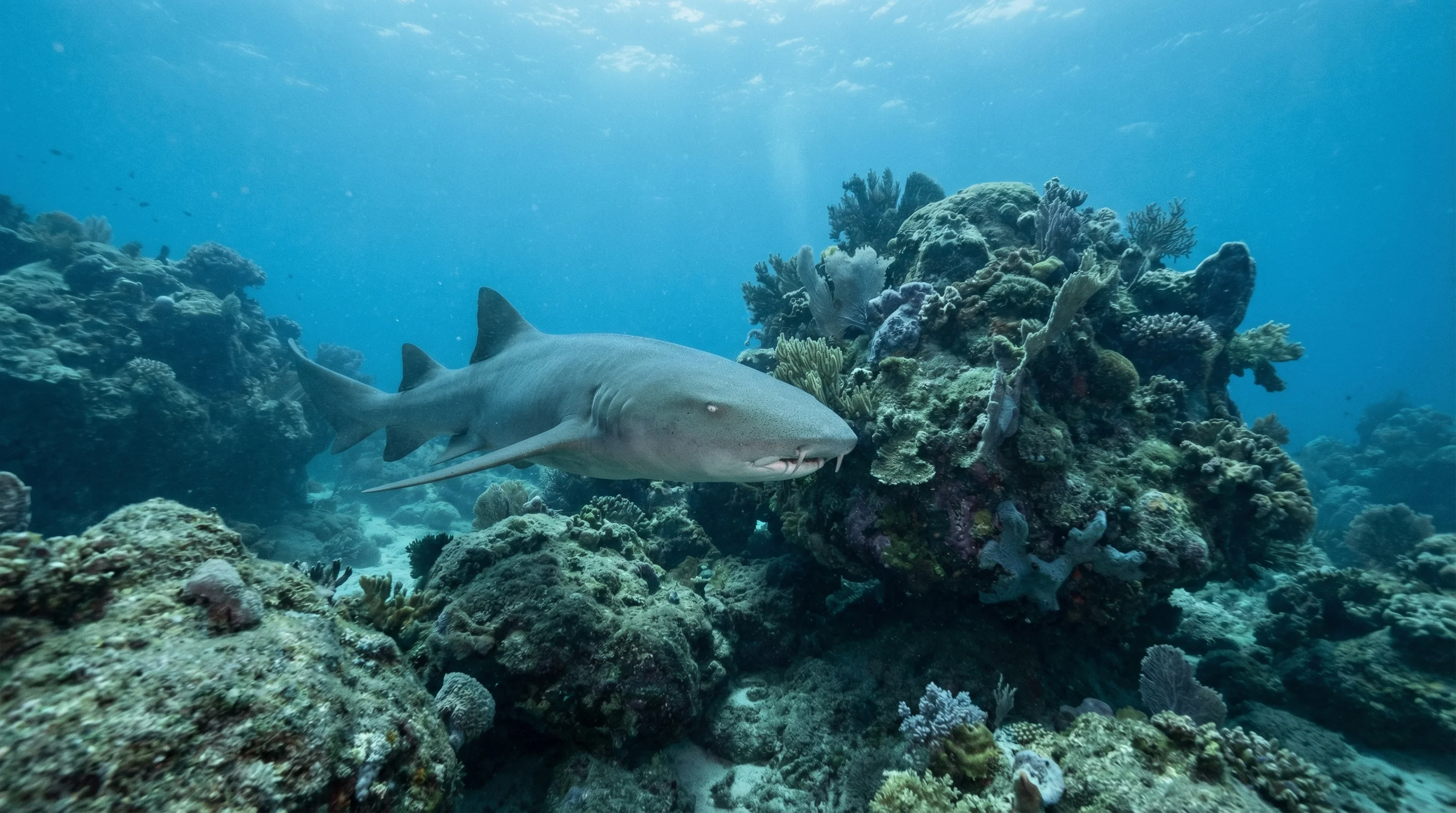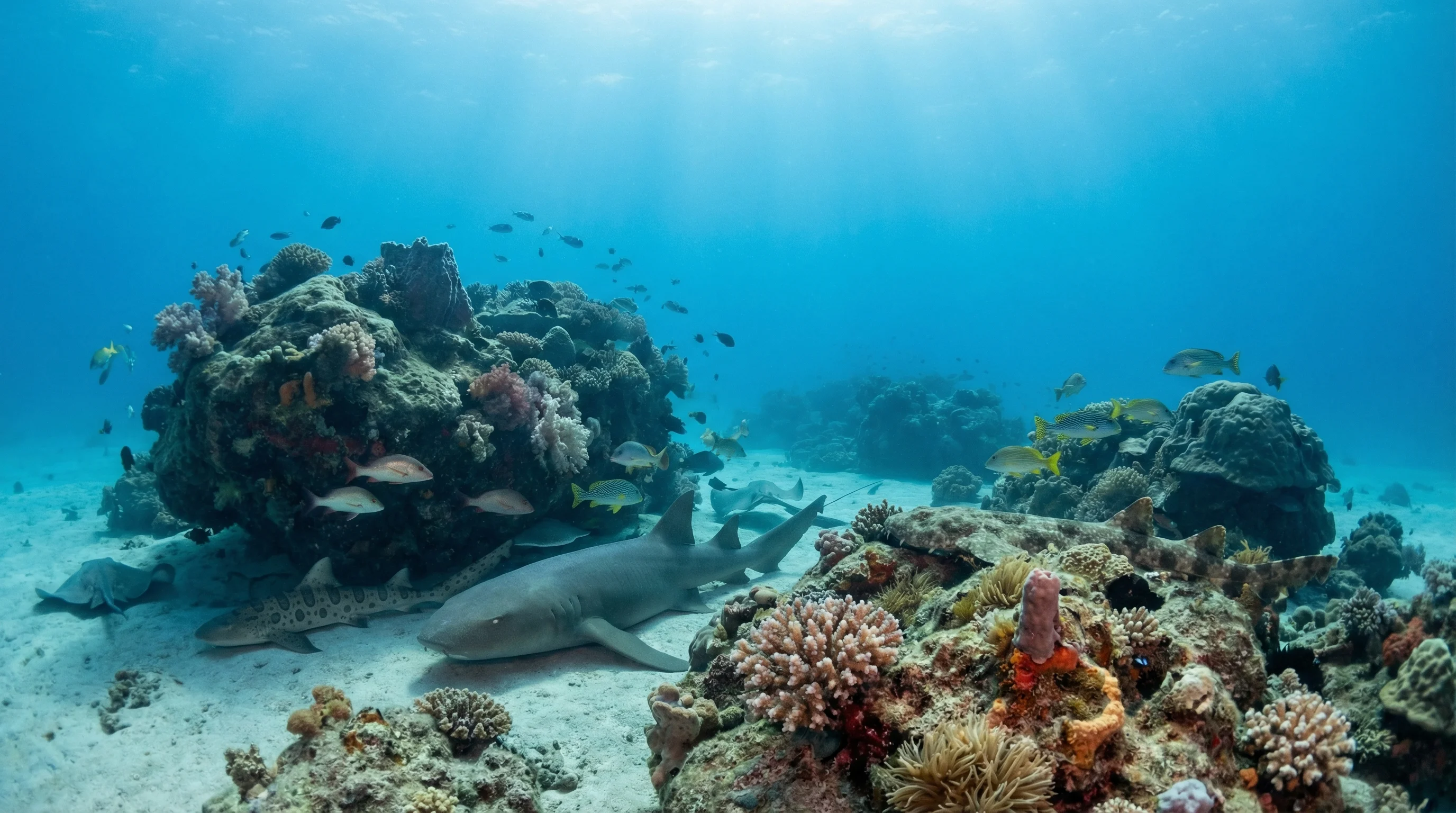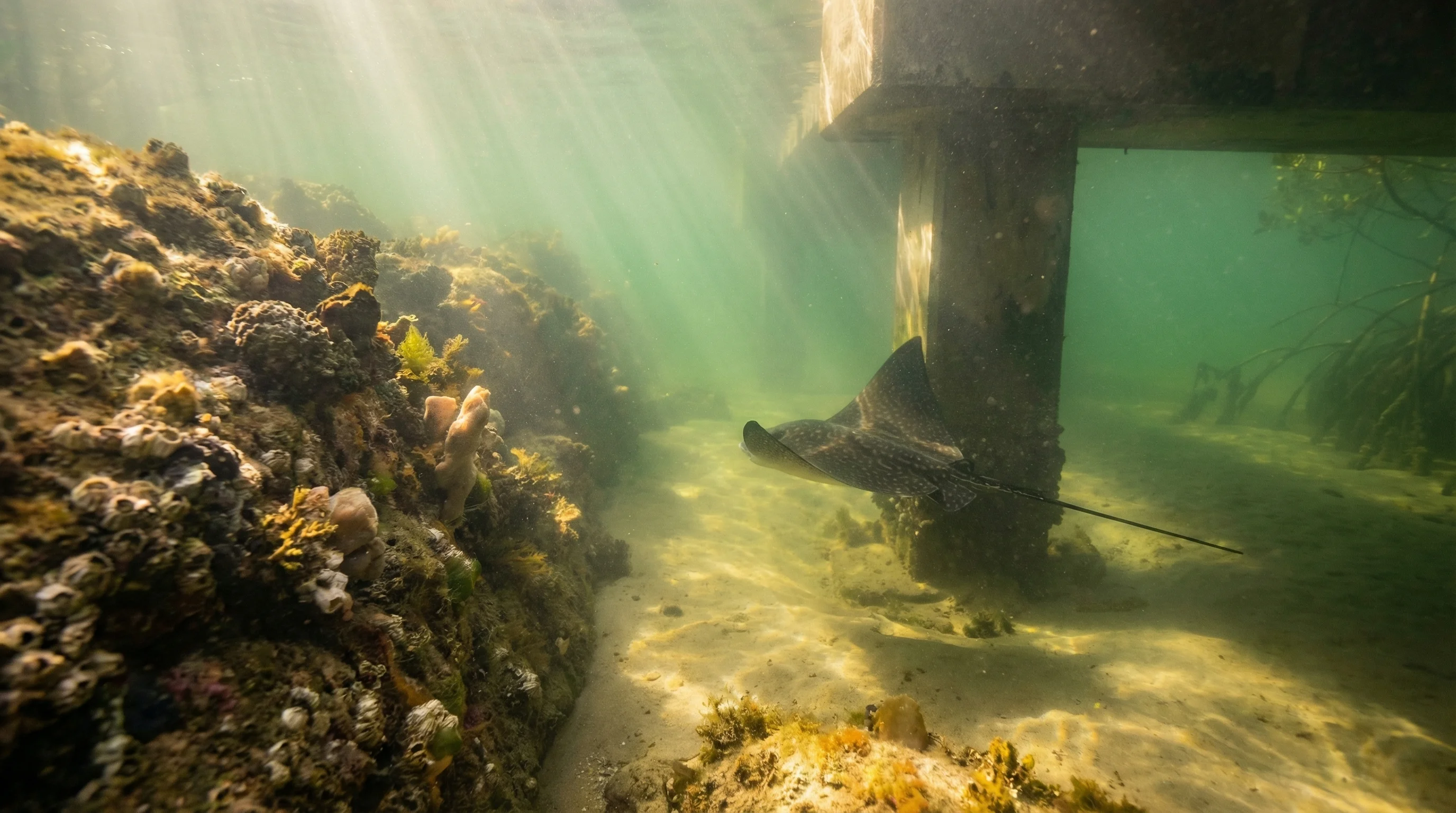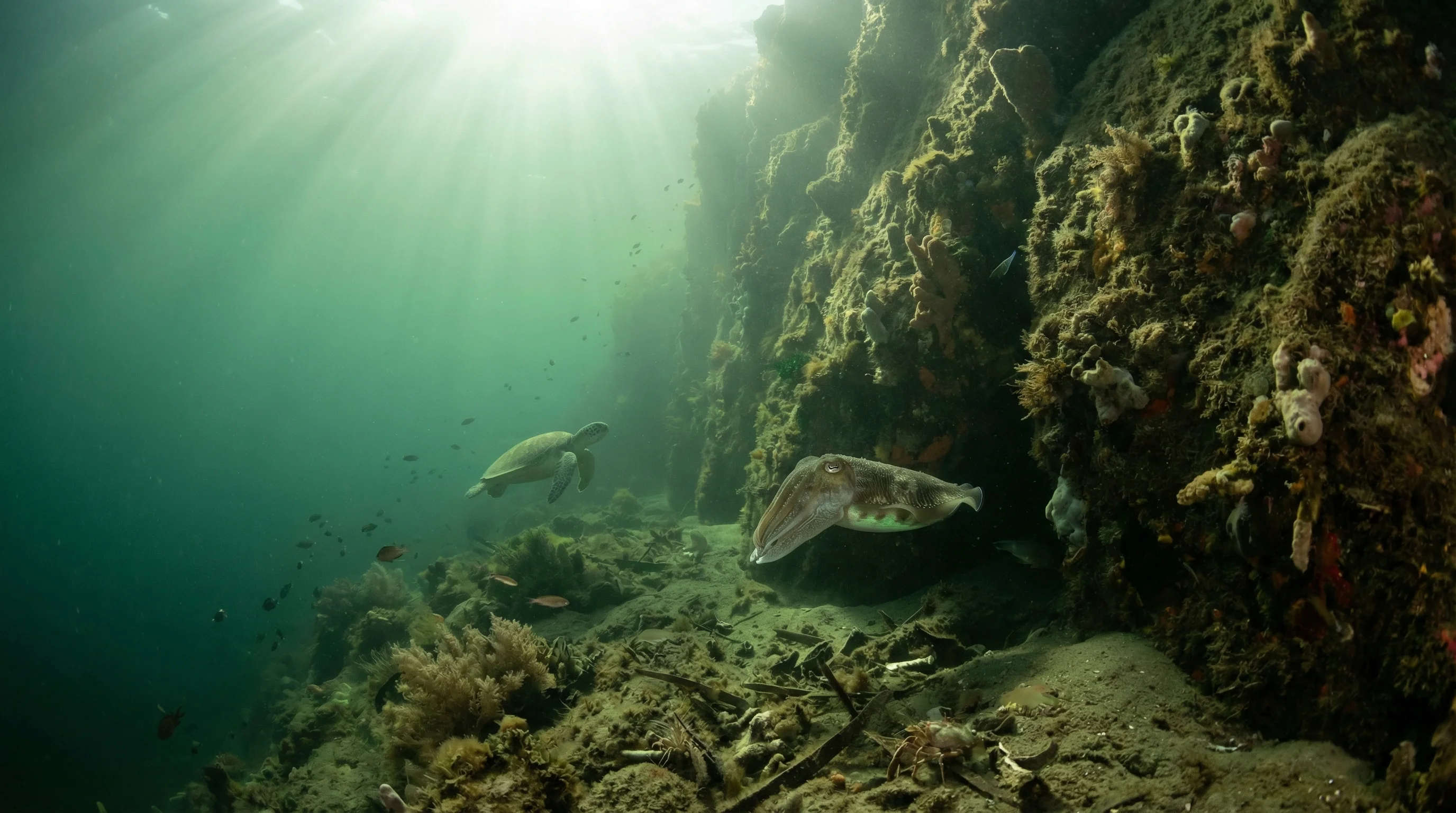
The Tweed River is a muck diving site where the mix of murky substrate and moderate current rewards patient, observant divers. Depths run from 5 to 13 metres with visibility typically between 5 and 10 metres. The site works as a shore dive with a drift element, so you move with the current rather than fight it. Keep your eyes down for wobbegong sharks, octopus, cuttlefish, ghost pipefish, and nudibranchs tucked into the bottom. Turtles and dolphins make occasional appearances. Be aware that stonefish and lionfish are present, so avoid touching or placing hands on the substrate.
-28.16973, 153.54960
June through August brings the clearest, most consistent conditions, so plan your visit for that window if you can. Check the current before you enter, as it can run stronger than expected, and always watch for boat traffic near the entry point.
Easy entry from the shore via concrete stairs located off Coral Street in Tweed Heads. There is also a beach entry option nearby for the drift dive.
The Tweed River is a busy channel with boat traffic; divers should stay close to the wall and use a dive flag. Stonefish and Wobbegong sharks are present, so care should be taken to avoid contact with the bottom.
Depth
5-12m
Visibility
3-10m
Skill Level
Beginner
Entry
Shore
Current
Moderate
Typical Dive
40 min
Best Time
Jun, Jul, Aug
Tweed River in Tweed Heads, New South Wales, hosts diverse marine life including wobbegong sharks, green turtles, dolphins, octopus, cuttlefish, moray eels, lionfish and stonefish. This shore-accessible site offers encounters with both charismatic megafauna and fascinating macro species in depths ranging from 5 to 13 metres. The varied ecosystem makes it particularly rewarding for underwater photographers and wildlife enthusiasts.
Tweed River is classified as a beginner-level dive site, making it accessible to newly certified divers with an Open Water certification. The shallow depths of 5 to 13 metres and convenient shore entry allow less experienced divers to build confidence. However, moderate currents and boat traffic require proper awareness and supervision during dives.
Tweed River presents several hazards including boat traffic due to its location in an active waterway, moderate to strong currents, and venomous marine life such as stonefish and lionfish. Wobbegong sharks are present but generally docile if not provoked. Divers should maintain good buoyancy control, display a surface marker buoy, wear protective gloves when necessary, and watch carefully where they place their hands and knees.
The optimal months for diving Tweed River are June, July and August during the Australian winter. These months typically offer the most favourable diving conditions in the Tweed Heads area. Visibility at the site ranges from 5 to 10 metres depending on tidal flow and recent weather conditions.
Tweed River is a shore dive that does not require a boat, with parking facilities available near the entry point. Divers can access the site directly from land, making it convenient and cost-effective. The shore entry also allows divers to choose their own timing and dive duration without charter restrictions.
Night diving is permitted at Tweed River, offering opportunities to observe nocturnal marine life such as hunting octopus, foraging wobbegong sharks and cuttlefish. The shallow depths of 5 to 13 metres make night diving more manageable for those with appropriate training. Divers must be particularly vigilant about boat traffic markers and should always dive with proper torches and surface signalling devices.
An Open Water certification is required to dive Tweed River in New South Wales. This entry-level certification provides adequate training for the site's maximum depth of 13 metres and beginner-friendly conditions. Divers should be comfortable with shore entries and managing moderate currents before attempting this site.
Visibility at Tweed River typically ranges from 5 to 10 metres depending on tidal conditions and rainfall in the catchment area. The river environment means visibility can fluctuate significantly, with clearer conditions generally occurring during the winter months of June to August. Moderate currents can both improve and reduce visibility by bringing in cleaner oceanic water or stirring up sediment.