
Rhincodon typus
11.9m
0-1928m
1868 sites
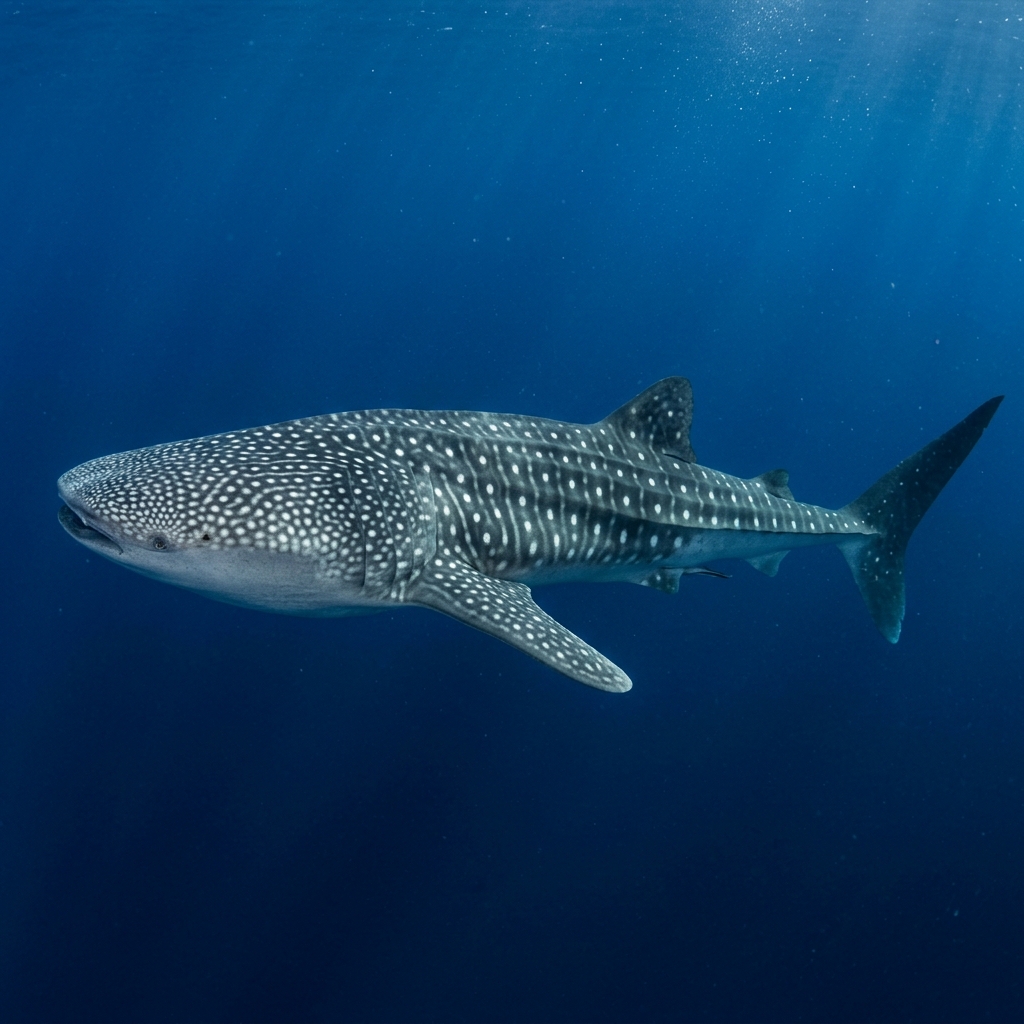
Whale Sharks are easily identified by their enormous size and distinctive 'checkerboard' pattern of light spots and stripes on a dark grey to blue-grey background. They possess a flattened head with a wide mouth located at the front, rather than underneath, and prominent ridges running along their body. Look for their large, crescent-shaped caudal fin (tail) as they gracefully propel themselves through the water. They are filter feeders, so they often swim near the surface with their mouths open, making them easily visible.
The Whale Shark is listed as endangered by the IUCN. When diving, please observe from a distance, avoid touching or feeding, and report any sightings to local marine research organisations.
Rhincodontidae
Imagine gliding through the clear blue, sunlight dancing on your mask, when suddenly a colossal, patterned shadow emerges. It's a Whale Shark, the gentle giant of the ocean and a bucket-list encounter for any diver or snorkeller! These magnificent creatures, despite being the largest fish in the sea, are filter feeders, posing absolutely no threat. Encounters typically involve swimming alongside them as they cruise near the surface, hoovering up plankton. Witnessing their immense size and unique spot patterns is an unforgettable experience. Whale Sharks are most commonly encountered in warm, tropical waters, often aggregating in specific locations during plankton blooms or migration seasons. Prepare to be awestruck by their sheer scale and peaceful demeanor – truly a humbling moment in the underwater world.