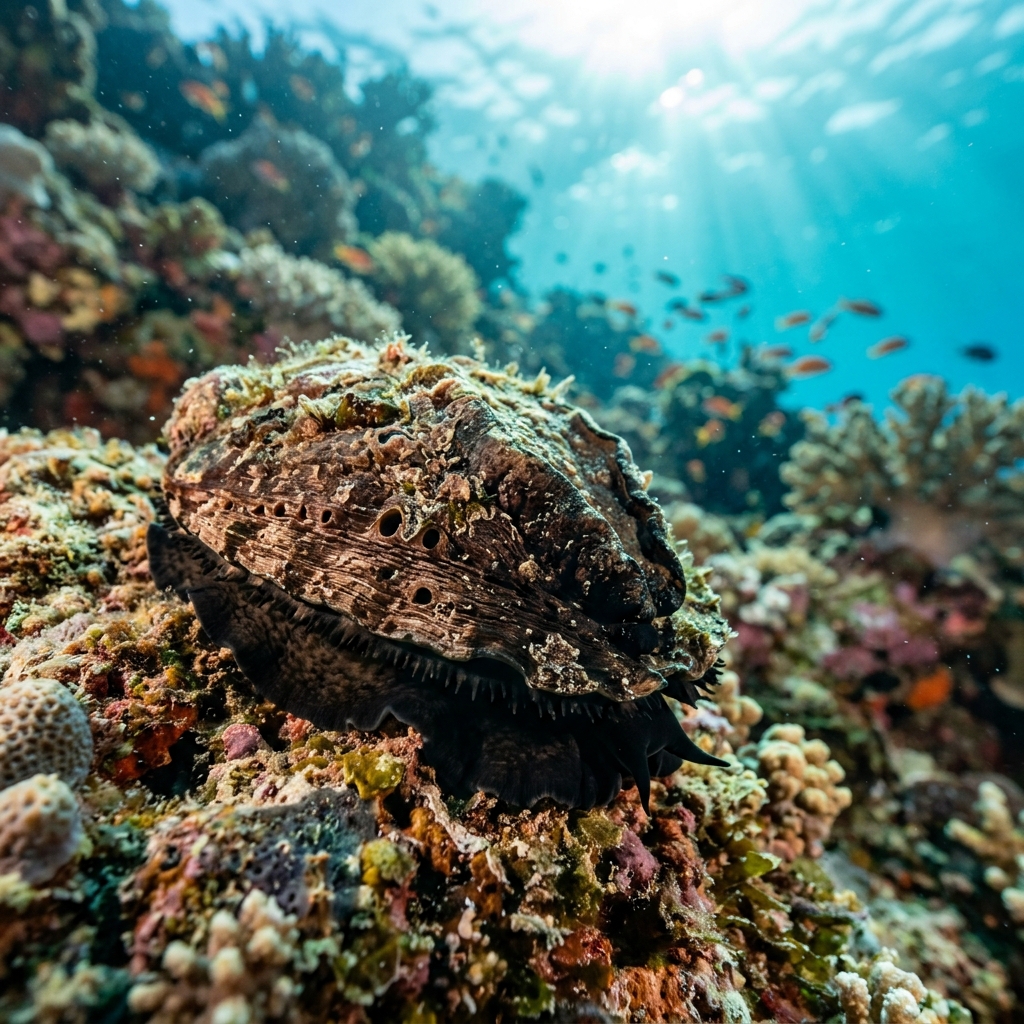
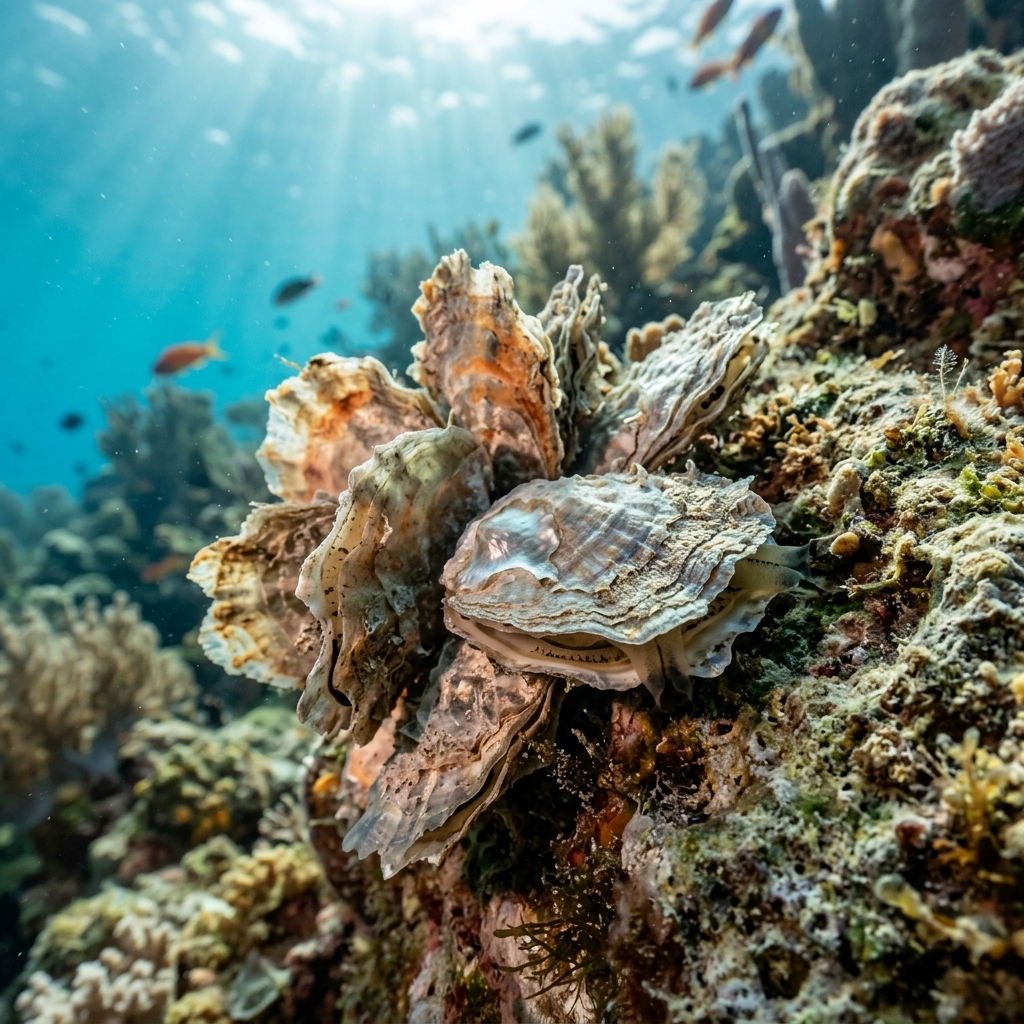
Tridacna gigas
95cm
0-35m
127 sites
Cardiidae
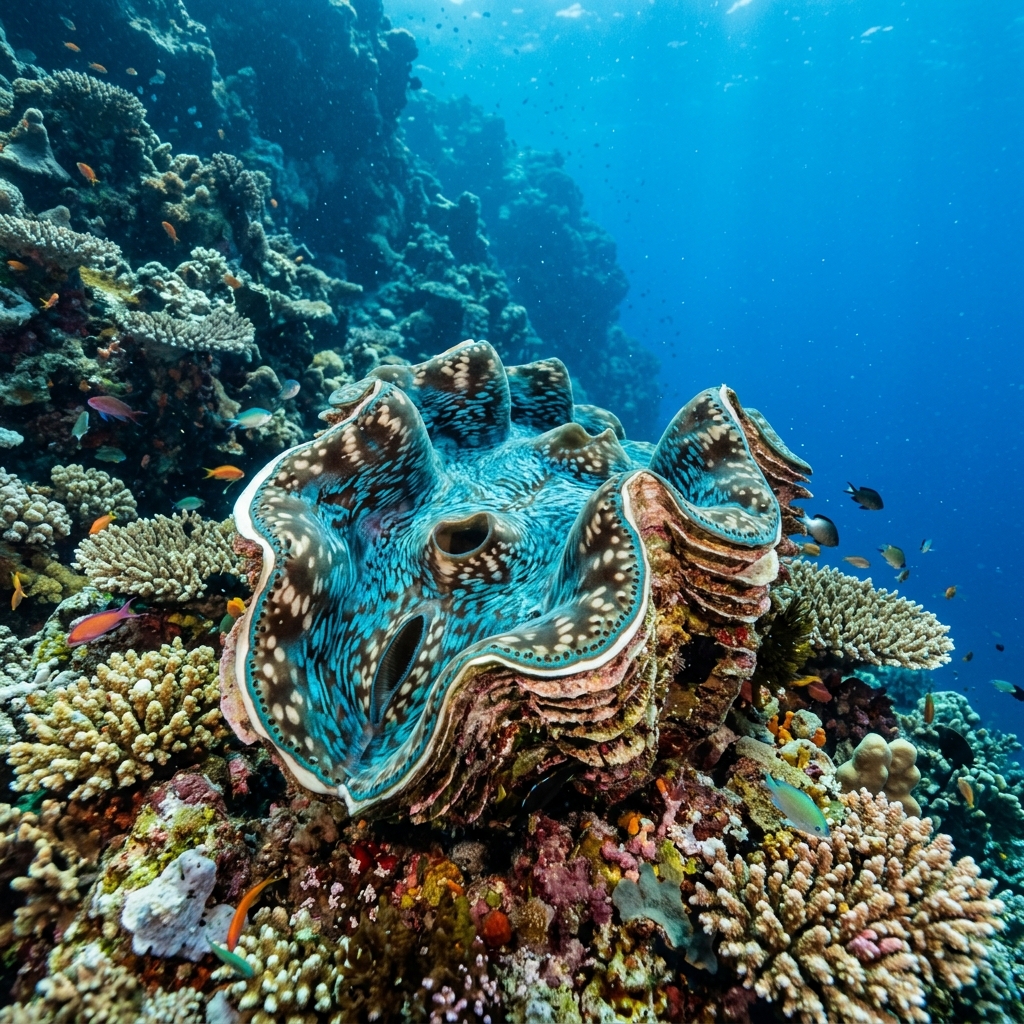
Imagine gliding over a vibrant coral reef and spotting a colossal, living jewel nestled amongst the coral. That's the Giant Clam (Tridacna gigas), the largest living bivalve mollusk on Earth! These magnificent creatures can grow to over a meter in length, making them an unforgettable sight for any diver or snorkeller. Their vibrant mantle, the soft tissue visible between the shell edges, displays a stunning array of colors, from electric blue and green to gold and brown. Divers most commonly encounter them in shallow, sun-drenched reefs, typically at depths of less than 20 meters. The Great Barrier Reef is a particularly popular spot to find these gentle giants. Seeing one is a truly awe-inspiring experience, a reminder of the incredible biodiversity our oceans hold. Giant clams are filter feeders, using their gills to extract phytoplankton from the water. They also have a symbiotic relationship with algae called zooxanthellae, which live in their mantle tissue and provide them with additional nutrients through photosynthesis. This is why they are often found in shallow, sunlit waters. While they appear firmly attached to the reef, they can actually move slightly using a small foot, especially when young. Though they cannot 'snap shut' on a diver, it's best to admire them from a respectful distance.
Giant Clams are easily identified by their immense size, often exceeding 90cm. Look for the brightly colored mantle, the fleshy part visible between the shell edges, which comes in a variety of vibrant blues, greens, and browns. The shell itself has distinctive, undulating ridges. They are typically found sitting on the reef floor, partially buried in the sand or coral.
The Giant Clam is listed as vulnerable by the IUCN. When diving, please observe from a distance, avoid touching or feeding, and report any sightings to local marine research organisations.