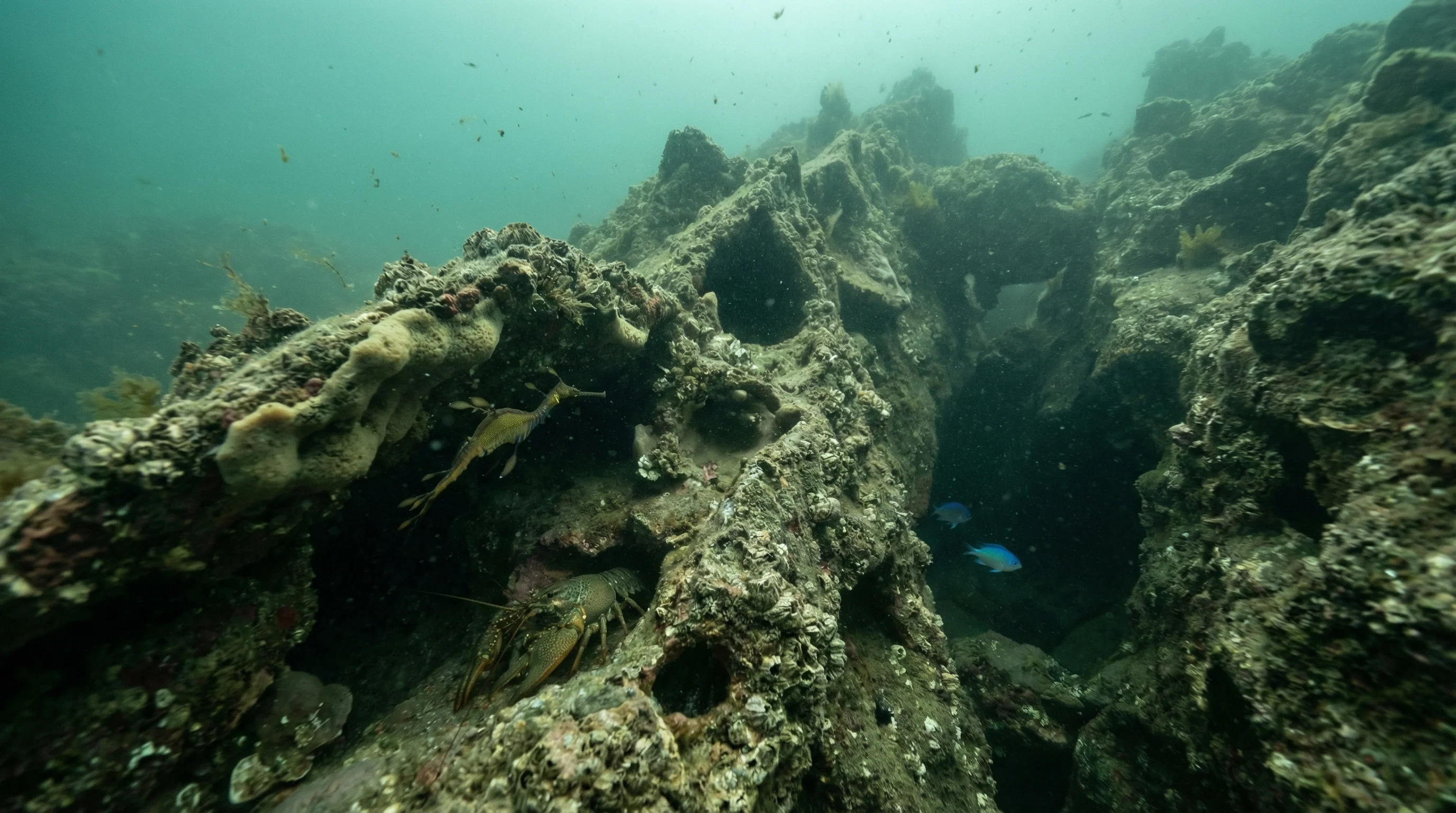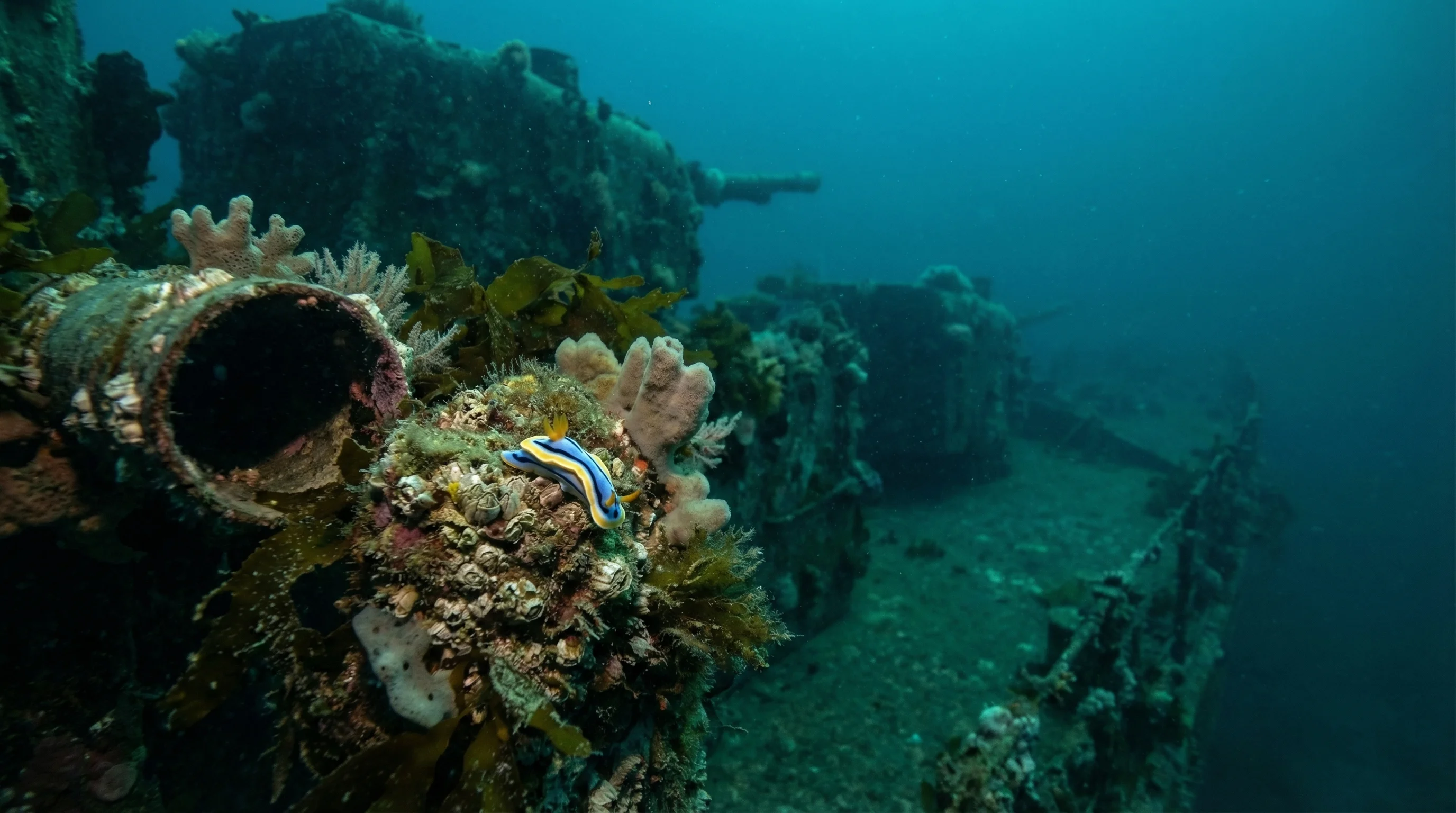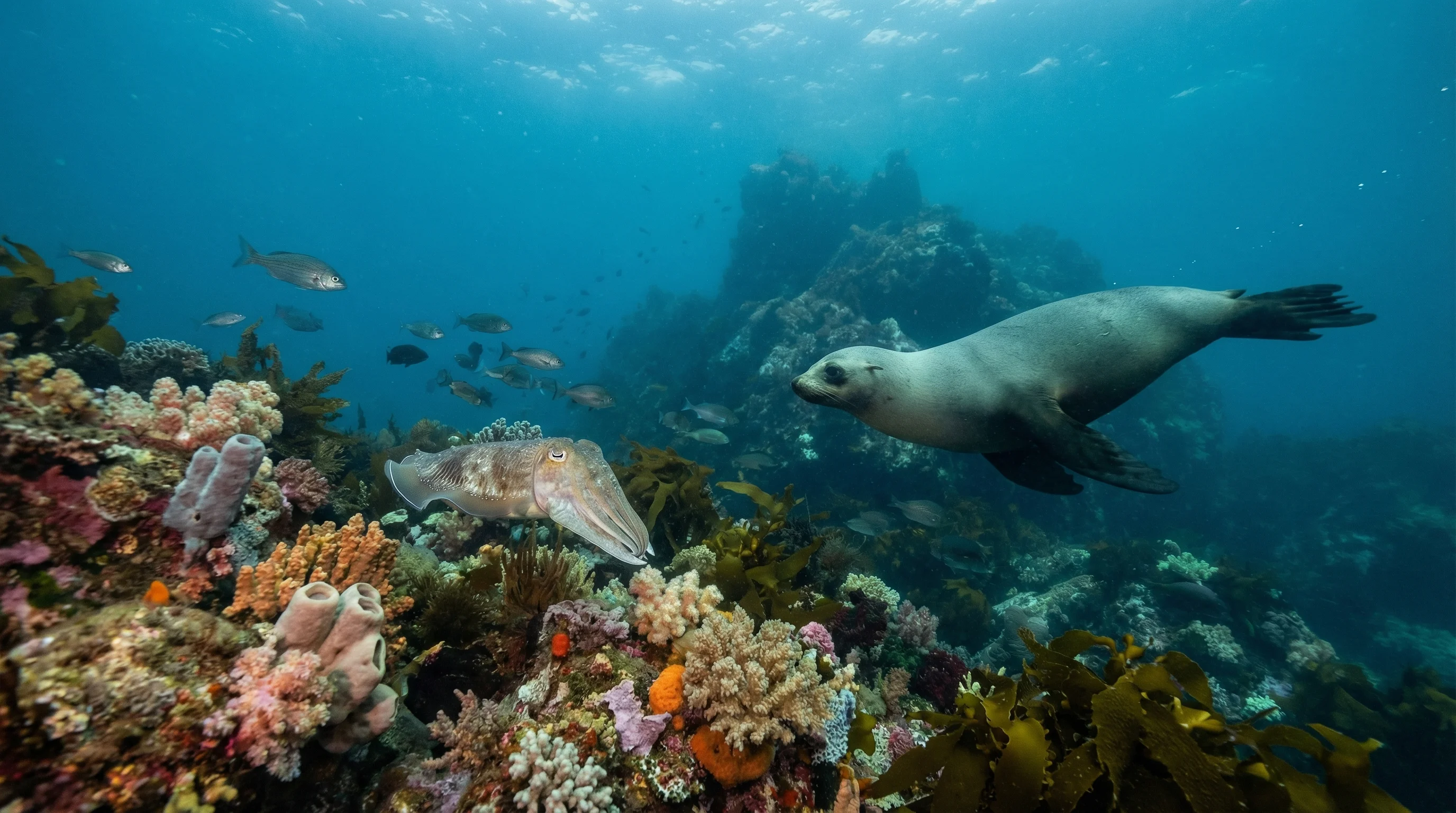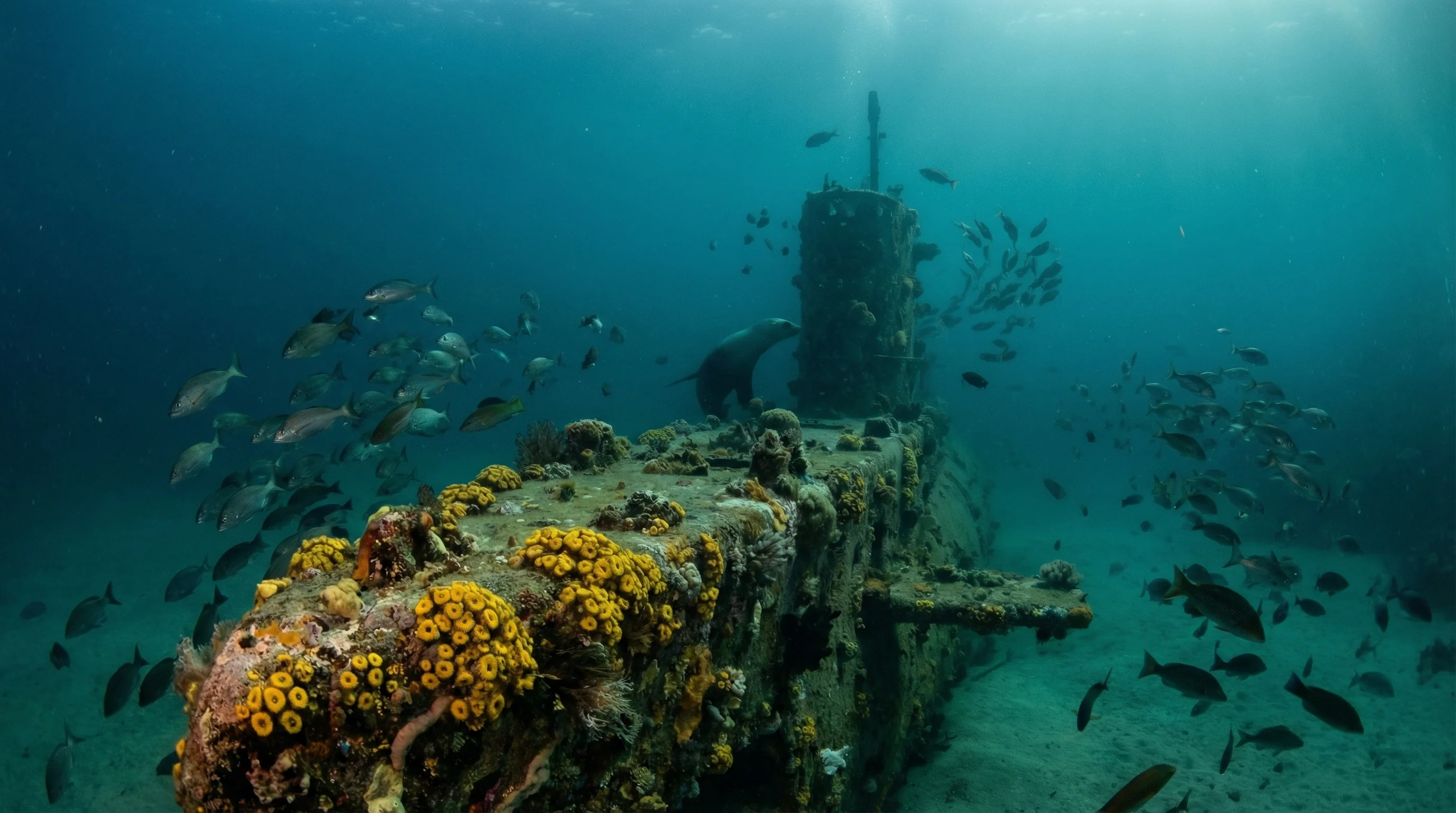
Best for advanced divers, 30-36m, boat entry, moderate current.
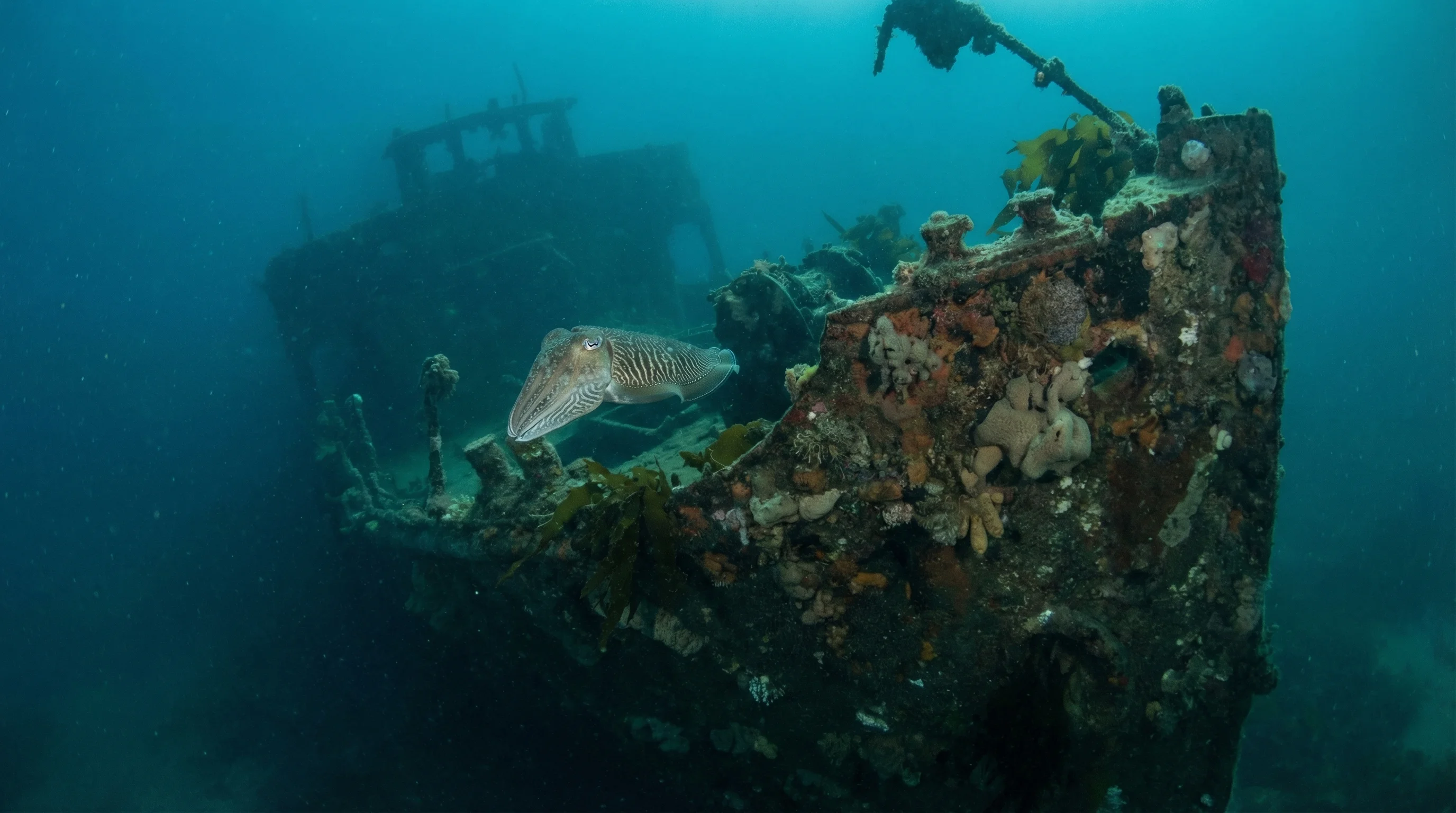
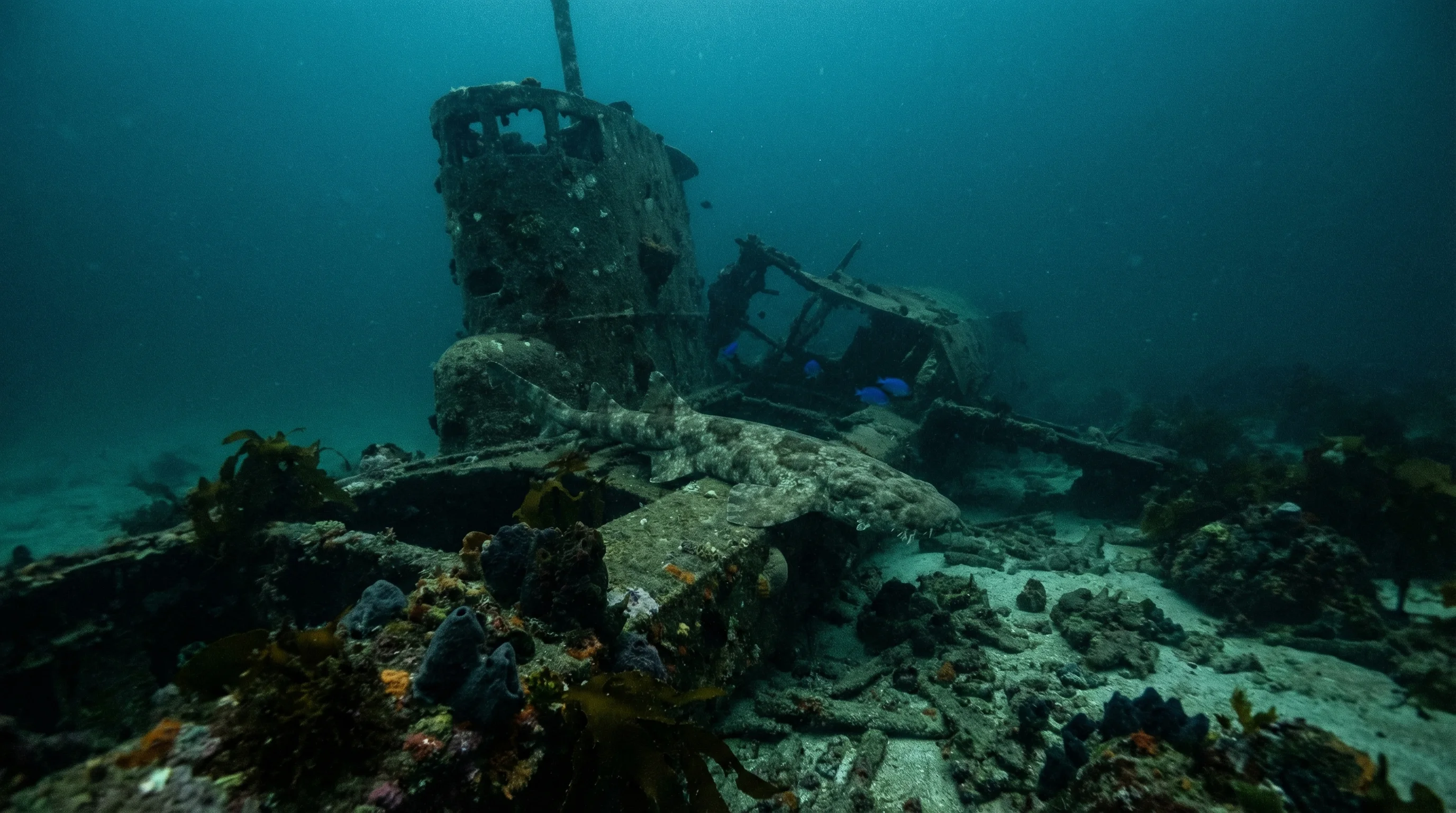
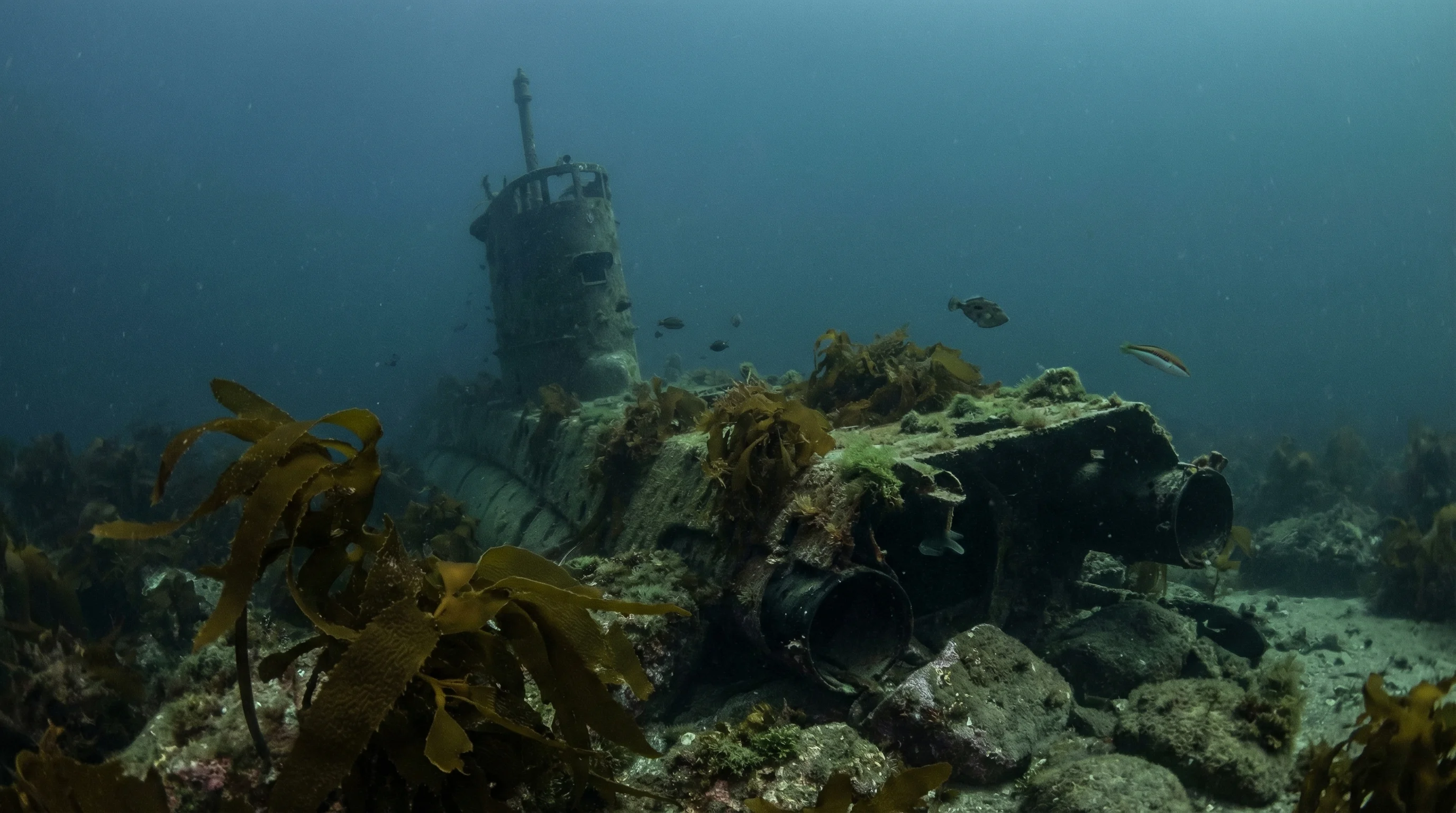
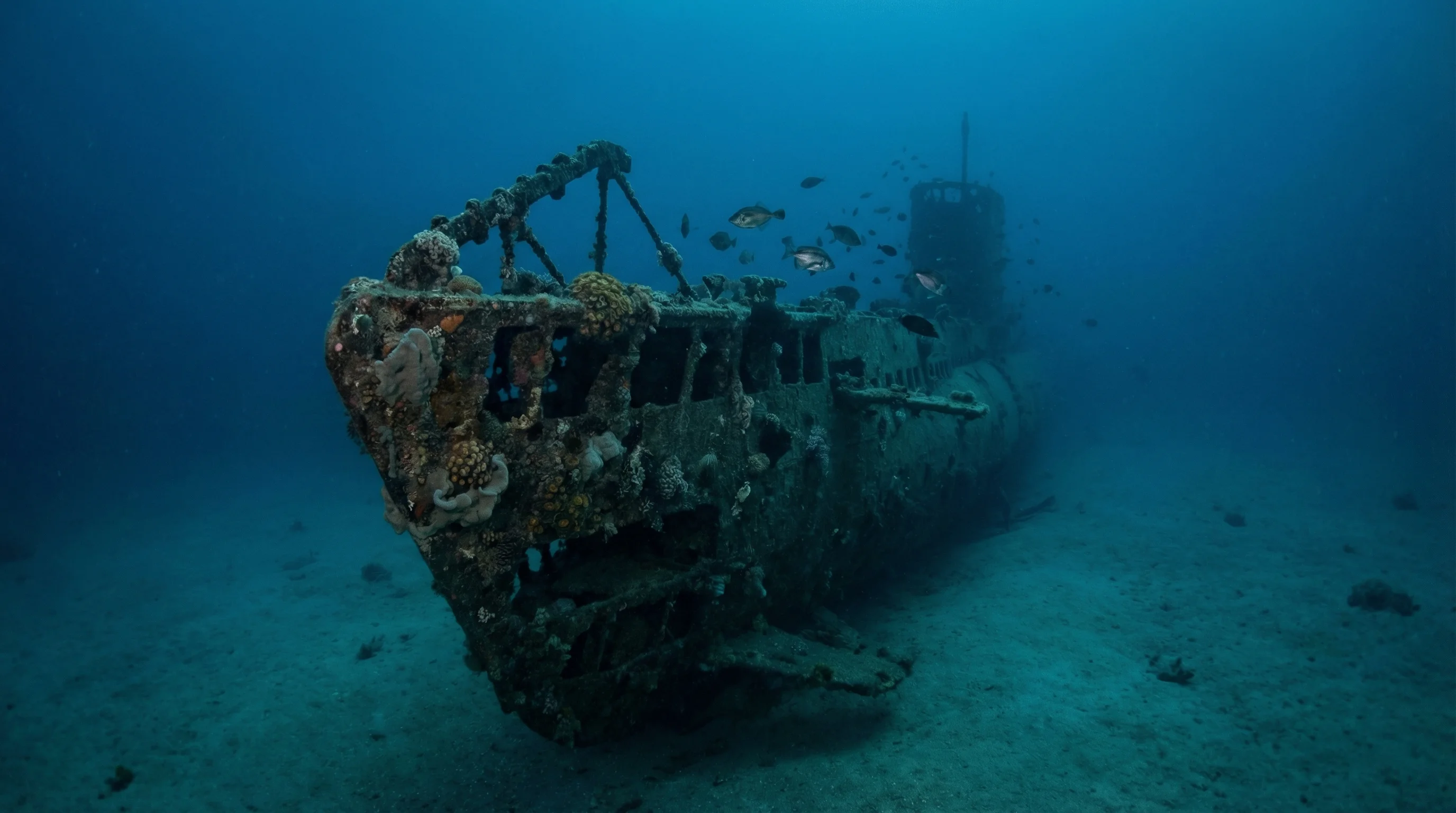
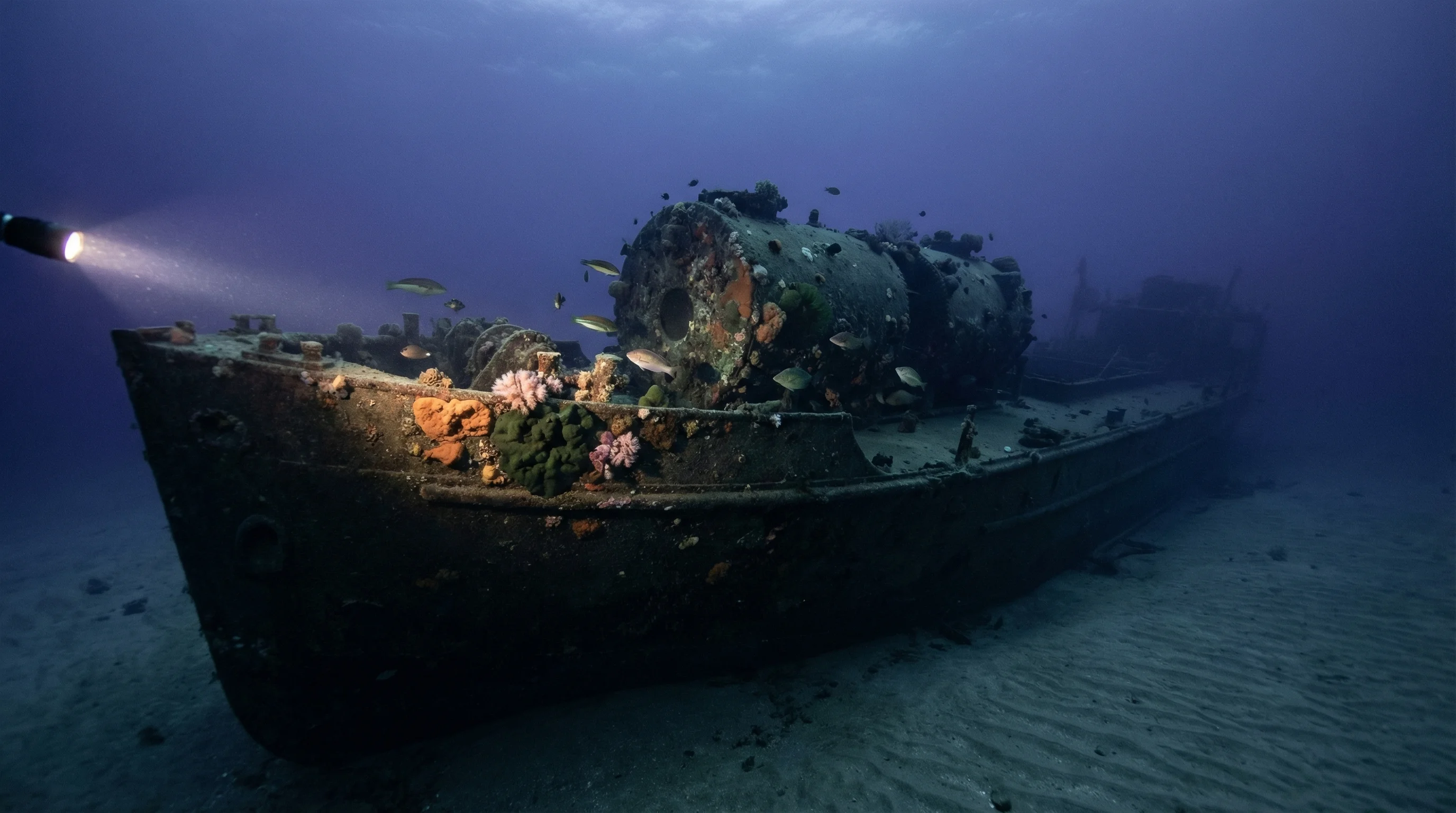
The HMAS J5 is a submarine wreck resting upright on the seabed at depths between 30 and 36 metres. This advanced dive requires boat access and is subject to moderate currents of 1 to 2 knots, which can funnel through the structure. Visibility typically ranges from 5 to 10 metres. The wreck features an overhead environment with tight internal spaces, making penetration hazardous due to potential silt-out and structural deterioration. Divers should be prepared for water temperatures between 13C and 18C. Given the depth and conditions, redundant air sources and multiple lights are mandatory for those planning to explore the interior of the hull.
-38.31085, 144.56888
Penetration inside the wreck is possible at several points where large plates were removed from the hull prior to scuttling.
The wreck is located approximately 3 miles (4.8 km) off Barwon Heads and is accessible via dive charters that run weekly from Portsea or Queenscliff.
Recorded at this site
Depth
30-36m
Visibility
5-10m
Skill Level
Advanced
Entry
Boat
Boat required
Water Temp
13-18°C
Current
Moderate
Typical Dive
55 min
Best Time
Jan, Feb, Mar, Apr, Nov, Dec
No, this site is rated for advanced divers only due to the depth, overhead environment, and potential for moderate currents.
The wreck sits on the sand at depths ranging from 30 to 36 metres, with an average depth of 33 metres.
This is a boat dive located approximately 4828 metres from the shore.
Hazards include the deep profile, low visibility, overhead environment, and strong currents. Penetration is particularly hazardous due to tight spaces and the risk of silt-out.
No, this site is not suitable for snorkelling as the wreck lies at a depth of 30 to 36 metres.
Diving at HMAS J5 Submarine in Sorrento requires the following certifications: Wreck, Deep. Always dive within your training limits.
A 7mm wetsuit or semi-dry is recommended for diving at HMAS J5 Submarine in Sorrento. Water temperatures range from 13°C to 18°C.
The best months to visit HMAS J5 Submarine in Sorrento are January, February, March, April, November, and December. Conditions outside these months can still be good but are less predictable.
Expect moderate currents at HMAS J5 Submarine in Sorrento. Good buoyancy control and some drift diving experience is helpful.
Visibility at HMAS J5 Submarine in Sorrento typically ranges from 5 metres to 10 metres. Conditions vary with weather, tides, and seasons.