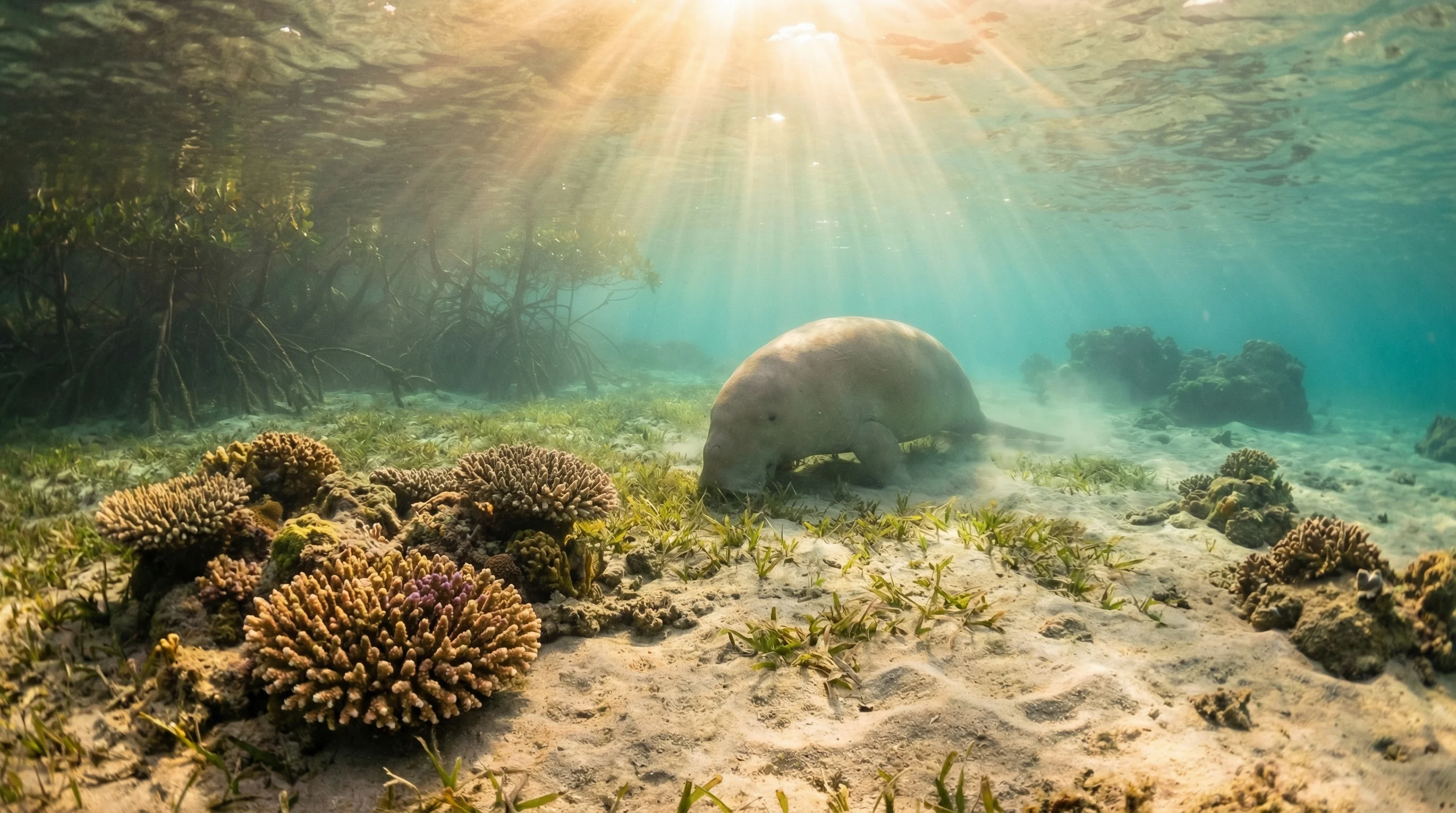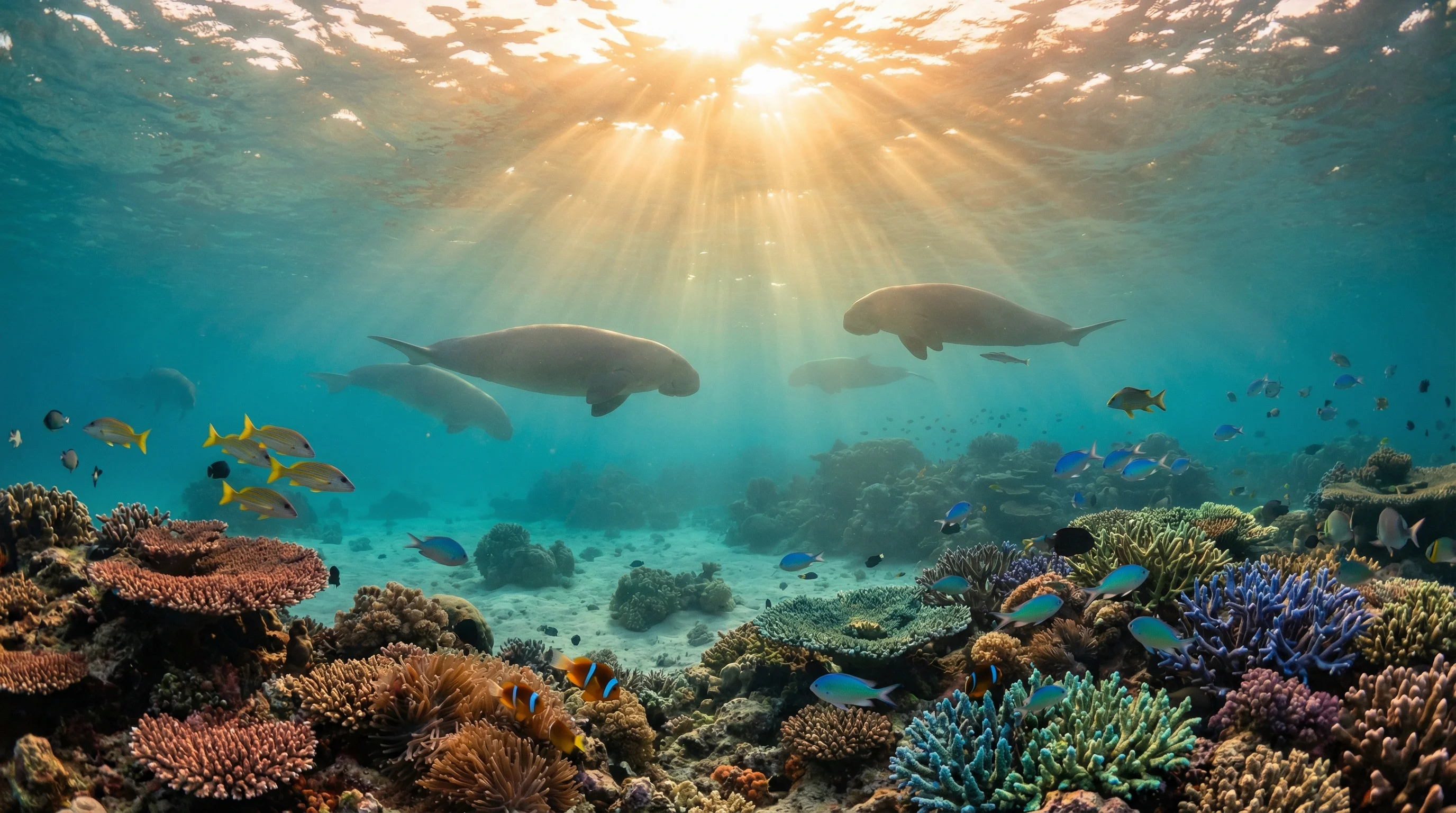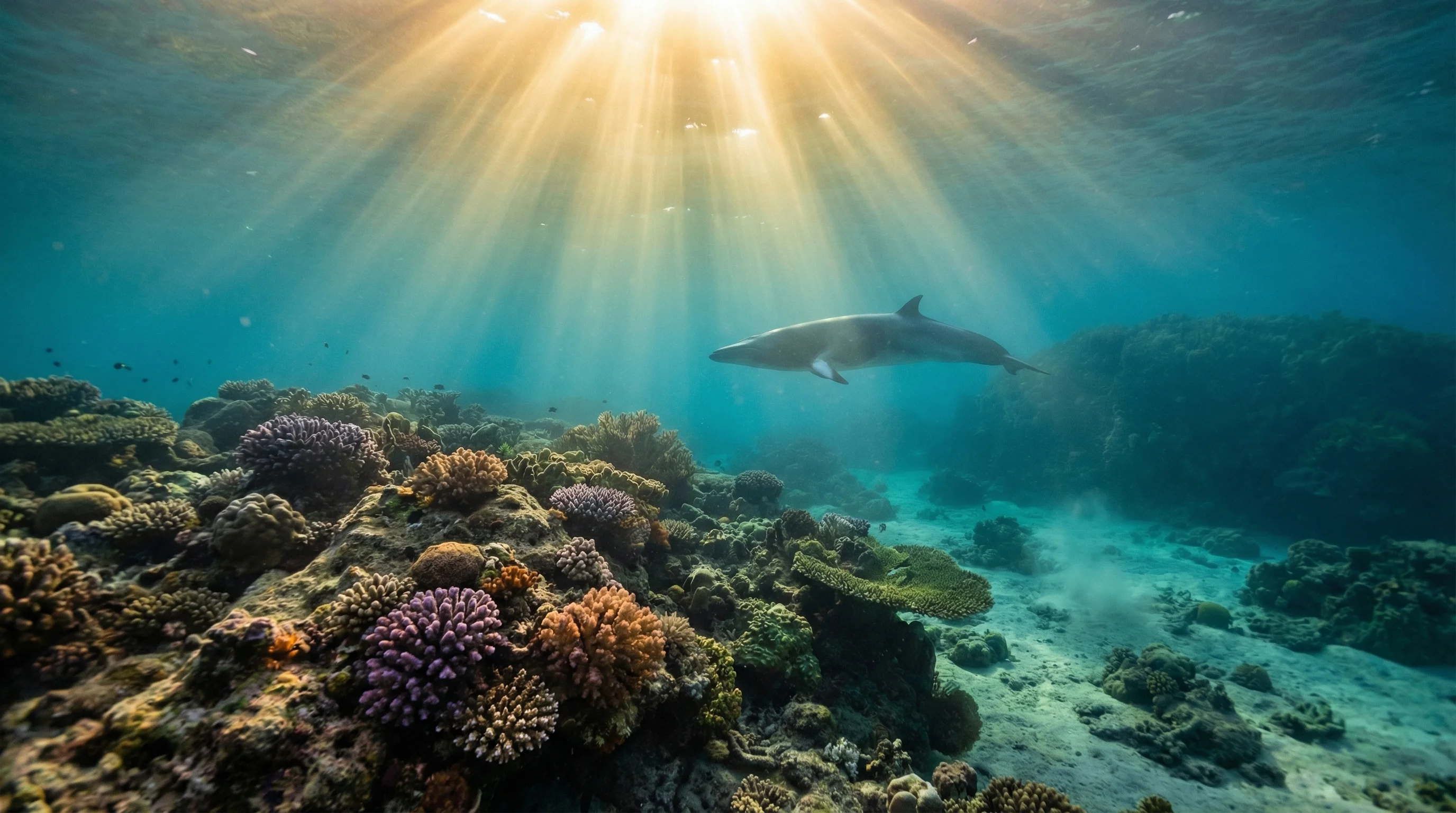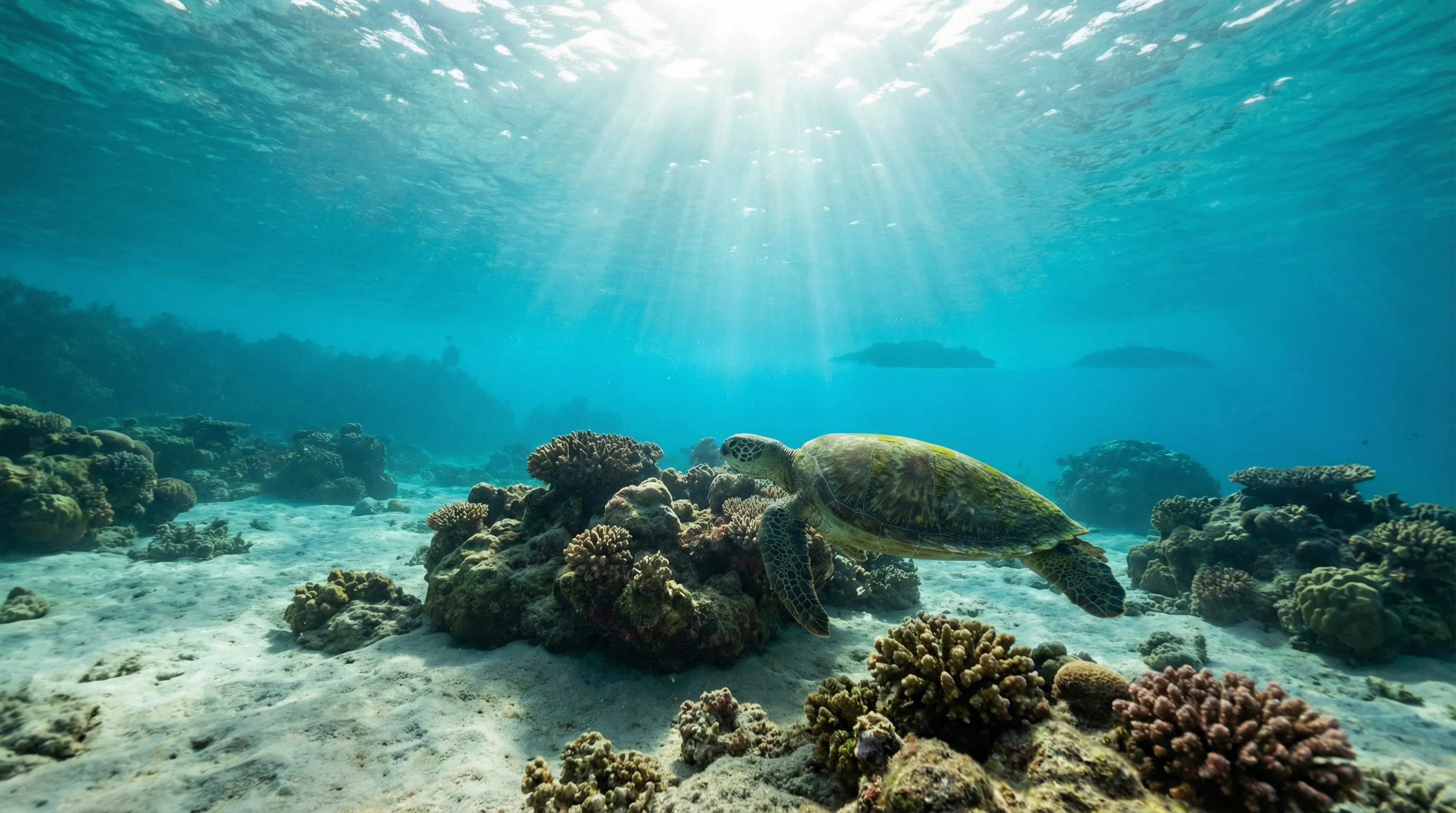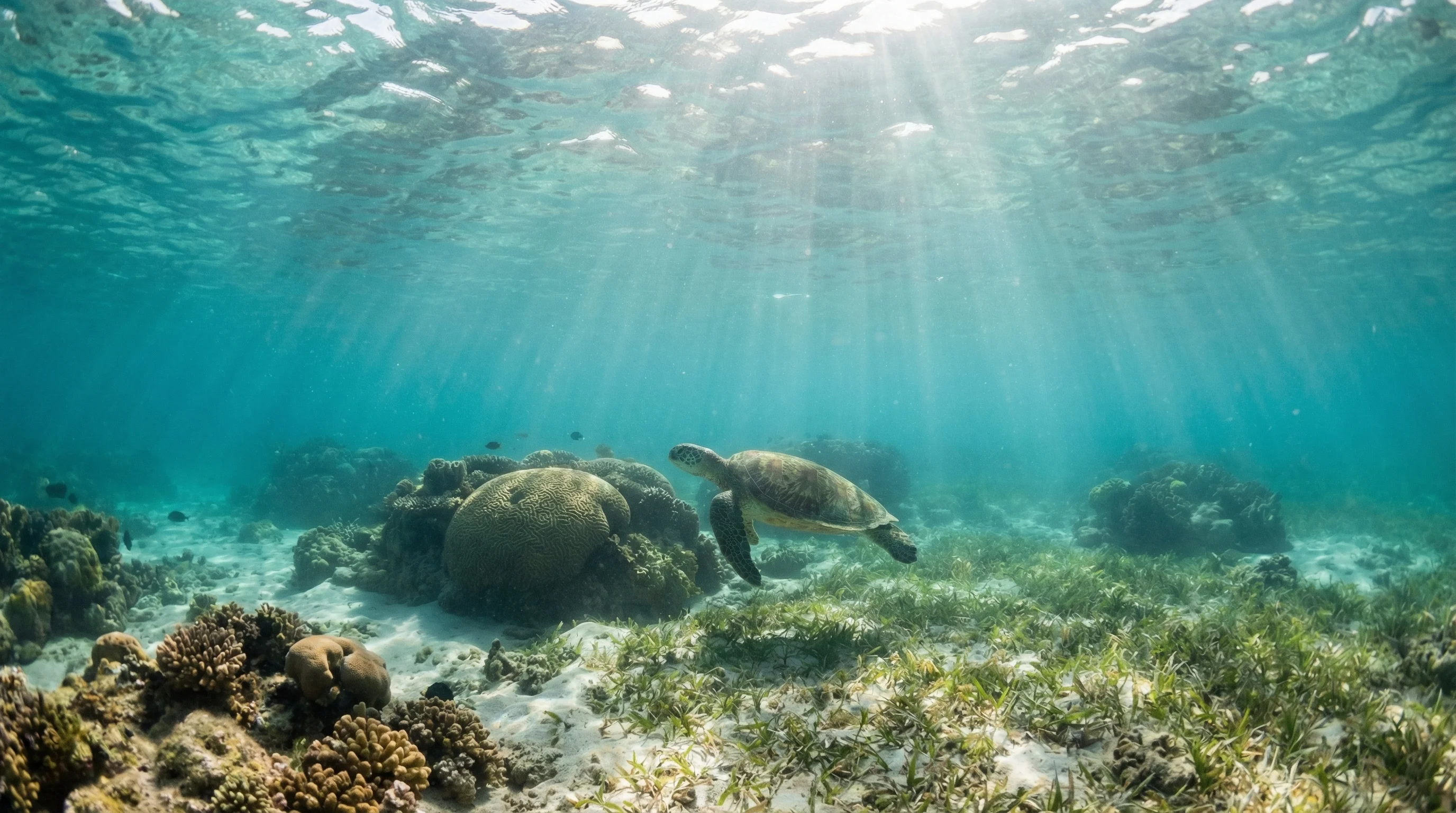
Best for intermediate divers, 3-12m, shore entry, mild current.
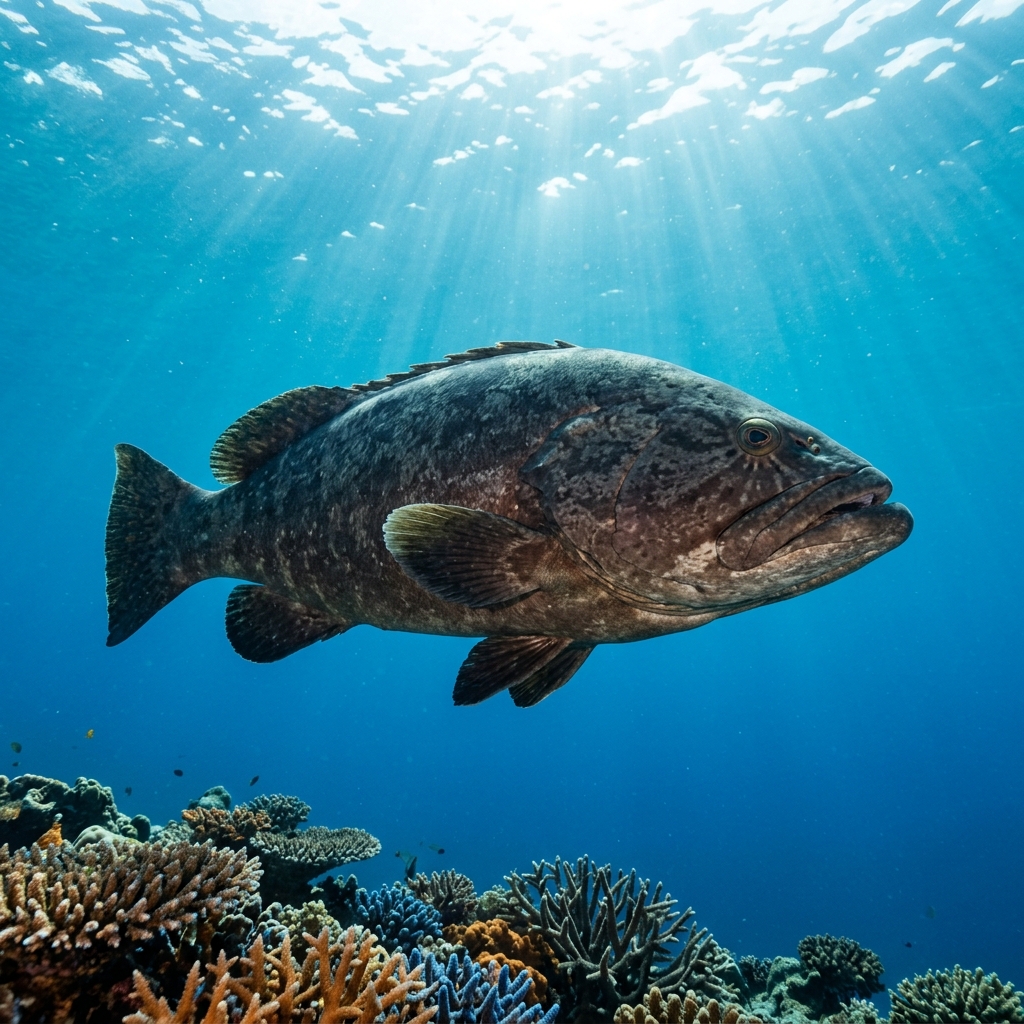
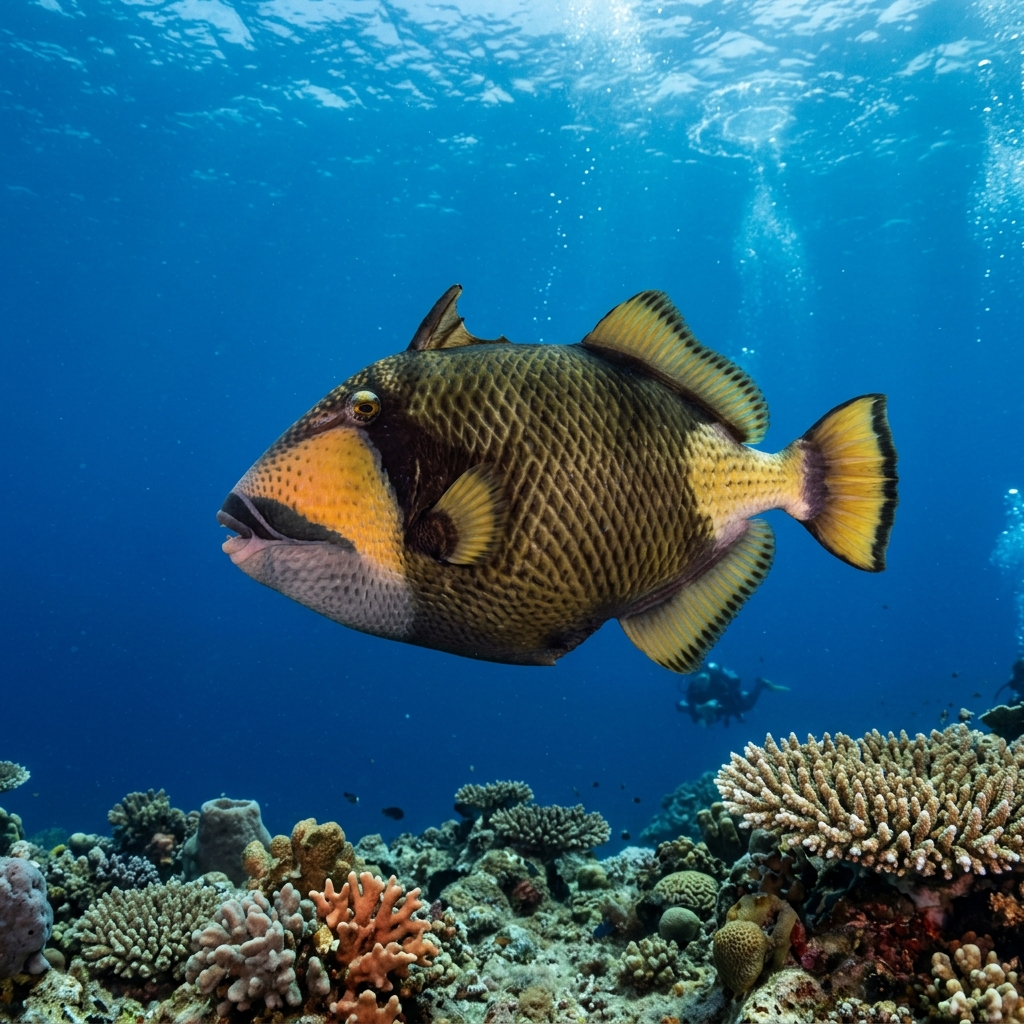
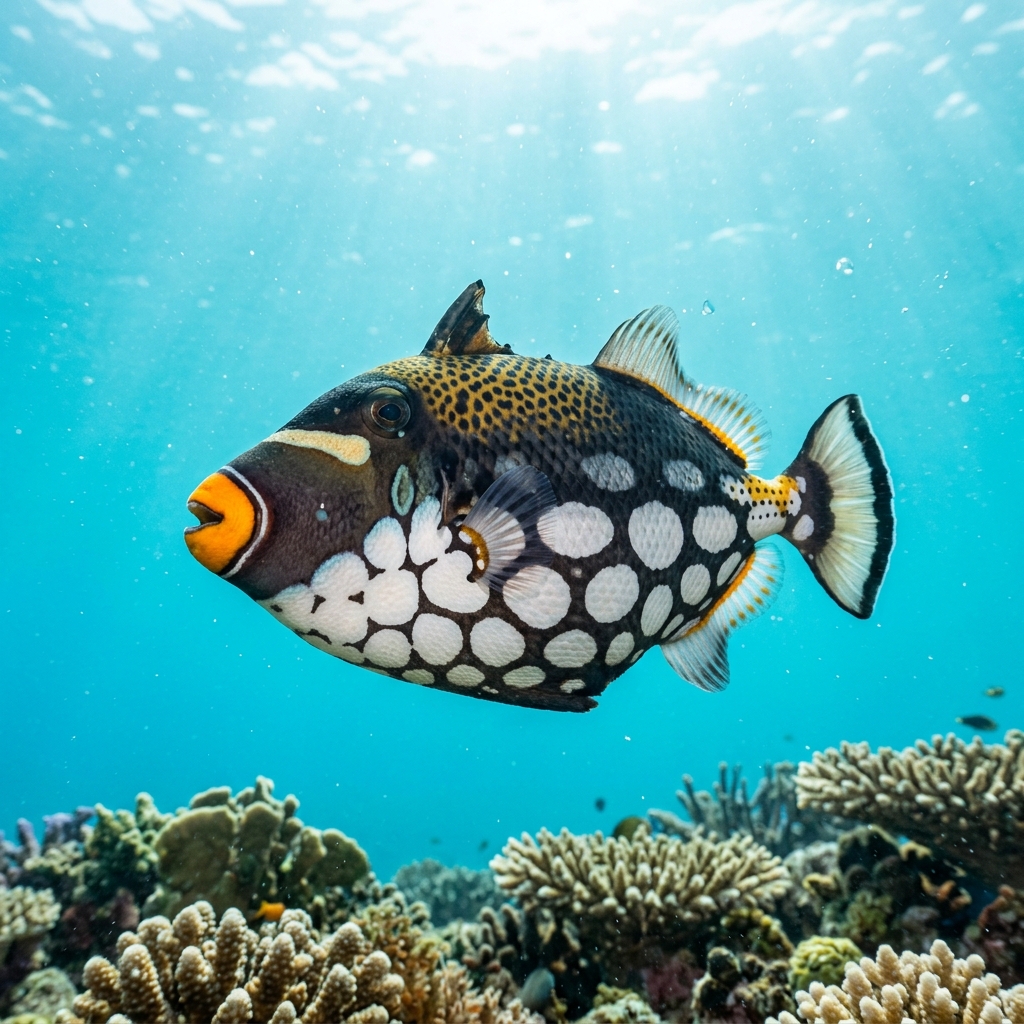
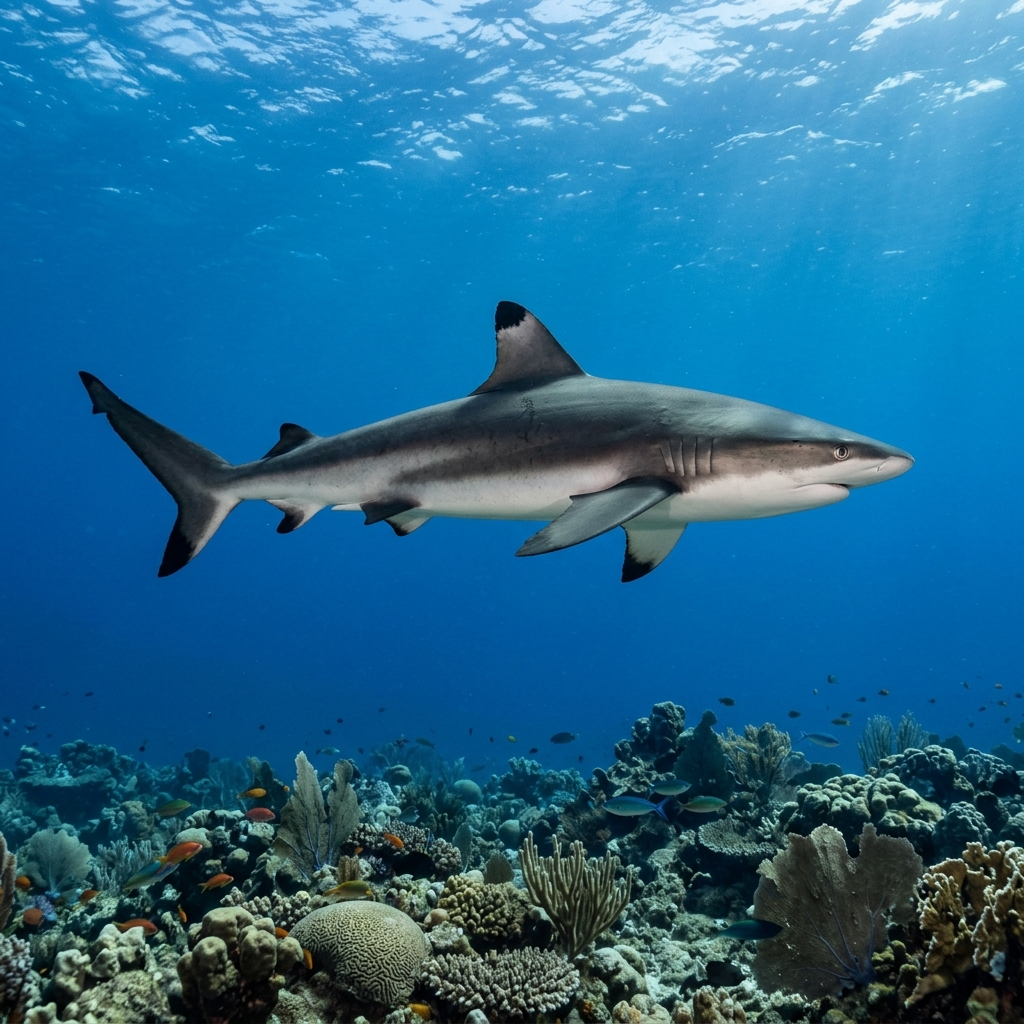
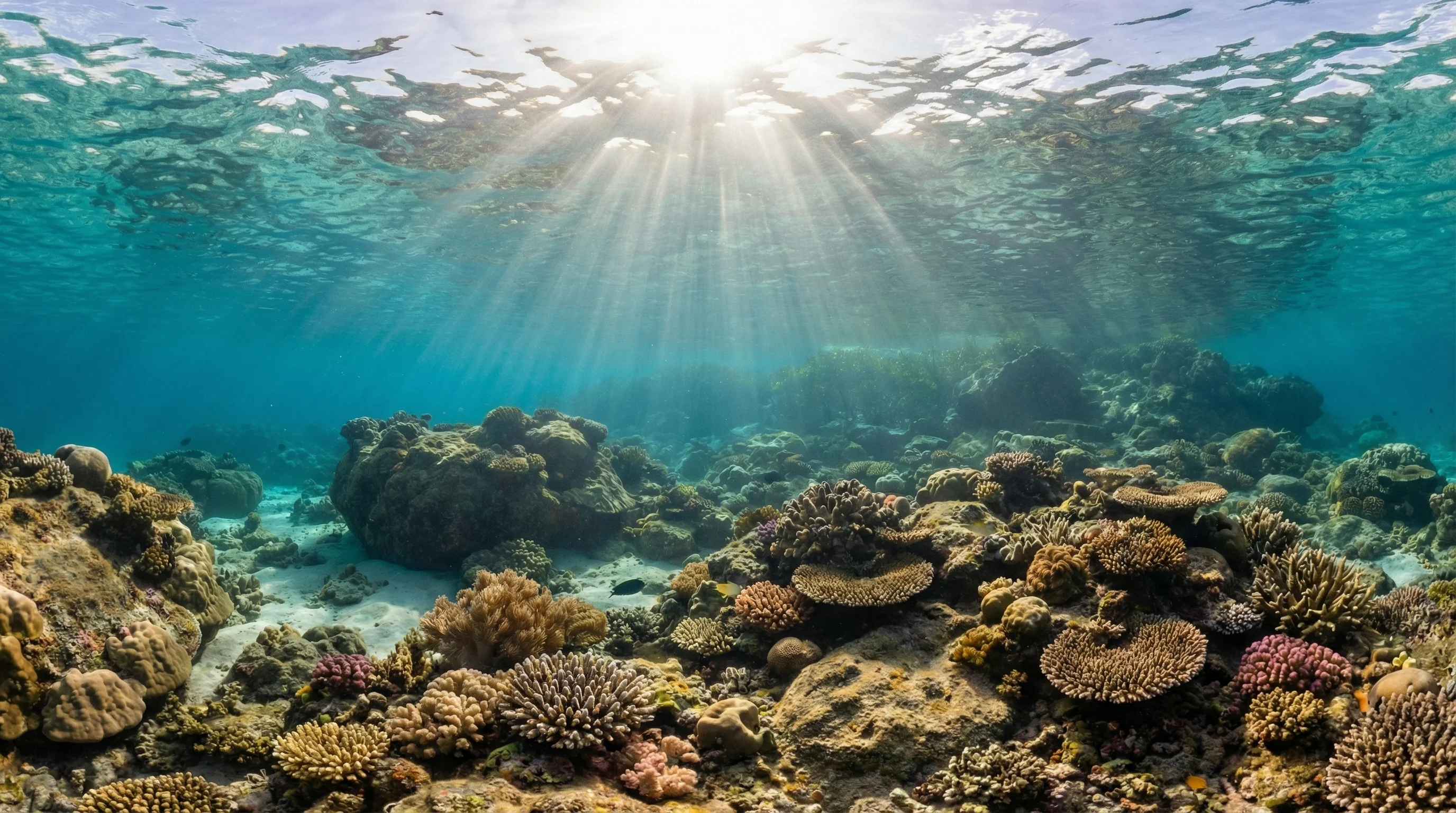
Coral Bay at Dunk Island is a shallow shore-entry reef suitable for intermediate divers. The site features depths ranging from 3 to 12 metres, with an average of 7 metres. Divers can explore the reef structure, which supports a variety of reef fish and invertebrates typical of the region. Visibility varies between 5 and 15 metres, and currents are generally mild. Hazards include sharp coral formations and sea urchins. A protective suit is recommended during the stinger season, which runs from October to May. Facilities at the site include parking, showers, and a rinse station.
-17.95250, 146.09830
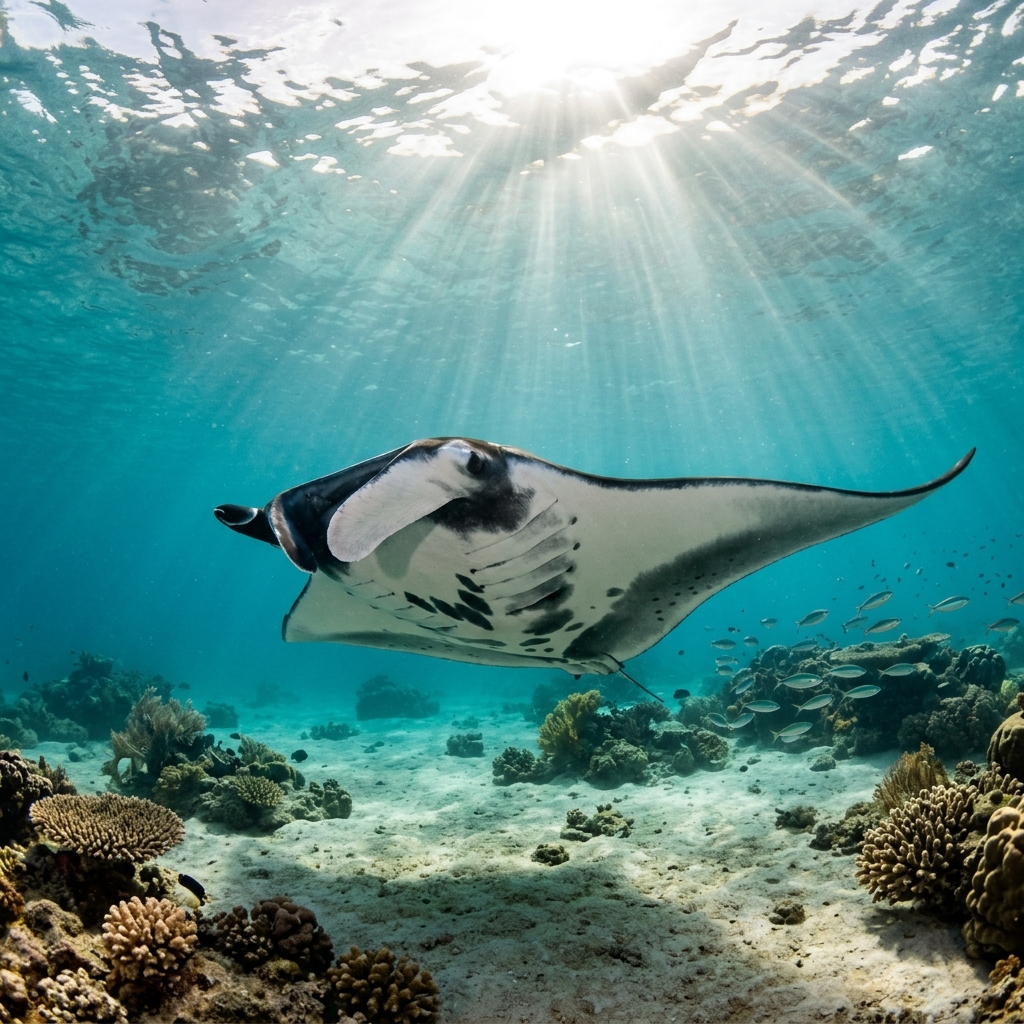
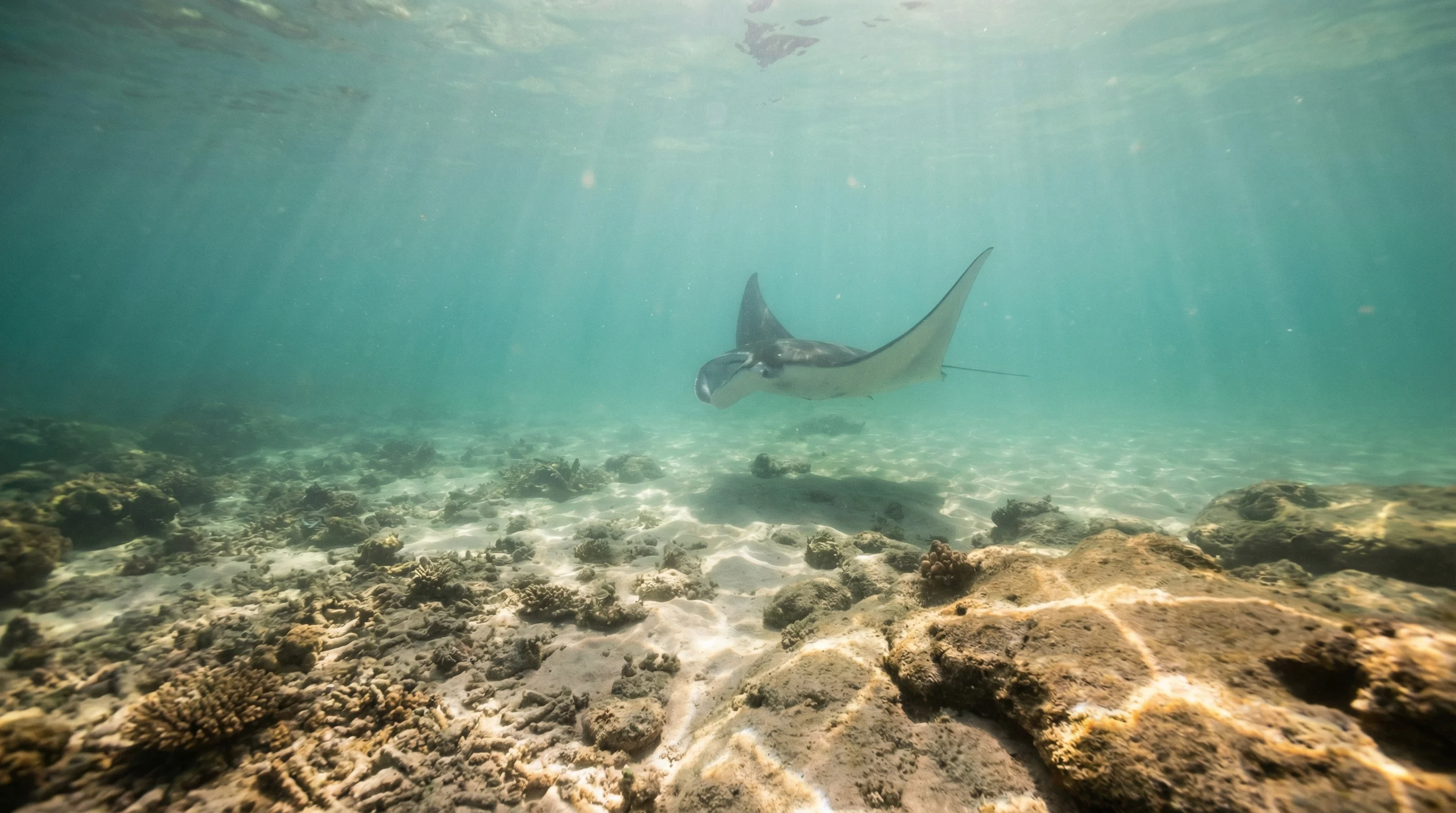
Charter operators time their dives to slack water at the cleaning stations to keep mantas in residence and divers stable on the bommie.
The site is described as being accessible from the shore. Park near South Mission Beach and walk to the small coral-encrusted beach to enter the water. The reef is located approximately 20-30 metres from the shore.
Recorded at this site
Depth
3-12m
Visibility
5-15m
Skill Level
Intermediate
Entry
Shore
Water Temp
23-29°C
Current
Mild
Typical Dive
45 min
Best Time
May, Jun, Jul, Aug, Sep, Oct, Nov
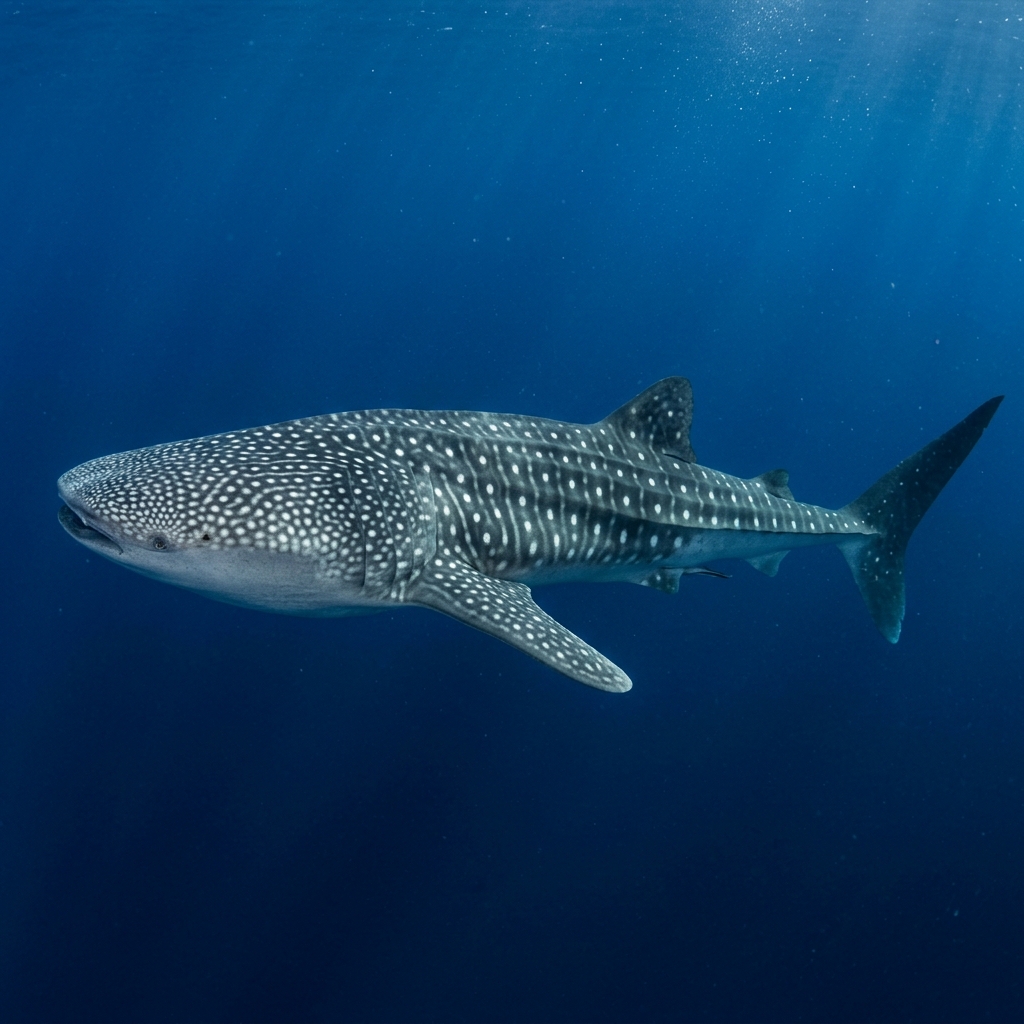
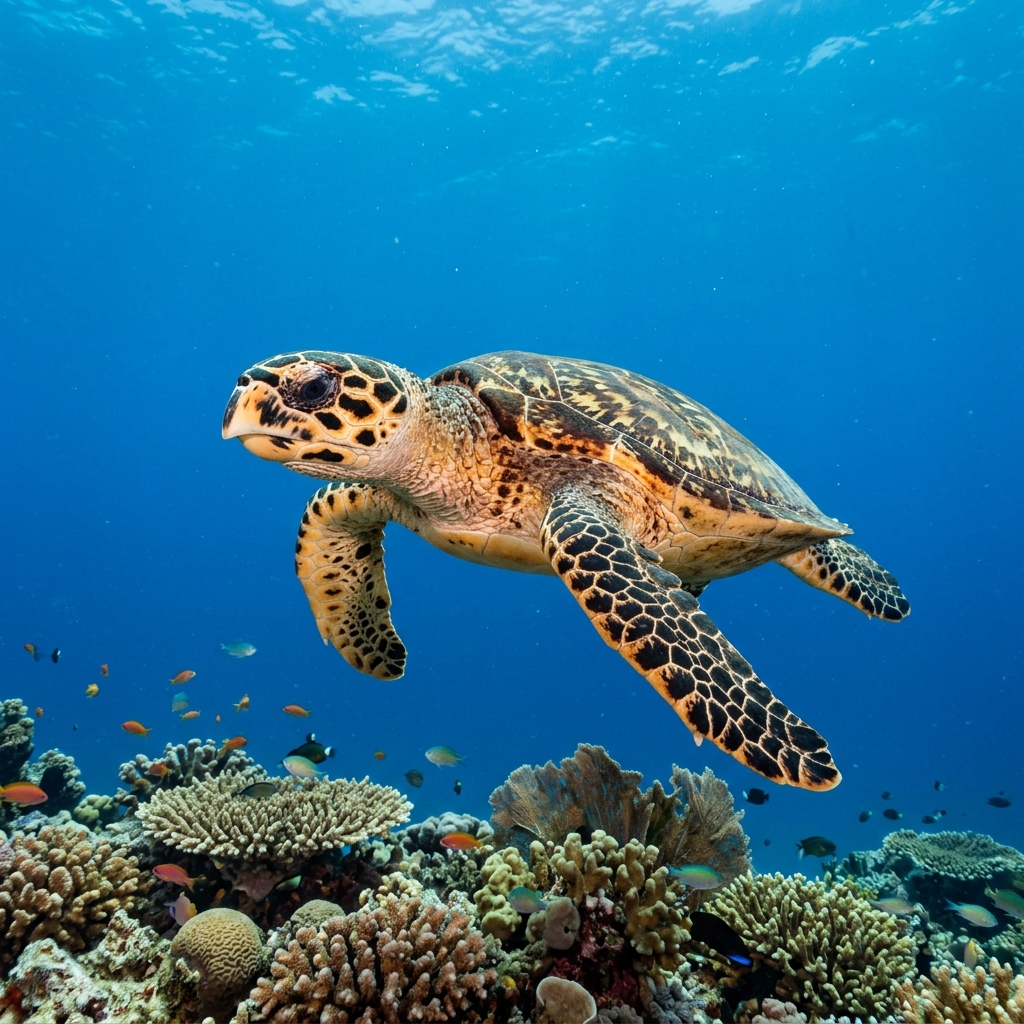
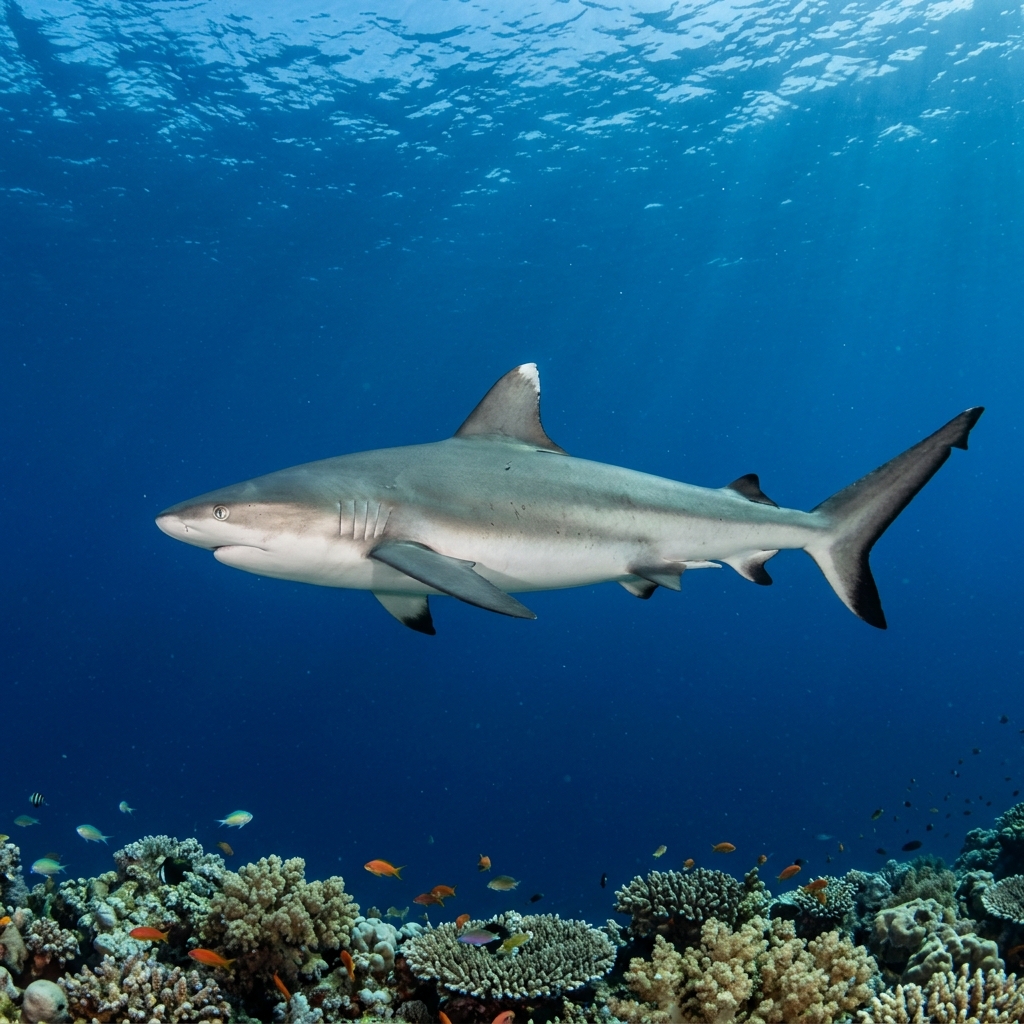
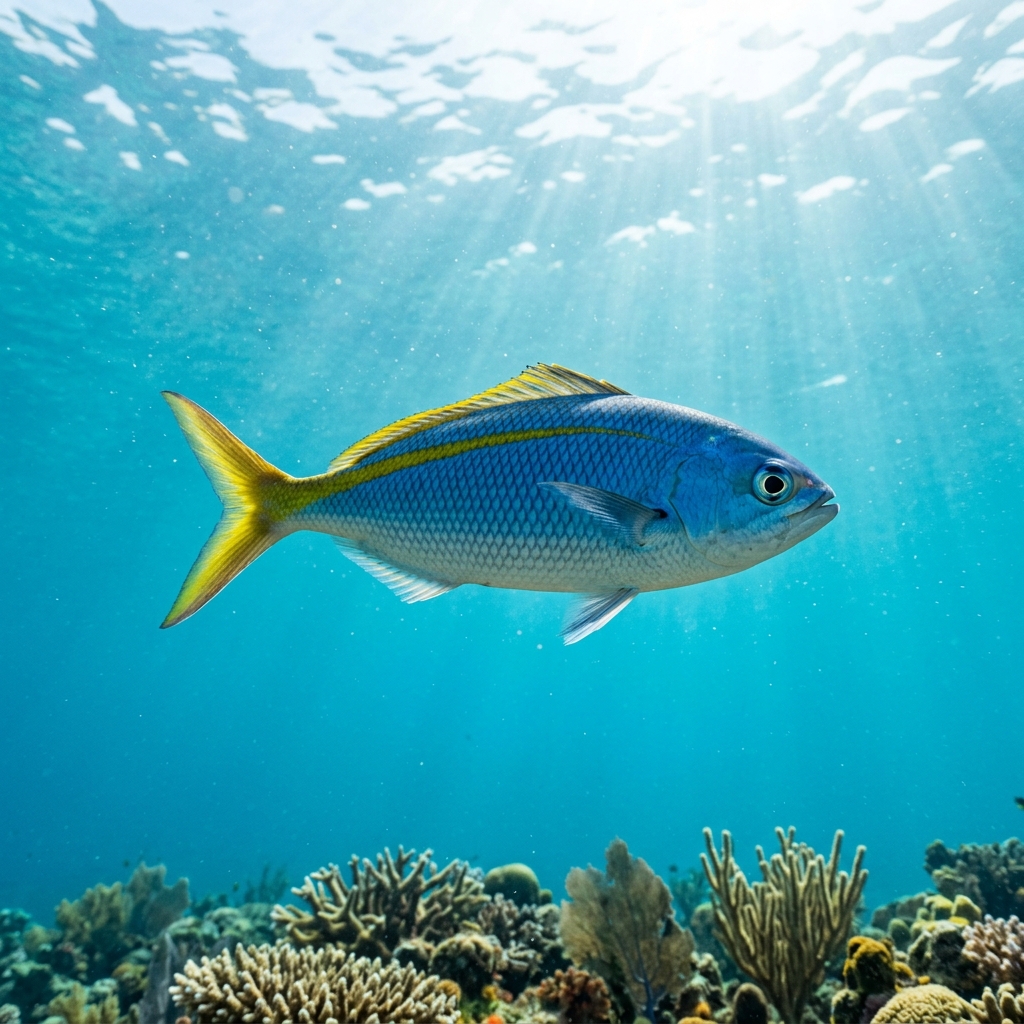
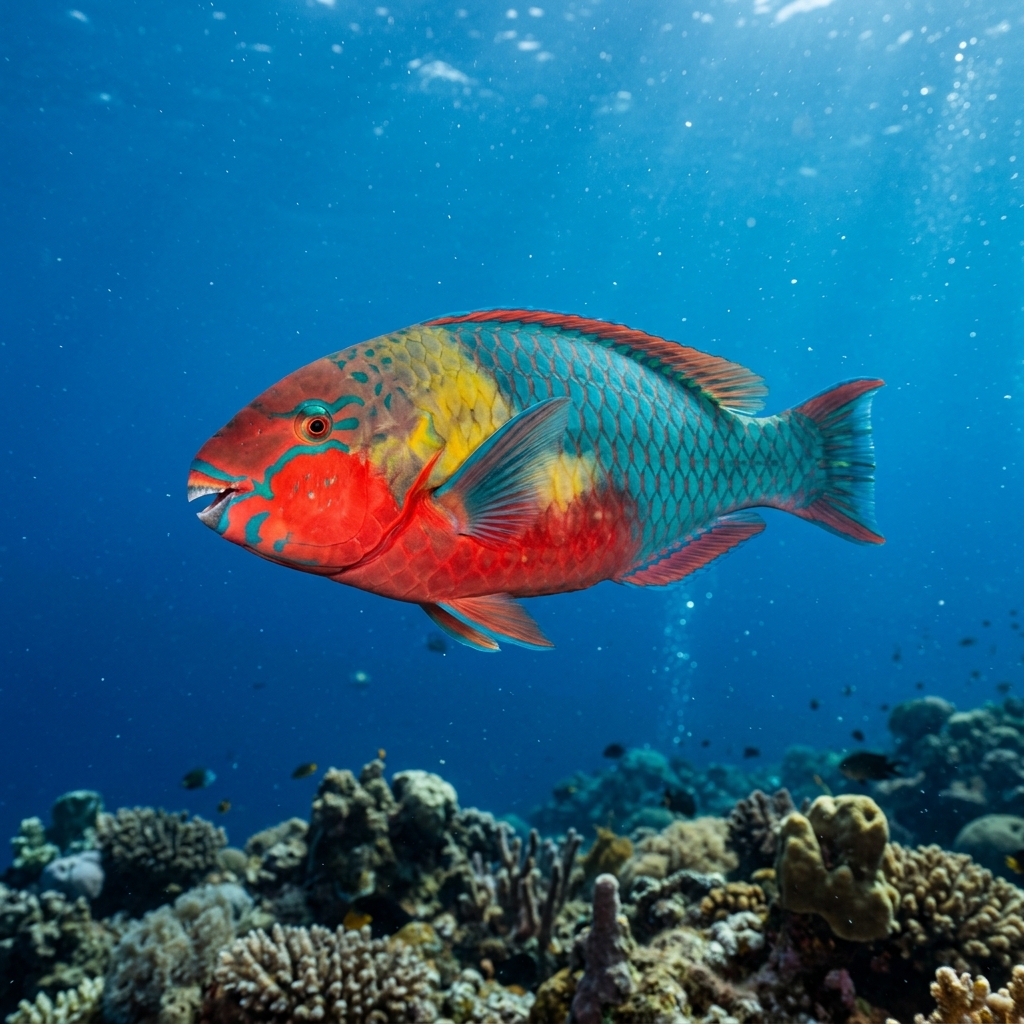
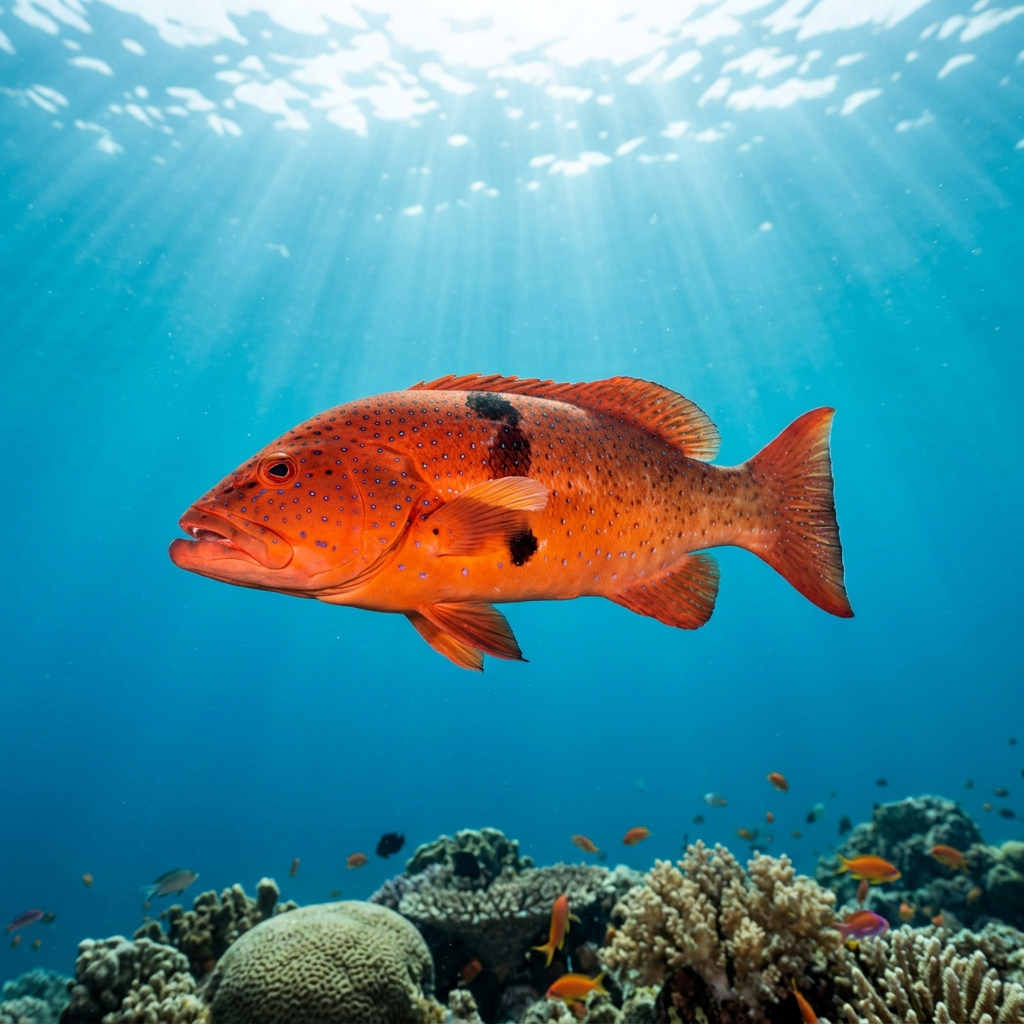
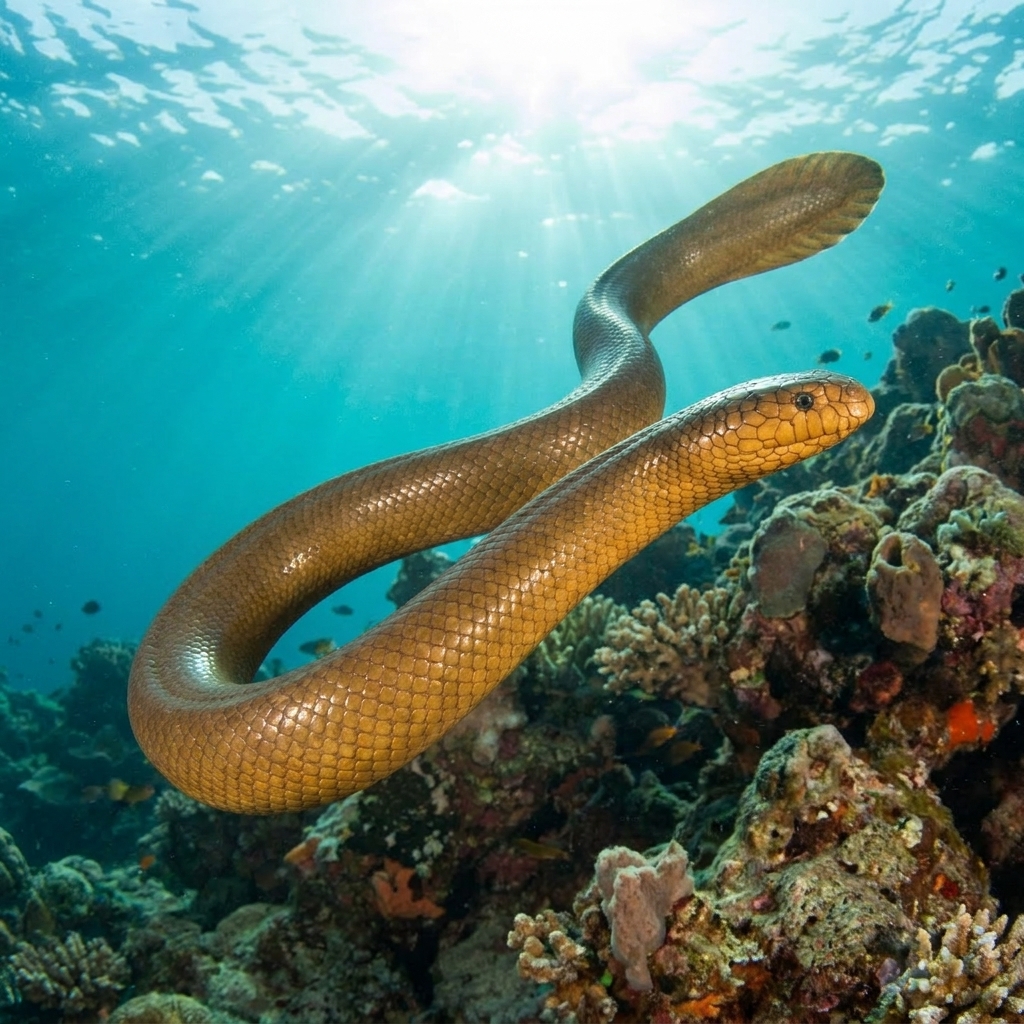
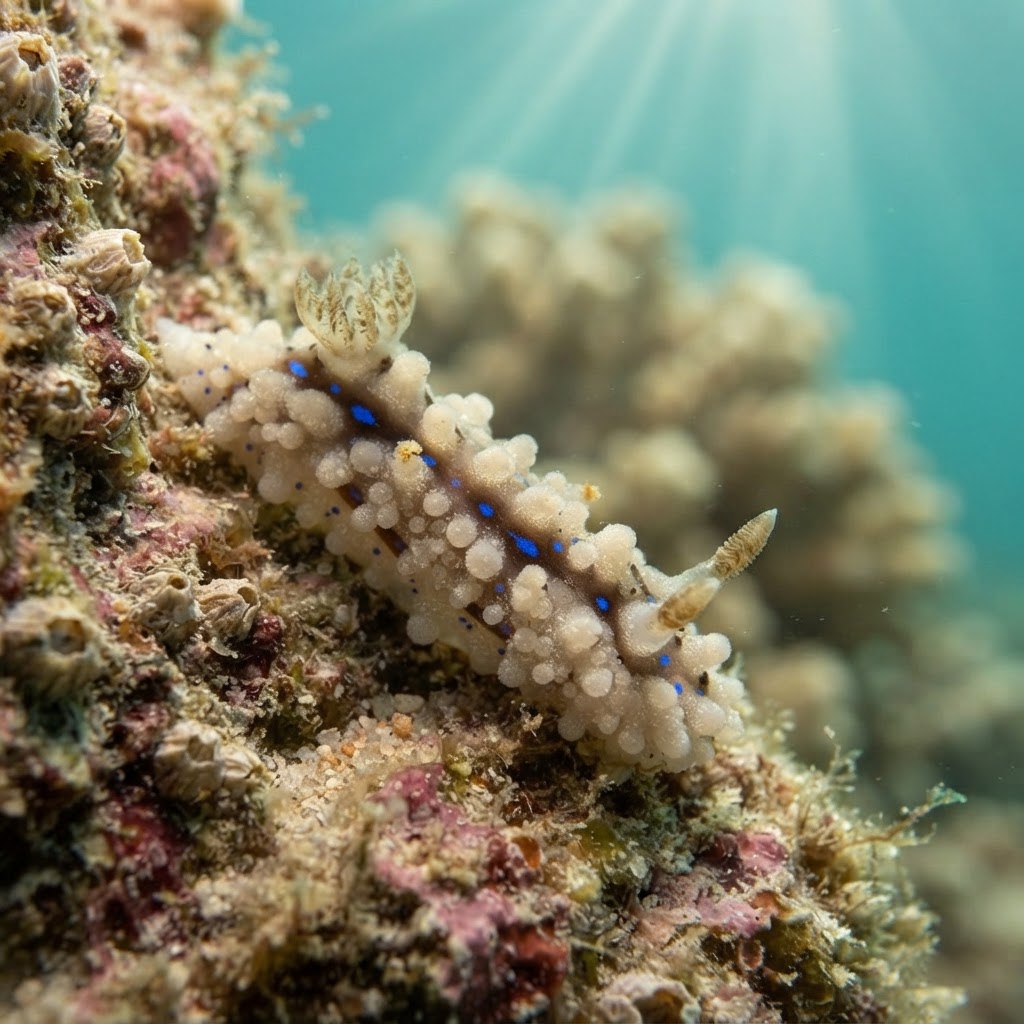
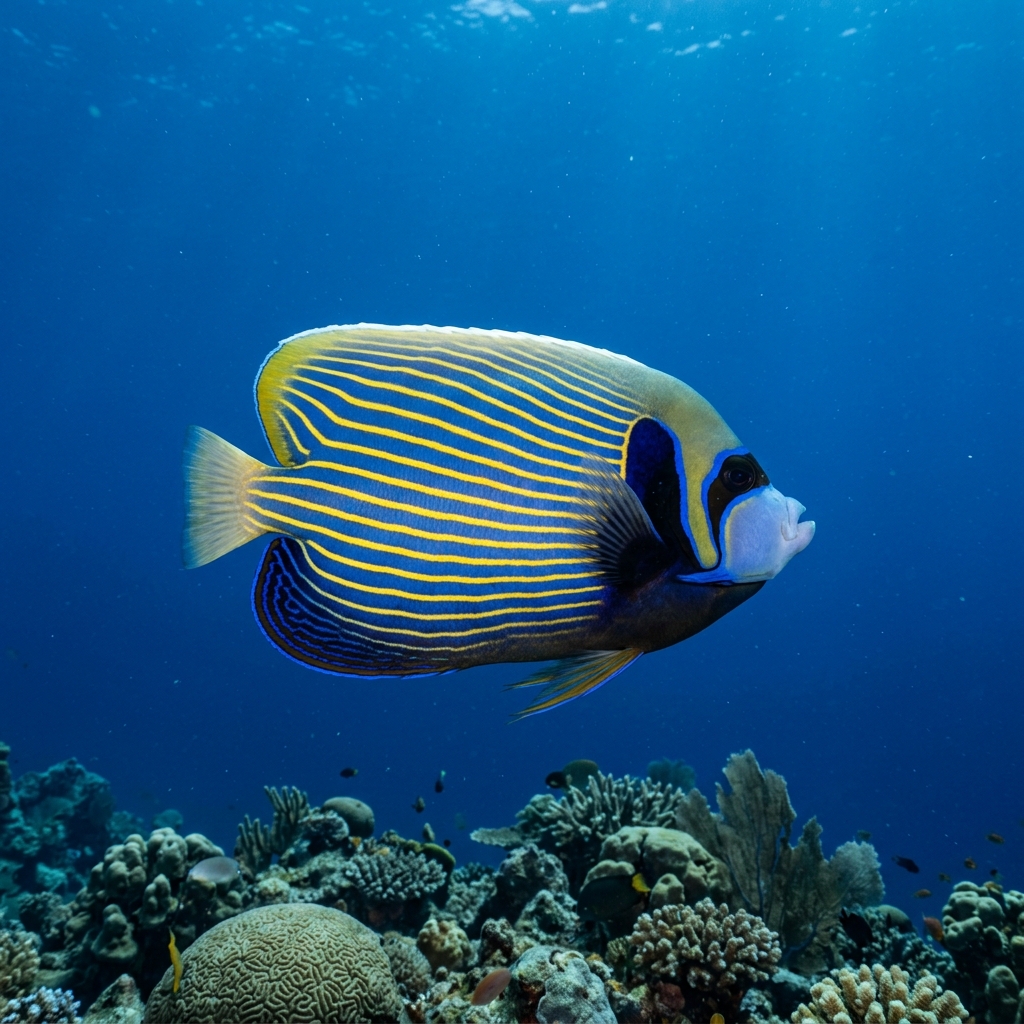
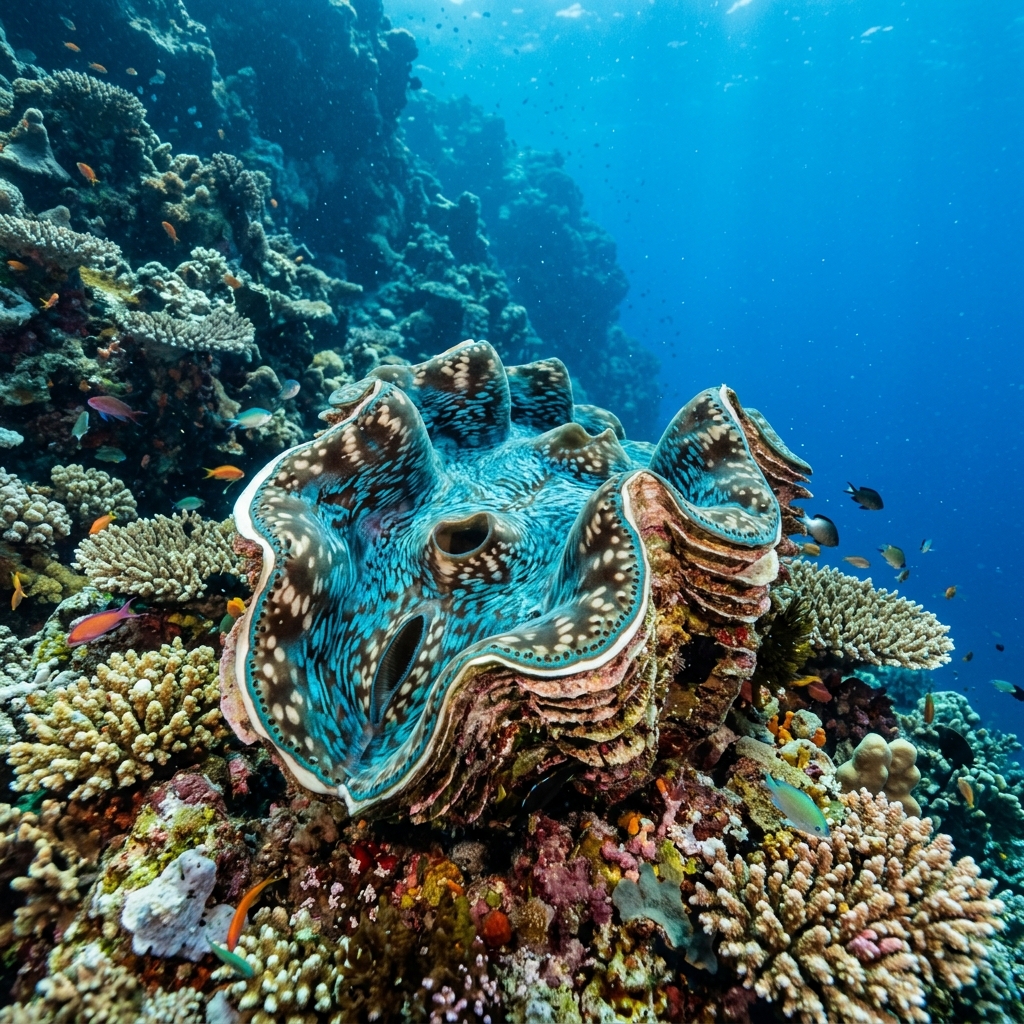
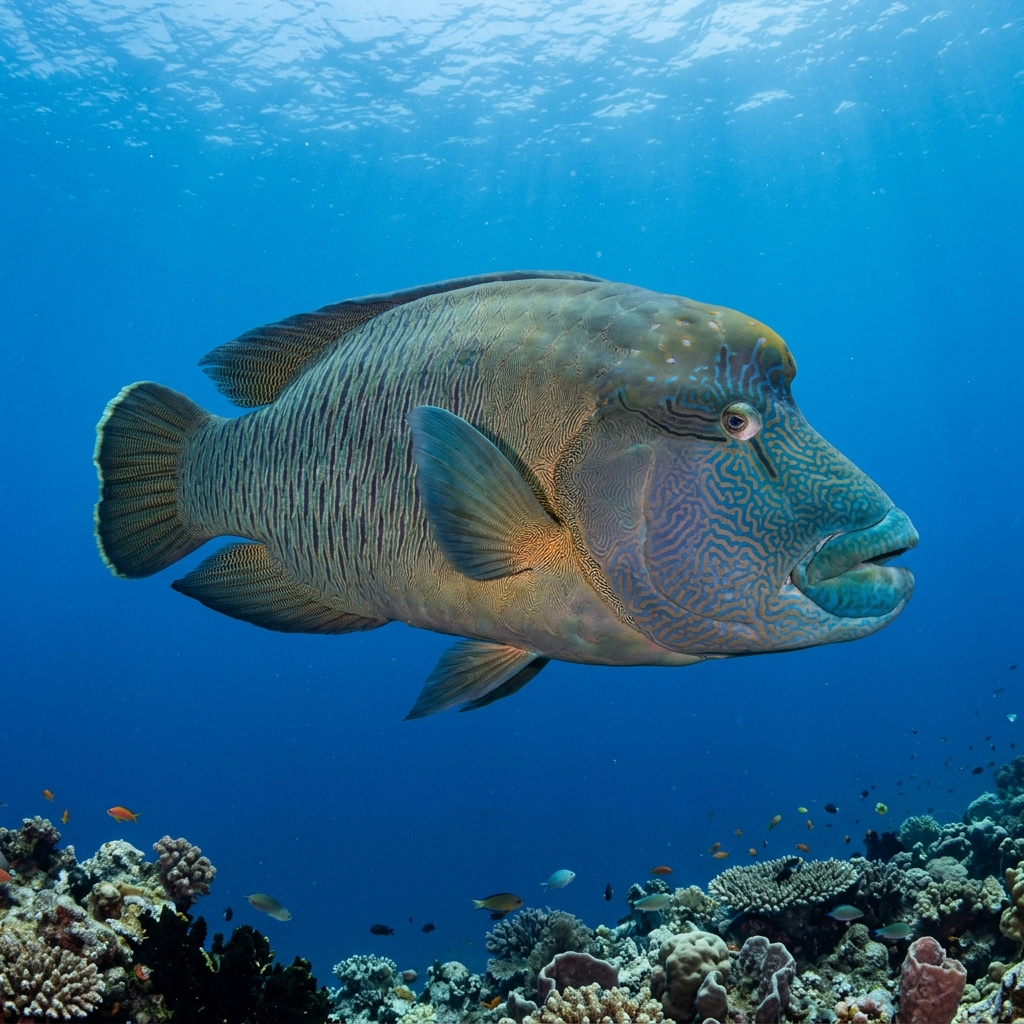
The site supports a variety of reef fish and invertebrates typical of the region's habitat.
Coral Bay is rated for intermediate divers due to variable visibility and the need for careful buoyancy control around sharp coral.
The depth ranges from 3 to 12 metres, with an average depth of 7 metres.
Coral Bay is a shore-entry site.
Yes, the site is suitable for snorkelling with a rating of 3 out of 5.
The best conditions for diving and snorkelling typically occur between May and November.
Diving at Coral Bay in South Mission Beach requires the following certifications: Open Water. Always dive within your training limits.
A 3mm wetsuit is recommended for diving at Coral Bay in South Mission Beach. Water temperatures range from 23°C to 29°C.
Coral Bay in South Mission Beach typically has mild currents that most divers can handle comfortably.
Visibility at Coral Bay in South Mission Beach typically ranges from 5 metres to 15 metres. Conditions vary with weather, tides, and seasons.